
The Paravur Synagogue: Kerala's Grandest Synagogue and the Kerala Jews History Museum
At the end of North Paravur's Jew Street, behind a Kerala-style gatehouse and a long colonnade, stands the largest and most architecturally distinctive of Kerala's synagogues. Rebuilt in 1616 on an older site, abandoned after 1988 and restored by the Muziris Heritage Project, it now tells the story of Kerala's Jews.
Kerala's Jewish heritage: The synagogues of Kerala · Paradesi · Kadavumbhagam & Thekkumbhagam · Paravur · Chendamangalam · Mala · The Jew ponds · The Jews of Kerala
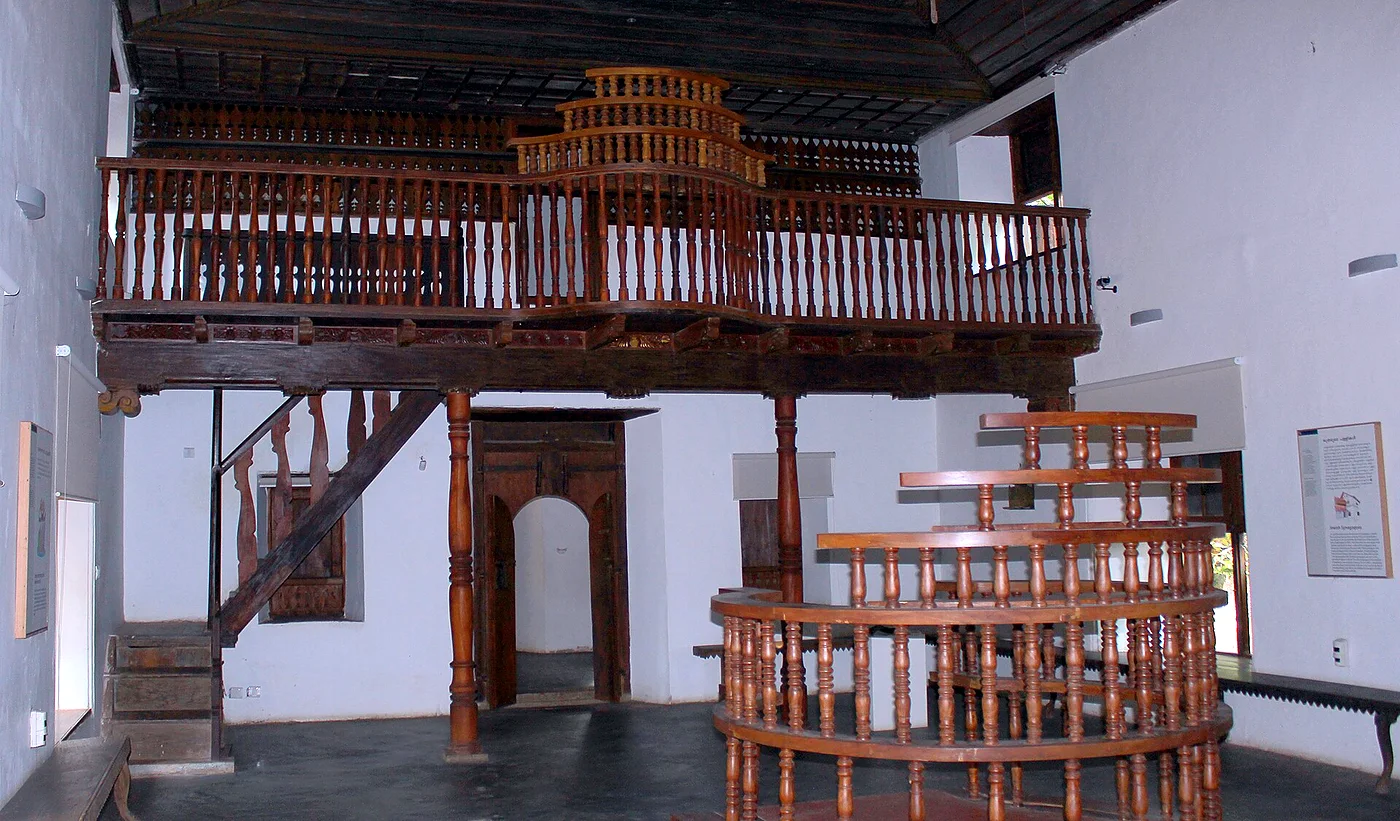
North Paravur, a market town on the Periyar delta north of Kochi, had one of the largest Malabari Jewish communities in Kerala. About 300 Jews still lived here in 1949. Their synagogue is the grandest in the state: not the biggest hall, but the most elaborate complex, with a gatehouse, a long covered walk and a courtyard, a design scholars describe as the most architecturally distinctive of all Kerala synagogues.
Jew Street and the Shabbat pillars
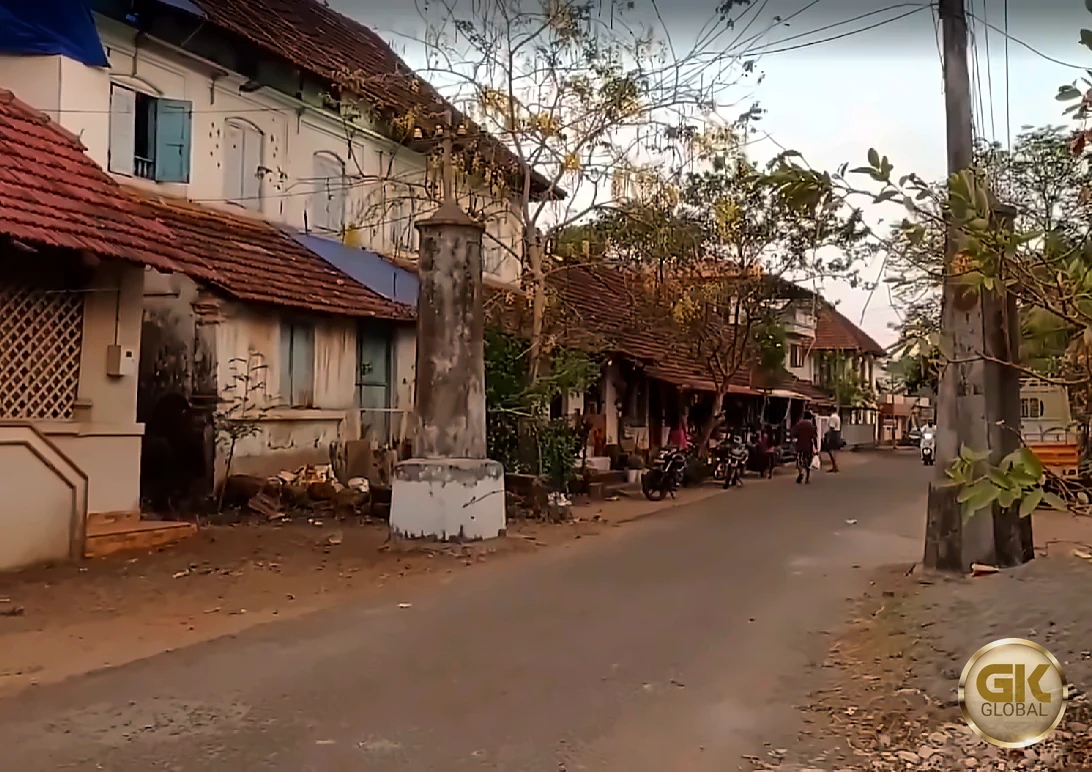
The synagogue stands at the end of Jew Street, close to the old market where Jewish traders once did business. At the entrance to the street stand stone pillars which, according to local tradition and visitors' accounts, once marked the Jewish quarter and were used to block carts and traffic on the Sabbath, so that the street stayed quiet for prayer. Several houses along the street still have the look of the old Jewish homes.
History
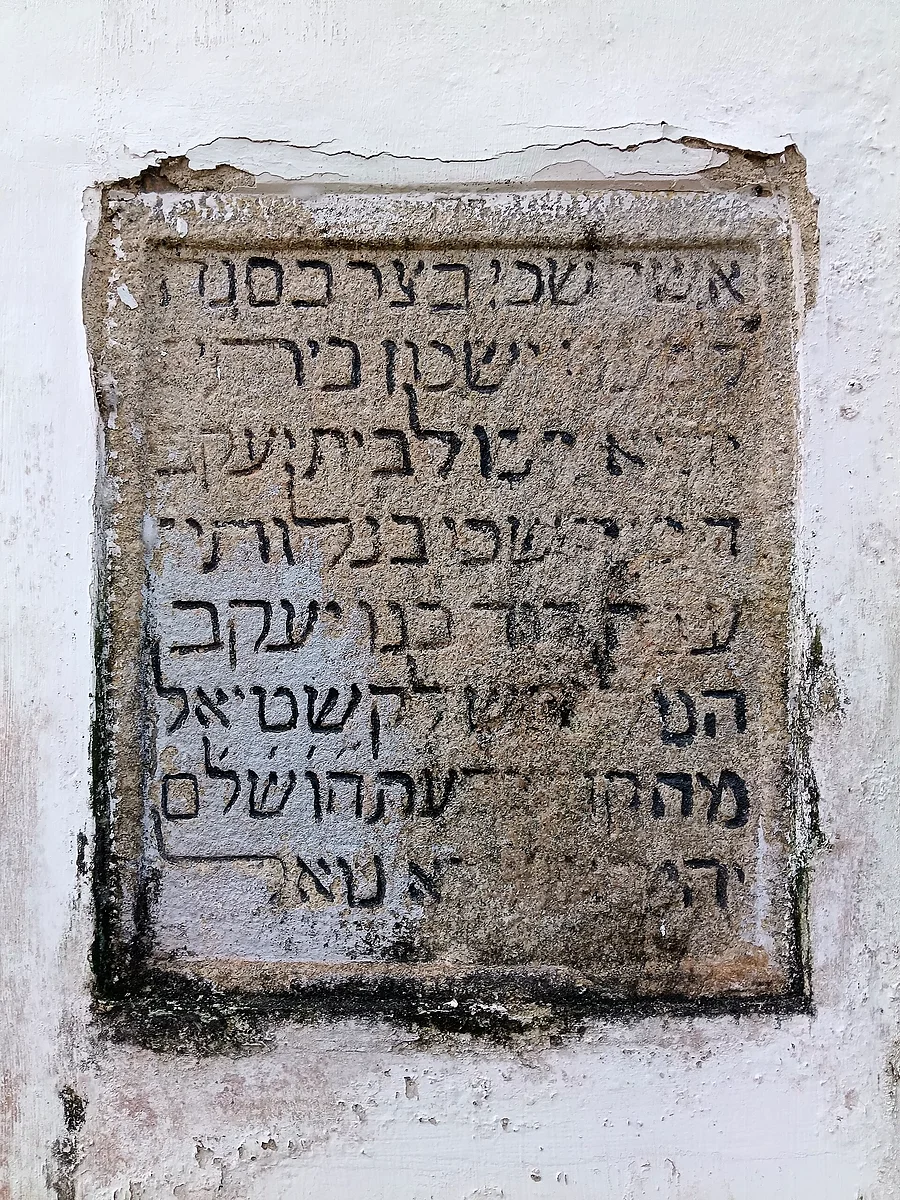
Tradition holds that a synagogue stood here long before the present one, perhaps from as early as the 12th century; after the great Periyar flood of 1341 silted up the old port of Kodungallur, Jewish families moved to nearby towns including Paravur. The present complex dates from 1616. A stone slab with a Hebrew inscription, set in the inner wall of the compound and dated to that year, commemorates David Yaakov Castiel, the community's leader (mudaliar), who helped rebuild the synagogue. A Jewish Malayalam song remembers that the synagogue was burned in 1662, probably during the Portuguese wars, and then repaired.
After 1948 the community emigrated to Israel, most of them by the mid-1950s. A few remained, but by the 1970s a minyan could no longer be gathered, and the last service was held in 1988. The original tevah and ark were taken to Israel in the 1990s. The building was declared a protected monument in 1996, handed to the Kerala Department of Archaeology in 2009, and restored under the Muziris Heritage Project from about 2010. It opened to the public in 2014 as the Kerala Jews History Museum.
The buildings
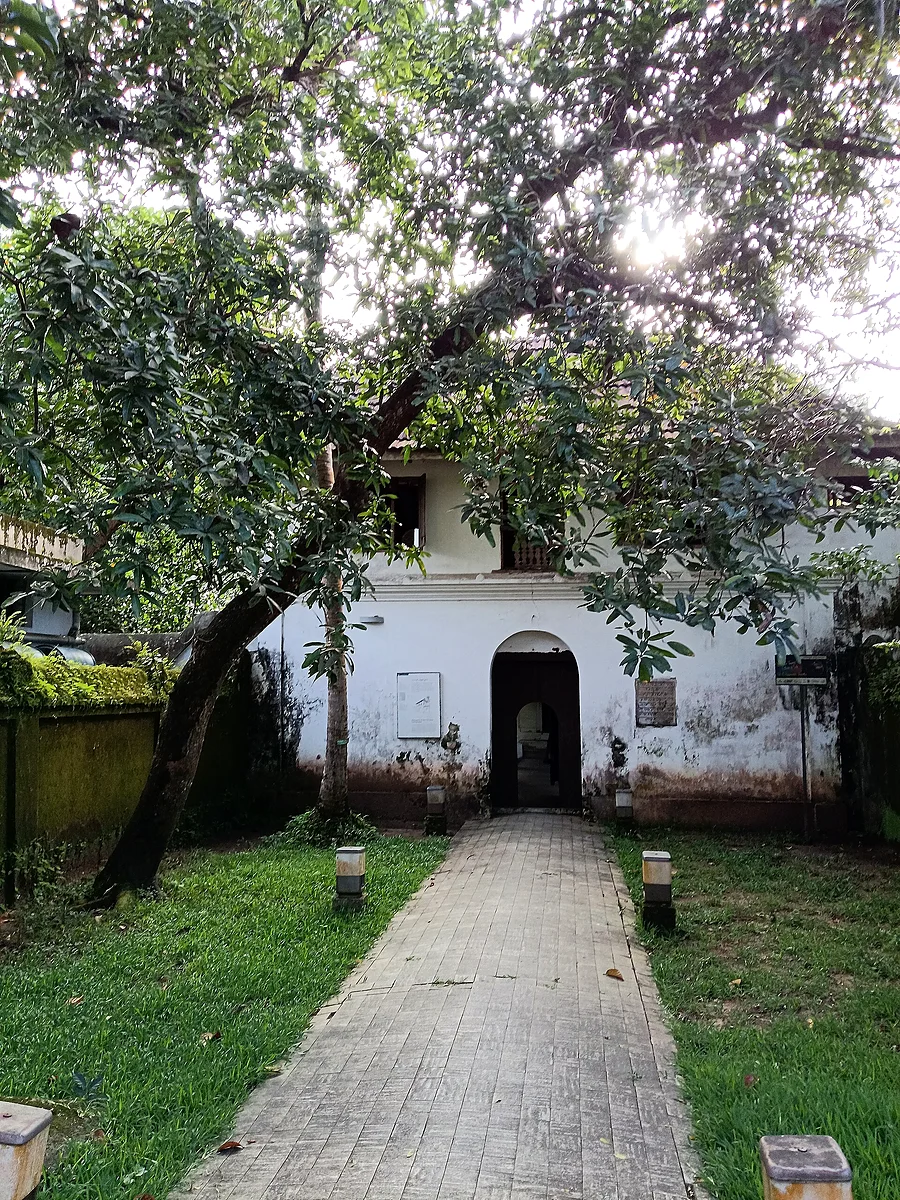
- The gatehouse (padippura): a two-storey whitewashed building with a tiled roof and an arched entrance, facing the street like the gateway of a traditional Kerala house.
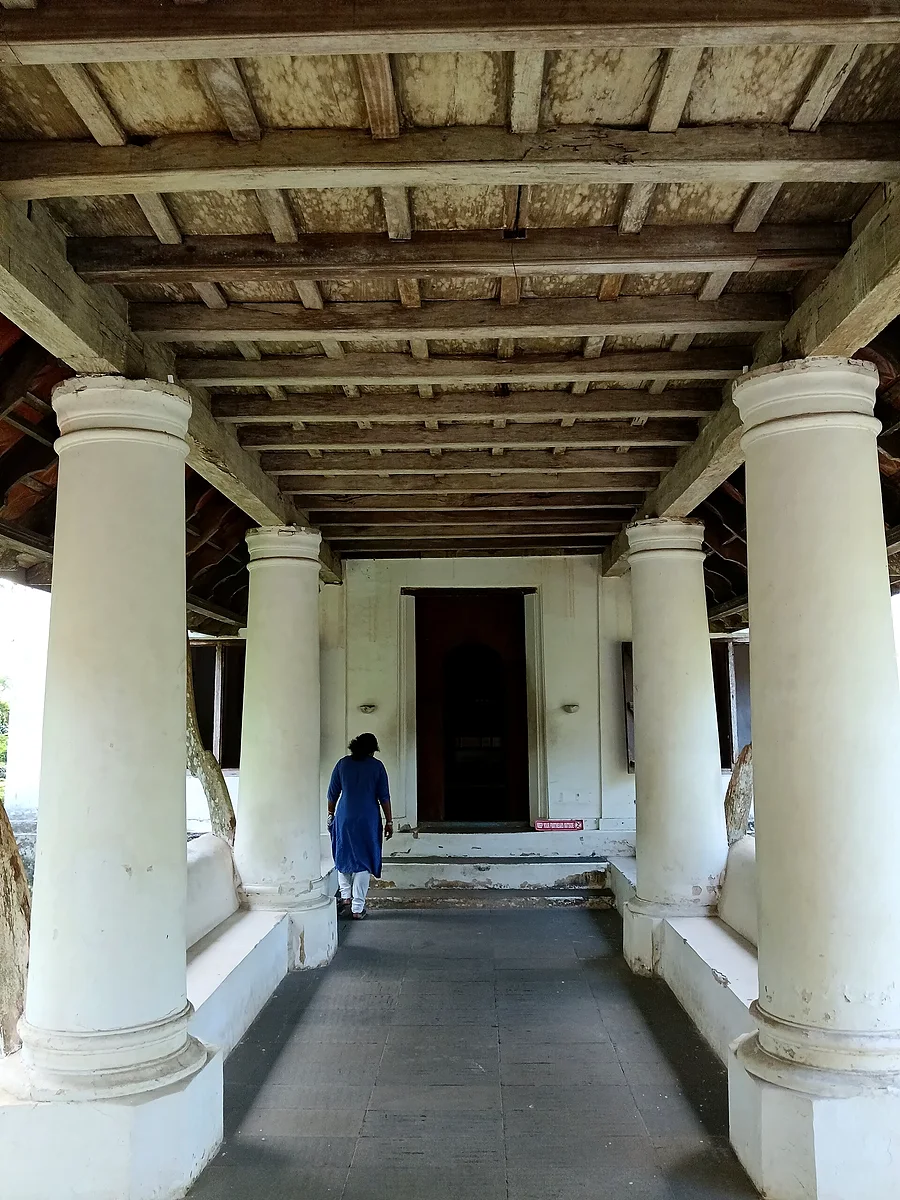
- The colonnade: a long covered walkway on round white pillars, leading from the gatehouse to the prayer hall, a feature found in no other Kerala synagogue.
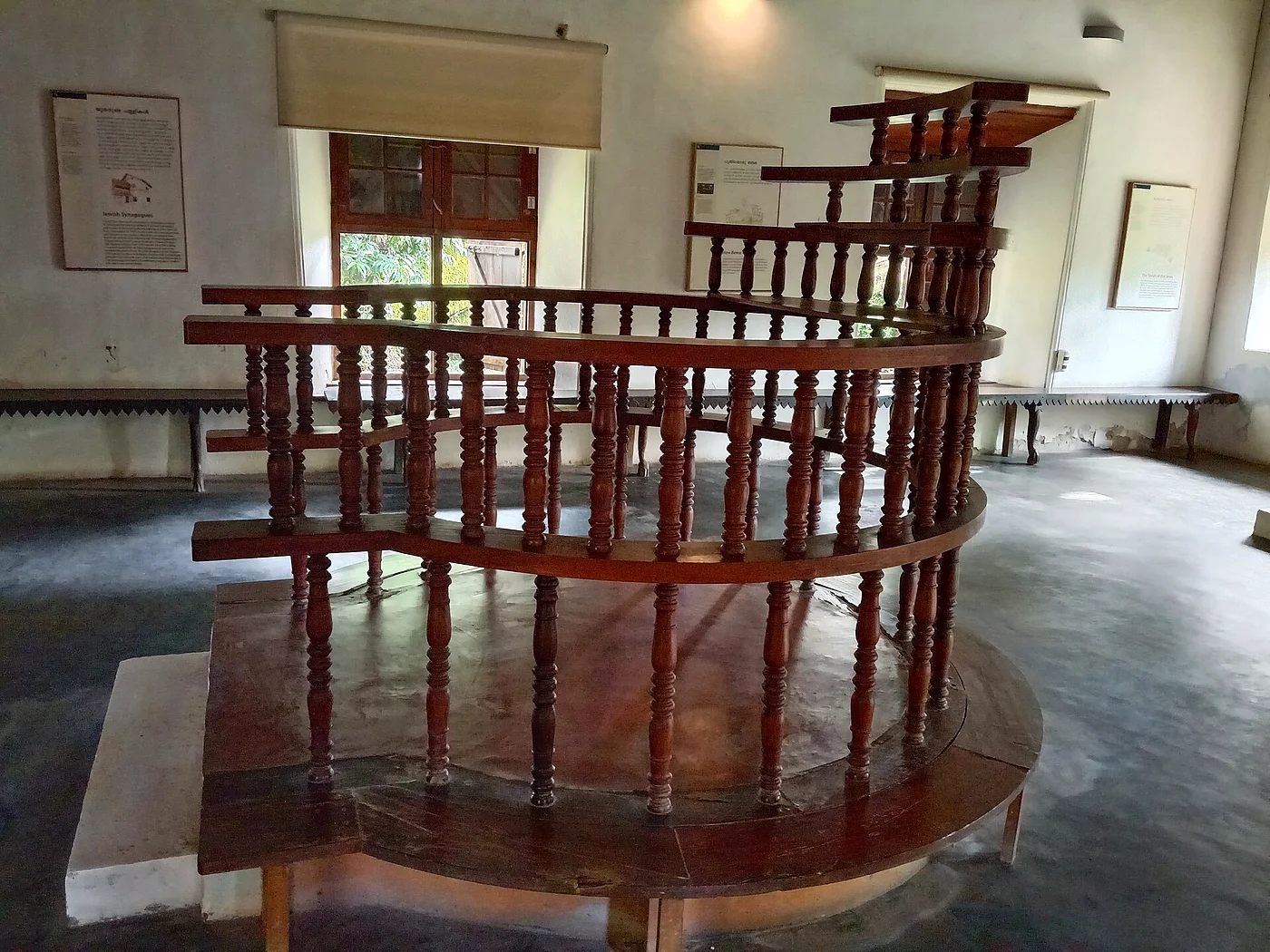
- The prayer hall, built of laterite and whitewashed, with huge wooden doors, a carved wooden ceiling, the central tevah, and a women's gallery reached by a wooden staircase, with the upper tevah projecting from it. A fan-shaped motif on the front wall is thought to reflect Portuguese influence.
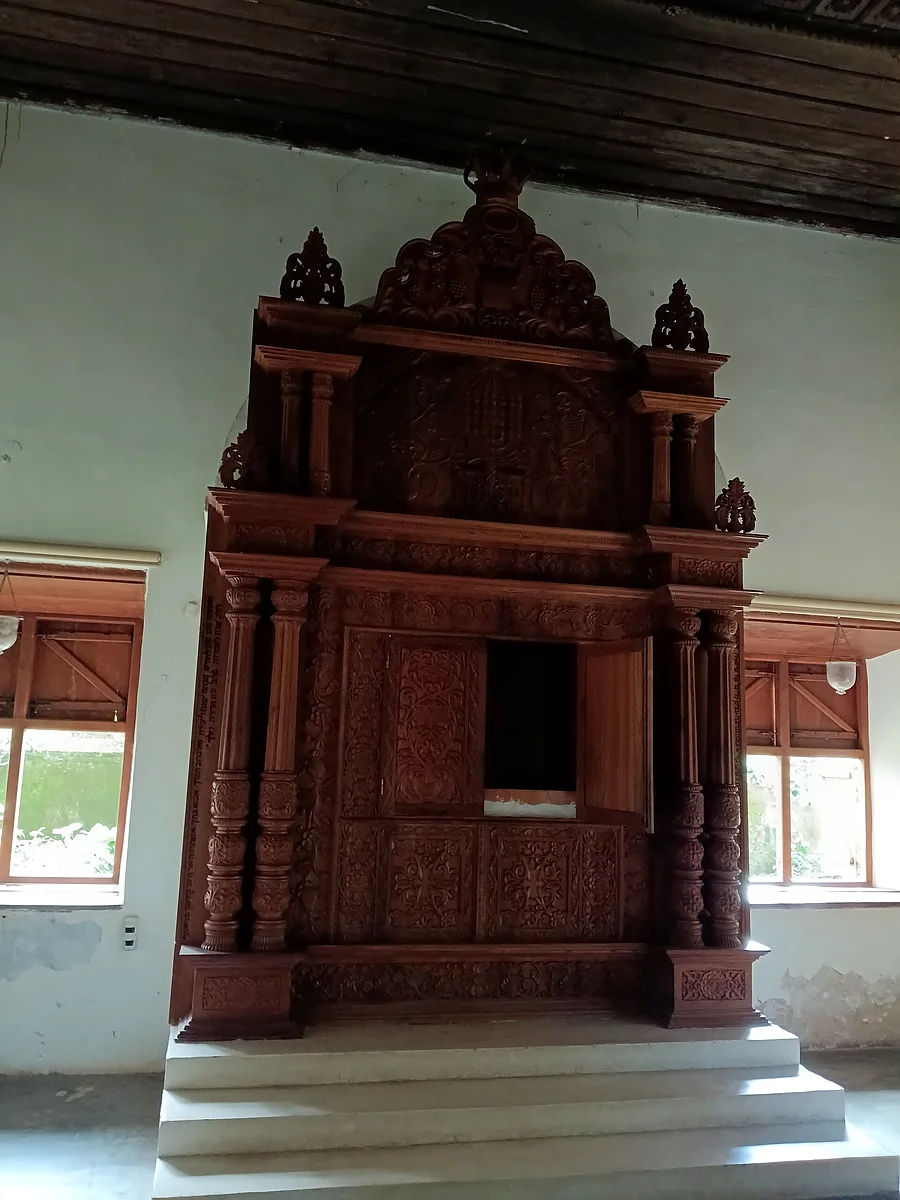
- The ark: the original went to Israel; a careful replica has been made for the museum.
The museum
The Kerala Jews History Museum tells the story of the Jews of Kerala: their arrival and settlement, the copper plates of Joseph Rabban (shown in reproduction), worship and festivals, occupations, social divisions, decline and emigration. Display panels, short films and trained guides explain the buildings and how they were used. The Paravur Jewish cemetery lies a short distance away, next to Lakshmi College.
Visiting
- Where: Jew Street, North Paravur, Ernakulam district, about 100 m off the Paravur–Kodungallur road.
- Open: usually 10 am to 5 pm, closed on Mondays; part of the Muziris Heritage Project ticket. Check current timings locally.
- Nearby: the Chendamangalam synagogue (about 5 km), the Paliam palace and nalukettu, and the Keezhthali temple at Kodungallur.
See it for yourself, with a local driver who knows these roads.
Book a Munnar Jeep SafariSources & further reading
- Wikipedia: Paravur Synagogue
- Kerala Tourism (Muziris): The Paravur Synagogue, Kerala Jews History Museum
- Hadassah Magazine (2017)
- Jewish Monuments of Kerala (Dr. Laju Paul K.)
Figures are from the sources listed and were checked in October 2026. Park timings and road conditions change, so please confirm before you travel.