
The Paradesi Synagogue, Mattancherry: Kerala's Last Living Synagogue
Built in 1568 beside the Raja of Cochin's palace, with a floor of hand-painted Chinese tiles, Belgian chandeliers and a clock tower that tells the time in Hebrew, Roman and Malayalam numerals. The story of the synagogue of the 'foreign' Jews of Cochin, and of the community that is now almost gone.
Kerala's Jewish heritage: The synagogues of Kerala · Paradesi · Kadavumbhagam & Thekkumbhagam · Paravur · Chendamangalam · Mala · The Jew ponds · The Jews of Kerala
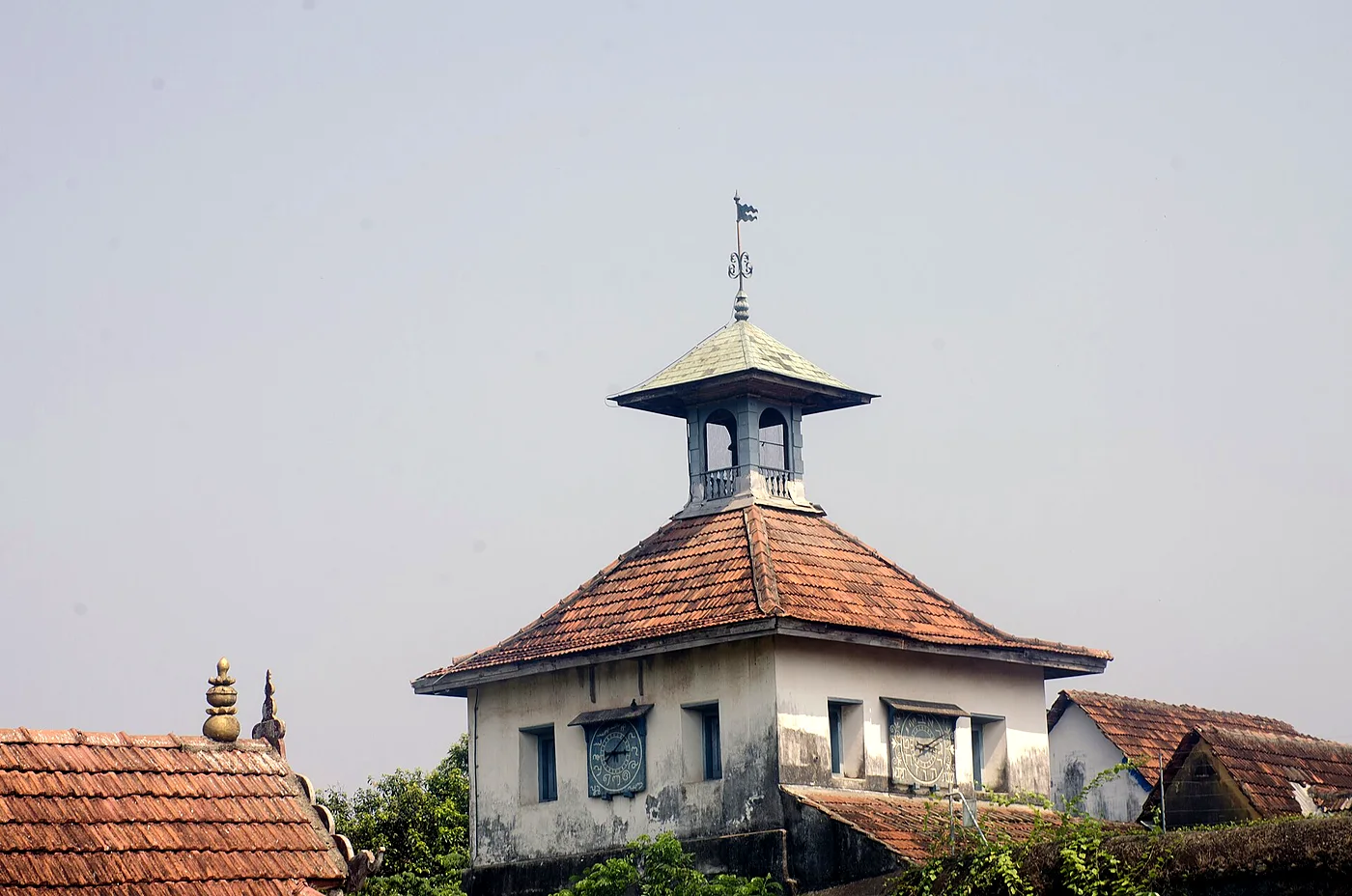
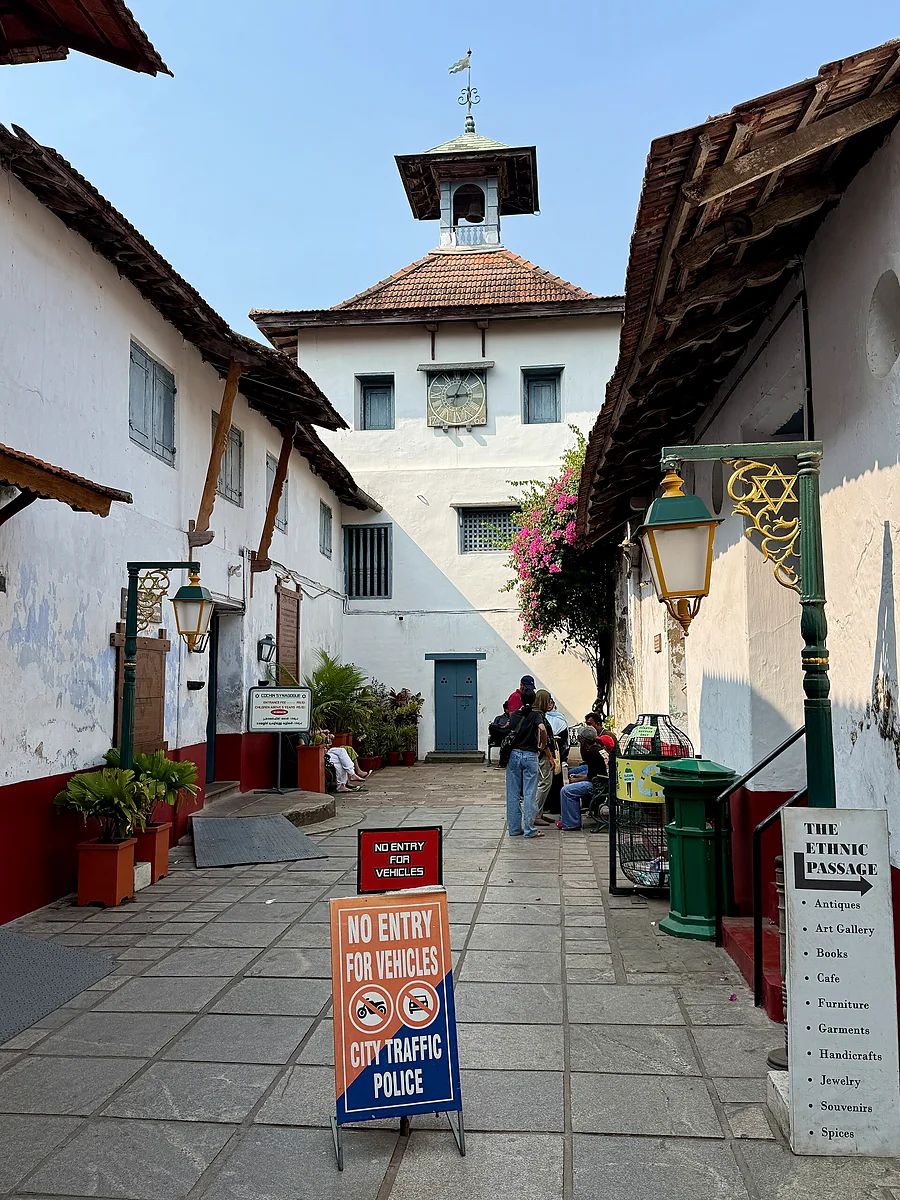
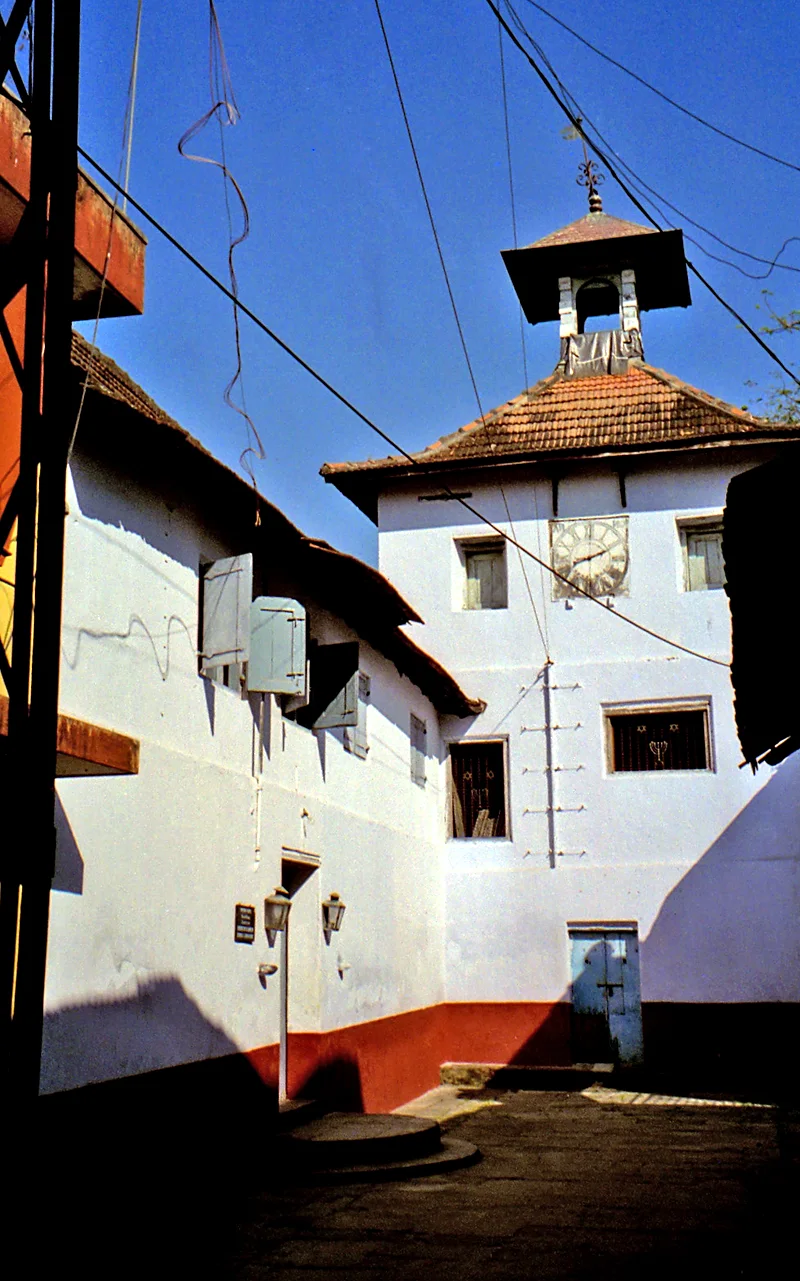
At the end of Jew Town Road in Mattancherry, Kochi, past antique shops and spice warehouses, the lane turns towards a white clock tower. Behind it stands the Paradesi synagogue, built in 1568 and the only one of Kerala's eight synagogues still used for regular worship. It is often described as the oldest active synagogue in the Commonwealth.
The "foreign" Jews
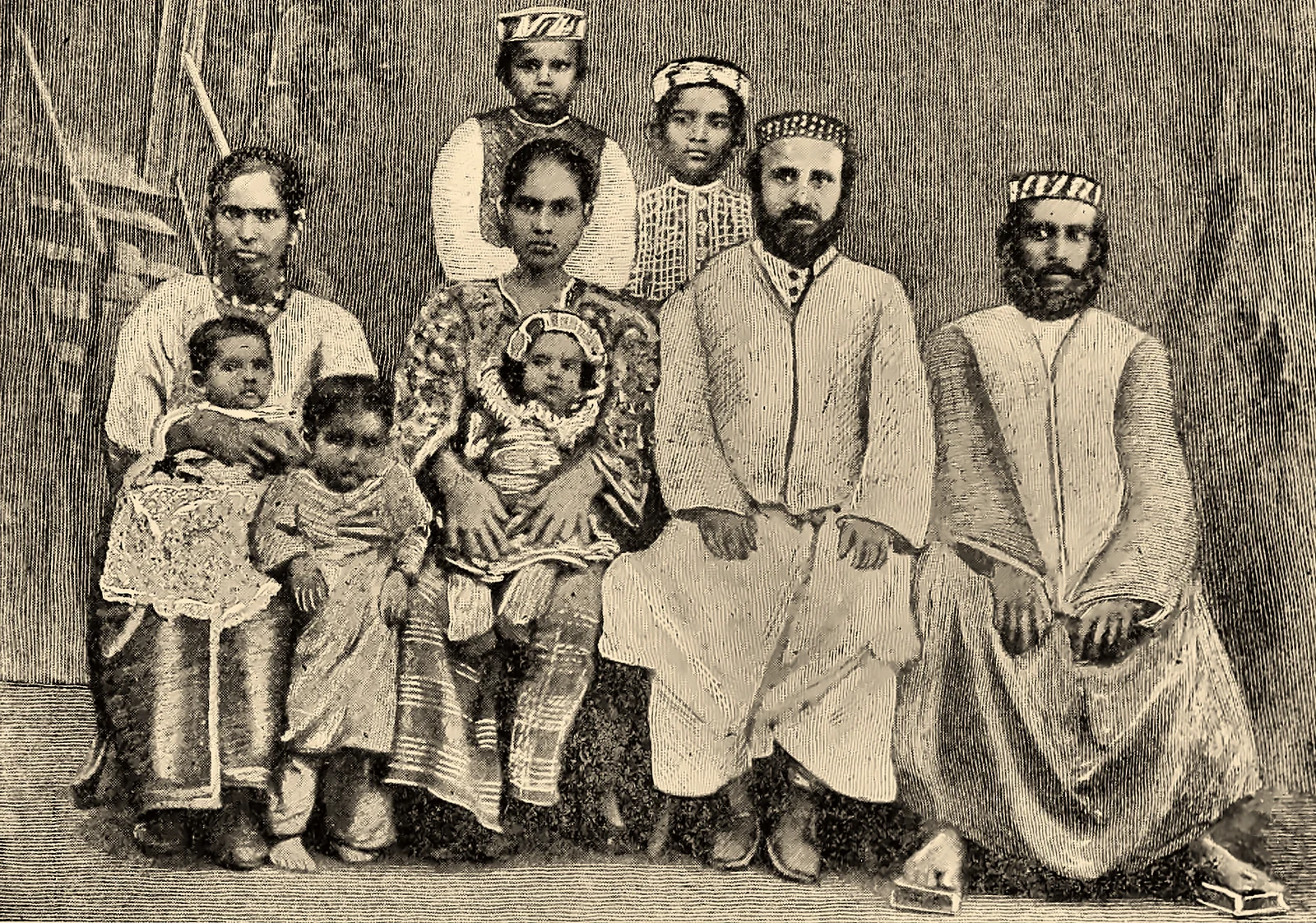
Paradesi means "foreigner" in Malayalam. The Paradesi Jews were newcomers: Sephardic Jews who had fled Spain and Portugal after the expulsions of the 1490s, and Jews from Iraq, Syria, Yemen, Germany and the Netherlands, who settled in Cochin from the 16th century onwards. They were mostly merchants, often agents for the European trading companies, and some, like the Rahabi family, became very influential. They kept apart from the older Malabari Jews, worshipped separately, and married within their own community. (Read The Jews of Kerala for the whole story.)
A synagogue beside the palace
In 1567 the Raja of Cochin gave the Jews land next to his own palace at Mattancherry, and the synagogue was built the following year by Samuel Castiel, David Belila and Joseph Levi. The site, right beside the royal palace and the palace temple, was a sign of the protection the rajas gave the Jews at a time when the Portuguese were persecuting them. The street around it became Jew Town.
The synagogue was badly damaged in 1662, when the Portuguese attacked Cochin, and is said to have been rebuilt in 1664 under the Dutch, who were more tolerant. In the 1760s, the merchant Ezekiel Rahabi, the most prominent Jew of Cochin in his time, is credited with major additions.
What to see
- The tiles. The floor is paved with some 1,100 hand-painted blue-and-white porcelain tiles from Canton (Guangzhou), China, laid in the mid-18th century. It is often said that no two are exactly alike. Tradition credits Ezekiel Rahabi with bringing them.
- The clock tower, added in 1761, with three faces showing the hours in Hebrew, Roman and Malayalam numerals, a neat symbol of Cochin's mixed society.
- Chandeliers and lamps of Belgian glass hanging from the ceiling.
- The tevah, with its brass railings, in the centre of the hall, and the gilded ark on the western wall holding Torah scrolls in silver and gold cases, some with gold crowns given by benefactors.
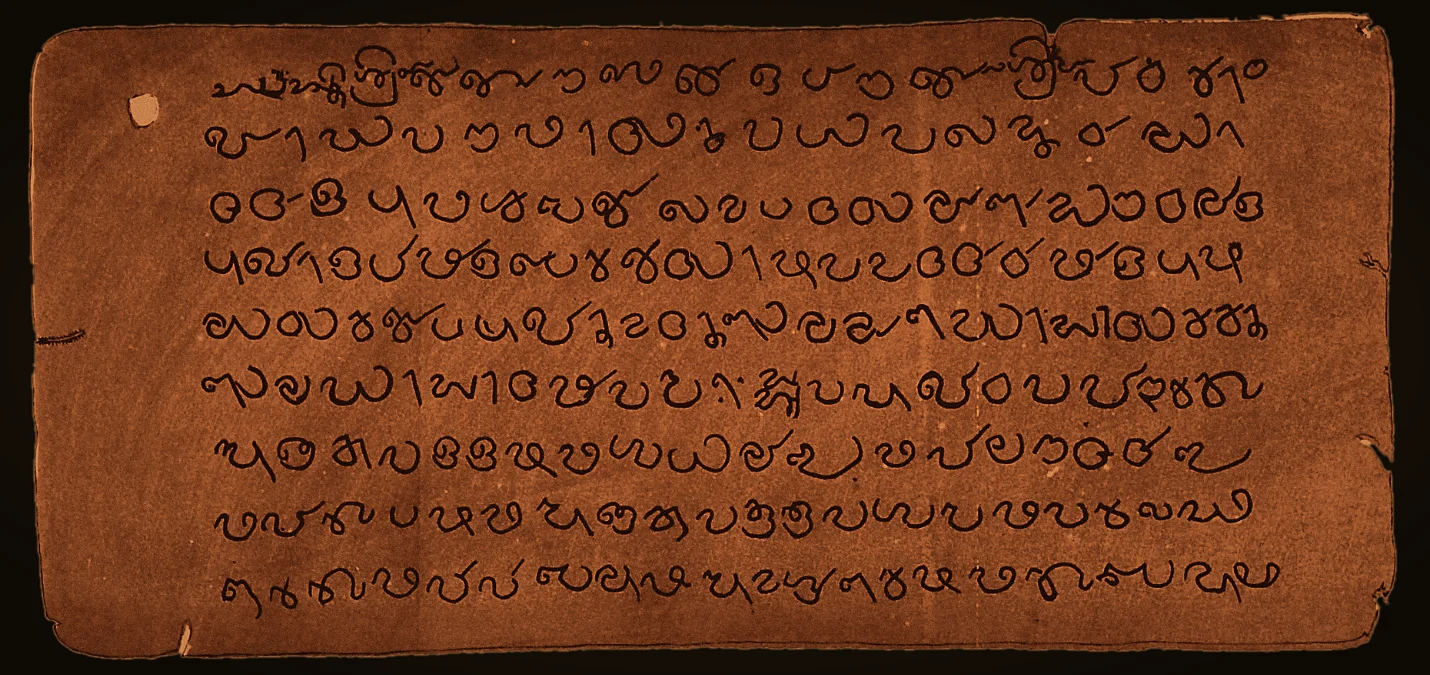
- The copper plates: the synagogue keeps the famous copper plates of about 1000 CE in which the Chera king Bhaskara Ravi Varman granted privileges to the Jewish leader Joseph Rabban. They are not usually on display.
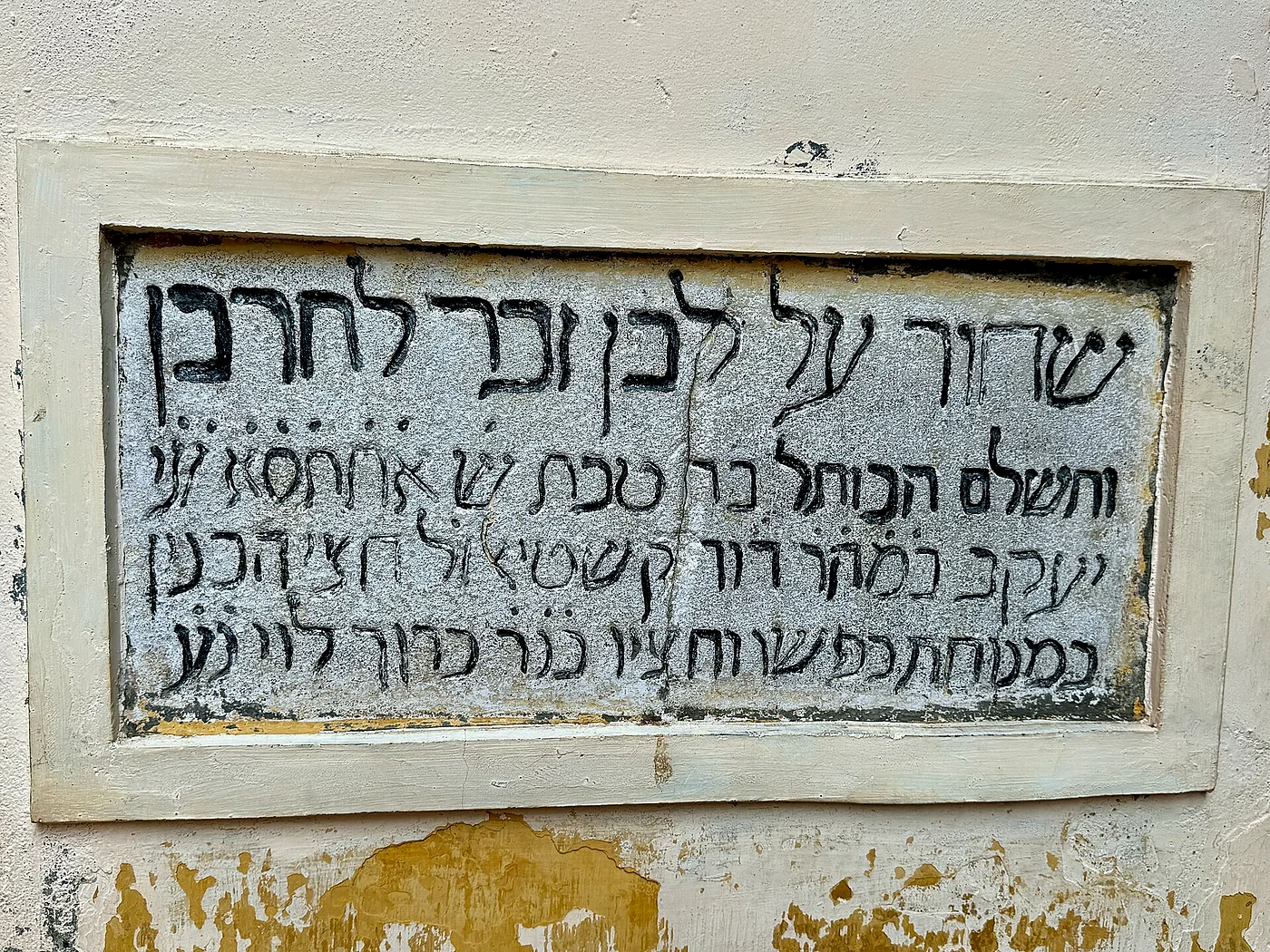
- The Kochangadi stone: a Hebrew inscription from the Kochangadi synagogue of 1344, the oldest synagogue in Kochi known from records, is set in the wall of the compound.
The 400th anniversary
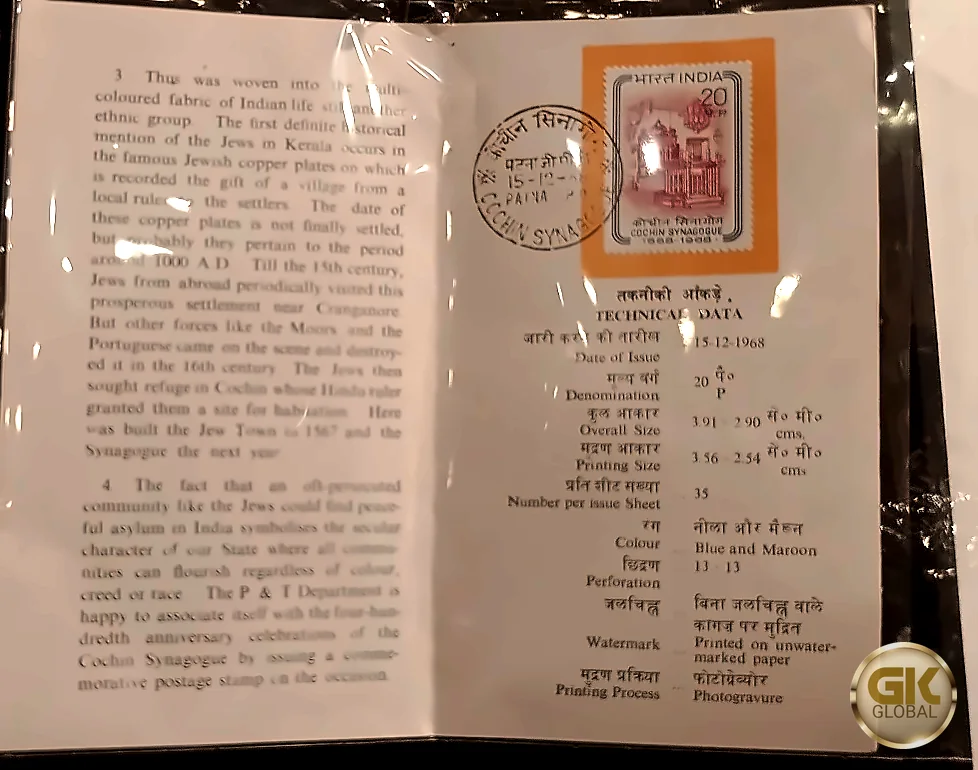
In December 1968 the synagogue celebrated its 400th anniversary in the presence of Prime Minister Indira Gandhi, and India Post issued a commemorative stamp of 20 paise on 15 December 1968.
The last Jews of Jew Town
After 1948 most of Cochin's Jews emigrated to Israel. The Paradesi community dwindled to a handful of elderly people, and today a minyan (the quorum of ten men needed for public prayer) is possible only when Jewish visitors are present. The best-known of the last Paradesi Jews was Sarah Cohen, whose embroidery shop beside the synagogue welcomed visitors for decades until her death in 2019. (Read Sarah Cohen of Jew Town.)
Visiting
- Where: Synagogue Lane, Jew Town, Mattancherry, Kochi.
- Open: usually 10 am to 1 pm and 3 to 5 pm; closed Fridays, Saturdays and Jewish holidays. Please check before you go.
- Dress: shoulders and knees covered; shoes are removed at the door. Photography inside is not allowed.
- Nearby: the Mattancherry Palace (Dutch Palace), the spice market and the Jewish cemetery.
See it for yourself, with a local driver who knows these roads.
Book a Munnar Jeep SafariSources & further reading
- Wikipedia: Paradesi Synagogue
- Hadassah Magazine: Kochi, an ancient Jewish treasure (2017)
- iStampGallery: Cochin Synagogue quatercentenary stamp, 1968
- Kerala Tourism, Judaism in Kerala: the synagogue as a heritage monument
Figures are from the sources listed and were checked in October 2026. Park timings and road conditions change, so please confirm before you travel.