
Keezhthali: The Broken Thali Temple of the Chera Capital
In Kodungallur, the old Chera capital of Mahodayapuram, one tall laterite sanctum stands among the ruined plinths and headless images of a once-great Shiva temple. The Keezhthali temple was one of the 'thalis' where Brahmin councils once checked royal power. Its history, its ruins, and the damage that left it this way.
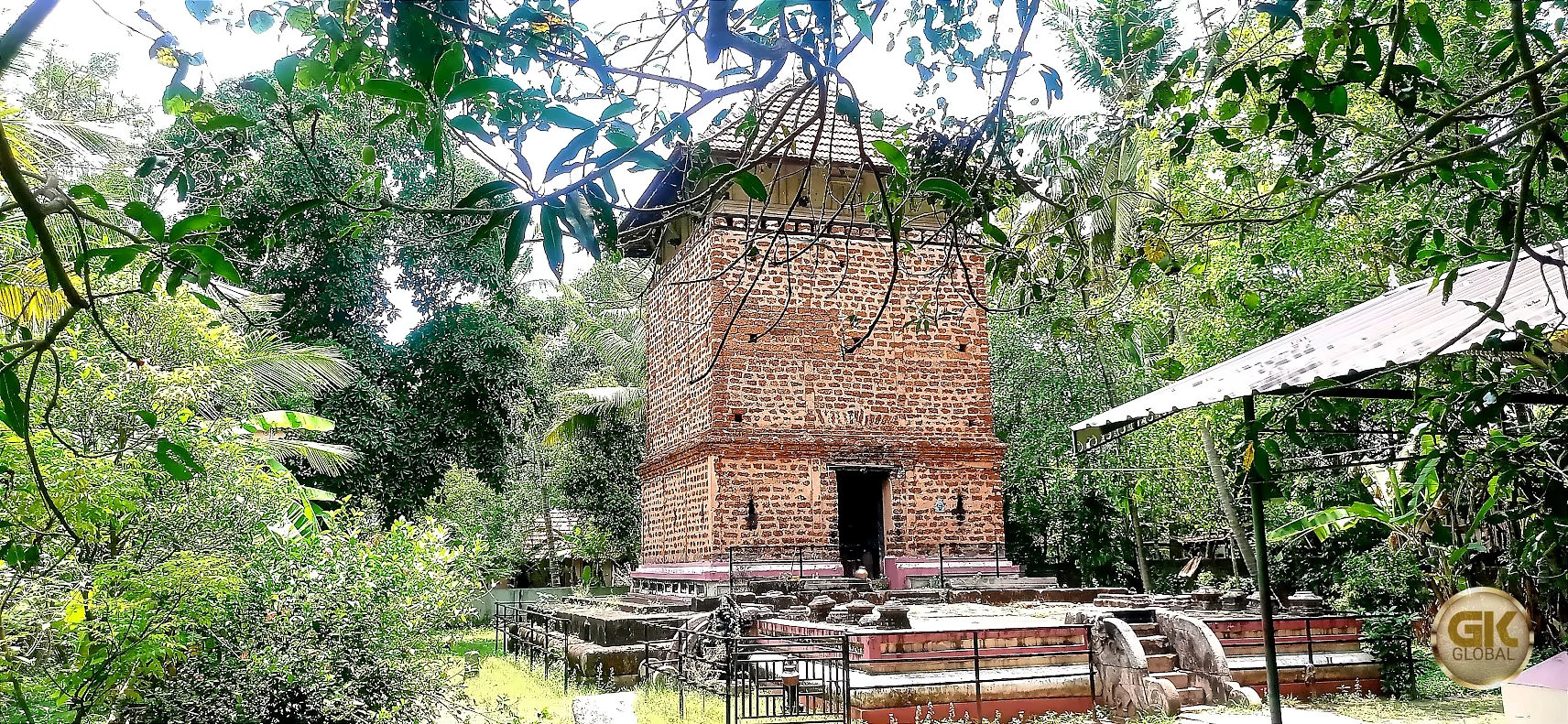
On the road from Kodungallur to North Paravur, just off the busy town, a path leads through a small grove to something unexpected: a tall, square tower of rough red laterite, capped with a tiled pyramidal roof, standing alone among the low stone platforms of buildings that are no longer there. Around its base lie stone images with their heads and arms broken off. Oil lamps still burn along the railings, and the priest still performs the daily worship. This is the Keezhthali (also written Kizhthali, Keezhtali or Kilttali) Siva temple, one of the oldest and most important temples of a city that was once the capital of Kerala.
At a glance
- Where: Methala, Kodungallur, Thrissur district, on the Kodungallur–Paravur road.
- Deity: Shiva, as a very large linga; tradition identifies the form as Kiratamurti, Shiva as the hunter.
- What survives: the square laterite sanctum (sreekovil) only, with the plinths and column bases of lost buildings around it.
- Status: a protected monument of the Kerala State Department of Archaeology; worship is conducted by a temple trust. It is part of the Muziris Heritage Project.
- Damage: attributed by tradition to the Portuguese and Dutch periods, and most severely to the Mysore army of Tipu Sultan in 1789–90.
A temple of the old capital
From roughly the ninth to the early twelfth century, much of what is now Kerala was ruled by the Chera Perumals (also called the Kulasekharas), whose capital was Mahodayapuram, the city we now call Kodungallur. This is the dating established by the historian M. G. S. Narayanan from the inscriptions of the period, usually given as about 800 to 1124 CE. Mahodayapuram grew up around the great Shiva temple of Thiruvanchikulam, the royal temple, and near the ancient port that many scholars identify with Muziris, the pepper port of the Roman trade. (Read about Muziris and the pepper trade in Black Pepper, King of Spices.)
Two Chera rulers are revered as saints: Cheraman Perumal Nayanar, one of the sixty-three Shaiva saints of the Tamil tradition, and Kulasekhara Alvar, one of the twelve Vaishnava Alvars. Shaivism enjoyed royal patronage, and the capital was ringed with Shiva temples.
What is a "thali"?
In the Malayalam of the Chera period, a thali (തളി) meant both a temple and the assembly of Brahmins attached to it. The capital had four principal thalis, remembered as the Nalu Thali ("four thalis"):
- Melthali ("upper thali"),
- Keezhthali ("lower thali"),
- Nediyathali ("tall thali"), and
- Chingapurathu Thali.
According to Narayanan's reading of the inscriptions, the leaders of these Brahmin councils, the thaliyathiris, sat with the king and his officers in the capital, and the councils acted as a check on royal power and on the temple administrators. The thali temples were therefore not only places of worship but seats of a kind of oligarchic government. This is why Keezhthali matters so much to historians: it is a surviving fragment of the political machinery of the Chera kingdom. Kerala Tourism's Muziris project counts Keezhthali among the surviving thali temples of the Kodungallur area, along with Melthali, Nediyathali, Chingapurathu Thali and Thrikkulasekharapuram.
Keezhthali is also counted among the 108 Shiva temples of the traditional Kerala list, whose consecration is credited, in the legend, to Parasurama. The Keralolpathi, a much later traditional chronicle, connects the temple with the Perumal kings; its dates and stories are legendary rather than historical.
The temple that once stood here
What survives is only the heart of the temple. Descriptions by the Kerala Department of Archaeology and the Muziris project, and the remains on the ground, suggest how much has gone:
- The sanctum is square, built of laterite on a moulded stone base (adhishthana), with a narrower front chamber (mukhamandapa). It rises in two storeys, the classic dvitala vimana form of Kerala temples, and today carries a plastered upper tier and a tiled pyramidal roof. Its tall, plain mass gives it the look of a cubic tower.
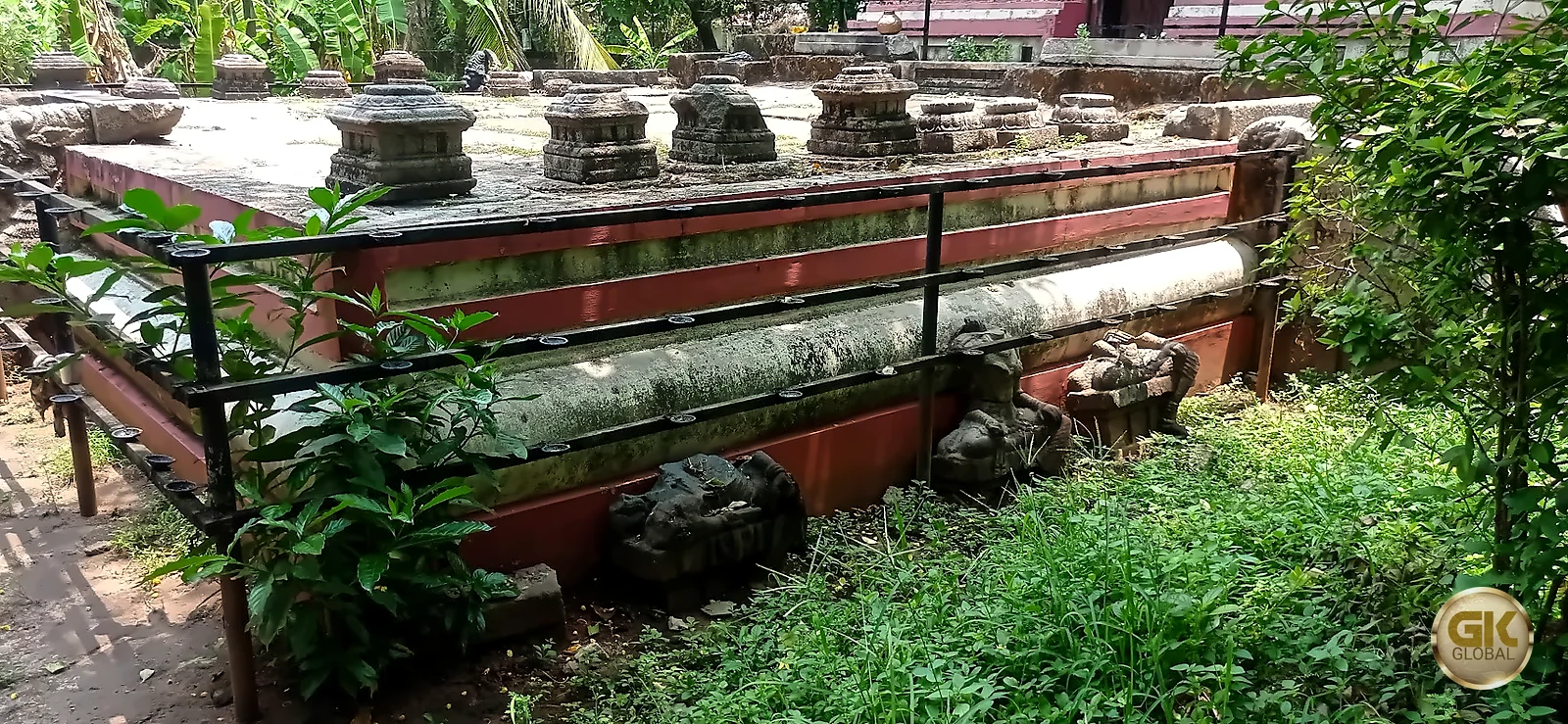
- Around it, the stone plinths and carved column bases of halls and enclosures still lie in rows, but the timber and tile structures they carried have vanished.
- The temple once had an outer wall with subsidiary shrines, and nearby grounds for performing arts and martial training: the koothu parambu (ground for Koothu, the temple theatre), the kalari parambu and the kalapura parambu. These names survive only in memory and in the local landscape.
- Unusually, there is said to be no namaskara mandapam (the pillared pavilion usually found in front of a Kerala sanctum).
The linga inside is very large; it is often described as the tallest in Kerala, so tall that the priest stands to perform the worship. We could not find a measured height, so treat the superlative with caution.
The broken images
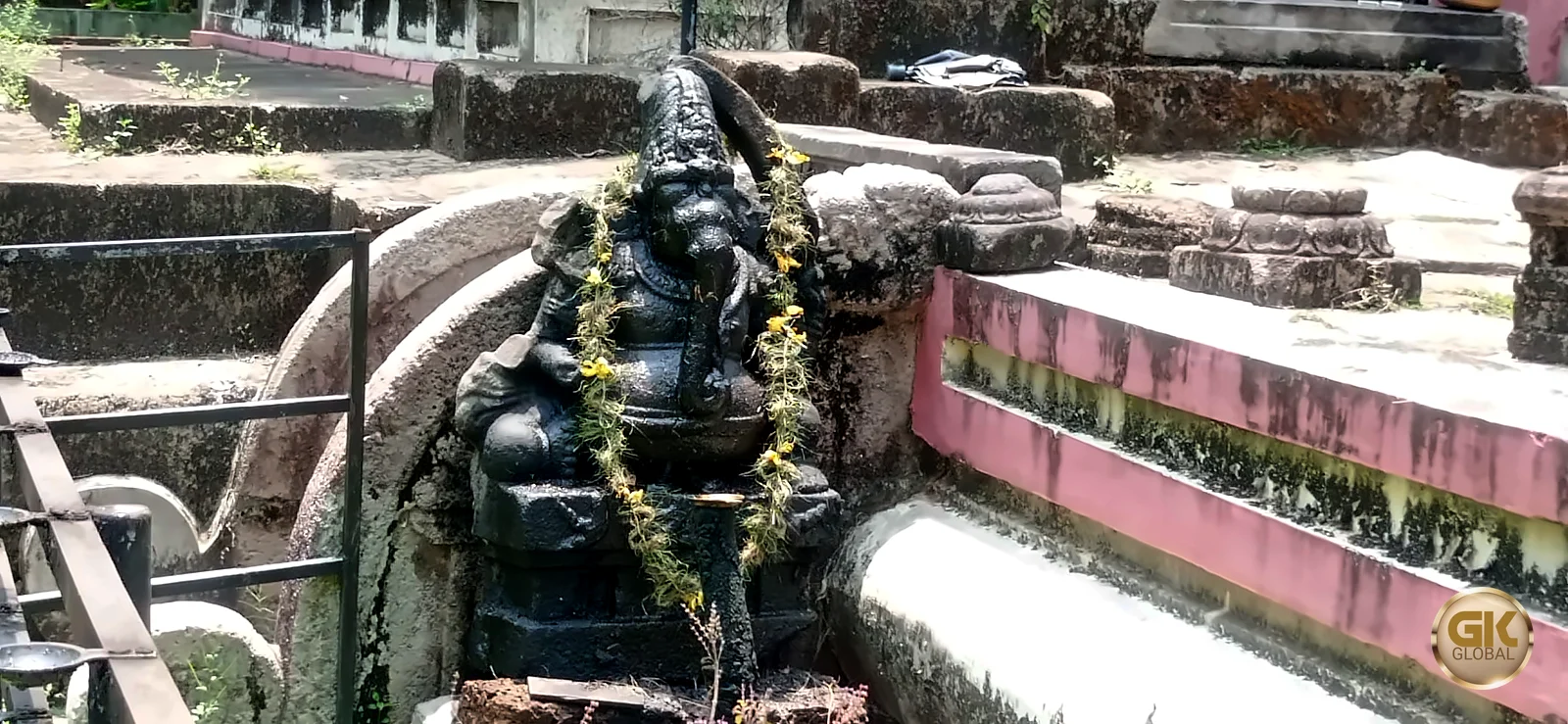
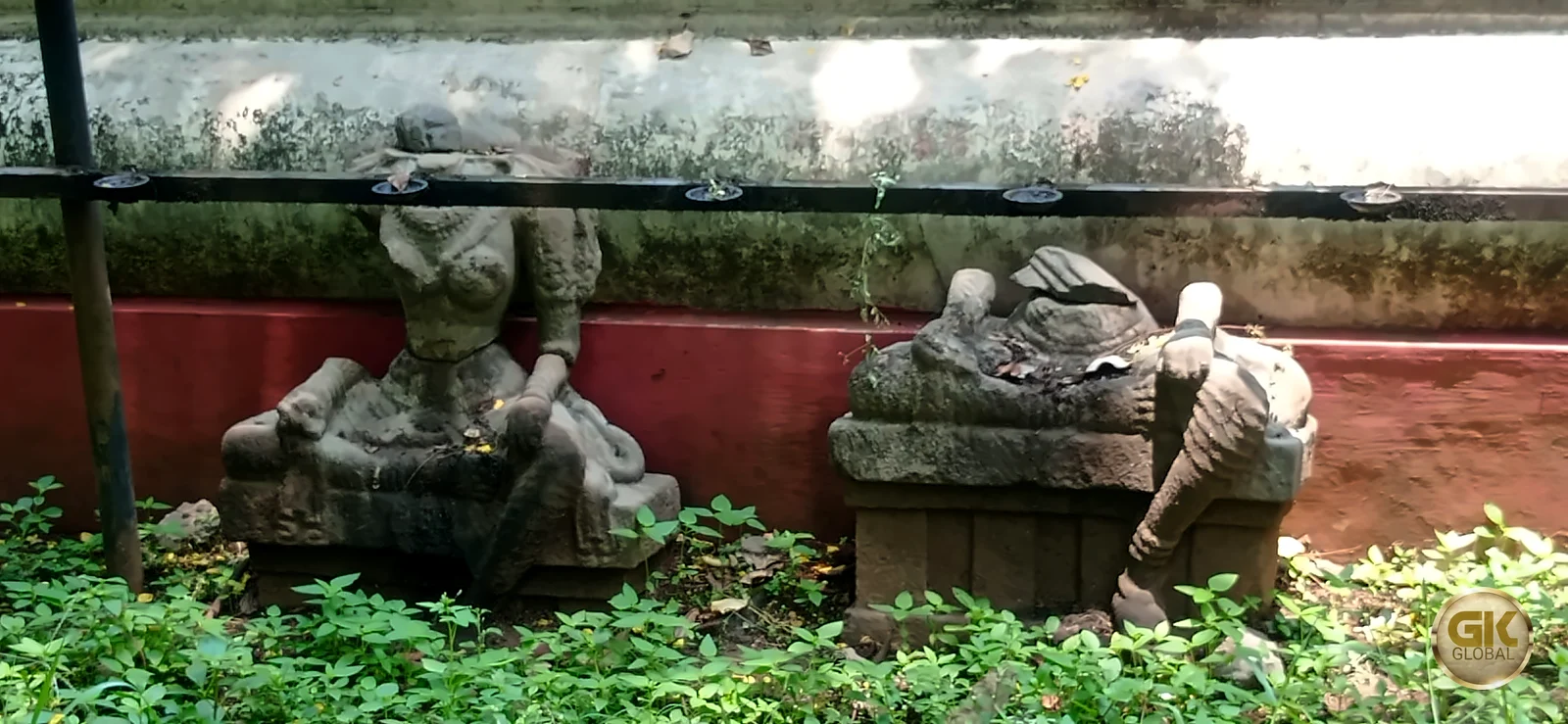
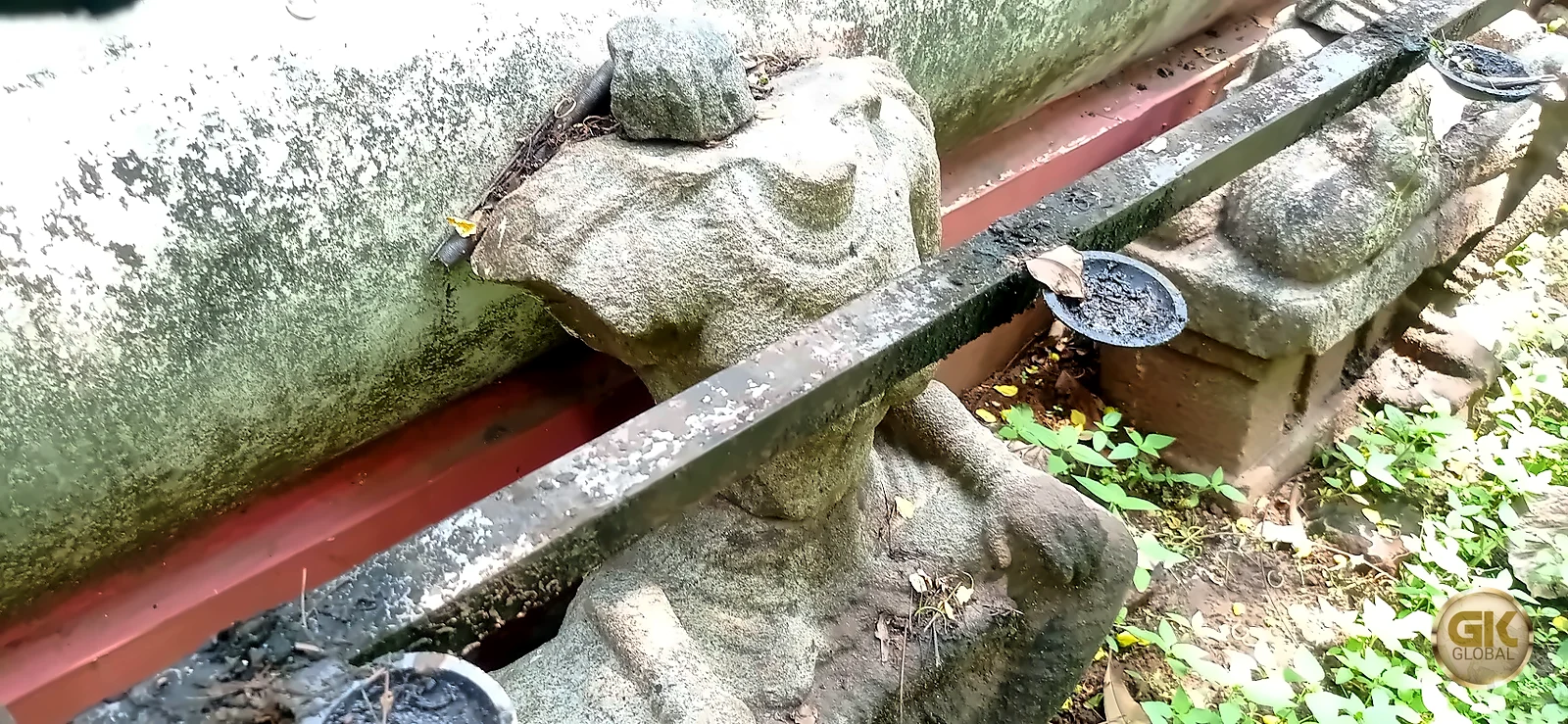
The most striking thing about Keezhthali today is the sculpture. Stone figures recovered from the ruins have been set around the platforms: a garlanded Ganapathi, seated deities on pedestals, fragments of guardian figures, almost all mutilated, with heads, faces and arms broken off. Other sculptures and pieces of the temple, including a set of images identified as the Saptamatrikas (the seven mother goddesses), are reported to have been taken to the archaeological museum at the Shakthan Thampuran Palace in Thrissur for safekeeping.
Who destroyed the temple?
Local tradition, the Kerala Department of Archaeology and the Muziris project describe the damage as happening in several waves:
- The Portuguese and the Dutch. From the sixteenth century, Kodungallur (Cranganore) was a battleground of the European powers. The Portuguese built a fort at Kottappuram in 1523; the Dutch took it in 1662. The fighting and the decline of the old town are said to have damaged the outer parts of the temple and driven away the families who served it.
- Tipu Sultan's campaign of 1789–90. In late 1789 Tipu Sultan, ruler of Mysore, marched south against the Nedumkotta, the line of fortifications Travancore had built across the Kochi kingdom. In the campaign of early 1790 his army broke through the lines and captured the fort of Cranganore and the country around Kodungallur, Paravur and Aluva, before the monsoon and the outbreak of war with the British forced him to withdraw. Temples in the area were attacked during this campaign. The nearby royal temple of Thiruvanchikulam was plundered of its copper roofing and treasures and was later rebuilt by the Paliath Achan. At Keezhthali, according to tradition and the archaeology department's account, the damage was the worst of all: the images were smashed and the temple left in ruins.
It is worth being careful with history here. The broken sculptures are undeniable, and the tradition that they were mutilated by Tipu's soldiers is strong and consistent in Kodungallur. At the same time, the Mysore campaigns in Kerala (Hyder Ali's from 1766 and Tipu's in the 1780s) are a subject of heated debate, and accounts of temple destruction range from carefully documented to exaggerated. Some historians stress forced conversions and destruction; others point out that Tipu also made grants to temples elsewhere and argue that much of the violence was military and political. For Keezhthali, we have found no contemporary record that describes the attack in detail, so the dating to Tipu rests mainly on tradition and later accounts. What is clear is that a temple that survived the Cheras, the Portuguese and the Dutch was left after the 1790 campaign as the ruin we see today.
Inscriptions
Kerala's history before 1500 rests to a great extent on inscriptions, on stone and on copper plates, written in the Vattezhuthu script and its relatives. Many Chera-period inscriptions refer to temple affairs and to Brahmin assemblies like the thalis. Reports say that inscribed stones (described as "edicts") from Keezhthali are kept at the archaeological museum in Thrissur. We have not found a published reading of them, and would welcome information from historians or epigraphists who know them.
Keezhthali today
The temple stands in a small compound, hemmed in by houses and other places of worship, far smaller than the old temple grounds. The sanctum is a protected monument, maintained by the Department of Archaeology, while a trust keeps up the daily worship, traditionally three pujas a day. Shivaratri, in the Malayalam month of Kumbham (February–March), is the main observance. The site is part of the Muziris Heritage Project, which links the historic monuments of Kodungallur and North Paravur: the Thiruvanchikulam temple, the Cheraman Juma Masjid, the Kottappuram fort ruins, the Paliam palace and nalukettu, the Paravur synagogue and others.
Around Keezhthali
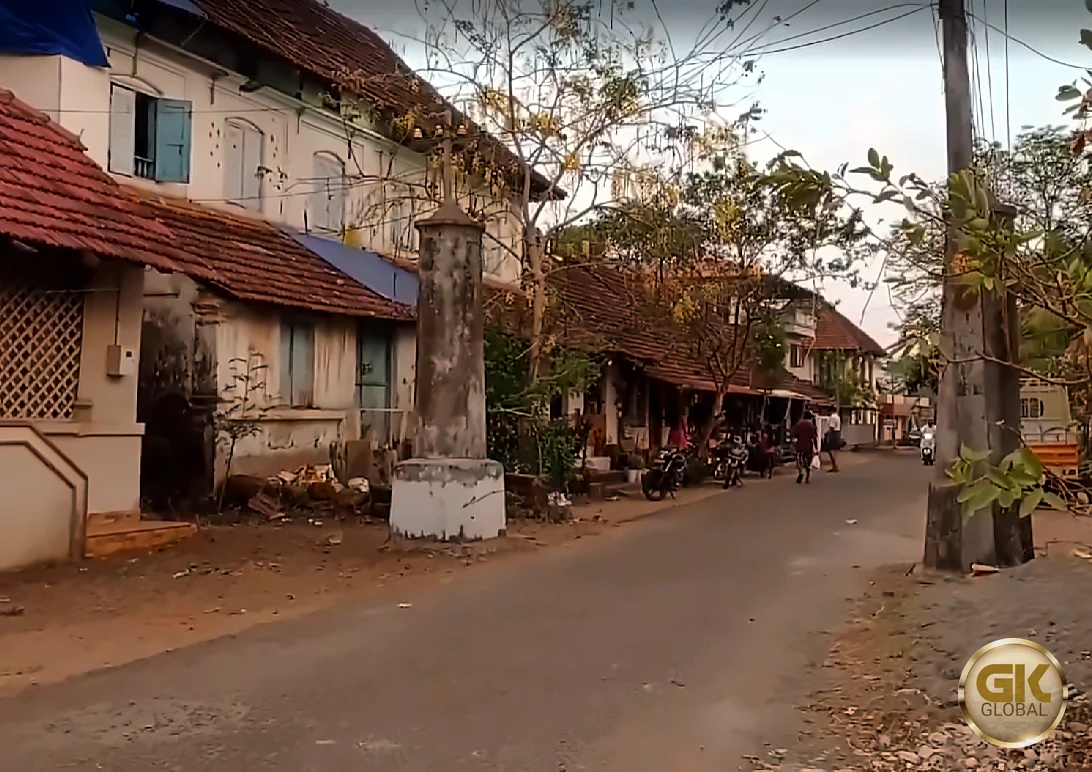
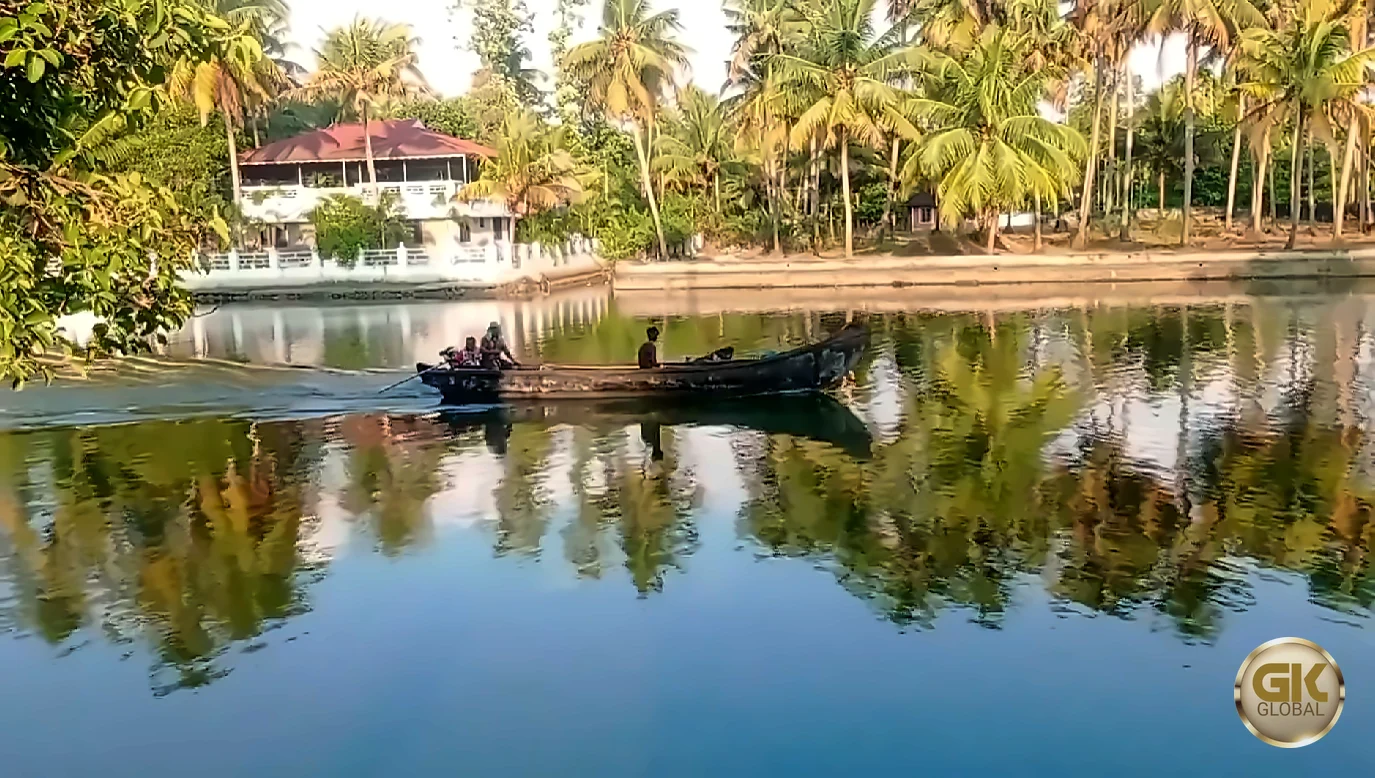
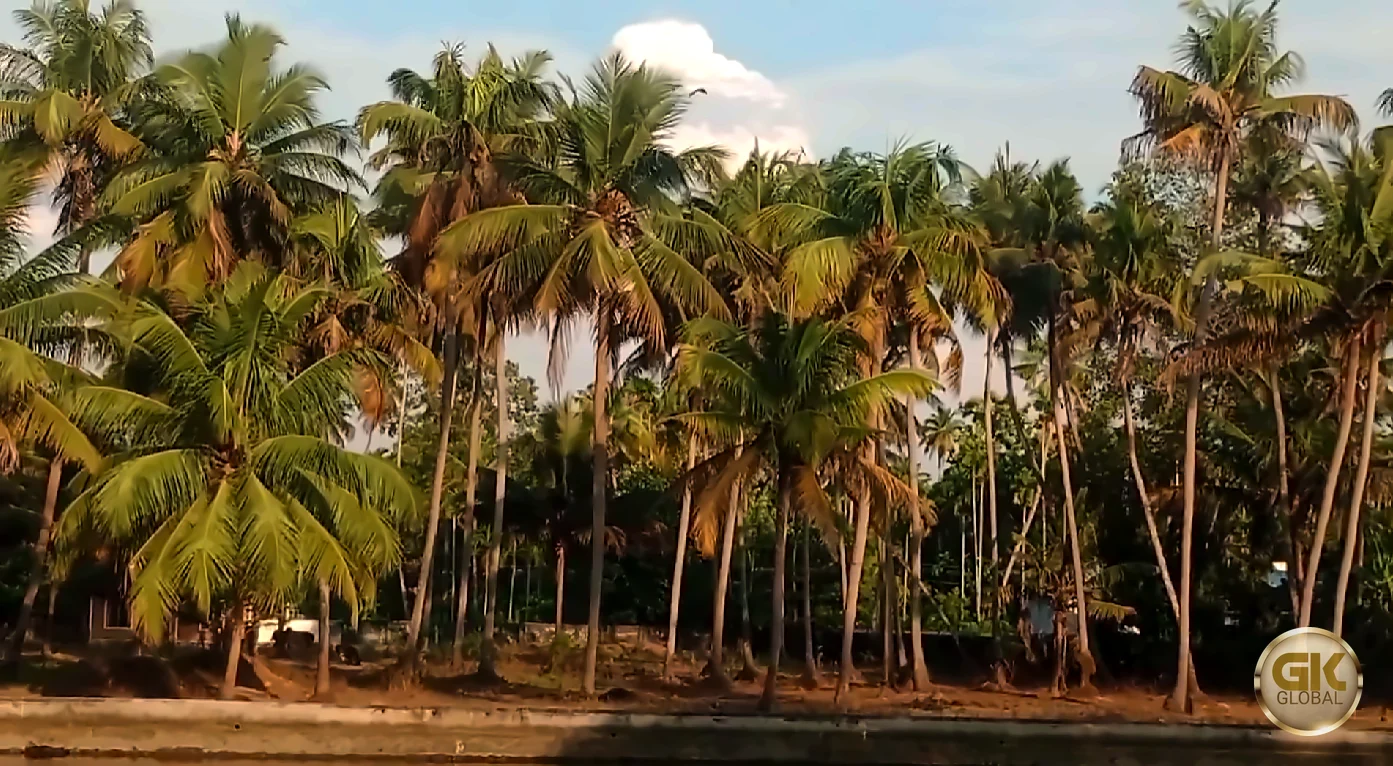
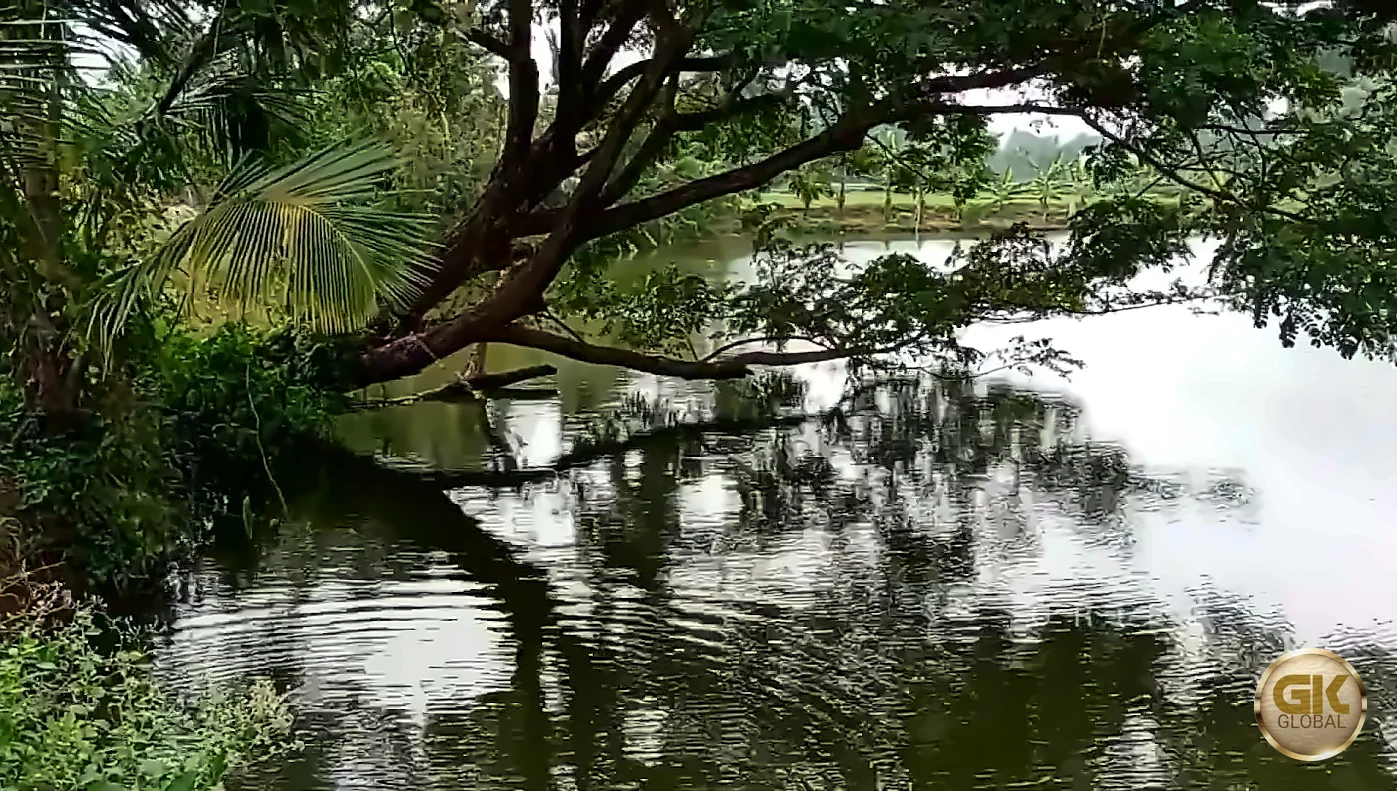
The old town around the temple still keeps something of the Chera and colonial past: narrow streets of tiled houses, and the quiet backwaters and canals of the Periyar delta, where the port of Muziris once stood.
Visiting respectfully
- This is a living temple as well as a monument. Follow the dress and entry customs, and ask before photographing the sanctum.
- Do not climb on the platforms or touch the sculptures; the stones are fragile.
- Combine the visit with Thiruvanchikulam, the Kodungallur Bhagavathy temple and the other Muziris sites nearby.
A note on sources
- The dates of the Chera Perumals and the role of the thalis follow M. G. S. Narayanan, Perumals of Kerala.
- The description of the lost buildings and of the damage follows the Kerala Department of Archaeology and the Muziris Heritage Project, and local tradition.
- The attribution of the destruction to Tipu Sultan's army in 1789–90 rests on tradition and later accounts; we have not found a contemporary eyewitness record for this temple.
- The identification of some sculptures, including the Saptamatrikas, and the claim that the linga is Kerala's tallest, are as reported; we have not been able to verify them independently.
Read also: The Jews of Kerala (Kodungallur's ancient Jewish community) · The Jain heritage of Kerala · Buddhism in Kerala · The Kuthirayala cave temple and Kodungallur Amma · Temples and churches of Munnar
See it for yourself, with a local driver who knows these roads.
Book a Munnar Jeep SafariSources & further reading
- Kerala Tourism, Muziris Heritage: Kizhthali Siva temple
- Kerala Tourism, Muziris Heritage: The Thalis
- Wikipedia: Keezhtali Mahadeva Temple
- Wikipedia: List of State Protected Monuments in Kerala (S-KL-50, Kizthali temple)
- Wikipedia: Thiruvanchikulam Temple
- Hearitage: The Keezhthali temple, a lost glory (2022)
- Dutch in Kerala: events of 1789–1790 (Cranganore fort, Tipu's campaign)
- Wikimedia Commons: Keezhthali Siva Temple, Kodungallur
Figures are from the sources listed and were checked in October 2026. Park timings and road conditions change, so please confirm before you travel.