
The Jews of Kerala: Two Thousand Years on the Malabar Coast
From the pepper port of Muziris to Jew Town in Mattancherry, Jews lived in Kerala for well over a thousand years: as merchants, as holders of a royal charter, as neighbours of Hindus, Christians and Muslims, in a land where they knew little persecution. A reference history of the Cochin Jews: their origins, communities, customs, synagogues and their return to Israel.
Kerala is one of the very few places in the world where Jews lived for many centuries without facing persecution from the society around them. On the Malabar Coast, they were traders in pepper and spices, holders of privileges granted by Hindu kings, and neighbours of Hindus, Christians and Muslims. They spoke Malayalam, sang their own songs in it, and built synagogues in a style found nowhere else. By the 1950s almost all of them had left for the new State of Israel. Today only a handful remain in Kerala, but their synagogues, their copper plates and the street names of Kochi and Ernakulam still tell their story.
This article brings together the established history and marks clearly where the evidence ends and tradition begins.
At a glance
- Known as: Cochin Jews, Malabar Jews or Kerala Jews; in Israel, Cochinim.
- Earliest firm evidence: five Jewish signatures in Hebrew script on the Tharisapalli (Quilon) copper plates of about 849 CE.
- Founding charter: the copper plates granted by the Chera king Bhaskara Ravi Varman to Joseph Rabban, about 1000 CE, still kept in the Paradesi Synagogue.
- Communities: the Malabari Jews, the oldest community; the Paradesi Jews, who arrived from the 16th century; and the meshuchrarim, descendants of freed slaves.
- Language: Malayalam (Judeo-Malayalam), with Hebrew for prayer.
- Peak population: never more than about 2,500 in recent centuries.
- Emigration: about 2,400 left for Israel in 1953–54; most Paradesis followed by the 1980s. A handful remain in Kerala today; around 8,000 people of Cochin Jewish descent live in Israel.
Origins: legend and evidence
The Jews of Kerala have many traditions about how they came to India. Some say their ancestors came in the ships of King Solomon, which brought back ivory, apes and peacocks from a land called Ophir; others that they came after the Assyrian or Babylonian exiles, or after the destruction of the Second Temple in Jerusalem in 70 CE, when they are said to have landed at Cranganore. A Jewish Malayalam song suggests that the Jews of Palur came from Yemen. None of these traditions can be proven, but they are not impossible: the Malabar Coast traded with the Middle East and the Mediterranean from very early times, and its ancient port of Muziris, near today's Kodungallur, was known to Roman, Greek and Jewish merchants alike.
The firm historical record begins in the 9th century. The Tharisapalli copper plates of Kollam (Quilon), dated to about 849 CE in the reign of the Chera king Sthanu Ravi, record a grant to a Christian church. Among the witnesses at the end are signatures in Arabic, Middle Persian and, in square Hebrew script, five names written in Judeo-Persian, including Hasan Ali, Sahaq (Isaac), Samael and Abraham. They show Jewish merchants living and trading on the Kerala coast by the 9th century. The same plates mention the merchant guilds Anjuvannam and Manigramam as protectors of the church and its land.
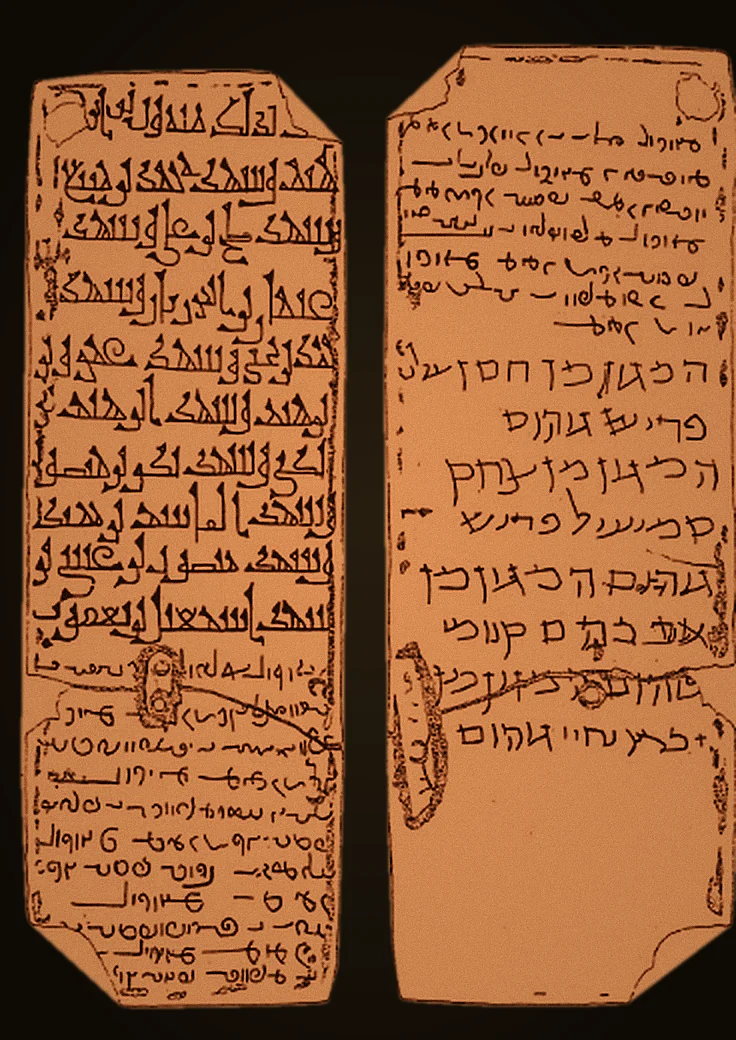
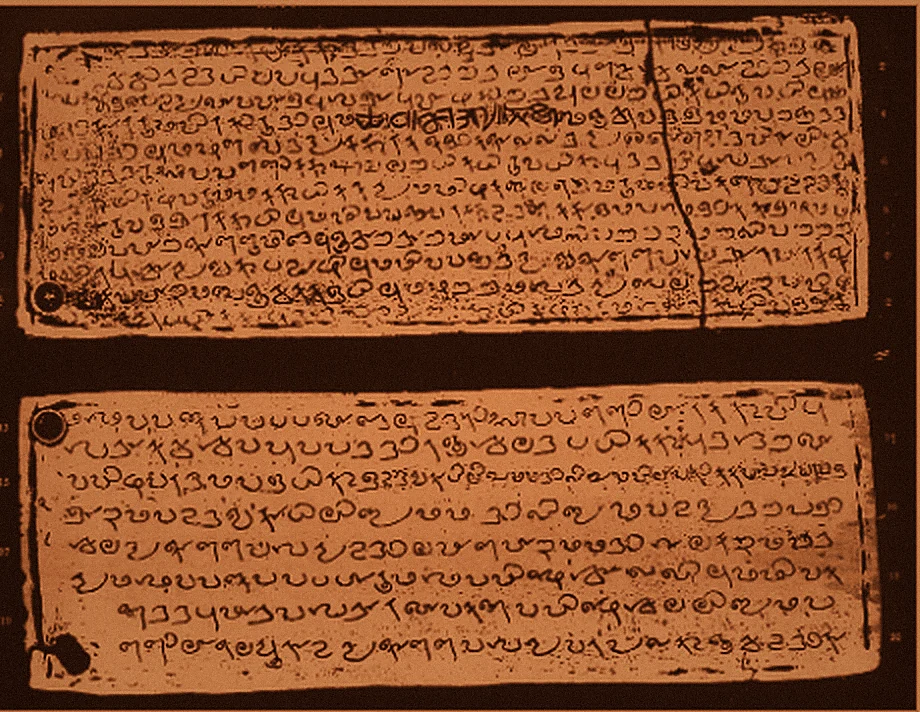
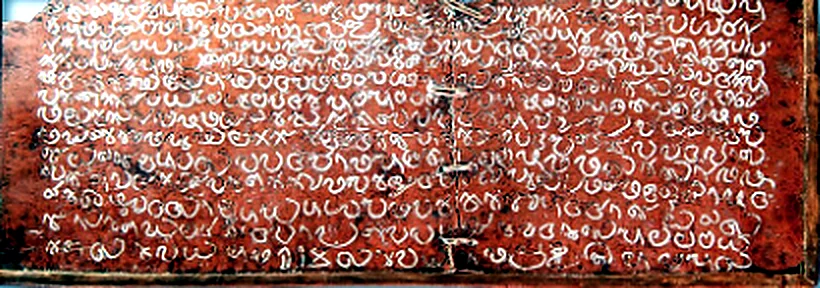
What the Tharisapalli plates say (in English)
The plates record two grants, made in about 849 CE in the fifth regnal year of the Chera king Sthanu Ravi, by Ayyan Adikal, chief of Venad, at the request of the Christian merchant Maruvan Sapir Iso, for the church of Tarisa at Kollam. In summary:
- Plate 1: Ayyan Adikal grants the church families of workers (four Ilava families with eight Ilava men, and a family of washermen), freed from several taxes. They may trade in the market and the fort, and only the church may try their offences.
- Plate 2: Sapir Iso gives the church land to meet the cost of its lamp oil and other needs, with families of carpenters and farmers to work it. The boundaries are marked out: the sea on the west, and named fields, walls and gardens on the other sides. By custom the bounds were fixed by leading a female elephant around them and pouring water.
- Plate 3: trading privileges for the settlers: freedom from certain duties on goods bought and sold and on slaves, fixed fees for carts and boats, and taxes and prices to be set only in consultation with them. The merchant guilds Anjuvannam and Manigramam are to protect the church and its land and enforce the grant, and the settlers receive the "seventy-two privileges", including the right to hold weddings with elephant processions.
- Plate 4: continues the list of witnesses; part of the text is lost.
- Plate 5: the signatures of the foreign witnesses: eleven in Arabic (Kufic script), such as Maymun son of Ibrahim and Muhammad son of Yahya; ten in Middle Persian (Pahlavi), such as Farrokh son of Narseh and Yohannan son of Mashya; and five in Judeo-Persian, written in Hebrew script: Hasan Ali, Sahaq (Isaac), Samael, Abraham Quwami and Kurush Yahiya. Each signs with a formula that scholars read as "I am witness".
Summary based on the translation by M. G. S. Narayanan (Cultural Symbiosis in Kerala, 1972) and later studies.
In the 12th century, letters preserved in the Cairo Geniza, a store of documents in an old synagogue in Egypt, describe Jewish merchants such as Abraham ben Yiju trading between Aden and the Malabar Coast. The traveller Benjamin of Tudela, writing at about the same time, reported Jews living on the pepper coast of India.
The copper plates of Joseph Rabban
The most precious document of Kerala's Jews is a set of two copper plates in the old Malayalam (or Middle Tamil) of the time, written in Vattezhuthu script with some Grantha letters. They record a grant by the Chera ruler Bhaskara Ravi Varman to Joseph Rabban (Issuppu Irappan), a Jewish merchant of the port of Muyirikkode, the Chera capital near Kodungallur. Most historians date them to about 1000 CE; community tradition gave much earlier dates, such as 379 CE.
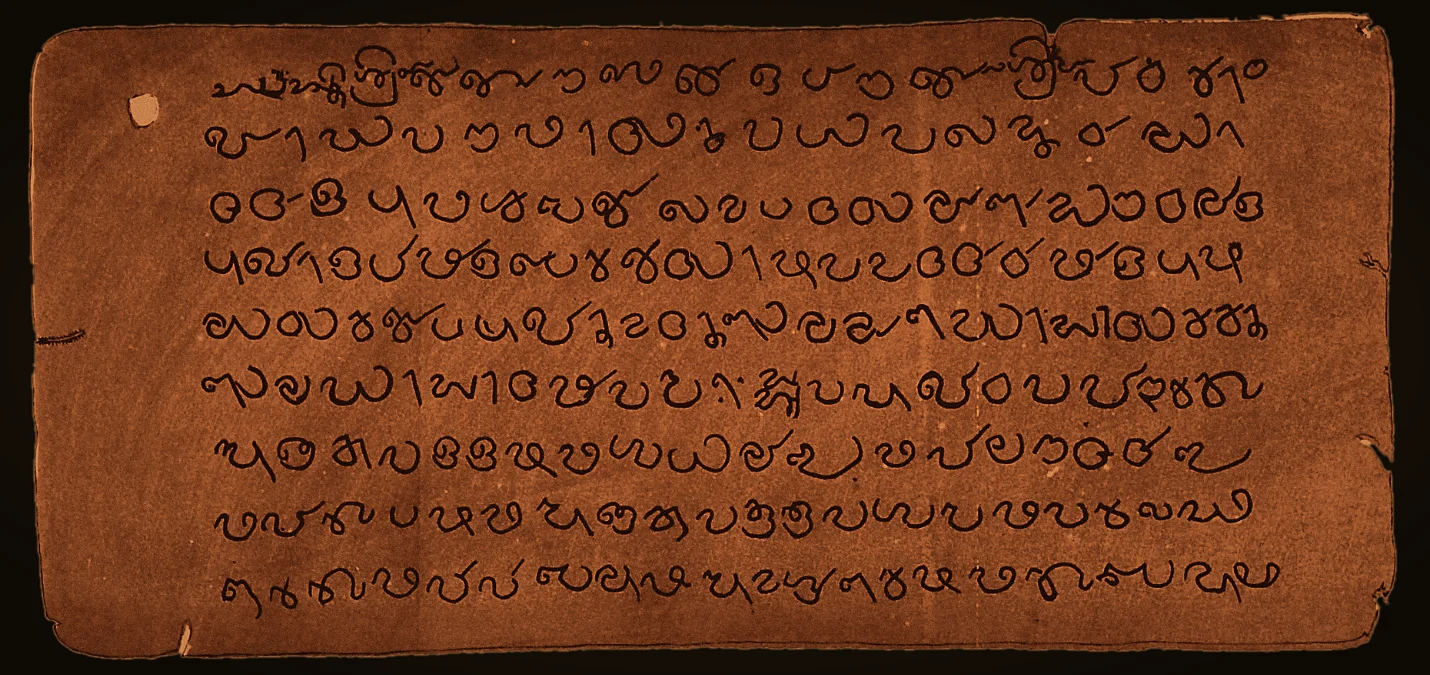
The king gave Joseph Rabban the office of the Anjuvannam, a merchant body of West Asian traders, together with the right to tolls and dues, freedom from customs and weighing fees, and the marks of high status in Kerala society: the day lamp, the decorative cloth spread before him, the palanquin, the umbrella, the kettledrum, the trumpet, the gateway and arch, and the rest of the "seventy-two privileges". These rights were granted to his descendants, male and female, his nephews and his sons-in-law, "as long as the world and moon exist". Five regional governors and the commander of the eastern forces witnessed the grant.
What the Joseph Rabban plates say (in English)
A summary translation of the whole grant, following M. G. S. Narayanan. The plates are written continuously across their faces, so the side shown above contains only part of this text.
- Opening and date: "Hail! Prosperity!" The grant is made by the king of kings, Bhaskara Ravi Varman, in the year counted as the thirty-sixth against the second of his reign, while he was residing at Muyirikkode.
- The grant: the king gives to Issuppu Irappan (Joseph Rabban) the office of the Anjuvannam, with its tolls on boats and carts and its dues.
- The honours: the day lamp, the decorative cloth spread before him, the palanquin, the umbrella, the kettledrum, the trumpet, the gateway, the arch, the arched canopy and weapons, and the rest of the seventy-two privileges.
- Freedom from taxes: he is freed from customs duty and weighing fees, and from the payments that other settlers in the town make to the royal palace, while enjoying all that they enjoy.
- Heirs: the grant is made to Joseph Rabban, the proprietor of the Anjuvannam, and to his descendants, sons and daughters, nephews and sons-in-law, as a hereditary possession, "as long as the world and the moon endure".
- Witnesses: the governors of Venadu, Venpolinadu, Eralanadu, Valluvanadu and Nedumpurayurnadu, and the commander of the eastern forces, Murkkan Chattan. The record was written by the secretary Vanralaceri Kantan Kunrappolan, who signed it.
The plates show a Jewish community that was already wealthy, well established and honoured by the king, probably after generations in Kerala. They are kept in the Paradesi Synagogue in Mattancherry. Over the centuries, the different Jewish communities of Kochi disputed which of them were Joseph Rabban's true heirs.
Shingly: Kerala's "Jerusalem"
For the Jews of Kerala, Cranganore (Kodungallur), which they called Shingly, was the cradle of the community, remembered almost as a Jerusalem in India. Here, tradition says, they lived under their own chiefs, the descendants of Joseph Rabban. In 1341 a great flood of the Periyar silted up the harbour of Cranganore and opened a new one at Cochin, and trade, and many Jews, moved south. A synagogue was built at Kochangadi in Cochin in 1344; its foundation stone is preserved in the Paradesi Synagogue.
The end of Shingly came in 1524. In the struggle for the pepper trade, in which the Portuguese, the Zamorin of Calicut and Muslim merchants were all involved, the Jewish quarter of Cranganore was attacked, and its Jews fled to the kingdom of Cochin, where the Raja gave them shelter and land. By tradition, Cochin Jews would not spend a night in Cranganore afterwards, in mourning for its loss.
Paradesis, Malabaris and the meshuchrarim
From the 16th century, Kerala's Jews became two communities, and in time three:
- The Malabari Jews were the old Jews of Kerala, with roots going back to Shingly and before. They lived in Kochi, Ernakulam, Chendamangalam, Mala and Paravur, spoke Malayalam, and were by far the larger group. European visitors sometimes called them "Black Jews".
- The Paradesi Jews (paradesi means "foreigner" in Malayalam) arrived from the early 16th century: Sephardic Jews from Spain and Portugal, fleeing the Inquisition, and others from Iraq, Persia, Yemen, Aleppo and Germany. They settled in Cochin under the Raja's protection, built the Paradesi Synagogue in 1568, adopted Malayalam, and, by the 17th century, stopped marrying the older community. European visitors called them "White Jews", though the distinction was about descent and status more than colour.
- The meshuchrarim ("freed people", from Hebrew) were the descendants of slaves owned by Jewish households, freed and converted to Judaism. Among the Paradesis they were treated as a lower group, for example by being made to sit apart in the synagogue.
This division mirrored the caste society around them, with its stress on purity of descent. Yet the communities shared one culture, worshipped in the same way, traded together and attended each other's ceremonies. Most Kerala Jews lived in the territory of the Raja of Cochin, so all came to be called "Cochin Jews".
The greatest challenge to these divisions came from Abraham Barak Salem (1882–1967), a meshuchrar who became the first Cochin Jew to qualify as a lawyer and a member of the Cochin Legislative Council. Inspired by Gandhi, he protested by non-violent means against the separate seating of meshuchrarim in the Paradesi Synagogue, boycotting it for a time, and the old restrictions gradually ended. He was a nationalist who supported India's freedom struggle and a Zionist who later helped organise the community's emigration to Israel. He is remembered as the "Jewish Gandhi" of Cochin.
Under Portuguese, Dutch and British rule
The Portuguese (1500–1663) were hostile to Jews, as they were to the Syrian Christians, whose church they tried to bring under Rome. New Christians who had been forced to convert in Portugal fled to Cochin to live openly as Jews again, but the Inquisition, established at Goa in 1560, was a constant threat. When the Dutch besieged Cochin in 1662, Jews who supported them suffered reprisals, and the Portuguese burned the Paradesi Synagogue and many Jewish houses. The synagogue was rebuilt soon after.
The Dutch took Cochin in 1663, and the following century was the golden age of the Paradesi community. Jewish merchants became agents of the Dutch East India Company and advisers to both the Dutch and the Raja. The most famous was Ezekiel Rahabi (1694–1771), chief merchant of the Company at Cochin, who corresponded with Jewish communities across the world. In 1686, a delegation of Dutch Jews from Amsterdam visited Cochin, and one of them, Moses Pereyra de Paiva, published an account of the community, Notisias dos Judeos de Cochim (1687), one of the earliest European descriptions of Kerala's Jews.
Under British rule (from 1795 in Cochin's ports, with the Raja keeping his throne), Cochin declined in importance as the British built up Bombay and Madras. Many Cochin Jews became clerks, teachers, lawyers and small traders, and some moved to Bombay and Calcutta, where a member of the Rahabi family, David Rahabi, is remembered for helping to revive Jewish learning among the Bene Israel. Families such as the Koders and the Halleguas became prominent in business in 20th-century Cochin.
Business and livelihoods
For most of their history, Kerala's Jews were above all traders. Their wealth came from the pepper and spice trade that linked Kerala with Arabia, Egypt and the Mediterranean: pepper, ginger, cardamom, cinnamon and timber outward; gold, horses and goods inward. They acted as merchants, brokers, interpreters and agents for kings and foreign companies. Later, Jewish families dealt in rice, coconut oil, timber, fish and poultry, ran shops and printing presses, and worked as government servants, teachers and lawyers. Within the community, men served as hazanim (cantors) and shochetim (ritual slaughterers), and Cochin Jews also served the Bene Israel Jews of Bombay in these roles.
Synagogues: a style found nowhere else
By the 18th century, Kerala had eight synagogues in five towns. Built by Kerala craftsmen, they look from outside like the homes and temples of Kerala, with tiled, sloping roofs and gatehouses, while inside they follow Jewish tradition. Distinctive features include a raised bimah (reading platform) in the centre, a carved wooden heichal (Torah ark) facing west towards Jerusalem, a women's gallery above the entrance, and, in several synagogues, a second bimah in the upper gallery, a feature rarely found outside Kerala. Worshippers remove their footwear before entering, as in a Hindu temple.
- Paradesi, Jew Town, Mattancherry (Paradesi). Built 1568 on land given by the Raja of Cochin, beside the Mattancherry palace temple; burned 1662 and rebuilt; clock tower added in the 18th century; floor of hand-painted Chinese tiles; Belgian glass chandeliers. Today: The only functioning synagogue in Kochi; houses the copper plates; open to visitors (closed on the Sabbath and Jewish holidays).
- Kadavumbhagam, Mattancherry (Malabari). One of the old Malabari synagogues of Cochin. Today: Ruined; its carved interior was taken to Israel and is displayed at the Israel Museum, Jerusalem, and its ark is used at Moshav Nehalim.
- Thekkumbhagam, Mattancherry (Malabari). Congregation left for Israel in 1955. Today: Demolished; relics, including a restored Torah ark, are at the Magnes Collection, University of California, Berkeley.
- Kadavumbhagam, Ernakulam (Malabari). Traditionally dated to about 1200 CE; regular services ended in 1972. Today: Restored, with a Torah scroll returned in 2018; the last functioning Malabari synagogue, with occasional services.
- Thekkumbhagam, Ernakulam (Malabari). Rebuilt in the 20th century. Today: Not used for regular worship; used for community gatherings. Its ark is now in the synagogue of Moshav Nevatim, Israel.
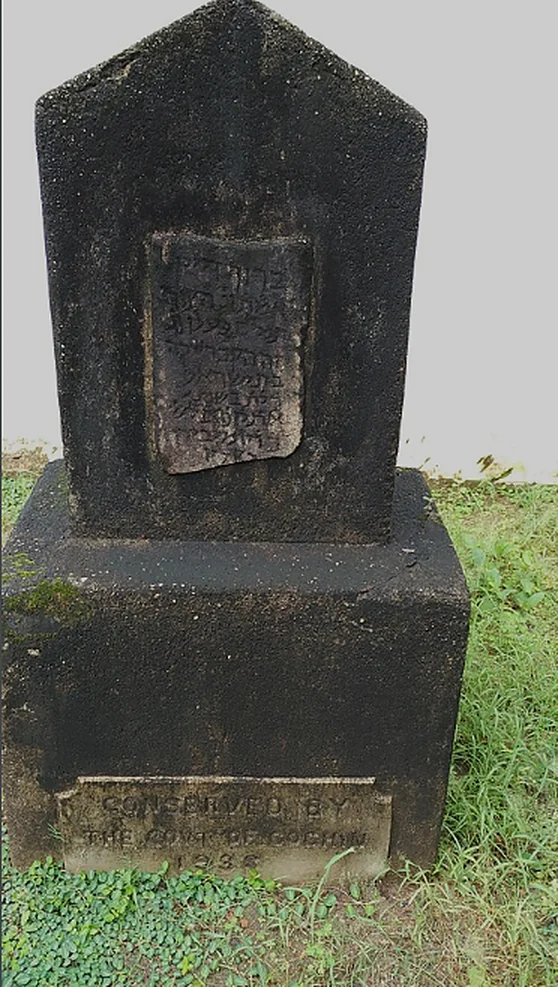
- Chendamangalam (Malabari). Built about 1420, rebuilt 1614; a gravestone of "Sarah bat Israel", dated 1269, the oldest known Cochin Jewish gravestone, stands in its yard. Today: Kerala Jews Lifestyle Museum (Muziris Heritage Project).
- Paravur (North Paravur) (Malabari). Rebuilt 1616; almost all its members left for Israel in 1954. Today: Kerala Jews History Museum (Muziris Heritage Project).
- Mala, Thrissur district (Malabari). Old Malabari synagogue with a nearby Jewish cemetery. Today: Not used for worship; open to visits.
Records also mention lost synagogues at Kochangadi (1344), Palur, Madayi and Kodungallur (from tradition), and others whose sites are no longer known.
The Paradesi Synagogue is the best known. Built in 1568 by Samuel Castiel, David Belila and Joseph Levi, it shares a wall with the Mattancherry Palace temple of the Raja who gave its land. Its floor is laid with hundreds of hand-painted blue-and-white Chinese tiles, traditionally said to have been brought from Canton by Ezekiel Rahabi in the 18th century, no two alike. Its 400th anniversary in 1968 was attended by Prime Minister Indira Gandhi. In 2026 a small museum opened there, displaying the copper plates.
Language, songs and learning
Kerala's Jews spoke Malayalam, enriched with Hebrew words for religious life, a form now called Judeo-Malayalam, the only known Jewish language of the Dravidian family. Most remarkable are the Jewish Malayalam women's songs, sung at weddings, circumcisions, festivals and in the home, telling Bible stories, praising God and remembering Shingly and Jerusalem. Unusually for Orthodox Jewish communities, Cochin Jewish women were taught Hebrew, recited prayers and had their own rich tradition of religious song. Some songs were collected in handwritten notebooks, and scholars such as Barbara C. Johnson, Scaria Zacharia and Ophira Gamliel have studied and published them. The prayers themselves were chanted in a distinctive local custom known as Shingli.
The community had no ordained rabbis. Learned elders led worship and decided questions of religious law, and in difficult cases wrote to scholars in Jerusalem, Cairo or elsewhere. From the 18th century, emissaries from the Holy Land visited Cochin, strengthening the community's ties with the wider Jewish world. The writer Ruby Daniel (1912–2002) of Kochi left a vivid memoir of community life, Ruby of Cochin, written in Israel.
Festivals and daily life
Cochin Jews kept the full Jewish calendar: the weekly Sabbath, Rosh Hashanah (New Year), Yom Kippur (Day of Atonement), Sukkot, Simchat Torah, Hanukkah, Purim, Pesach (Passover) and Shavuot. Some observances took on a Kerala flavour:
- Simchat Torah, the "rejoicing in the Torah", was one of the most joyful days of the year, with the Torah scrolls carried in procession and singing that lasted late into the night.
- Pesach preparations were famously strict: houses were cleaned and whitewashed, utensils changed, and rice and spices prepared at home, a thoroughness that observers have compared with the purity rules of Kerala's Hindu households.
- Hanukkah lamps were lit in a spirit close to Kerala's own festivals of light.
- A well-known story says that in 1550 the Raja of Cochin would not fight a battle on a Saturday because his Jewish soldiers were keeping the Sabbath.
At home, Cochin Jewish families dressed much like their Malayali neighbours and cooked Kerala food, with rice, coconut and spices, while keeping the Jewish dietary laws: kosher meat, and no mixing of meat and milk, so that coconut milk took the place of dairy in many dishes. Footwear was removed at the synagogue door, and festive clothes were brightly coloured.
Weddings and family life
Cochin Jewish weddings combined Jewish law with Kerala custom. The betrothal usually came about a year before the wedding. Celebrations traditionally stretched over several days, with women's songs for each stage. The bride took a ritual bath, and a wedding canopy, called the manara or aperion, was set up, usually at the groom's house. The couple signed a ketubbah (marriage contract), which was read aloud before the congregation.
Some customs came straight from Kerala. The groom tied a thali, the small gold pendant that marks a married woman in Kerala, round the bride's neck, a custom taken from Nair practice. The groom placed on the bride's finger a ring made from silver coins given by his father, which she wore all her life. Among the Malabari Jews, the groom walked into the synagogue on a white cloth, an honour like the decorative cloth listed among Joseph Rabban's privileges. Unusually, it was the groom himself, not a rabbi, who announced the betrothal and the marriage in the synagogue. Brides wore an embroidered pudava (wrap skirt) and white blouse or a sari with a head veil; grooms wore white trousers, a long white shirt and an embroidered vest or coat, with a skullcap. The bride's pudava might later serve as a drape and finally be sewn into a curtain for the Torah ark.
Marriage within one's own community was strictly kept, which is why the Paradesi and Malabari groups remained separate for so long. The last Jewish wedding in Kerala for many years took place in 2008; another was celebrated in Kochi in 2023.
The return to Israel
Love for Zion ran deep in Cochin Jewish prayers and songs, and early in the 20th century Malayalam Zionist songs were written in Kochi. When the State of Israel was founded in 1948, the longing became a practical possibility. Religious devotion, the wish to help build the new country, and worsening economic conditions in Kerala all played their part. In 1949, seventeen families sold their property and left. Community leaders, including A. B. Salem, wrote to the Israeli government asking that the whole community be allowed to come, and Salem visited Israel in 1953 to negotiate.
In 1953–54, about 2,400 Cochin Jews, most of them Malabari, emigrated to Israel, many travelling via Bombay. Nobody was forced to leave, and their Hindu, Christian and Muslim neighbours saw them off with sadness. They left behind homes, synagogues and cemeteries; several synagogues were later given to local bodies or sold. The Paradesis left more slowly, mainly in the 1970s and 1980s.
In Israel, many Cochin Jews were settled on agricultural moshavim (cooperative villages), often in hard frontier areas. Settlements that remain largely Cochini include Nevatim in the Negev, Mesilat Zion, Taoz and Aviezer near Jerusalem, and Kfar Yuval on the Lebanese border; others joined Shahar, Nehalim and cities such as Rishon LeZion, Ashdod, Beersheba and Jerusalem. They turned dry land into farms and flower and vegetable fields. At Nevatim, a synagogue built in the Kerala style holds a Torah ark brought from Ernakulam, and the Cochin Jewish Heritage Centre there preserves the community's memory. Some Israeli synagogues still pray in the Cochin tradition.
Kerala's Jews today
Only a handful of Jews remain in Kerala. Sarah Cohen, the matriarch of Jew Town, died in 2019 at 96; her embroidery shop is kept by her former helper, a Muslim craftsman who closes it on Saturdays. In 2026, Keith Hallegua was described as the last Paradesi Jew in Jew Town, and Elias "Babu" Josephai, a Malabari Jew, had restored the Kadavumbhagam Synagogue in Ernakulam. Services at the Paradesi Synagogue depend on Jewish visitors and tourists to make up a minyan of ten men.
Yet the memory endures. Jew Town and Jew Street remain on the maps of Kochi and Ernakulam. Several synagogues have been restored as museums under the Muziris Heritage Project. The Paradesi Synagogue is one of Kerala's most visited monuments. In 2017, India's Prime Minister presented Israel's Prime Minister with replicas of Kerala's Jewish copper plates. And among the Cochin Jews of Israel, Malayalam songs are still sung at weddings and festivals.
Timeline
| Date | Event |
|---|---|
| Ancient times | Traditions of arrival in Solomon's ships, after the exiles, or after 70 CE; trade through Muziris |
| c. 849 CE | Tharisapalli plates, Kollam: five Jewish witnesses sign in Hebrew script |
| c. 1000 CE | Copper plates of Bhaskara Ravi Varman to Joseph Rabban |
| 12th century | Geniza letters of Jewish traders with Malabar; Benjamin of Tudela's report |
| 1269 | Gravestone of Sarah bat Israel, now at Chendamangalam |
| 1341 | Periyar flood; trade shifts from Cranganore to Cochin |
| 1344 | Kochangadi synagogue, Cochin |
| 1524 | Jewish quarter of Cranganore attacked; Jews flee to Cochin |
| 1568 | Paradesi Synagogue built in Mattancherry |
| 1662–63 | Paradesi Synagogue burned during the Dutch siege; Dutch take Cochin |
| 1686–87 | Amsterdam Jewish delegation; Pereyra de Paiva's account published |
| 1694–1771 | Life of Ezekiel Rahabi, chief merchant of the Dutch East India Company |
| 1882–1967 | Life of A. B. Salem, the "Jewish Gandhi" |
| 1949 | First families leave for Israel |
| 1953–54 | Mass emigration of about 2,400 Cochin Jews |
| 1968 | Paradesi Synagogue's 400th anniversary, attended by Indira Gandhi |
| 2019 | Death of Sarah Cohen |
| 2026 | Museum opened at the Paradesi Synagogue; only a handful of Jews remain in Kerala |
(Read about another vanished faith of Kerala in The Jains of Kerala, and about the region's places of worship in Munnar's churches, temples and mosques.)
A note on sources
- The early history of Kerala's Jews rests on a small number of documents: the copper plates, Geniza letters, travellers' accounts and the community's own traditions and songs. Dates for the copper plates, the origins of particular synagogues and the meaning of terms such as Anjuvannam are still debated by historians; we have followed the main scholarly view and noted community traditions as traditions.
- For further reading: Barbara C. Johnson's studies of Cochin Jewish history and songs; Nathan Katz and Ellen Goldberg, The Last Jews of Cochin (1993); J. B. Segal, A History of the Jews of Cochin (1993); Ruby Daniel and Barbara Johnson, Ruby of Cochin (1995); and the publications of the Israel Museum, Jerusalem.
- If you have memories, photographs or family records of Kerala's Jewish communities, please contact us.
See it for yourself, with a local driver who knows these roads.
Book a Munnar Jeep SafariSources & further reading
- Wikipedia: Jewish copper plates of Cochin
- Wikipedia: Quilon Syrian copper plates (Tharisapalli plates)
- Wikipedia: Cochin Jews
- Barbara C. Johnson, My Jewish Learning / Israel Museum: The Cochin Jews of Kerala
- Everyculture: Cochin Jew, history and cultural relations
- Everyculture: Cochin Jew, religion and expressive culture
- Wikipedia: Paradesi Synagogue
- Wikipedia: List of synagogues in Kerala
- Wikipedia: Chendamangalam Synagogue
- Wikipedia: Kadavumbhagam Ernakulam Synagogue
- Wikipedia: Abraham Barak Salem
- Wikipedia: Rahabi Ezekiel
- Encyclopedia.com: Pereira de Paiva, Moses
- Wikipedia: Judeo-Malayalam
- Wikipedia: Ruby Daniel
- Kerala Tourism: Kerala Jewish wedding ceremony
- Kerala Tourism: Jewish customs
- Onmanorama (May 2023): Kochi hosts Jewish wedding after 15 years
- AP / Arab News (Aug 2026): After centuries in India, the last Cochin Jews try to keep their history alive
- The Quint (2017): The Kerala relics Modi gifted Netanyahu
Figures are from the sources listed and were checked in October 2026. Park timings and road conditions change, so please confirm before you travel.