
Joothakulam: The 'Jew Ponds' of Kodungallur and Madayi
Kerala's Jews left few buildings in their oldest settlements, but they left names. In the villages around Kodungallur and on the Madayipara plateau near Kannur, ponds called Joothakulam, 'the Jew pond', keep the memory of vanished communities, wrapped in legends of hills, brothers and ritual baths.
Kerala's Jewish heritage: The synagogues of Kerala · Paradesi · Kadavumbhagam & Thekkumbhagam · Paravur · Chendamangalam · Mala · The Jew ponds · The Jews of Kerala
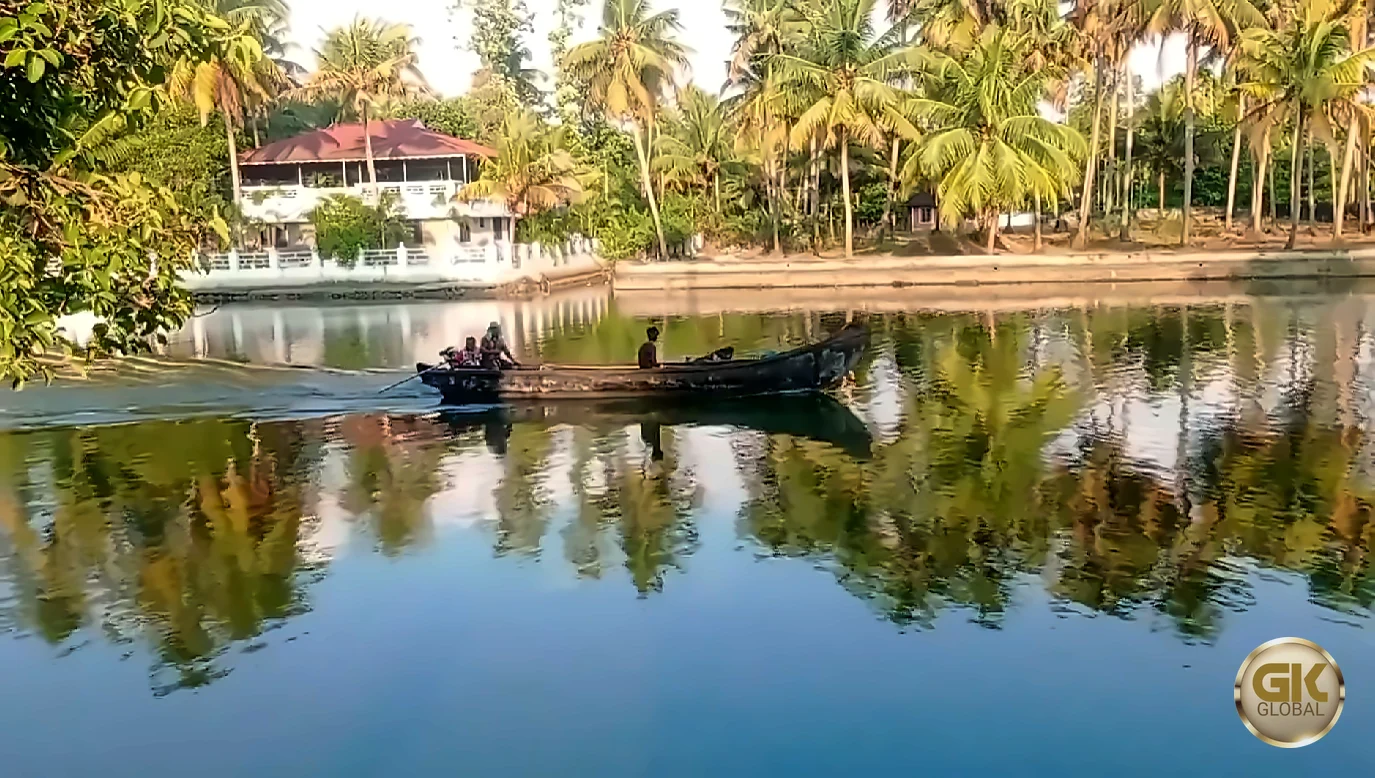
The Jews of Kerala first lived in and around the ancient port of Kodungallur (Cranganore, the Muziris of the Romans and the Shingly of Jewish tradition), and probably at other ports along the coast. When the port declined after the Periyar flood of 1341, and especially after the Portuguese attacks of the early 16th century, they moved to Kochi, Paravur, Chendamangalam, Mala and elsewhere. In their old homes they left almost no buildings. What they did leave were place names: Joothakulam ("Jew pond"), Joothakunnu ("Jew hill"), Joothathi, Joothapalli and others. (Read The Jews of Kerala for the background.)
Much of what is known about these sites today comes from the patient fieldwork of Dr. Laju Paul K., who documents them on his blog Jewish Monuments of Kerala, and from a 2010 Malayalam doctoral thesis by Adarsh C., which first linked the Kodungallur Joothakulam to a particular pond.
The Joothakulam of Kodungallur
In Kunnamkulam village, in Methala near Kodungallur (not to be confused with the town of Kunnamkulam in Thrissur), two ponds are remembered locally as Joothakulam:
- the large pond, now called Kunnamkulam ("hill pond"), owned by the panchayat and used as a public pond; and
- the small pond, also called Moolakulam, on private land.
Older residents told Dr. Laju Paul that two hills here, Cheriyakunnu and Valiyakunnu, once belonged entirely to Jews, that two Jewish brothers had mansions near the present Methala school, and that this "Jew hill" was the Jewish quarter of old Kodungallur. A canal once linked the area to the Periyar, carrying rice and goods. Some said the Jews took soil from here for burials. These are oral traditions, not documented history, and the author himself calls them unverified. An old colour photograph of the pond, taken in the mid-1970s for a documentary on Cochin Jews by the ethnomusicologist Johanna Spector, is thought to be one of the earliest images of the site. A possible Jewish cemetery site at Chakkamparambu nearby has also been suggested.
Not far away is the Keezhthali temple, in the same Methala area, a reminder of how the old Chera capital was shared by many communities.
The Joothakulam of Madayi
Far to the north, on the Madayipara laterite plateau near Pazhayangadi in Kannur district, a few kilometres from Ezhimala, lies another Joothakulam. It is a large rock-cut tank, about 50 m long and 20 m wide, in an old laterite quarry, with narrow steps cut down its sides, shaped (as Dr. Laju Paul observed) somewhat like a hand mirror. Local people say it never dries up. Tradition holds that the Kolathiri rajas gave refuge to Jews here.
The evidence is thin but real: the Portuguese writer Duarte Barbosa, around 1510–1520, mentions Jews living at Madayi, speaking the local language, which suggests a long-established community. The surname "Madai" survived among the Jews of Cochin. Madayi was a busy port until its harbour silted up in the 16th century. No synagogue or inscription has been found.
Were they ritual baths?
It is tempting to see a Joothakulam as a mikveh, the pool of "living water" used for ritual purification in Jewish law. Some local traditions say so. But the ponds are very large for a mikveh, and in well-watered Kerala, Jews could use rivers and springs. Other explanations are possible: a pond simply on land owned by Jews, a tank dug for a Jewish quarter's water supply, or a name that preserved the memory of nearby Jewish homes. Without excavation or written records, the purpose of these ponds remains an open question.
A note on sources
- This article relies mainly on the published fieldwork of Dr. Laju Paul K. (Jewish Monuments of Kerala) and the sources he cites.
- The legends about the Kodungallur ponds are oral traditions and have not been confirmed by archaeology.
- No copyright-free photographs of the ponds themselves are available to us; we would welcome photographs from readers.
See it for yourself, with a local driver who knows these roads.
Book a Munnar Jeep SafariSources & further reading
- Jewish Monuments of Kerala: A rare image of the Joothakulam (Jew Pond) of Kodungallur (2024)
- Jewish Monuments of Kerala: Legends about the Joothakulam (2018)
- Jewish Monuments of Kerala: The Joothakulam of Madai (2023)
- Jewish Monuments of Kerala: Chakkamparambu Jewish cemetery
Figures are from the sources listed and were checked in October 2026. Park timings and road conditions change, so please confirm before you travel.