
The Mala Synagogue and Jewish Cemetery: A Promise to a Departing Community
When the Jews of Mala left for Israel in the 1950s, they handed their synagogue and cemetery to the village panchayat on a promise that both would be preserved. The story of what happened next, of a stadium on the graves, a long legal fight, a restoration and a roof that fell in.
Kerala's Jewish heritage: The synagogues of Kerala · Paradesi · Kadavumbhagam & Thekkumbhagam · Paravur · Chendamangalam · Mala · The Jew ponds · The Jews of Kerala
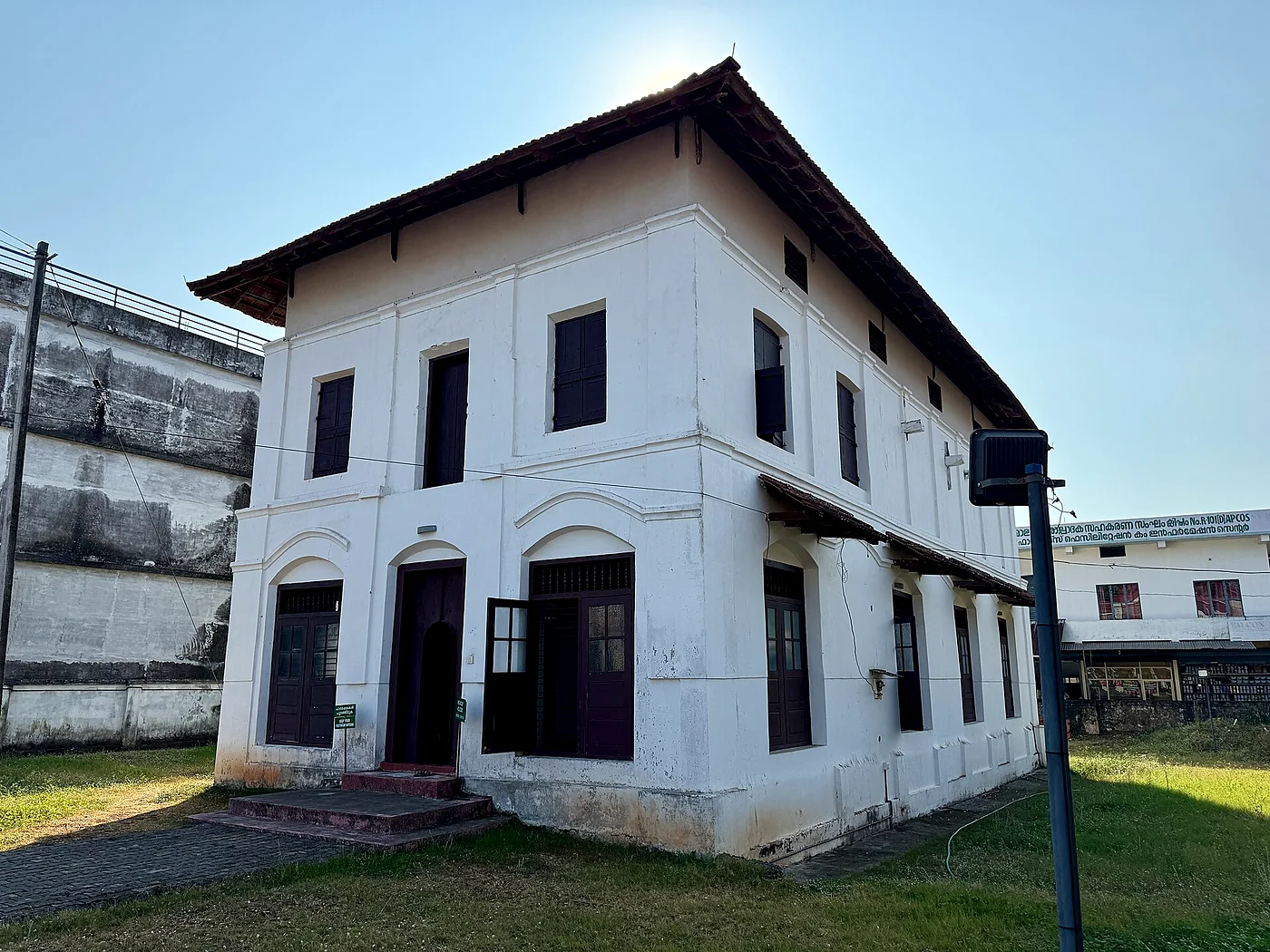
Mala, a town in the south of Thrissur district, not far from Kodungallur, was home to one of the Malabari Jewish communities, about 40 families before 1948. Their synagogue still stands in the middle of the town, and their cemetery a short walk away.
A disputed age
The age of the synagogue is uncertain. A Jewish Malayalam song, cited by the historian Prem Doss Swami Doss Yehudi, links it to the 11th century and to timber given to Joseph Rabban by the king of Kodungallur. Other accounts speak of a rebuilding in 1400, of evidence for 1597, or of a building of about 1721. More firmly, the synagogue was repaired in 1792, probably after damage during Tipu Sultan's campaigns, was still in ruins when the missionary Thomas Dawson visited in 1817, and was rebuilt, in part or in full, in 1909 on the old foundations.
The promise of 1955
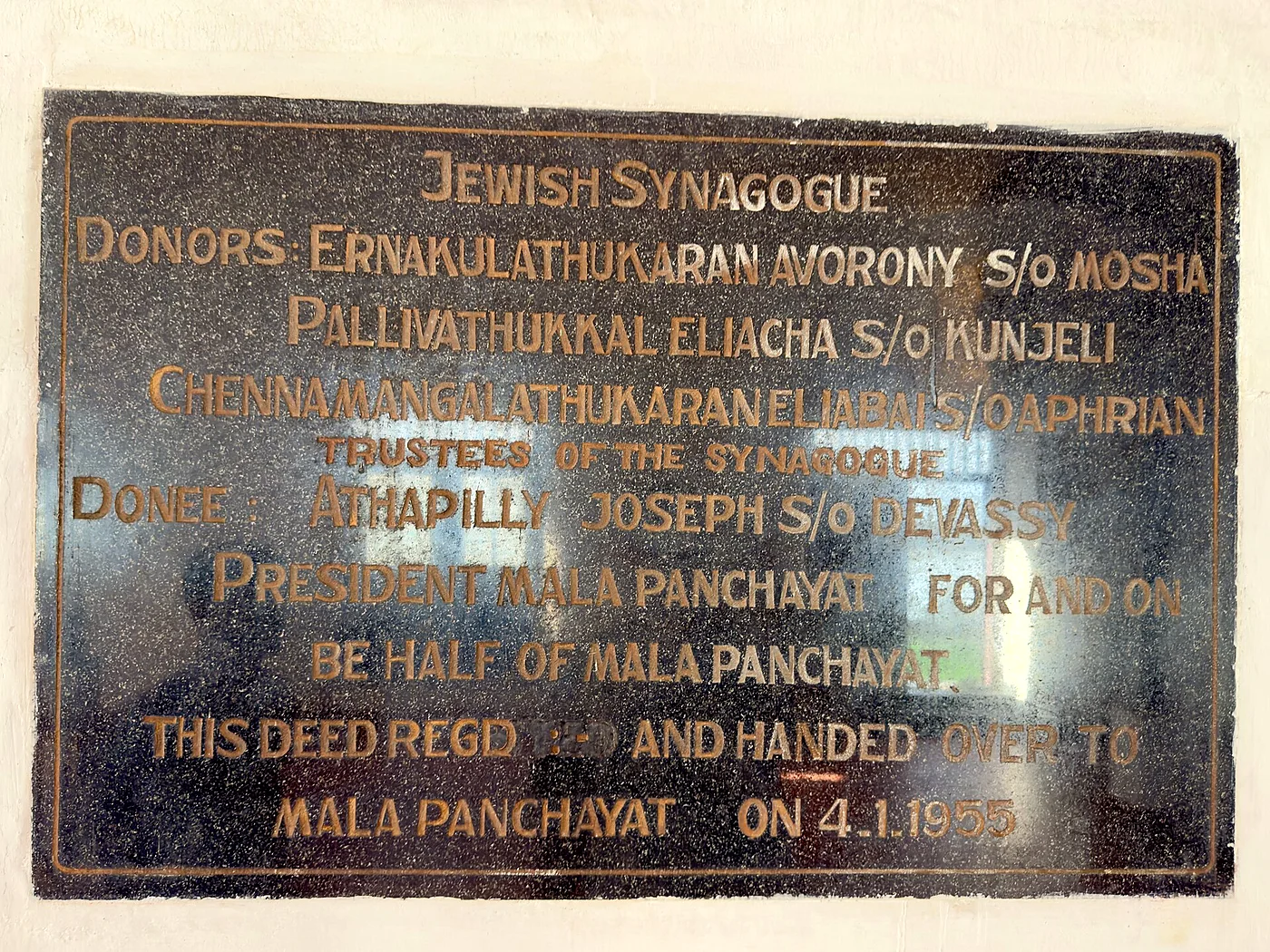
When the community left for Israel in the mid-1950s, its leaders handed the synagogue (on 20 December 1954) and the cemetery (on 1 April 1955) to the Mala Grama Panchayat. The agreement, signed at the Israeli consulate in Mumbai, bound the panchayat to "preserve and maintain both cemetery and synagogue with its own funds". A plaque in the synagogue records the gift.
The promise was not well kept. The synagogue was used for years as a panchayat hall. The cemetery, once about four acres with dozens of graves, was largely built over: in 2000 the panchayat took about 2.5 acres for a stadium, opened in 2005. Local heritage activists fought a long campaign and court cases to protect what remained, and a proposed park on the rest of the cemetery was changed after protests.
Restoration, and a collapse
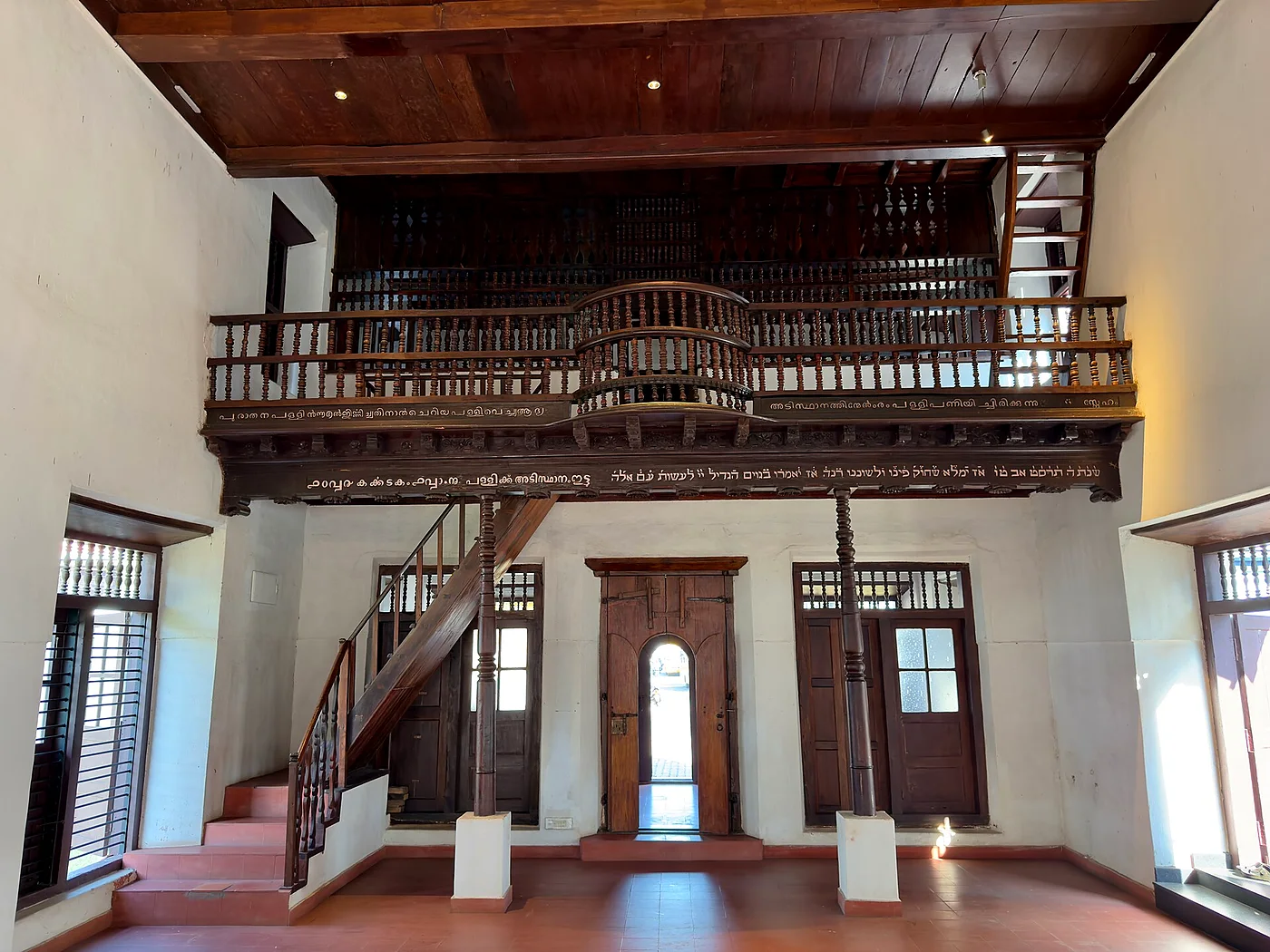
In 2017 the Kerala Department of Archaeology took control of the synagogue, and under the Muziris Heritage Project it was restored and turned into a Jewish community centre and museum, at a cost reported as about ₹1 crore. Then, one night in June 2025, in heavy monsoon rain, part of the roof collapsed. No one was hurt, but activists, who had warned about the roof weeks earlier, raised questions about the quality of the recent work. Check locally whether the building has reopened before you visit.
The cemetery
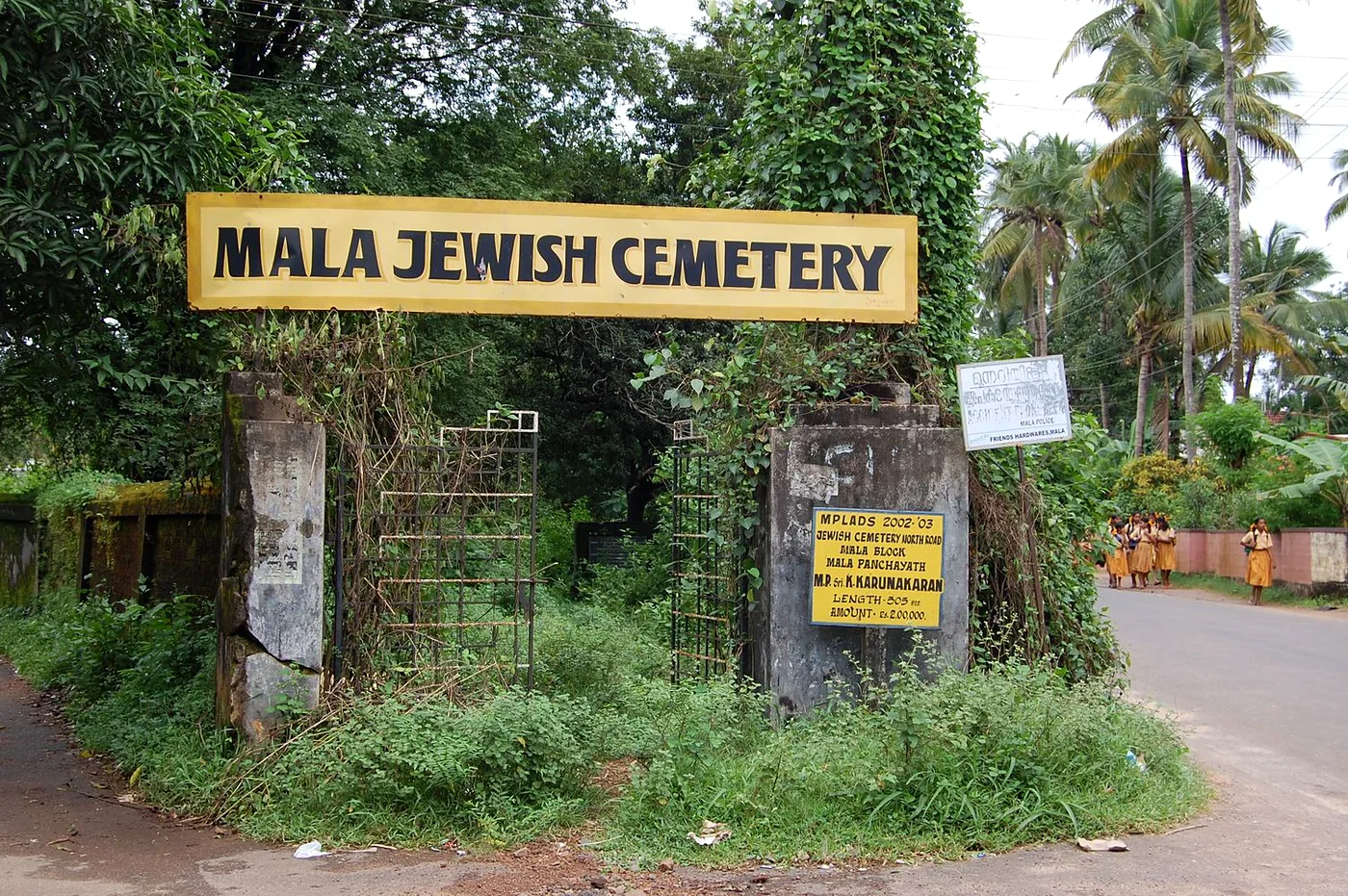
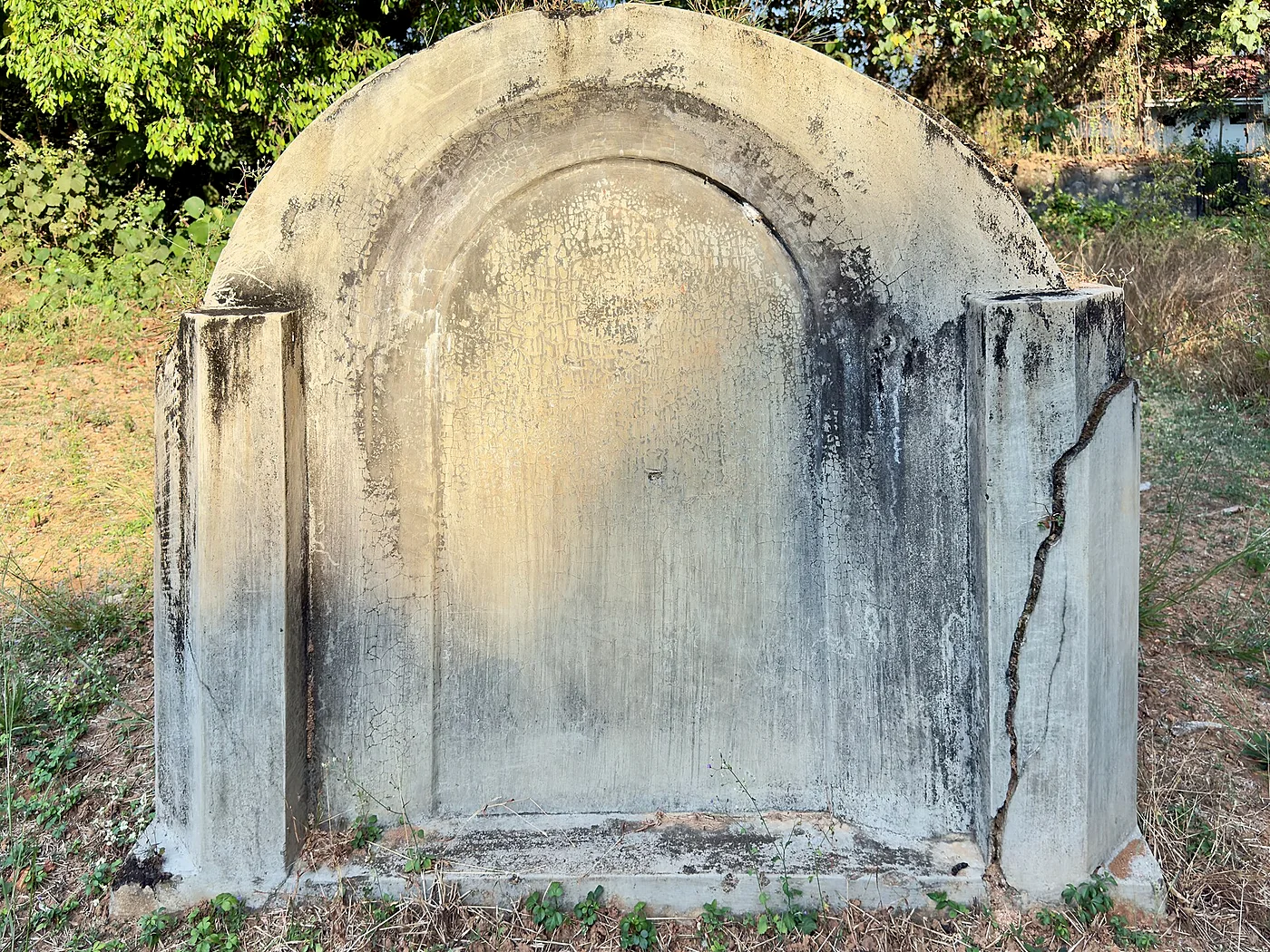
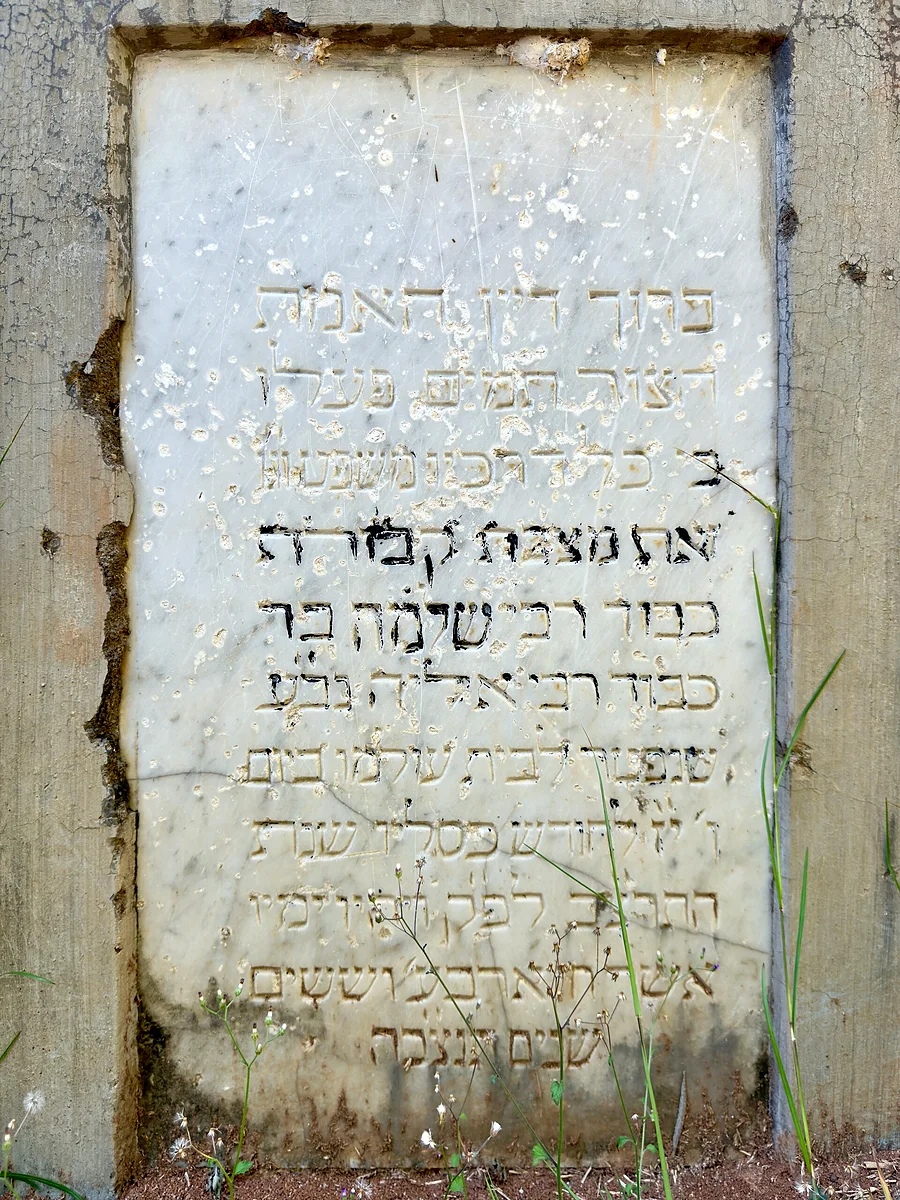
A few tombs still stand in the remaining part of the cemetery, behind a gate marked "Mala Jewish Cemetery": vaulted graves of plastered laterite with arched headstones, some with Hebrew epitaphs. They are among the last physical traces of the Jews of Mala.
At a glance
- Where: Mala, Thrissur district, about 15 km from Kodungallur.
- Handed over: synagogue 20 December 1954, cemetery 1 April 1955, to the Mala Grama Panchayat.
- Protected: Kerala Department of Archaeology since 2017; Muziris Heritage Project museum.
- Note: the dates of the early synagogue are disputed.
See it for yourself, with a local driver who knows these roads.
Book a Munnar Jeep SafariSources & further reading
- Wikipedia: Mala Synagogue
- The News Minute (2015): The struggle to ensure a Kerala panchayat's promise to the Jewish community isn't broken
- Onmanorama (June 2025): Heavy rain damages historic synagogue in Thrissur
- Asia Times (2017): Gentiles fight to save Kerala's rare Jewish monuments
Figures are from the sources listed and were checked in October 2026. Park timings and road conditions change, so please confirm before you travel.