
Sarah Cohen of Jew Town: The Last Matriarch of the Paradesi Jews of Kochi
For almost a century she lived on the lane beside the Paradesi Synagogue in Mattancherry, stitching kippahs and challah covers, singing old Jewish songs and greeting the world from her window. The life, last days and legacy of Sarah Cohen, and of the Muslim and Christian friends who cared for her to the end.
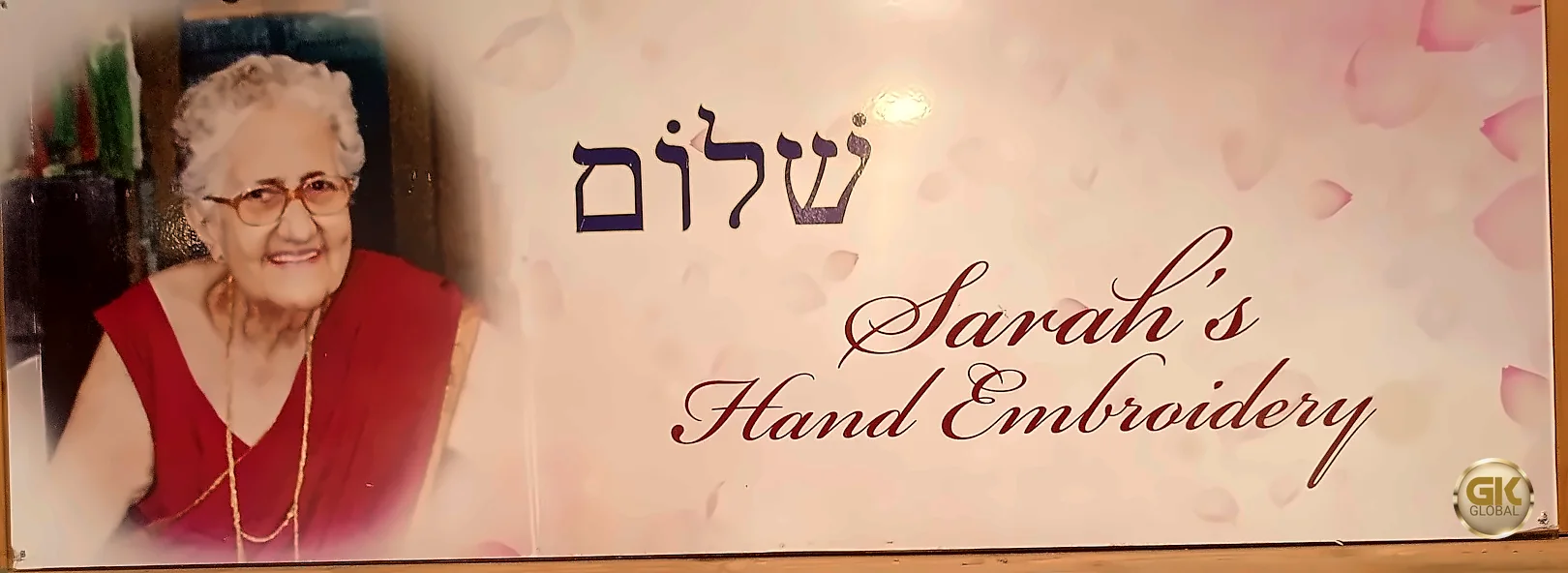
For decades, visitors walking down Synagogue Lane in Mattancherry's Jew Town, on their way to the 16th-century Paradesi Synagogue, would pass a small green house with Star-of-David bars on its window. Behind the bars sat a tiny, white-haired woman, sometimes stitching, sometimes simply watching the street, always ready with a smile and a word for strangers. Her name was Sarah Cohen. When she died in August 2019, at the age of 96, newspapers across India and abroad wrote that a chapter of history had closed: she was the oldest member of one of the oldest Jewish communities in Asia, the Paradesi Jews of Kochi.
At a glance
- Born: 1922 in Kochi (Cochin), most likely on 4 September; a few reports give 1924.
- Married: Jacob Elias Cohen, of Jew Town, in 1942. They had no children.
- Known for: Sarah's Hand Embroidery, the shop in her home where she made kippahs (skullcaps), challah covers and other Jewish textiles.
- Died: Friday, 30 August 2019, at her home in Jew Town, a few days before her 97th birthday by most accounts.
- Buried: 1 September 2019, in the Jewish cemetery at Mattancherry, beside her husband.
- Legacy: her shop and home, kept by her Muslim friend Thaha Ibrahim; a documentary film; and a story of friendship across three faiths.
The Jews of Kochi: a short history
Jews have lived on the Malabar coast for well over a thousand years. The oldest firm evidence is a set of copper plates, usually dated to around 1000 CE, in which a Chera ruler granted privileges to a Jewish merchant leader, Joseph Rabban. The early community lived at Kodungallur (Cranganore), near the ancient port of Muziris. After the decline of Kodungallur and the arrival of the Portuguese in the 16th century, many Jews moved south to Kochi, where the Hindu Raja gave them land beside his palace at Mattancherry. The street that grew up there became known as Jew Town. (Read our full history, The Jews of Kerala.)
Kerala's Jews came to form two main groups. The Malabari Jews, the older, Malayalam-speaking community, had synagogues in Kochi, Ernakulam, Chendamangalam, Mala and Parur. The Paradesi ("foreign") Jews were later arrivals, among them Sephardic Jews whose families had fled Spain and Portugal after the expulsions of the 1490s, and others from Baghdad, Aleppo, Germany and the Netherlands. In 1568 the Paradesi community built its synagogue at the end of Jew Town, next to the Raja's palace and temple. Damaged by the Portuguese in 1662 and rebuilt under the Dutch, it gained its clock tower and its floor of hand-painted blue Chinese tiles in the 1760s, gifts of the merchant Ezekiel Rahabi. It is the oldest active synagogue in the Commonwealth.
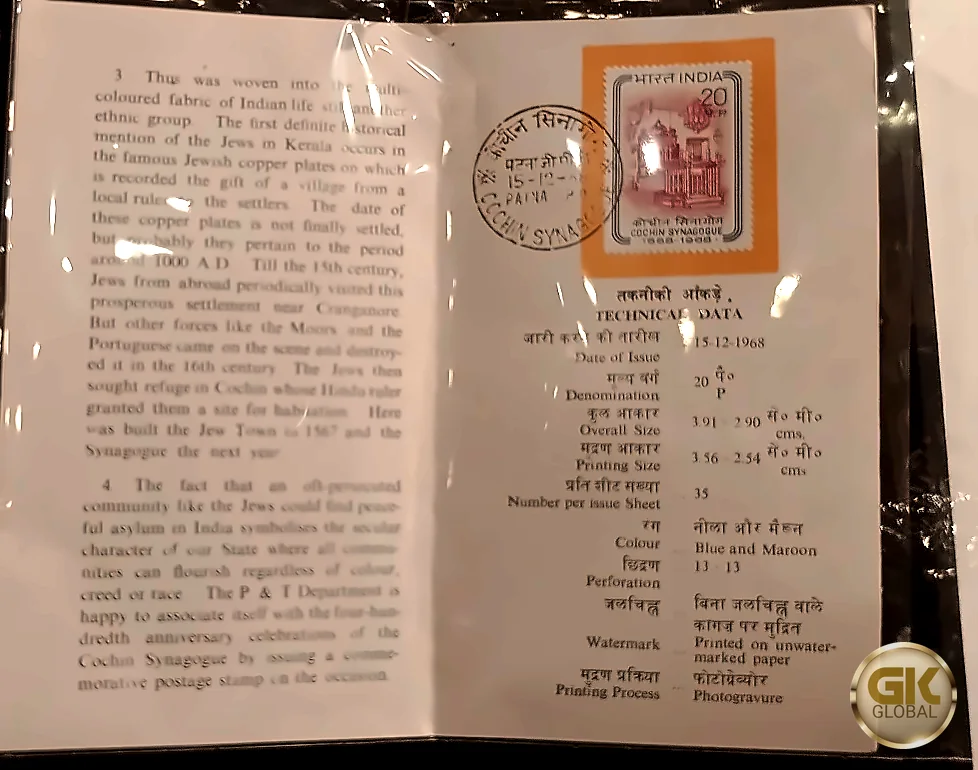
In December 1968, India celebrated the synagogue's 400th anniversary. Prime Minister Indira Gandhi visited Jew Town, and the Posts and Telegraphs Department issued a commemorative stamp. Its folder, still displayed in Sarah's shop, says that the peaceful asylum the Jews found in India "symbolises the secular character of our State."
But by then the community was already shrinking. After the founding of Israel in 1948, almost all of Kerala's Jews emigrated, most of them in the 1950s, often for religious reasons and to join their families. Jew Town, home to a few hundred Jews in the 1940s, had fewer than 30 by the early 1980s and fewer than 20 by the 1990s. Sarah and Jacob Cohen were among the few who chose to stay. "I won't leave India. This is my home," Sarah told a reporter.
Sarah's early life
Sarah was born in Kochi and grew up in Jew Town. Accounts differ on her family's roots: most describe her as a Paradesi Jew of Sephardic descent, while one report says her ancestors came from Baghdad. Both are possible, since many Paradesi families had mixed Sephardic and Middle Eastern ancestry. She had a brother, Joseph, and a sister, Hanny, who emigrated to Israel, and half-siblings around the world.
In 1942 she married Jacob Elias Cohen, also of Jew Town. Jacob worked as a tax consultant; some reports call him a lawyer. In the 1940s he gave his young wife a Singer sewing machine, the machine on which she would later build her small business. The couple had no children. Over the years they visited Israel, celebrated their wedding anniversaries with the community, and watched their neighbours leave one family after another.
Sarah's Hand Embroidery
Sarah had learned the fine needlework of the Cochin Jewish women, who embroidered caps, cushion covers, wedding dresses and synagogue textiles. Around 1984, she began to make and sell kippahs (the skullcaps worn by Jewish men) and challah covers (the cloths that cover the plaited Sabbath bread) from the front room of her home. As tourism in Fort Kochi grew in the 1990s, so did the little shop, adding table linen, placemats, cushion covers, children's clothes and Jewish souvenirs.
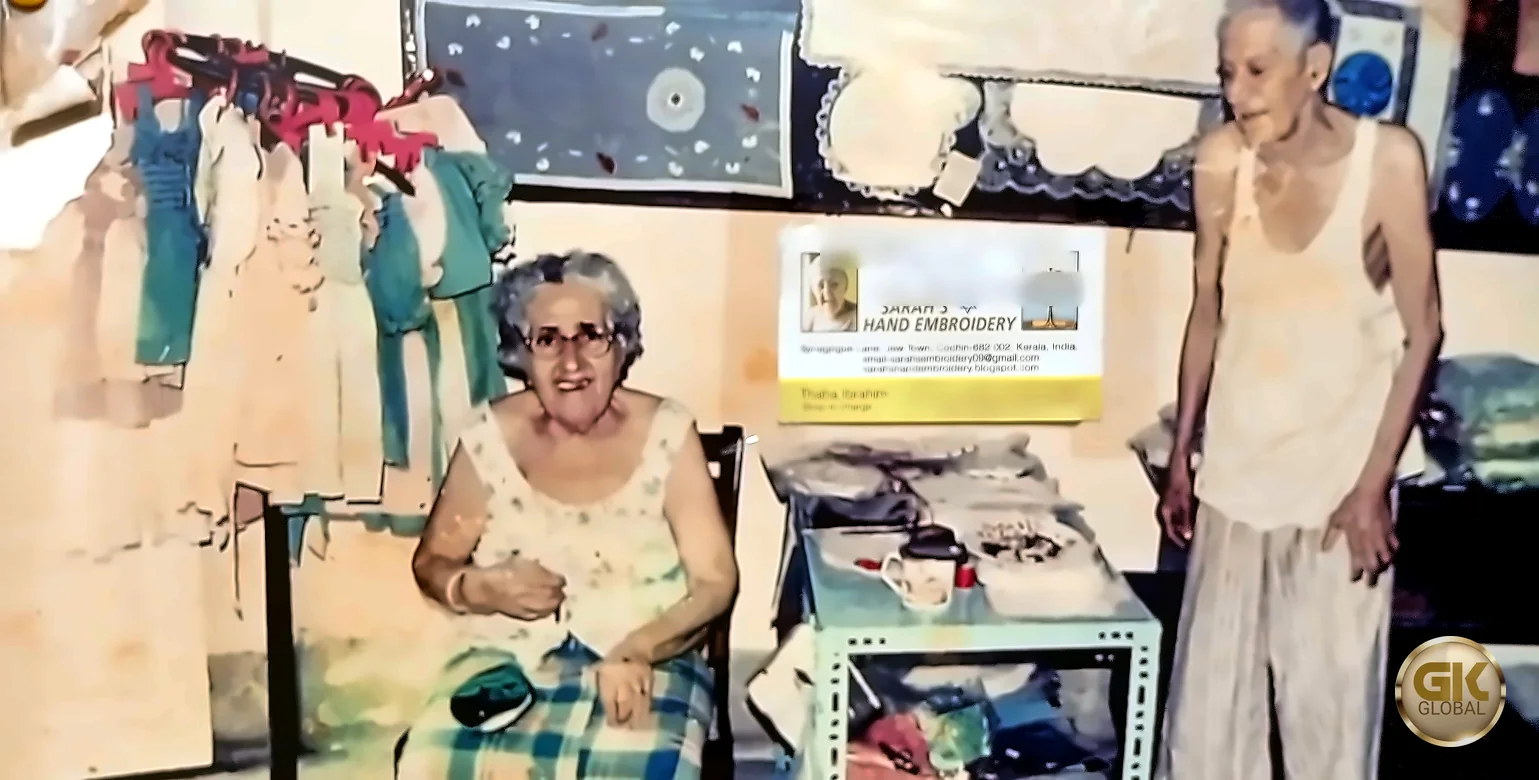
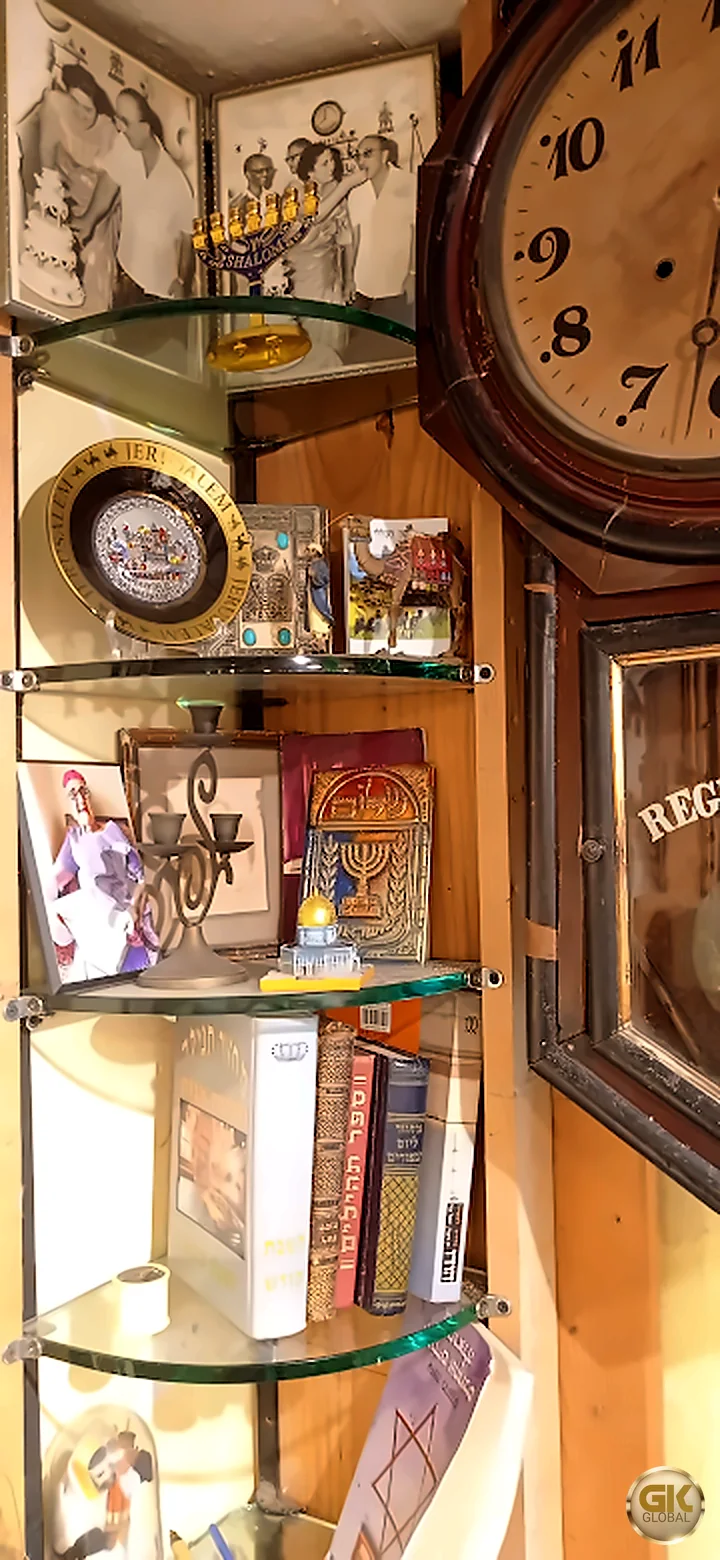
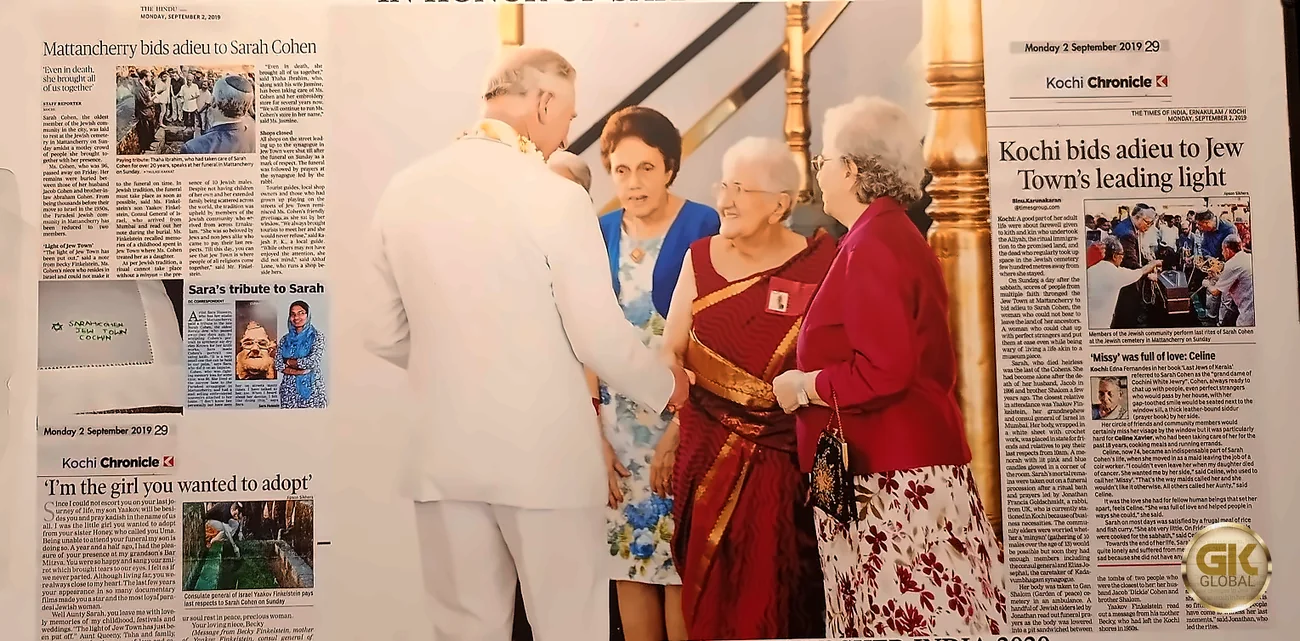
Sarah sat in the shop for most of the day, often in a pink kippah of her own, and talked to visitors from every country who stopped at her window. Her house became a kind of living museum, with family photographs, a menorah, prayer books, souvenirs from Israel, and a photograph of her meeting Prince Charles and Camilla when they visited the Paradesi Synagogue in November 2013. She sang old Jewish songs and prayers to anyone who asked. She also took pride in being an Indian citizen: in April 2019, at 96, she voted in the Lok Sabha election, and she was said to have missed only one election in her life, because it fell on the Sabbath.
Thaha Ibrahim: "she treated me like her son"
The story of Sarah Cohen cannot be told without Thaha Ibrahim. In 1982, Thaha, a Muslim boy of 12 or 13 from Mattancherry, was selling postcards and spices to tourists in Jew Town. Jacob Cohen let him store his postcards in their house. Sarah was not pleased at first, but Jacob insisted. A few years later, when Thaha was about 19, he helped Sarah with the embroidery of a cushion cover for the synagogue. She was surprised: "So you know about stitching!" From then on she taught him the patterns and techniques of Cochin Jewish embroidery, and he became her helper in the shop.
Before Jacob died in 1999, he asked Thaha to look after Sarah, who had no one else in Kochi. In 2000, at 77, Sarah handed the running of the shop to Thaha, telling him that the business should only grow. He kept his promise. He expanded the business, bought kosher food and bread so that she could keep the Sabbath, took her out to functions and festivals, and, with his wife Jasmine, cared for her for the rest of her life. He even organised an exhibition on the Jews of Malabar and designed Hanukkah lamps for it. A Christian woman, Celine Xavier, joined the household as a cook in 2002 and became Sarah's companion and caregiver; after Sarah fell from her bed one night in 2012, Celine slept beside her every night.
A Jewish woman in the care of a Muslim man and a Christian woman, in a lane between a synagogue, a temple and a mosque: the household became famous as a symbol of Kochi's tolerance. Thaha keeps the shop closed on Saturdays and on Jewish holidays, as Sarah did, and lights the Sabbath candles on Friday evenings.
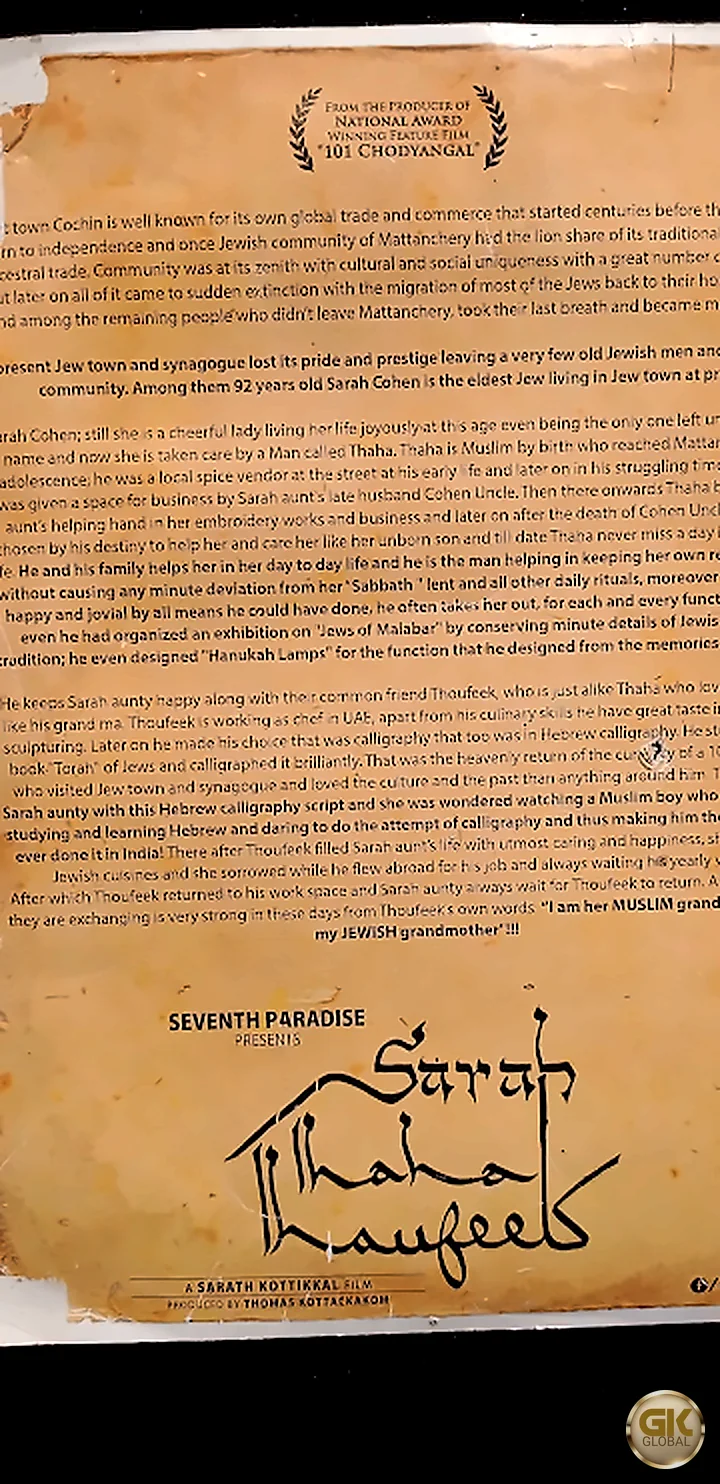
The film: Sarah Thaha Thoufeek
Another young Muslim, Thoufeek Zakriya, a chef from Kochi who learned Hebrew calligraphy and copied out the Torah by hand, also became close to Sarah. He called her "my Jewish grandmother". The Thrissur filmmaker Sarath Kottikkal began filming the three friends in 2013, and the documentary Sarah Thaha Thoufeek, produced by Thomas Kottackakom, took about seven years to complete. It premiered in early 2020 at Beit Hatfutsot, the Museum of the Jewish People in Tel Aviv, shortly before the COVID-19 lockdowns.
The last days
In her final years, Sarah's memory faded. Her carers said she sometimes forgot the details of the day, but she still remembered her songs and the Shema Yisrael, the central Jewish prayer. She ate well and was in fair health until, about two weeks before her death, she fell while getting up, suffered a small fracture and spent some time in hospital.
She died at home on Friday, 30 August 2019, at about 1:30 in the afternoon, just hours before the Sabbath. Because Jewish burials are not held on the Sabbath, her body was kept in a hospital mortuary at Palluruthy until Sunday. On 1 September 2019, her body, wrapped in a white sheet, lay in the house for people to pay their last respects. Jews, Muslims, Christians and Hindus filled the lane. The shops of Jew Town closed until after the funeral as a mark of respect. The Israeli Consul General in Mumbai, Yaakov Finkelstein, came for the rites. With so few Jewish men left in Kochi, making up a minyan of ten for the prayers was itself a challenge.
She was buried in the old Jewish cemetery in Mattancherry, beside her husband Jacob. "Even in death, she brought all of us together," one mourner told The Hindu.
After Sarah
Sarah left Thaha her wedding ring, her Singer sewing machine, her embroidery patterns and the shop, and he continues to run Sarah's Hand Embroidery on Synagogue Lane. In 2020 he turned part of her house into a small museum, with her photographs, embroidery tools, kitchen utensils, prayer books and Jewish textiles, "to preserve the Jewish history for the future generations". The pictures on this page were taken there. Today the stitching is done by more than a hundred women working to Sarah's designs in workshops in Tamil Nadu and Andhra Pradesh, and Thaha is teaching the craft to his son.
In 2024–25 he set out to recreate, by hand, a complete traditional Cochin Jewish wedding dress, the bride's pudava, blouse and veil, in gold-thread embroidery, following a pattern Sarah had drawn some 80 years earlier. Such a dress had not been made in Kochi for half a century. It is meant for the new Jewish museum beside the Paradesi Synagogue.
Sarah's death left only a handful of Paradesi Jews in Kochi. Queenie Hallegua, warden of the synagogue from 2012 to 2018, died in August 2024 at 89. By 2026 her nephew, Keith Hallegua, was described as the last Jew of Jew Town, praying in a 458-year-old synagogue that now relies on visiting Jews to make up a minyan. The street still bears its name, and the synagogue still draws visitors from all over the world. And in a small green house halfway down the lane, a Muslim tailor still closes his shop every Saturday, for Sarah aunty.
Visiting Jew Town
- Where: Jew Town, Mattancherry, Kochi, about 3 km from Fort Kochi.
- The Paradesi Synagogue: usually open Sunday to Thursday, closed on Fridays, Saturdays and Jewish holidays. Dress modestly, and note that photography is not allowed inside.
- Sarah's Hand Embroidery: on Synagogue Lane, a few steps from the synagogue; closed on Saturdays.
- Nearby: the Mattancherry Palace, the spice warehouses of Bazaar Road and the antique shops of Jew Town.
A note on the sources
- Sarah Cohen's year of birth is given as 1922 in most sources, including reports that she died days before her 97th birthday, but some articles say 1924. Her ancestry is variously described as Sephardic or Baghdadi. Thaha Ibrahim's age when he met the Cohens is given as 12 or 13. We have followed the majority of sources and noted the differences.
- Numbers of Jews remaining in Kochi change with each report; the figures here are as reported in 2024–2026.
(Read also The Jews of Kerala: Two Thousand Years on the Malabar Coast, places of worship in the High Range and the history of Munnar.)
See it for yourself, with a local driver who knows these roads.
Book a Munnar Jeep SafariSources & further reading
- Al Jazeera (Apr 2024): Saving Sarah, the last Jewish embroidery shop in Kochi
- Onmanorama (Sep 2019): India's oldest Jewish woman was under the care of a Muslim and a Christian
- The News Minute (Aug 2019): Sarah Cohen, oldest Jewish person in Kochi, passes away at 96
- The Week (Aug 2019): Sarah Cohen, oldest member of Kochi's Jew community passes away
- The Hindu (2 Sep 2019, print): Mattancherry bids adieu to Sarah Cohen
- Esther David: Sara Cohen, an obituary
- IMB (Mar 2019): The oldest woman in Jew Town, India
- The Quint (Jun 2023): A moving tale of religious tolerance in Kochi's Jew Town
- Onmanorama (Dec 2020): Sarah Cohen's house turns museum
- Onmanorama (May 2020): Documentary on Sarah Cohen's friendship with Thaha and Thoufeek
- Onmanorama (Jun 2025): Kerala tailor recreates a Jewish wedding dress
- Forward (Aug 2024): Queenie Hallegua, second-to-last Jewish resident, dies at 89
- Gulf News / AP (Aug 2026): Last Jews of Kochi
- Ynetnews (Nov 2013): Indian synagogue hosts Prince Charles
- Wikipedia: Sarah Jacob Cohen
Figures are from the sources listed and were checked in October 2026. Park timings and road conditions change, so please confirm before you travel.