
Kanchipuram: City of a Thousand Temples, Capital of the Pallavas and the Silk City
A royal capital where scholars came from afar, a Pallava king's history carved in stone, a wooden god kept under water for forty years, the battles of Conjeeveram and the looms that still weave its famous silk. The story of Kanchipuram through inscriptions, travellers' accounts, old engravings and newspapers, with our own assessments.
Few towns in India have been important for as long as Kanchipuram. For more than fifteen hundred years it has been a royal capital, a university town, a centre of Buddhist, Jain, Shaiva and Vaishnava learning, a pilgrimage city and a weaving town whose silk is worn at weddings across the world. Sanskrit tradition counts it among the seven sacred cities of India that grant liberation, the only one of the seven in the south. Its temples span every great period of South Indian architecture, from the Pallava sandstone shrines of the eighth century to the soaring Vijayanagara gateways of the sixteenth.
This article follows the city through its own records: inscriptions on stone, the account of a Chinese pilgrim, the sculpted history of a Pallava king, the drawings and newspaper engravings of the colonial period and the living traditions of its temples and looms. Established facts come first. Where the evidence is thin or disputed, we say so, and our own reading is kept in clearly marked boxes.
At a glance
- Where: Kanchipuram district, Tamil Nadu, on the Vegavathi river near the Palar, about 72 km south-west of Chennai.
- Other names: Kanchi, Kachchi in old Tamil, and Conjeeveram or Conjeveram in British records.
- Capital of: the Pallava kings, roughly from the fourth to the ninth century CE; later an important city under the Cholas and the Vijayanagara empire.
- Known for: the Kailasanatha, Vaikuntha Perumal, Ekambareswarar, Kamakshi Amman and Varadaraja Perumal temples, and Kanchipuram silk saris (a registered Geographical Indication since 2005–06).
- Divisions: Shiva Kanchi (Big Kanchi), Vishnu Kanchi (Little Kanchi) and, a few kilometres away, Jina Kanchi at Tiruparuttikunram, the old Jain quarter.
An ancient city of learning
Kanchi appears early in the written record. The Sanskrit grammarian Patanjali, usually dated to the second century BCE, mentions it in passing. In the fourth century CE the great Allahabad pillar inscription of the Gupta emperor Samudragupta lists, among the southern kings he defeated, Vishnugopa of Kanchi, an early Pallava ruler.
The most vivid early story comes from far away, in Karnataka. A Sanskrit inscription on a stone pillar at Talagunda, composed in the mid-fifth century for the Kadamba kings, tells how the founder of their dynasty, a young Brahmin scholar named Mayurasharma, travelled to Kanchi with his teacher and grandfather to study the Vedas at its ghatika, a royal college of learning. There he was humiliated in a quarrel with a Pallava horseman. Enraged, he gave up his studies, took up the sword and went on to carve out a kingdom of his own, the first native kingdom of Karnataka. The inscription is one of the earliest records of Kanchi as a place where students came from distant lands.
Our assessment: a quarrel that made a kingdom?
The Talagunda story is told by the Kadambas about themselves, a century after the event, and it is meant to show their founder as a scholar pushed into arms by injustice. Historians have pointed out that his revolt also coincides with a period of Pallava weakness after Samudragupta's southern campaign, and some think Mayurasharma first served the Pallavas as a commander before turning against them. Our view: the quarrel is probably a real memory shaped into a founding legend. What the inscription proves beyond doubt is the reputation of Kanchi's ghatika: in the fifth century, a family of learned Brahmins from the far west of the Deccan thought it the natural place to send a gifted student.
The city the Chinese pilgrim saw
Around 640 CE the Chinese Buddhist monk Xuanzang, travelling through India to collect scriptures, reached Kanchipura, which he described as the capital of the kingdom of Dravida. He had hoped to sail on to Sri Lanka, but at Kanchi he learned that the island was in turmoil and gave up the plan. His account, translated into English by Samuel Beal in 1884, describes a city about six miles round, whose people he found brave, truthful and devoted to learning. He counted around a hundred Buddhist monasteries with some ten thousand monks, numerous Hindu temples and many Jain ascetics, and he recorded that the great Buddhist philosopher Dharmapala, a famous teacher of the monastic university at Nalanda, had been born in Kanchi.
Kanchi's name is linked with several other Buddhist teachers, including the logician Dignaga and, in later Chinese and Japanese tradition, Bodhidharma, the monk credited with carrying Chan (Zen) Buddhism to China. Buddhism survived in the city for centuries: a fourteenth-century Javanese text is said to mention Buddhist monasteries at Kanchi. Today almost nothing of them remains above ground, apart from a few Buddha images kept in temples and museums.
Our assessment: was Bodhidharma from Kanchipuram?
The earliest Chinese sources describe Bodhidharma only as a monk from the West or from South India, and in one early account as the third son of a South Indian king. The specific identification with Kanchipuram and the Pallava royal family appears much later and is not supported by any Indian record. Our view: a South Indian origin is plausible, and Kanchi, the leading Buddhist city of the Tamil country in his era, is a reasonable guess. But it remains a guess. The Kanchi–Bodhidharma link should be presented as a tradition, not as established history.
The Pallava temples
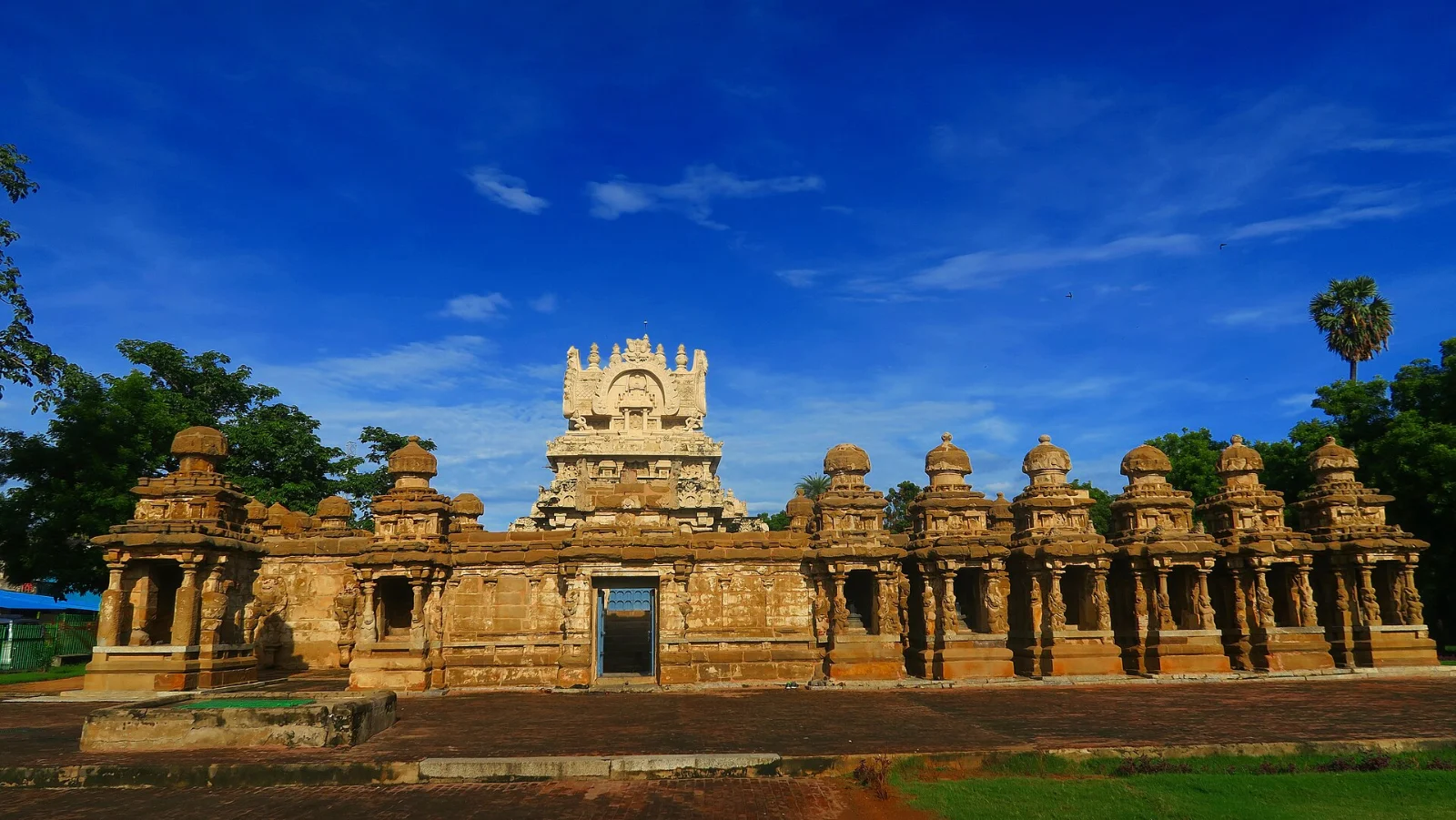
The Pallava kings, who ruled from Kanchi for some five centuries, turned the city into a laboratory of temple architecture, the inland twin of their seaside workshop at Mahabalipuram. The finest survivor is the Kailasanatha temple, built by Narasimhavarman II Rajasimha (about 700–728) and completed by his son. Unlike the granite of Mahabalipuram, it is built largely of soft sandstone on a granite base. The main shrine, with its pyramidal tower, stands within a courtyard lined by a continuous ring of small cells, each a miniature shrine, and its walls are crowded with sculptures of Shiva in many forms. Faint traces of Pallava wall painting survive in some of the cells.
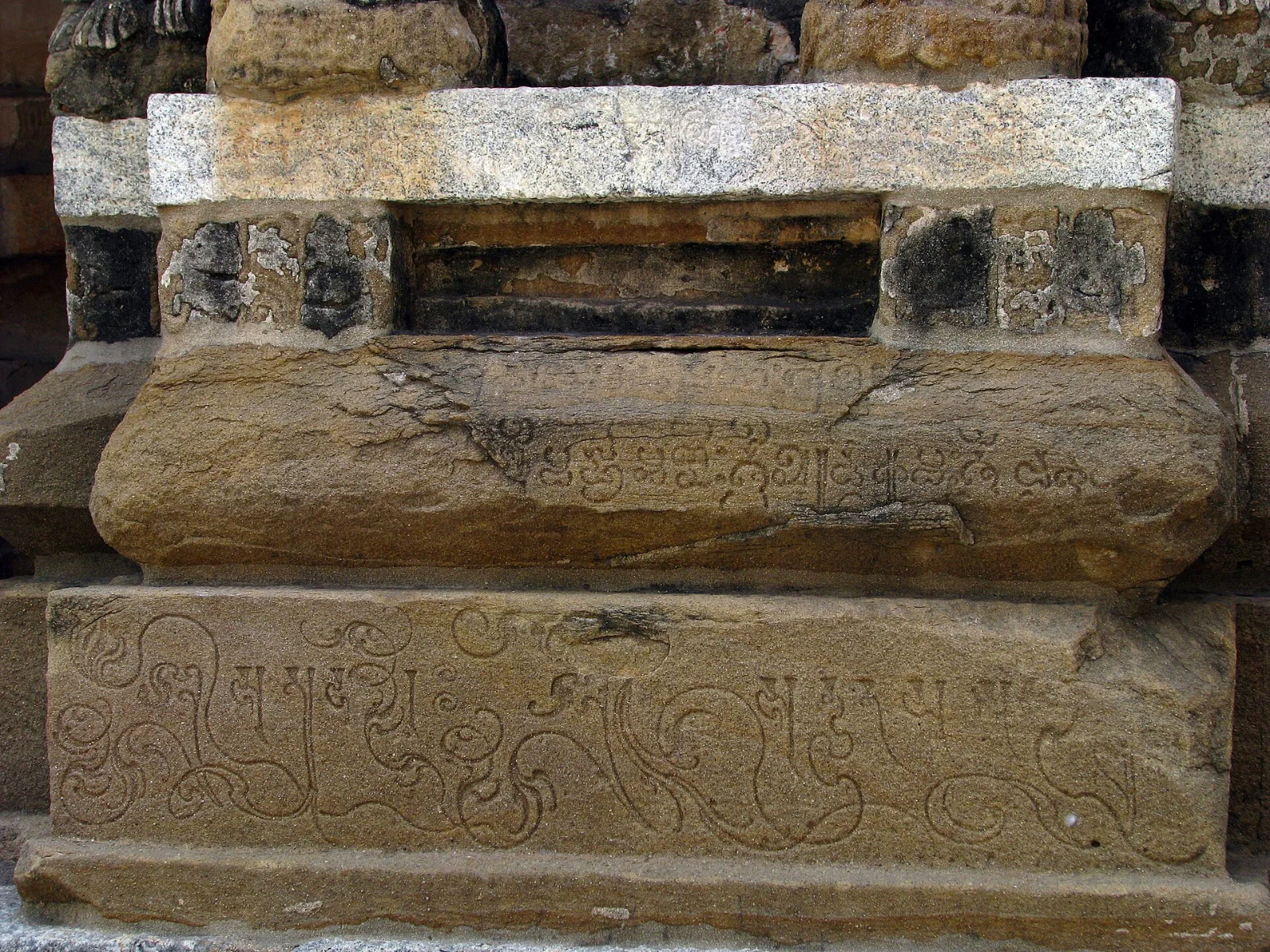
Around the base of the temple run Sanskrit inscriptions in an elaborate, almost decorative form of the Pallava-Grantha script, listing the king's many titles. They are among the most beautiful inscriptions in India and an important source for the dynasty's history.
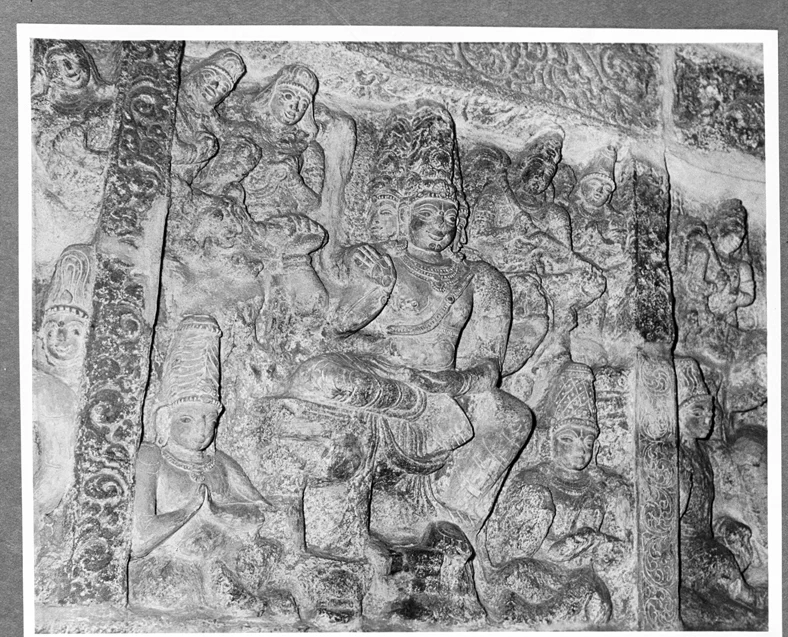
A generation later, Nandivarman II Pallavamalla (about 731–796) built the Vishnu temple now called the Vaikuntha Perumal temple, known in its own inscriptions as Parameshvara Vinnagaram. Its sanctum rises in three storeys, with Vishnu shown seated, reclining and standing. Its most remarkable feature is a long series of relief panels on the walls of the covered walkway around the shrine. They tell the story of the Pallava dynasty, from its mythical descent from the gods to the wars of Mahendravarman I and Narasimhavarman I against the Chalukyas. They end with a crisis: the early death of King Parameshvaravarman II without an heir, the search for a successor, and the selection of a twelve-year-old prince from a collateral branch of the family, who became Nandivarman II. Short inscriptions beside some of the panels explain the scenes. The Vaishnava saint-poet Thirumangai Alvar, a contemporary of the king, praised the temple in his hymns.
Our assessment: a history written by the winner
The Vaikuntha Perumal panels are often described as the first illustrated history of a dynasty in India, and in a sense they are. But they were also a political statement. Nandivarman II was not the obvious heir: he came from a distant branch of the family, was chosen as a boy, and had to fight rivals and the Chalukyas to keep his throne. Our view: the panels were designed above all to show that his accession was lawful, chosen by the ministers and blessed by the gods, and that he belonged to an unbroken royal line reaching back to Brahma. They are an invaluable historical source, but they should be read the way historians read any royal chronicle: as the official version.
Shiva Kanchi and Vishnu Kanchi
After the Pallavas, the Cholas, and later the Vijayanagara emperors, kept enlarging the city's temples. The largest Shaiva temple, the Ekambareswarar temple, is one of the five shrines in South India where Shiva is worshipped as one of the five elements, here as earth (prithvi). Its legend tells how the goddess Parvati worshipped Shiva in the form of a sand lingam beneath a mango tree, and a mango tree is still revered in the temple courtyard. The great southern gateway tower, about 57–59 metres high and one of the tallest in South India, was built in the time of the Vijayanagara emperor Krishnadevaraya, traditionally dated to 1509.
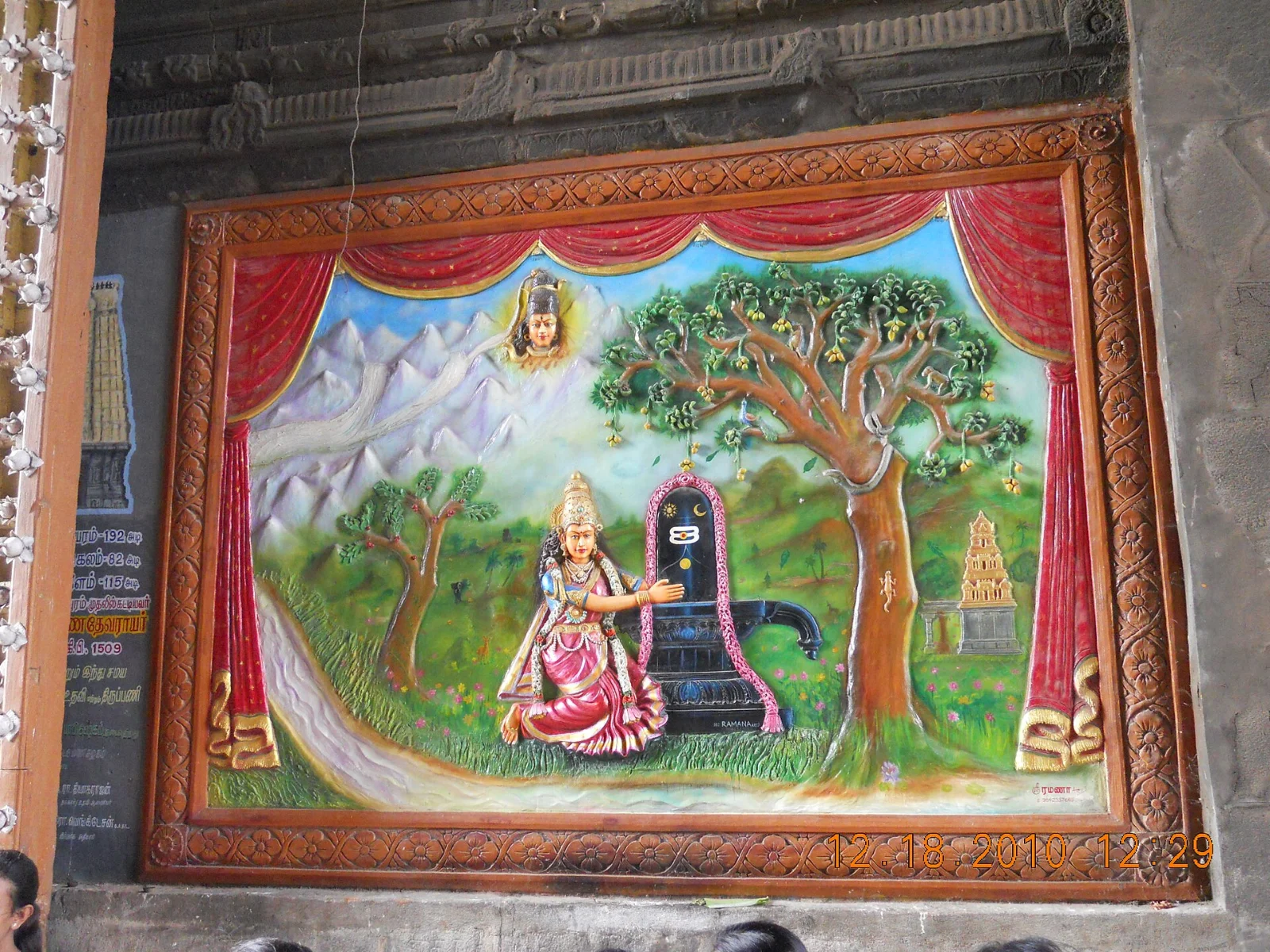
Our assessment: the 3,500-year-old mango tree
Guidebooks and even some official tourism pages describe the temple's mango tree as 3,500 years old. No mango tree lives anywhere near that long: even very old mango trees are measured in centuries, not millennia. Our view: what is ancient is the tradition, not the tree. The sacred tree has almost certainly been renewed many times from the same stock over the centuries, as is common with sacred trees in Indian temples. The tradition of worship beneath a mango tree at this spot is old, and that is remarkable enough.
At the centre of the old city stands the Kamakshi Amman temple, dedicated to the goddess as Kamakshi, one of the most important goddess shrines in the south. Close to it is the Kanchi Kamakoti Peetham, a Hindu monastic institution that traces its foundation to the philosopher Adi Shankara; historians debate how far back that link can be documented, and records show the matha was based at Kumbakonam for part of the eighteenth and nineteenth centuries before returning to Kanchipuram.
In Vishnu Kanchi, the great Varadaraja Perumal temple stands on a low rise called Hastigiri, "the elephant hill". Expanded by the Cholas from the eleventh century and by the Vijayanagara rulers, it is one of the 108 sacred shrines of Vishnu. The philosopher Ramanuja is associated with it in Sri Vaishnava tradition. Its hall of about a hundred pillars is famous for its sculptured columns of riders on rearing horses and mythical beasts, and for chains carved, link by link, from single blocks of stone.
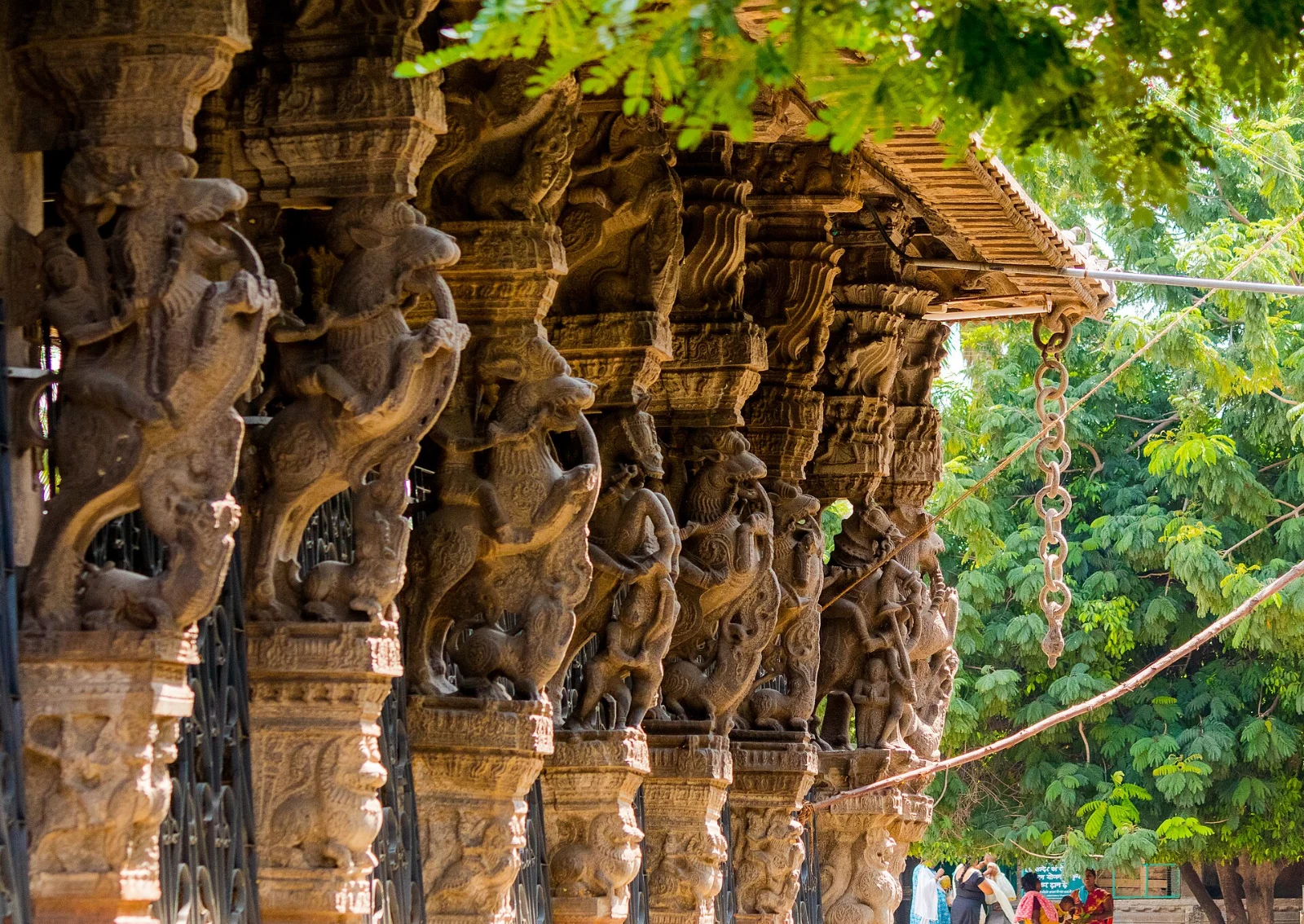
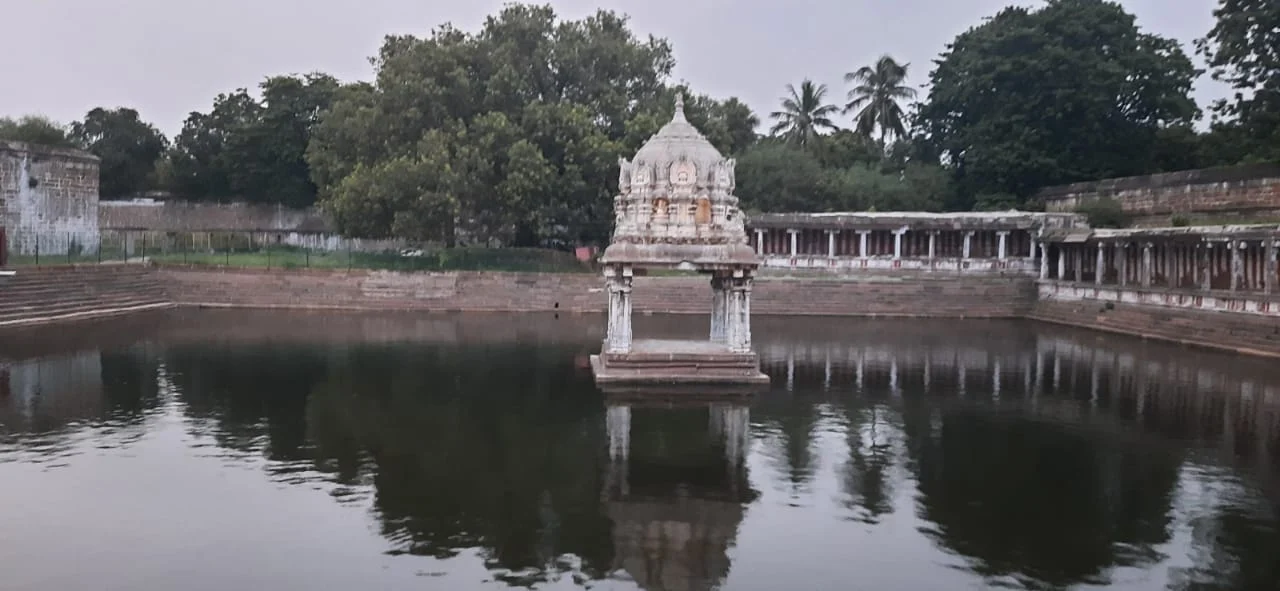
The temple keeps one of the most unusual customs in Hindu worship. Its ancient wooden image of Vishnu, called Athi Varadar because it is carved from the wood of the fig (athi) tree, is kept in a chamber under the waters of the temple tank, the Ananta Saras. Once in about forty years it is brought out and shown to worshippers for some 48 days, then returned to the water. The last two expositions were in July 1979 and in July–August 2019, when more than a crore of pilgrims are reported to have come to the town. The next is expected in 2059.
Our assessment: why forty years?
Temple tradition explains that the wooden image was hidden in the tank to protect it, perhaps during the invasions of the fourteenth century, and that when it was rediscovered a new stone image had already taken its place, so the old one was returned to the water and brought out only at long intervals. Lists of earlier expositions found in newspapers and devotional literature mention 1854, 1892 and the late 1930s (sources disagree between 1937 and 1939), followed by 1979 and 2019. Our view: those older dates are not exactly forty years apart, which suggests the strict forty-year cycle became fixed only in the twentieth century, building on an older practice of occasional expositions. The reasons for hiding a wooden image under water, protection in times of danger and the preservation of the wood, are both entirely plausible.
Jina Kanchi
On the far bank of the Vegavathi, at Tiruparuttikunram, is Jina Kanchi, the old Jain quarter. Its Chandraprabha temple goes back to the Pallava period, and the Trailokyanatha temple, enlarged under the Cholas and the Vijayanagara rulers, preserves painted ceilings telling the lives of the Jain Tirthankaras, among the most important Jain murals in South India. Together with Xuanzang's mention of many Jain ascetics, it is a reminder that Kanchi was never the city of a single faith.
Conjeeveram: the city in the wars of the eighteenth century
In the eighteenth century Kanchipuram, which the British called Conjeeveram, lay in the path of the wars between the British, the French, the Nawabs of Arcot and the rulers of Mysore. The thick walls of its great temples made them natural fortresses, and both sides garrisoned them. In 1751, during the struggle around Arcot, troops under Robert Clive fought in and around the town. Victorian illustrators later turned these campaigns into scenes of imperial heroism.
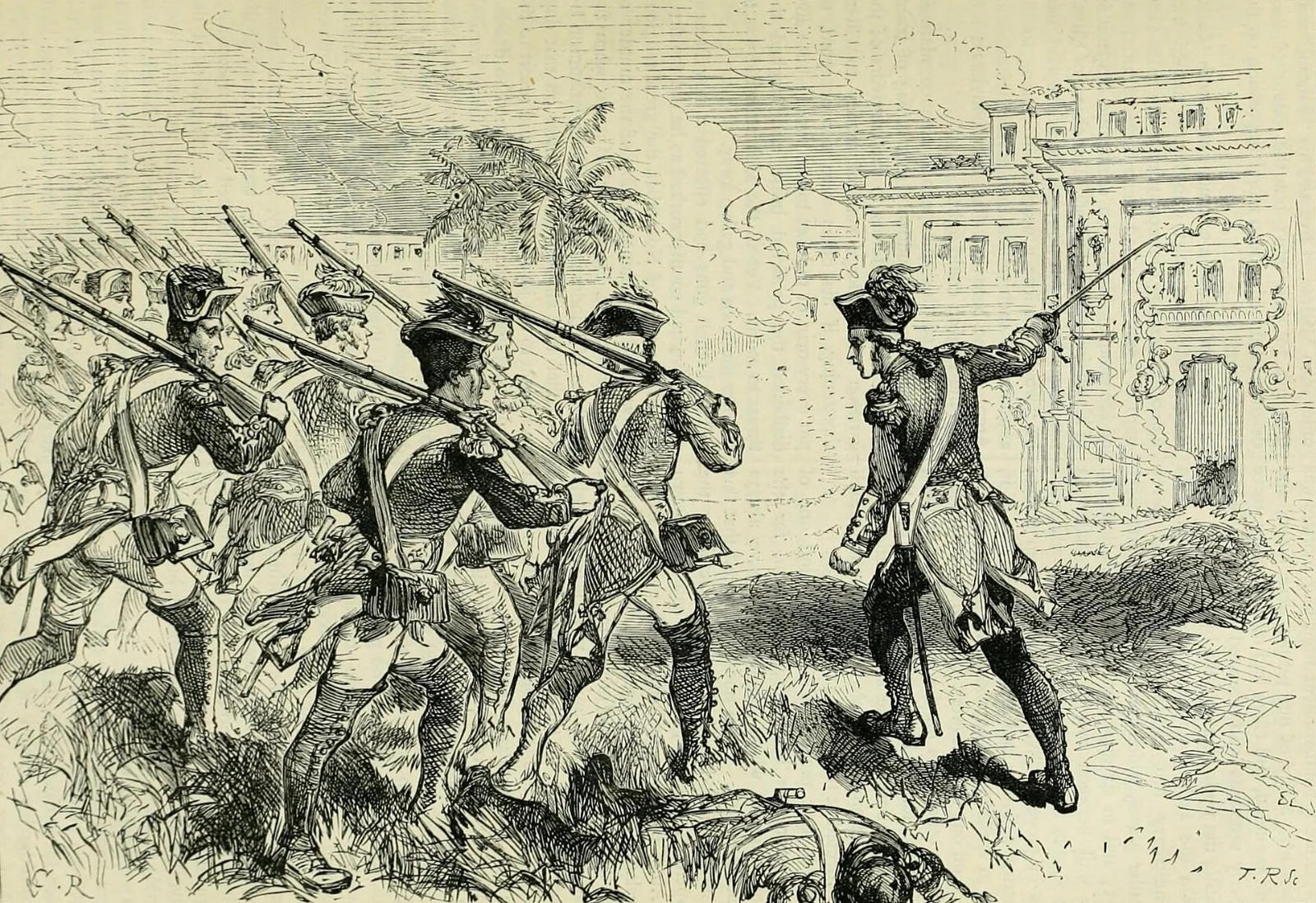
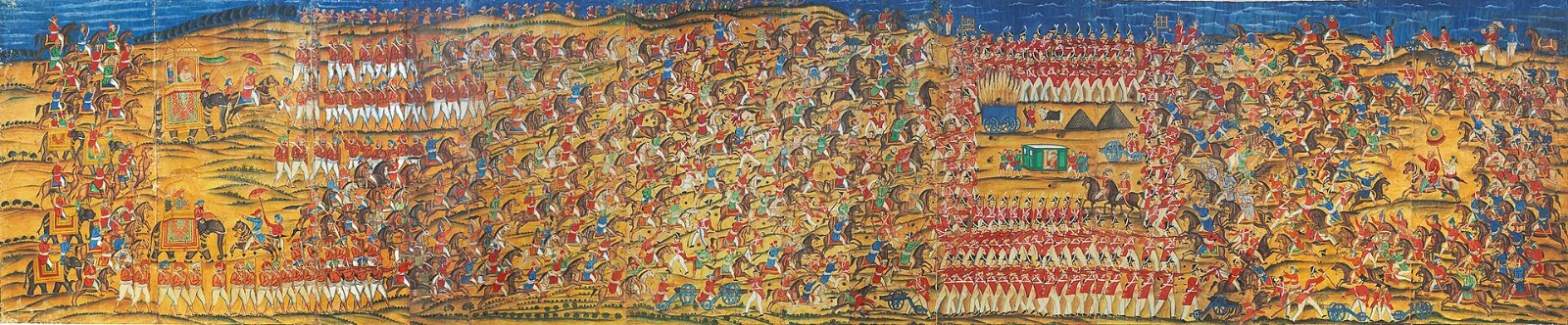
On 10 September 1780, near the village of Pollilur, a few kilometres from Kanchipuram, the armies of Hyder Ali and his son Tipu Sultan of Mysore surrounded and destroyed a British East India Company force under Colonel William Baillie. It was one of the worst defeats the Company ever suffered in India. Tipu later had the battle painted on the walls of his summer palace, the Daria Daulat Bagh at Srirangapatna, and copies of the mural were made on paper in the early nineteenth century.
A decade later the city was again a military camp during the Third Anglo-Mysore War. Officers who passed through drew its temple towers, and their views, engraved in London, were among the first pictures of Kanchipuram seen in Europe.
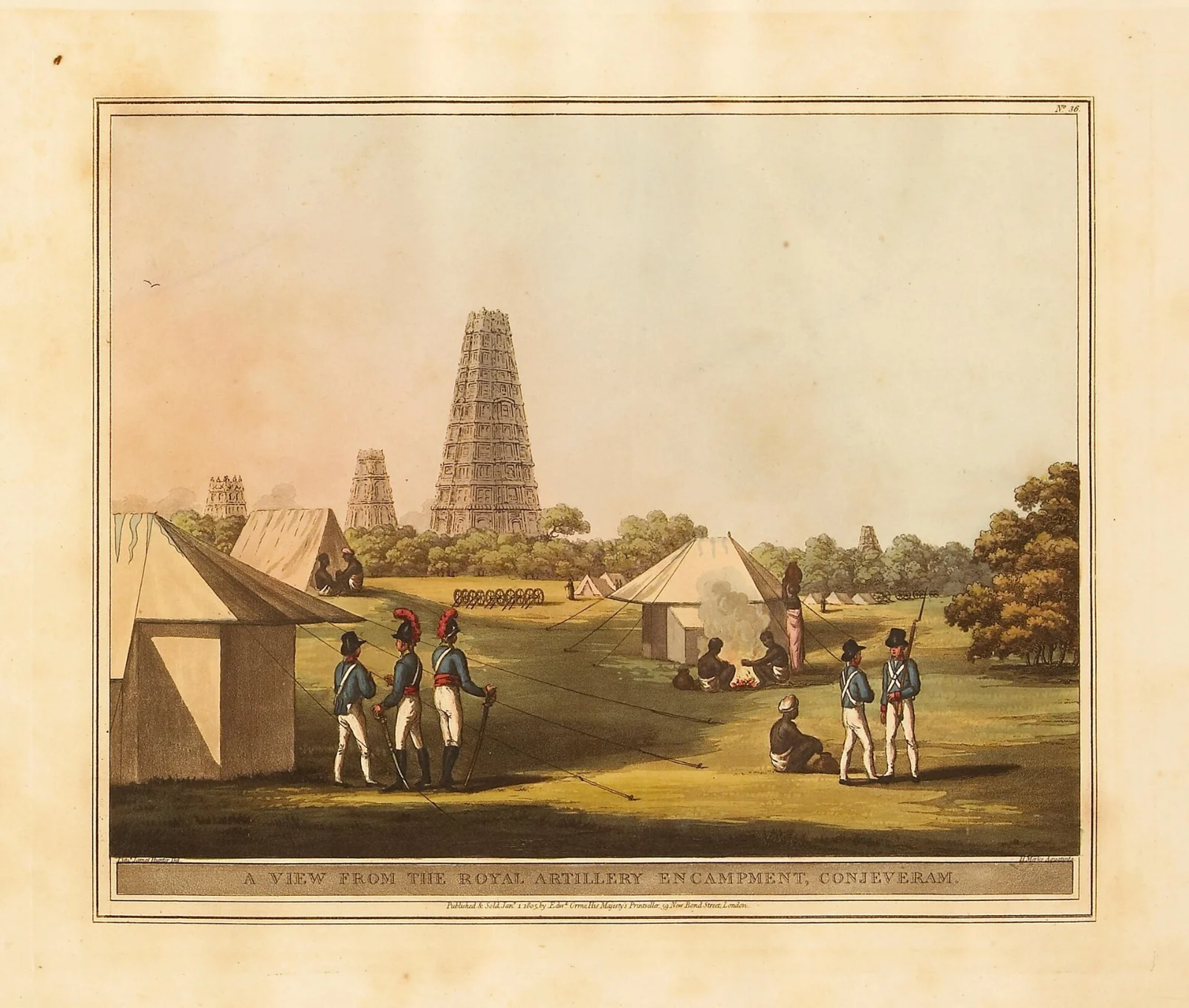
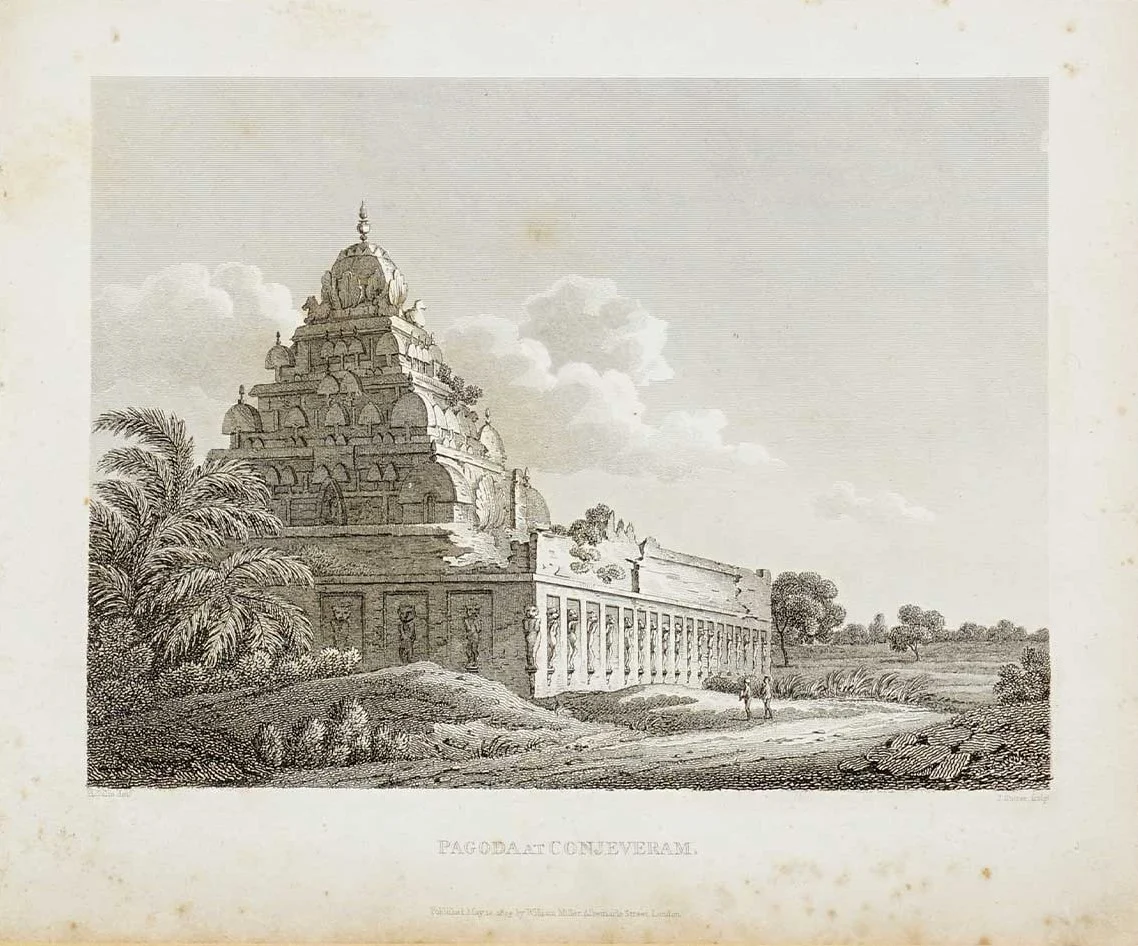
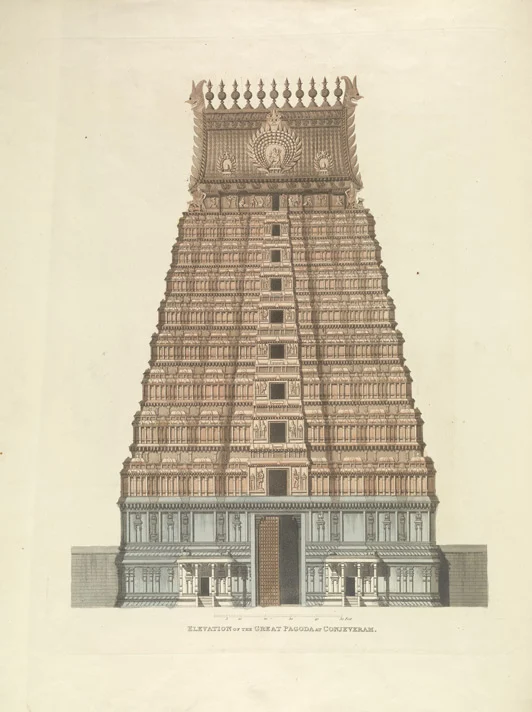
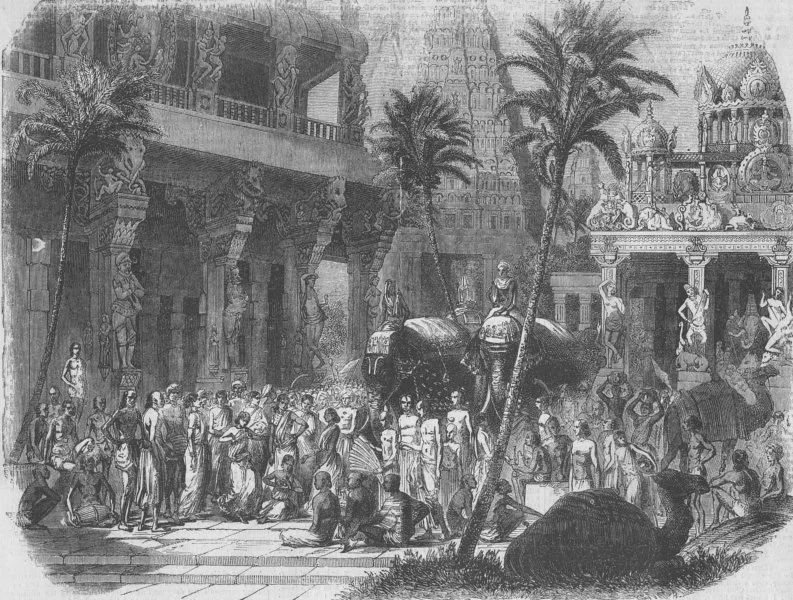
Temple tradition at the Varadaraja Perumal temple holds that Clive himself, impressed by its festival, presented an emerald necklace that is still used to adorn the deity on festival days. Wherever the truth lies, the story shows how deeply the temples were woven into the life of the colonial town as well.
The silk city
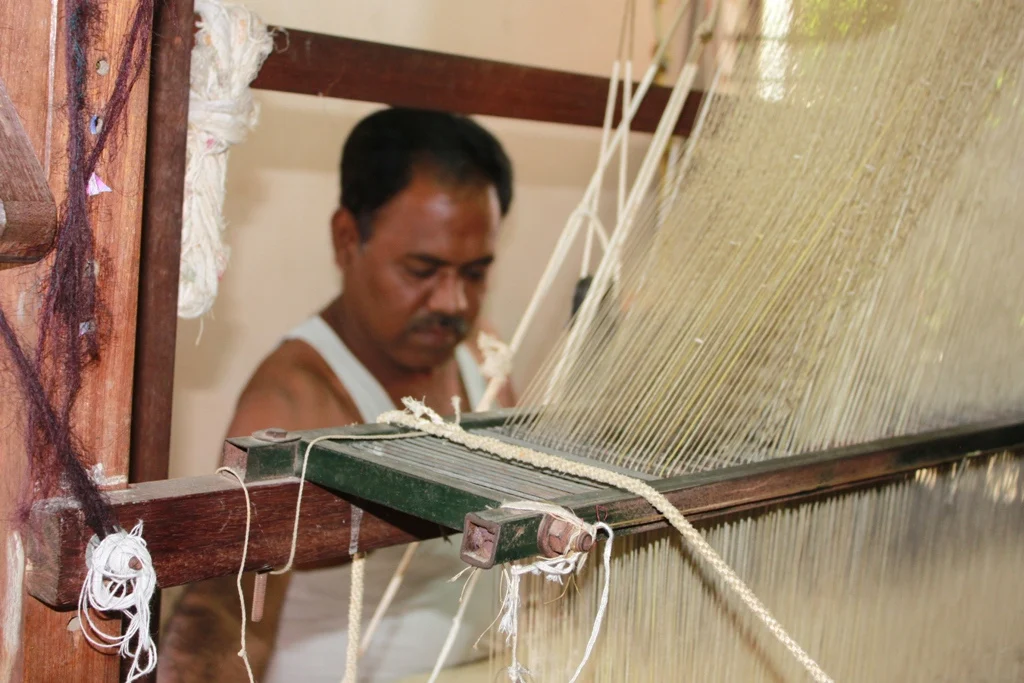
Kanchipuram's other great tradition is weaving. The city's weaving communities, chiefly the Saliyar and the Devanga, trace their craft to the sage Markandeya, in legend the weaver of the gods, and the town has been a weaving centre for centuries under royal and temple patronage. The Kanchipuram silk sari is known for its heavy mulberry silk, its rich gold zari and its bold contrasting borders. In the classic technique called korvai, the border and the body of the sari are woven separately on the same loom and interlocked so firmly that the border will not come apart even if the sari tears.
For generations weavers depended on master weavers and traders. In 1949 the first weavers' co-operative society, the Kamatchi Amman Society, was formed, and co-operatives still handle much of the trade. In 2005–06 the Kanchipuram silk sari was registered as a Geographical Indication, so that only saris made in the region to the agreed standards of silk and zari may carry the name. In 2008 about five thousand families in the area were still involved in sari production.
Kanchipuram today
Modern Kanchipuram is a busy district town where pilgrims, students of temple architecture and silk buyers mingle in the same streets. It was the birthplace, in 1909, of C. N. Annadurai, who became Chief Minister of Madras State in 1967, the first from the Dravidian movement, and under whom the state was renamed Tamil Nadu. Yet the old pattern of the city survives: Shiva Kanchi and Vishnu Kanchi on either side, the goddess at the centre, the Jain village across the river, and everywhere the sound of looms.
Visiting Kanchipuram
- Getting there: about 2 hours by road from Chennai; Kanchipuram also has a railway station. Mahabalipuram is about 65 km away, and the two are often visited together.
- Temples: most temples close in the afternoon, roughly from noon to 4 pm; start early. The Kailasanatha and Vaikuntha Perumal temples are protected monuments and open through the day.
- Dress and photography: modest dress is expected in all temples; photography is not allowed inside many sanctums, so check before taking pictures.
- Silk: look for the Silk Mark and the Geographical Indication label, and buy from co-operative society showrooms or established weavers if you want an authentic hand-woven sari.
- Best time: November to February, when the weather is cooler.
Read also: Mahabalipuram: the Pallava workshop by the sea · Madurai: the city of Meenakshi · Hampi: the rise and fall of Vijayanagara · The Jain heritage of Kerala · Buddhism in Kerala · Padmanabhaswamy and Thiruvananthapuram
See it for yourself, with a local driver who knows these roads.
Book a Munnar Jeep SafariSources & further reading
- Wikipedia: Kanchipuram
- Samuel Beal (tr.), Buddhist Records of the Western World (Xuanzang), 1884: Dravida, at Wisdom Library
- Wikipedia: Talagunda (the Talagunda pillar inscription)
- Wikipedia: Tiru Parameswara Vinnagaram (Vaikuntha Perumal temple)
- Google Arts & Culture: the Vaikuntaperumal temple, Kanchipuram
- Wikipedia: Ekambareswarar Temple (Kanchipuram)
- Wikipedia: Athi Varadar
- Kancheepuram District Administration: Kancheevaram silks and saris (GI)
- Wikipedia: Kanchipuram silk sari
- World History Encyclopedia: On the Pallava Trail in Kanchipuram
Figures are from the sources listed and were checked in October 2026. Park timings and road conditions change, so please confirm before you travel.