
Attukal Pongala: When Thiruvananthapuram Becomes One Kitchen for the Goddess
Once a year, millions of women cook sweet rice on brick hearths along the streets of Kerala's capital, all lighting their fires from one flame. The goddess of Attukal and her link to Kannaki, how the Pongala day unfolds, the Guinness records, the American scholar who studied it, the Kuthiyottam debate, and what happens to the bricks.
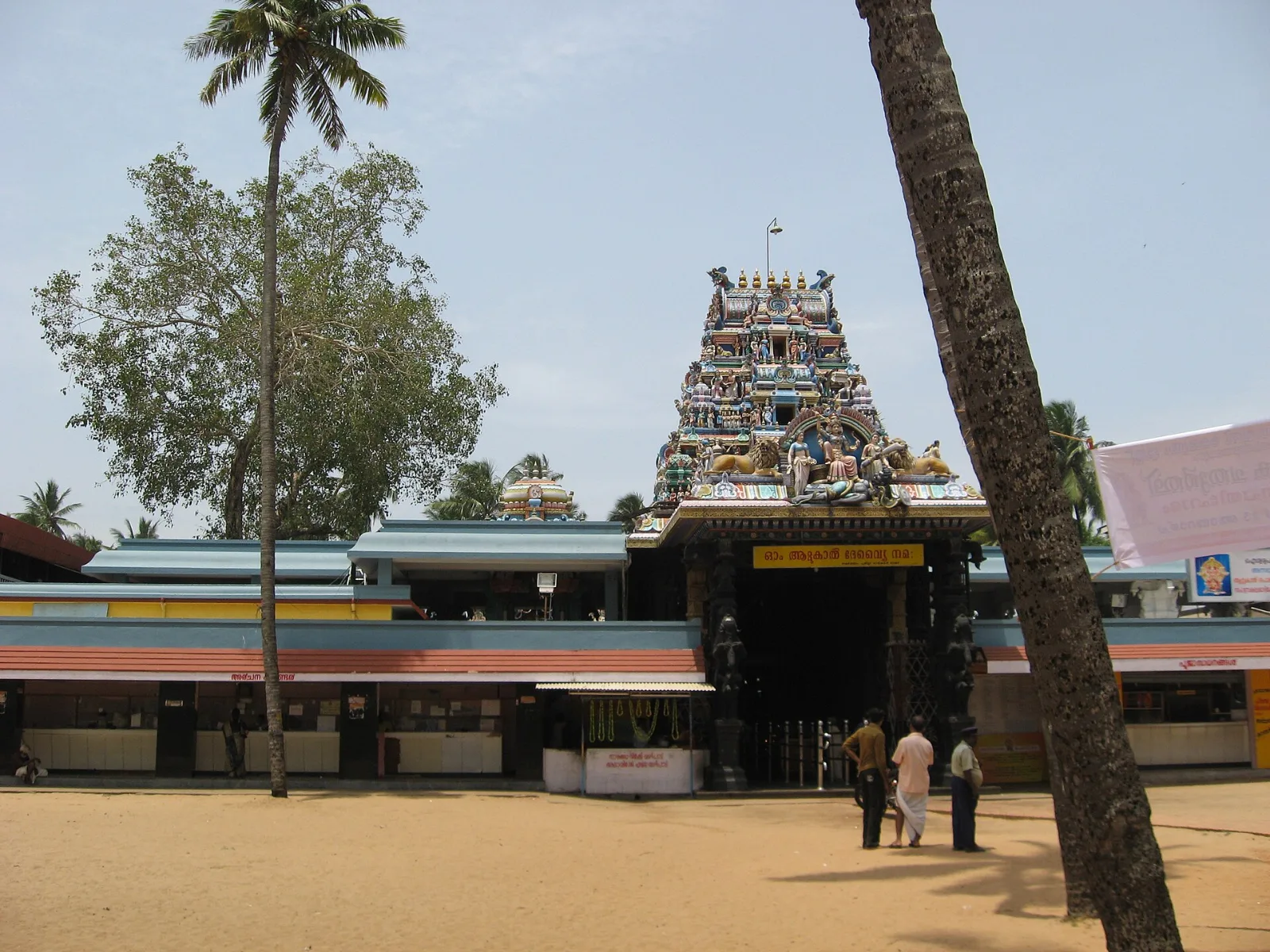
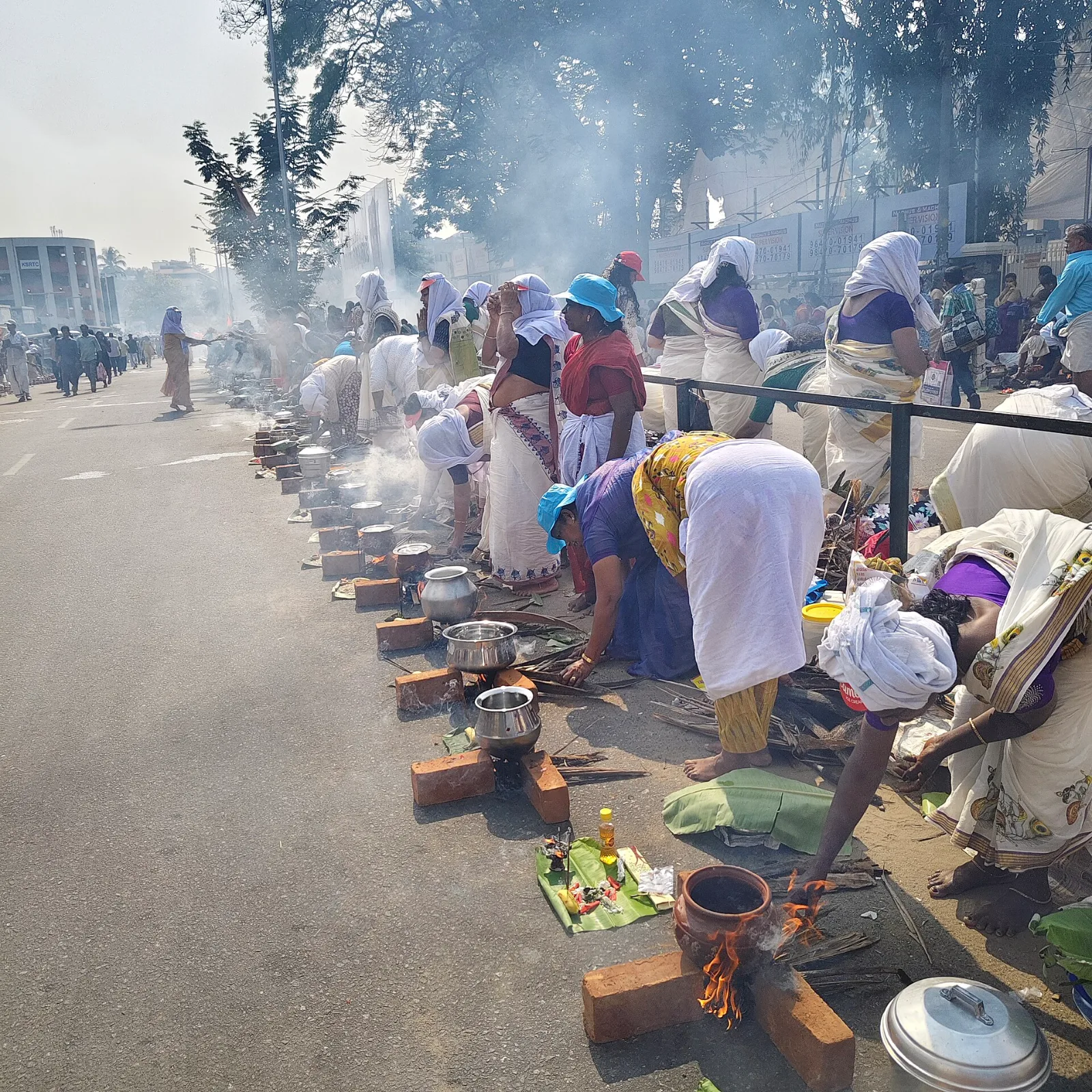
For one morning each year, the streets of Thiruvananthapuram stop being streets. From the temple at Attukal, south of the old Fort, for kilometres in every direction, women sit beside three-brick hearths on pavements, flyovers, school grounds and railway platforms, each with a new clay or metal pot. At a signal from the temple, a flame is passed from hearth to hearth until the whole city is smoking. This is Attukal Pongala, often called the largest gathering of women in the world, and sometimes the "women's Sabarimala". (For the city's other great temple, see Sree Padmanabhaswamy; for Sabarimala itself, see our Sabarimala article.)
At a glance
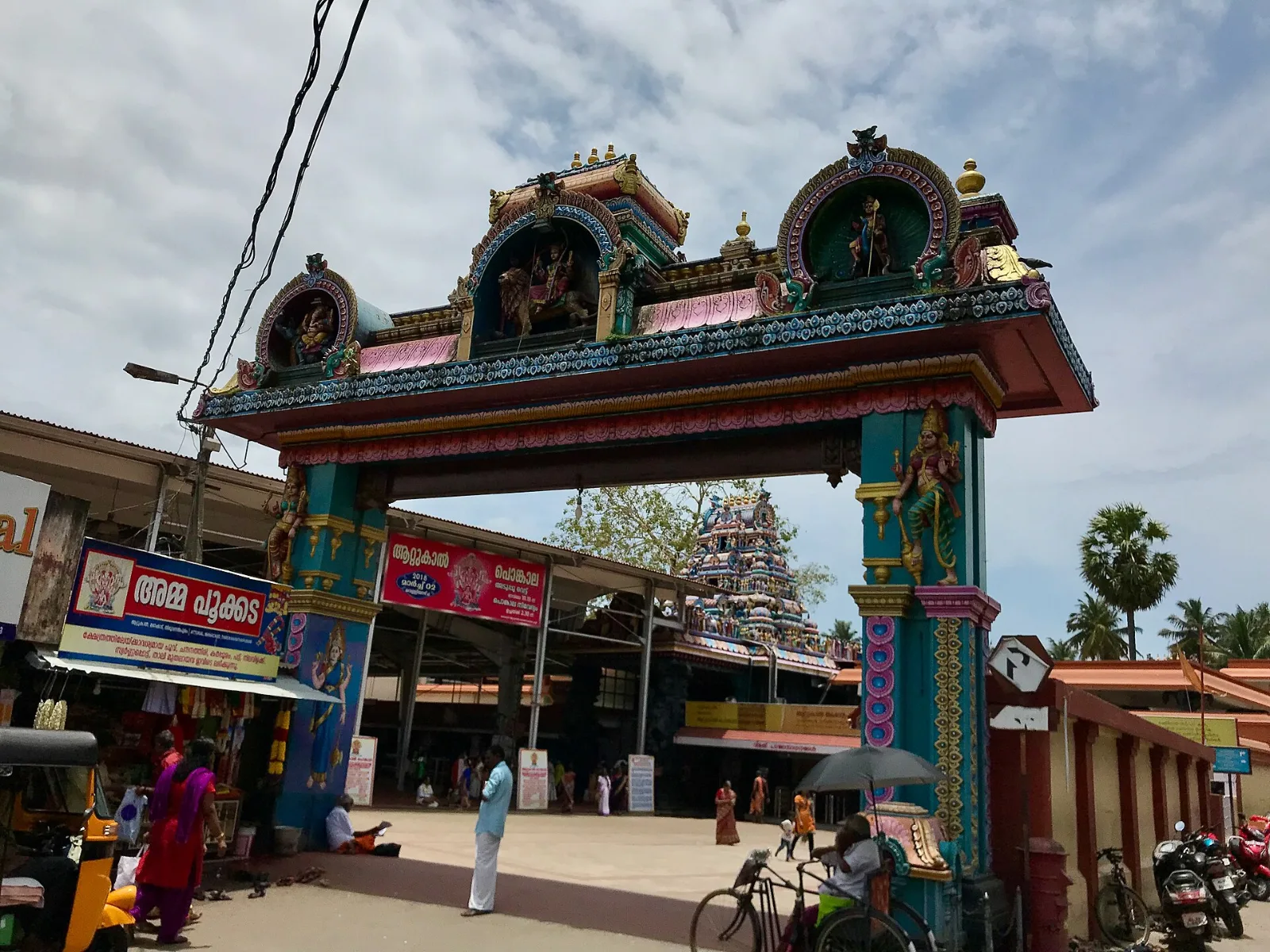
- Where: Attukal Bhagavathy Temple, on the bank of the Killi river about 2 km south-east of the Padmanabhaswamy temple, Thiruvananthapuram.
- Goddess: Attukal Amma, a form of Bhadrakali, identified with Kannaki, heroine of the Tamil epic Chilappathikaram.
- Festival: ten days in the Malayalam month of Kumbham (February or March). Pongala falls on the ninth day, on the Pooram star, usually close to the full moon.
- Records: Guinness World Records recognised 1.5 million women in 1997 and 2.5 million in 2009 as the largest annual gathering of women.
- Next: the 2027 festival runs from 14 to 23 February, with Pongala on 22 February (temple announcement; confirm closer to the date).
The goddess who crossed the river
The temple's own story begins with an old man of the Mulluveettil family, a Nair household of Attukal, bathing in the Killi river. A young girl appeared on the far bank and asked him to carry her across. He did, and took her home, but she vanished. That night she appeared to him in a dream and asked to be given a place in the sacred grove (kavu) nearby, where he would find three lines marked on the ground. He found them, built a small shrine, and the family's descendants still have a part in the temple's rituals.
The girl is identified with Kannaki. In the Chilappathikaram, the Tamil epic attributed to Ilango Adigal, Kannaki's husband Kovalan is wrongly executed in Madurai for stealing the queen's anklet. Kannaki proves his innocence by breaking her own anklet in the king's court, and in her fury she tears off her breast and burns the city. In Kerala tradition, she then walked west over the mountains towards Kodungallur, where she is worshipped as the goddess of the Kodungallur Bhagavathy temple, and she rested at Attukal on the way. There are no early records of the temple. The present stone structure and its towers are modern; the old shrine was small and set in a grove.
Ten days in Kumbham
The festival begins on the Karthika star of Kumbham with the kappukettu, the tying of the sacred band (kappu) that binds the goddess to the festival, and the start of the Thottampattu, songs that retell the story of Kannaki from her birth to the burning of Madurai. The songs continue each day. When the singers reach the death of the Pandya king, the festival reaches its climax.
On Pongala morning, after the Thottampattu reaches that point, the chief priest (tantri) lights a flame in the sanctum and gives it to the head priest (melsanthi), who lights the pandara aduppu, the temple's own hearth, in front of the shrine. In 2026 this was at 9:47 in the morning. Volunteers carry the flame outwards and it is passed hand to hand along kilometres of hearths. Each woman cooks her offering, keeping her eyes, by tradition, on the smoke rather than on her neighbour.
What is cooked
The classic offering is sharkkara pongala, rice cooked with jaggery, grated coconut, ghee and cardamom until it is thick and golden. Others make vella pongala (plain rice), payasam and kadumpayasam, and therali and mandaputtu, steamed sweets wrapped in leaves. In the afternoon, at a fixed hour (around 2:15 to 2:30 pm), priests come out from the temple and walk the streets sprinkling holy water over the pots. This is the nivedyam, the moment the offering is accepted. Only then do women pack up their pots and go home.
The last day
The festival closes with the kuruthi tharpanam, an offering of a red liquid of lime and turmeric to the fierce goddess, on the tenth night.
Records, and the scholar who counted
The numbers are vast and hard to verify. Guinness World Records accepted 1.5 million participants on 23 February 1997 and 2.5 million on 10 March 2009 as the largest annual gathering of women. The temple trust has since claimed figures of three to four million, which have not been independently checked.
The American scholar Dianne Jenett began studying the festival in the 1990s, wrote her doctoral dissertation on it, and published an article in the Journal of Feminist Studies in Religion in 2005. She helped the temple prepare its Guinness application and still returns to cook pongala herself. Her research found that pongala offerings were traditionally made by women of many castes, including Dalit women in fields and groves, long before the festival grew into its present form, and that today Hindu, Christian and Muslim women take part. For many participants she interviewed, the day is about a relationship with the goddess as a mother and about women's own space in the city, rather than about scripture.
Kuthiyottam and Thalappoli
Two other rituals involve children. In Thalappoli, girls dressed in new clothes walk in procession carrying plates of rice, flowers and a lamp. In Kuthiyottam, boys, usually between 5 and 12 years old, stay at the temple for seven days under a vow, sleeping there, eating temple food and performing 1,008 prostrations. On Pongala night they are dressed as warriors of the goddess, and a thin silver hook or wire is passed through a fold of skin at the side of the waist before they walk in the goddess's procession to the Manacaud Sastha temple and back. The wire is removed afterwards.
In 2018 the senior police officer R. Sreelekha wrote that the ritual amounted to cruelty to children, and the Kerala State Commission for Protection of Child Rights registered a case on its own motion. The temple trust's president replied that the description was misleading: that the prick is shallow and causes little pain, that no child is forced, and that parents sign declarations. The Devaswom minister at the time also defended the practice. In 2018, 993 boys took part. The ritual continues each year, though its critics have not been persuaded.
Smoke, bricks and a clean city
A festival of millions of fires creates mountains of bricks, pots and waste. Since 2018 the city corporation has collected bricks left behind and used them to build houses for homeless families under the state's LIFE Mission housing scheme; eight houses were built from the first year's bricks. Some 1,200 workers clean the streets within hours, and a green protocol discourages plastic and disposable plates. The corporation reported that waste fell from about 80 tonnes in 2018 to about 54 tonnes after these measures. The day also has a public health side: hospitals and fire services prepare for heat exhaustion and burns.
What is certain and what is not
- Documented: the Guinness recognitions of 1997 and 2009; the festival's calendar and rituals; the 2018 Kuthiyottam controversy; the brick and waste programmes.
- Tradition: the Mulluveettil legend; Kannaki's stop at Attukal; the temple's age.
- Uncertain: crowd figures since 2009, which are trust or police estimates.
- Debated: whether Kuthiyottam harms children.
Timeline
- UndatedThe Mulluveettil family establishes a shrine in the grove at Attukal (tradition).
- 1990sThe festival grows rapidly; Dianne Jenett begins her research.
- 1997Guinness records 1.5 million women (23 February).
- 2009Guinness records 2.5 million women (10 March).
- 2018The Kuthiyottam debate; brick reuse for LIFE Mission houses begins.
- 2026Pongala on 3 March; the hearth is lit at 9:47 am.
- 2027Festival 14–23 February; Pongala on 22 February.
Questions people ask
Can men take part?
The Pongala offering is made by women. Men help as volunteers, carry supplies, and run free water and food stalls along the route.
Can visitors and non-Hindus cook pongala?
Yes. Women of any religion or nationality can take part. Book a spot early through friends, a hotel or a local family, since places near the temple are claimed days in advance.
What should a first-timer bring?
Bricks, a new pot, rice, jaggery, coconut, firewood or dried coconut leaves, a hat and plenty of water. Many shops near the temple sell kits.
How do I get there?
Thiruvananthapuram Central railway station is about 2 km away. On Pongala day, roads are closed and trains and buses are packed; arrive the evening before if possible.
(Read also: Sree Padmanabhaswamy Temple, the dance forms of Kerala, Parumala and Parassinikadavu Muthappan.)
See it for yourself, with a local driver who knows these roads.
Book a Munnar Jeep SafariSources & further reading
- Wikipedia: Attukal Temple
- Wikipedia: Attukal Pongala
- Wikipedia: Silappatikaram
- Kerala Tourism: Attukal Pongala
Figures are from the sources listed and were checked in November 2026. Park timings and road conditions change, so please confirm before you travel.