
The First Mosque? Cheraman Juma Masjid, Malik Dinar and the Timber Mosques of Kerala
Tradition says India's first mosque was built at Kodungallur in 629, while the Prophet was still alive, after a Chera king sailed to Arabia. The evidence tells a slower and in some ways richer story, of Arab and Persian merchants who settled the Malabar ports and built mosques that look like Kerala temples.
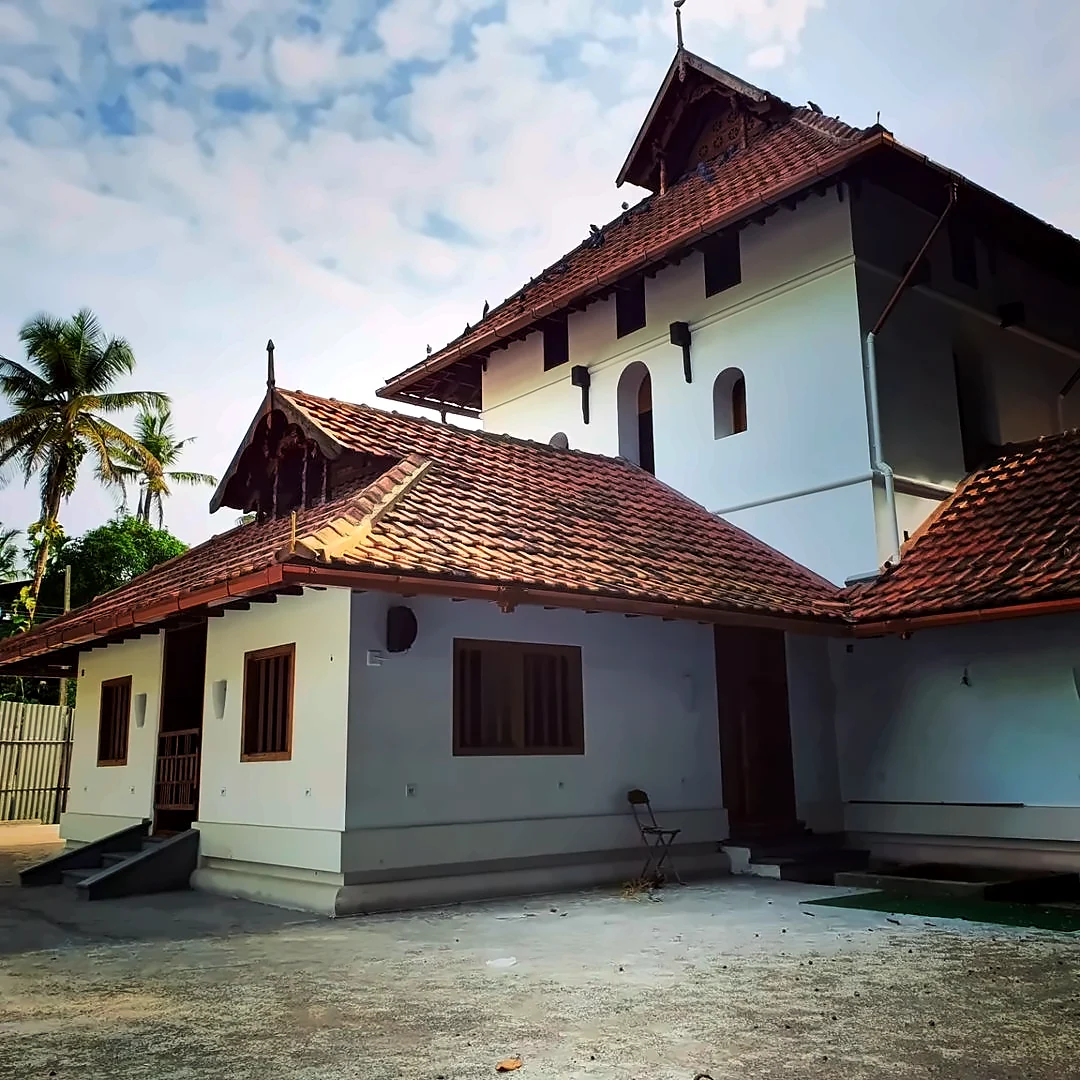
Drive north from Kodungallur towards Methala and you pass a low building with a sloping tiled roof, a gabled front and carved wooden doors. Without the signboard you might take it for a Kerala temple or an old tharavad house. It is the Cheraman Juma Masjid, which tradition calls the first mosque in India.
Inside, a brass oil lamp of the kind found in Kerala temples is said to have burned without going out for centuries. Behind the prayer hall are two old tombs, traditionally those of Habib ibn Malik and his wife. Non-Muslim visitors come in large numbers, and the mosque is often held up as a symbol of Kerala's religious harmony.
Tradition dates it to 629, while the Prophet Muhammad was still alive. The evidence tells a slower and in some ways richer story. This article sets the two side by side; as always, our own assessments are clearly marked.
At a glance
- Where: Cheraman Juma Masjid, Methala, Kodungallur (Thrissur district); Madayi (Kannur); the Mishkal, Muchundi and Jami mosques at Kuttichira, Kozhikode.
- Tradition: Cheraman Perumal accepts Islam in Arabia; Malik ibn Dinar and his companions found ten mosques along the coast, the first at Kodungallur in 629 (or 643, in another version).
- Earliest firm evidence: Arabic-script signatures on the Tharisapalli copper plates of Kollam, 849; a mosque foundation date of 1124–25 at Madayi; the Muchundi inscription (thirteenth century); the Mishkal mosque (fourteenth century).
- Key figures: Cheraman Perumal (legend); Malik ibn Dinar (legend, though a Basran ascetic of that name is historical); Nakhuda Mishkal of Calicut (historical, 1340s); Zainuddin Makhdum, author of the Tuhfat al-Mujahidin (sixteenth century).
- Today: the Cheraman mosque restored to its Kerala form by the Muziris Heritage Project (work began 2019, completed 2021–22); the Mishkal mosque still in use, four storeys high.
Arabs on the coast before Islam
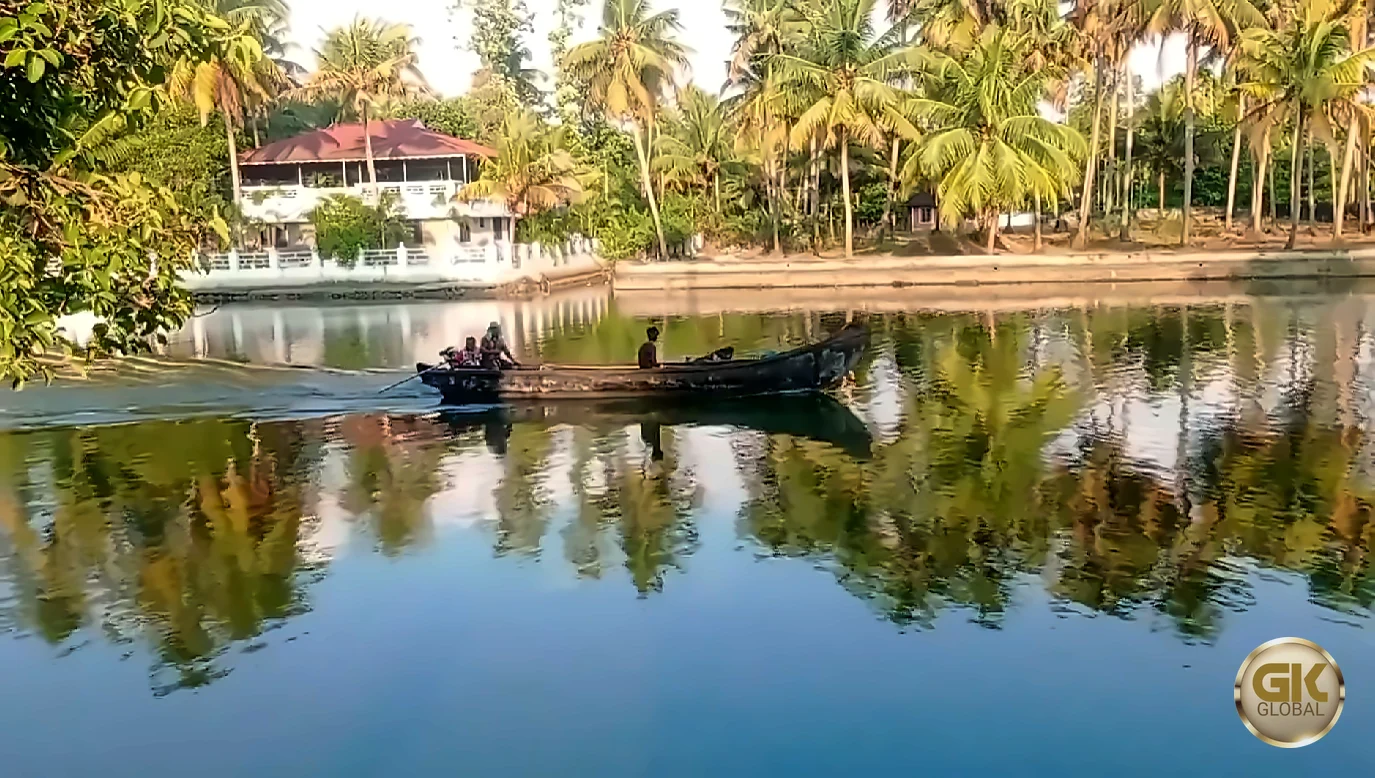
Arab, Persian and Jewish ships were trading on the Malabar coast long before the seventh century. Pepper, ginger and cardamom went west; horses, gold and dates came east. Traders waited months for the monsoon to turn, and some settled. Historians such as M. G. S. Narayanan have argued that the earliest Mappila Muslims descended from these merchants and the local families they married into, and that when Arabia became Muslim, so did many of their kin on the coast.
The legend of Cheraman Perumal
The best-known story of how Islam came to Kerala runs like this. The last Chera king, Cheraman Perumal, saw the moon split in two in the night sky. Arab pilgrims passing through Kodungallur told him that the Prophet had performed this miracle in Mecca. The king divided his kingdom among his relatives, sailed to Arabia, met the Prophet and became a Muslim.
On his way home he fell ill and died, in most versions on the coast of Arabia. Before dying he gave letters to his companions, led by Malik ibn Dinar, asking the rulers of Kerala to welcome them. They landed, were received with honour, and built mosques along the coast. The first, at Kodungallur, became the Cheraman Juma Masjid.
The oldest full telling is an undated Arabic text, the Qissat Shakarwati Farmad, ‘the tale of the great king Cheraman Perumal’. Its list of the first mosques runs from Kodungallur and Kollam north to Madayi, Barkur, Mangalore, Kasaragod, Kannur, Dharmadam, Panthalayini and Chaliyam. The story also appears in two sixteenth-century works: the Portuguese traveller Duarte Barbosa's account, and the Tuhfat al-Mujahidin, written by the Ponnani scholar Zainuddin Makhdum to rally Malabar's Muslims against the Portuguese.
Malik ibn Dinar: one name, two men
A man named Malik ibn Dinar is well known to Islamic history: a pious scholar and ascetic of Basra in Iraq, who died around 748. There is no early evidence that he ever travelled to India. Malabar tradition gives the name to the leader of the missionary party, and a shrine at Thalangara near Kasaragod is dedicated to him. Historians treat the Kerala Malik ibn Dinar as a figure of tradition whose name may have been borrowed from the famous Basran.
Our assessment: is it really the first mosque in India?
As a claim of history, 629 cannot be proved, and the evidence points to a later date for Islam's organised presence on the coast. But Muslims were almost certainly living in Malabar's ports earlier than anywhere else in India, and the Kodungallur tradition is very old.
‘One of the earliest places of Muslim worship in India, with a tradition going back to the Prophet's lifetime’ is a fair description. ‘Built in 629’ is not.
What the stones and copper say
The documents give a later but firmer picture. In 849, the governor of Venad issued copper plates at Kollam granting rights to a church and to merchant guilds. Among the witnesses who signed are men writing in Arabic script, merchants from West Asia, alongside signatures in Middle Persian and Hebrew. (The Jews of Kerala article touches on the same plates.)
Arab geographers of the ninth to twelfth centuries describe Muslim merchants living in the Malabar ports. The oldest mosque date that can be read with confidence comes from Madayi, near Kannur: a foundation plaque giving the year 518 AH, that is, 1124–25. In Calicut, an inscription at the Muchundi mosque in Kuttichira records a gift from the Zamorin in the thirteenth century.
What is proven, and what is not
- Arab and Persian merchants traded and settled on the Malabar coast before and after the rise of Islam: documented.
- Muslim merchants were established at Kollam by 849: documented, by Arabic-script witness signatures on the Tharisapalli plates.
- The Cheraman mosque was founded in 629 (or 643): tradition. The legend texts were recorded from about 1500 onward, and no inscription or early account confirms the date.
- A Chera king converted and died in Arabia: legend. No traveller before 1500 mentions it, including Ibn Battuta.
- Malik ibn Dinar led the first mission to Kerala: tradition. The Basran ascetic of that name is historical, but no early source puts him in India.
- The oldest reliably dated mosque on the coast is Madayi, 1124–25: documented by its foundation plaque, now set in the floor and no longer legible.
- The present Cheraman building is seventh-century: no. Historians date its oldest parts to the eleventh to fourteenth centuries.
- The Mishkal mosque was built by the shipowner Mishkal in the fourteenth century: documented, through Ibn Battuta's account of Calicut in the 1340s.
- The Mishkal mosque originally had seven storeys: disputed; one recent study says seven, other sources say five.
The Cheraman Juma Masjid through time
No part of the present building can be shown to be seventh-century. Kerala's timber and laterite buildings are repaired and rebuilt over and over, so no early fabric would be expected to survive. Historians generally date the oldest surviving parts to between the eleventh and fourteenth centuries, and the core, with its prayer hall and sanctuary, has been rebuilt more than once.
In the twentieth century the mosque grew. Concrete halls, corridors, a dome and minarets were added between the 1970s and the 1990s, and they hid the old building almost completely.
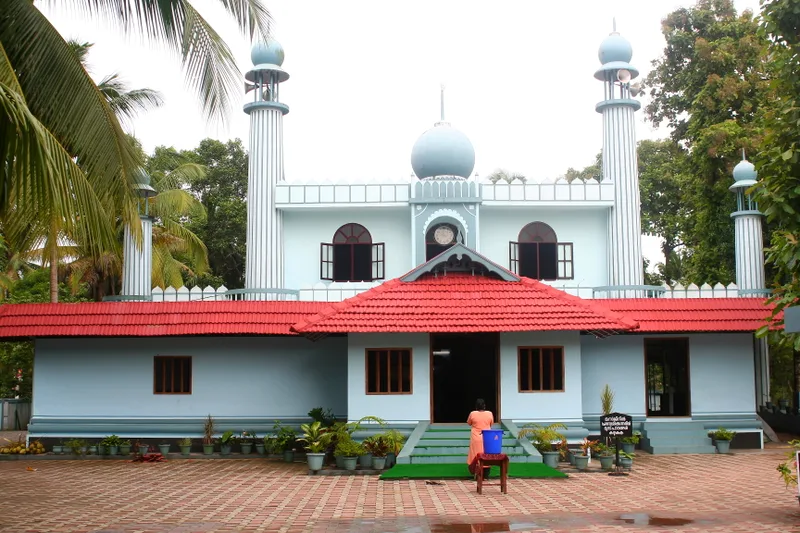
From 2019, the Muziris Heritage Project, with the conservation architect Benny Kuriakose, removed the later additions and restored the mosque to its Kerala form, at a cost of about Rs 1.14 crore. The old sanctuary was left untouched, and Arabic inscriptions came to light during the work. A small Islamic history museum now stands beside it.
Our assessment: what the legend was for
It is easy to call the Cheraman story a myth and move on. We think, with the historian Sebastian Prange, that it is better to ask what it did. It gave Malabar's Muslims a founding story in which a Kerala king himself invited Islam in, and in which their mosques and qadis went back to the Prophet's companions.
Recorded as the Portuguese were attacking Muslim shipping, it said that Muslims belonged to this coast. Remarkably, Hindu tradition tells a version of the same story, with the king leaving for Mecca.
Mishkal and the mosques of Kuttichira
The finest surviving medieval mosque in Kerala is not in Kodungallur but in Calicut. In the Kuttichira quarter, beside a large tank, stands the Mishkal Palli, built in the early fourteenth century by Nakhuda Mishkal, a shipowner of great wealth. The Moroccan traveller Ibn Battuta, who passed through Calicut in the 1340s, mentions a merchant of this name who owned ships trading to China, Yemen and Persia.
The mosque is a tower of timber on laterite walls, now four storeys and about 18 metres high. A recent architectural study says it once had seven storeys; other accounts say five. In January 1510 the Portuguese under Albuquerque attacked Calicut and set the mosque on fire; the upper floors still show the damage. It was rebuilt with the Zamorin's support.
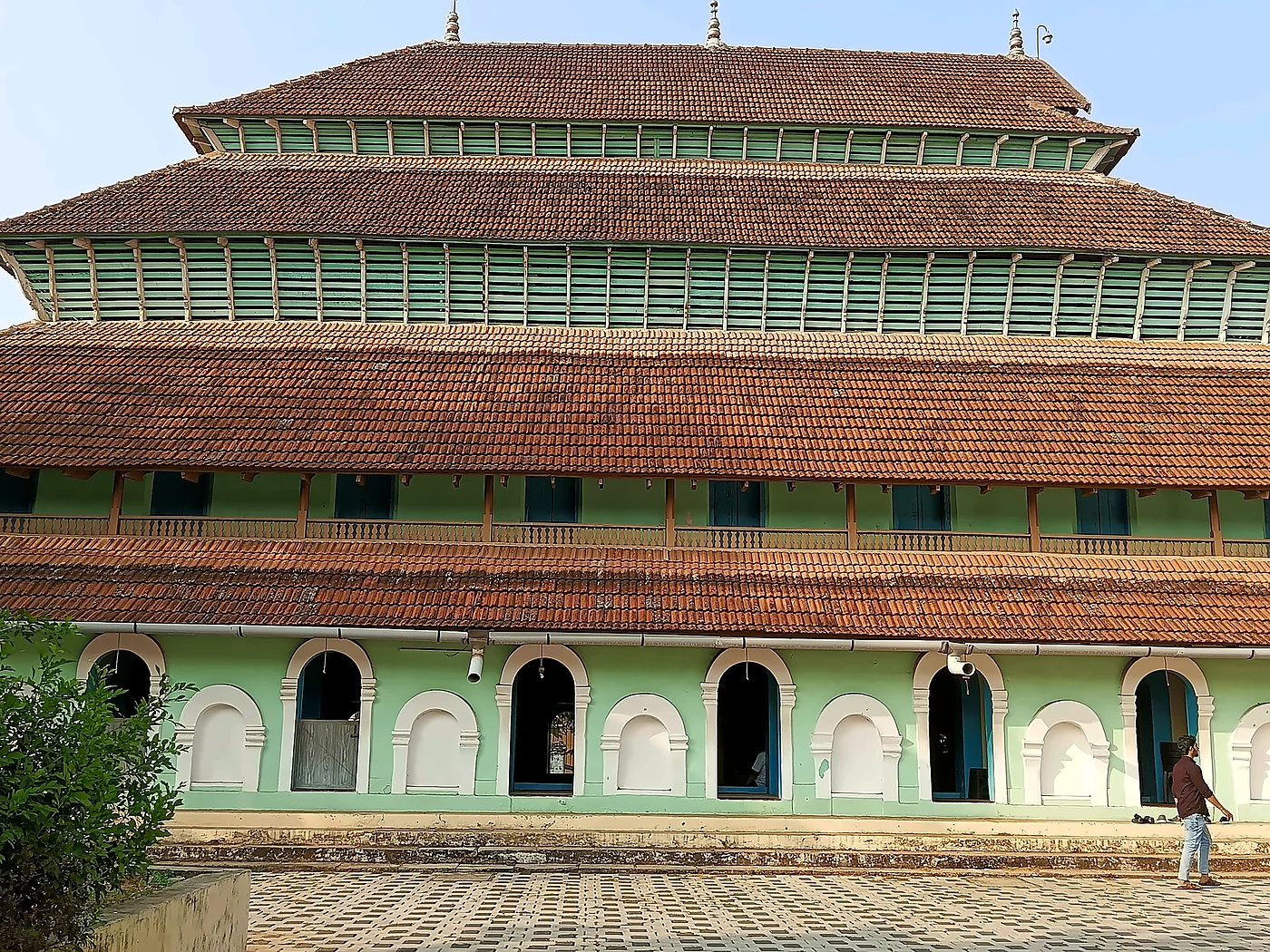
Nearby stand the Muchundi mosque, a century older, and the Jami mosque, both in the same style. Together they show what a Malabar mosque looked like before modern domes arrived.
How a Kerala mosque is built
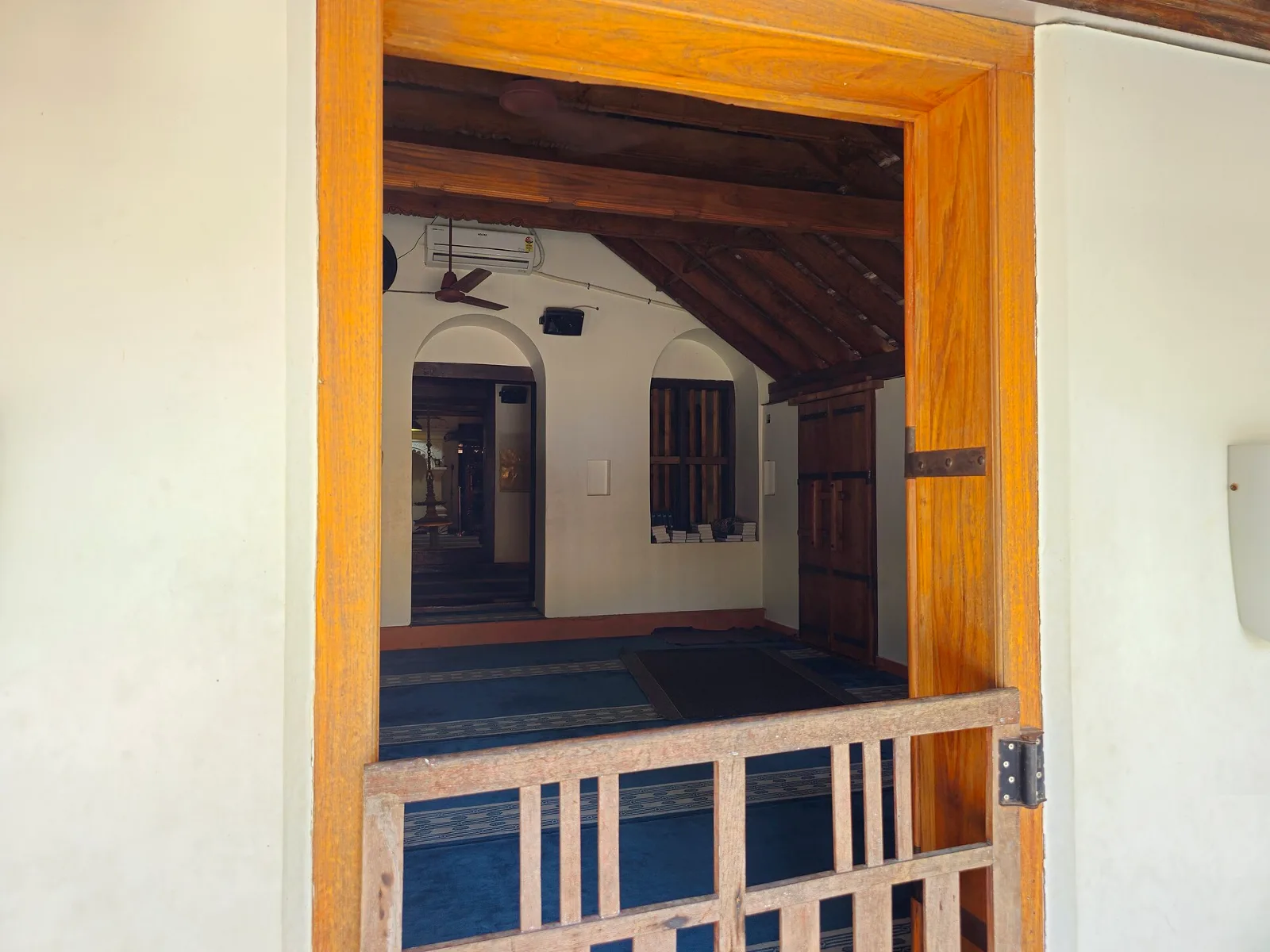
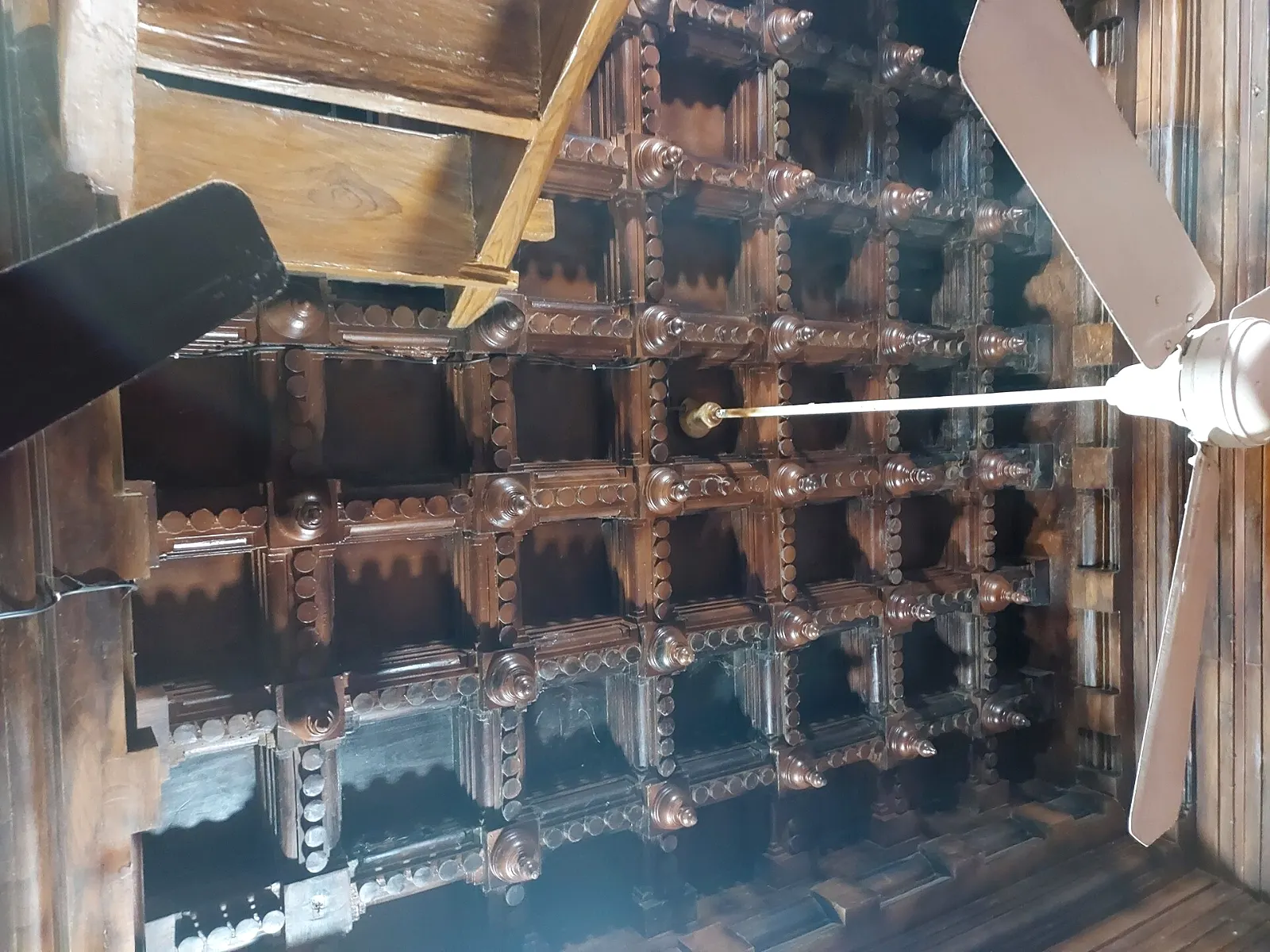
Kerala's old mosques follow the building traditions of the coast, not those of Arabia or North India. Laterite walls stand on a raised stone plinth. Inside, a grid of teak columns carries the floors and a steep, tiered roof of tiles, with deep eaves against the monsoon rain. Gables are filled with carved wooden screens that let air through. Joints are pegged, not nailed.
There are no domes and no minarets. The coast had no tradition of building domes, and timber cannot carry them; the steep roofs suit a place where it rains for half the year. The call to prayer was given from the building itself. Many mosques have a tank for ablutions beside them, just as temples have a tank for bathing.
Decoration follows Islamic rules: geometric patterns, flowers and lotus motifs, and no human or animal figures. In everything else the craftsmen were the same carpenters who built temples, palaces and nalukettu houses. The result is one of the clearest examples anywhere of a world religion taking the shape of a local landscape.
Our assessment: restoration, done well
The Cheraman restoration is one of the best heritage projects in Kerala in recent years. Removing a dome and minarets from a working mosque was a sensitive decision, and the result shows the old building as it was meant to be seen.
Many other old mosques on the coast have been rebuilt in concrete with imported domes, and their timber fabric is lost. Mishkal, still in use and still largely timber, deserves the same care.
Visiting
- Cheraman Juma Masjid, Methala, Kodungallur: on the Kodungallur–Shoranur road, a short drive north of Kodungallur town. Non-Muslim visitors are usually welcome outside prayer times; dress modestly, remove shoes, and ask before photographing inside. The Islamic history museum is next door.
- Combine with the Muziris sites: Kottappuram fort, Pattanam, the Kodungallur Bhagavathy temple and the Paravur synagogue are all close by.
- Mishkal mosque, Kuttichira, Kozhikode: a working mosque in a dense old quarter. The exterior and the tank are easily seen; entry inside is at the committee's discretion. Avoid Friday midday prayers.
- Madayi Palli, Payangadi (Kannur): on a hill near the Madayi Para plateau; combine with Ezhimala and Kannur.
- From Munnar: Kodungallur is roughly four to five hours by road via Aluva.
Read also: Muziris · Kozhikode and Kappad · Kerala Architecture · Keezhthali · The Jews of Kerala
See it for yourself, with a local driver who knows these roads.
Book a Munnar Jeep SafariSources & further reading
- Sebastian R. Prange, Monsoon Islam: Trade and Faith on the Medieval Malabar Coast (Cambridge University Press, 2018), ch. 2, 'The Mosque'
- Mehrdad Shokoohy, Muslim Architecture of South India (RoutledgeCurzon, 2003)
- Shahim Abdurahiman, 'Forensic architectural analysis of traditional mosque architecture in Kerala: the Miskhal mosque', Built Heritage (2026)
- Benny Kuriakose: Cheraman Juma Masjid, restoration of India's first mosque (2021)
- Onmanorama: Cheraman Juma Masjid set to reopen after renovation (2021)
- From Legend to Landmark: The Story of the Ten Malabar's Earliest Mosques
- Sahapedia: The Mahals of Malabar
- Wikipedia: Qissat Shakarwati Farmad
- Wikipedia: Madayi Mosque
- Wikipedia: Mishkal Mosque
Figures are from the sources listed and were checked in November 2026. Park timings and road conditions change, so please confirm before you travel.