
Kozhikode and Kappad: The Zamorins, Vasco da Gama and the City of Spices
Before Europe found the sea route to India, Calicut was already the busiest port on the Malabar coast, open to Arabs, Persians and Chinese. Then, in May 1498, three Portuguese ships appeared off Kappad. The story of the Zamorins, the Kunjali Marakkars and the city that is now India's first UNESCO City of Literature.
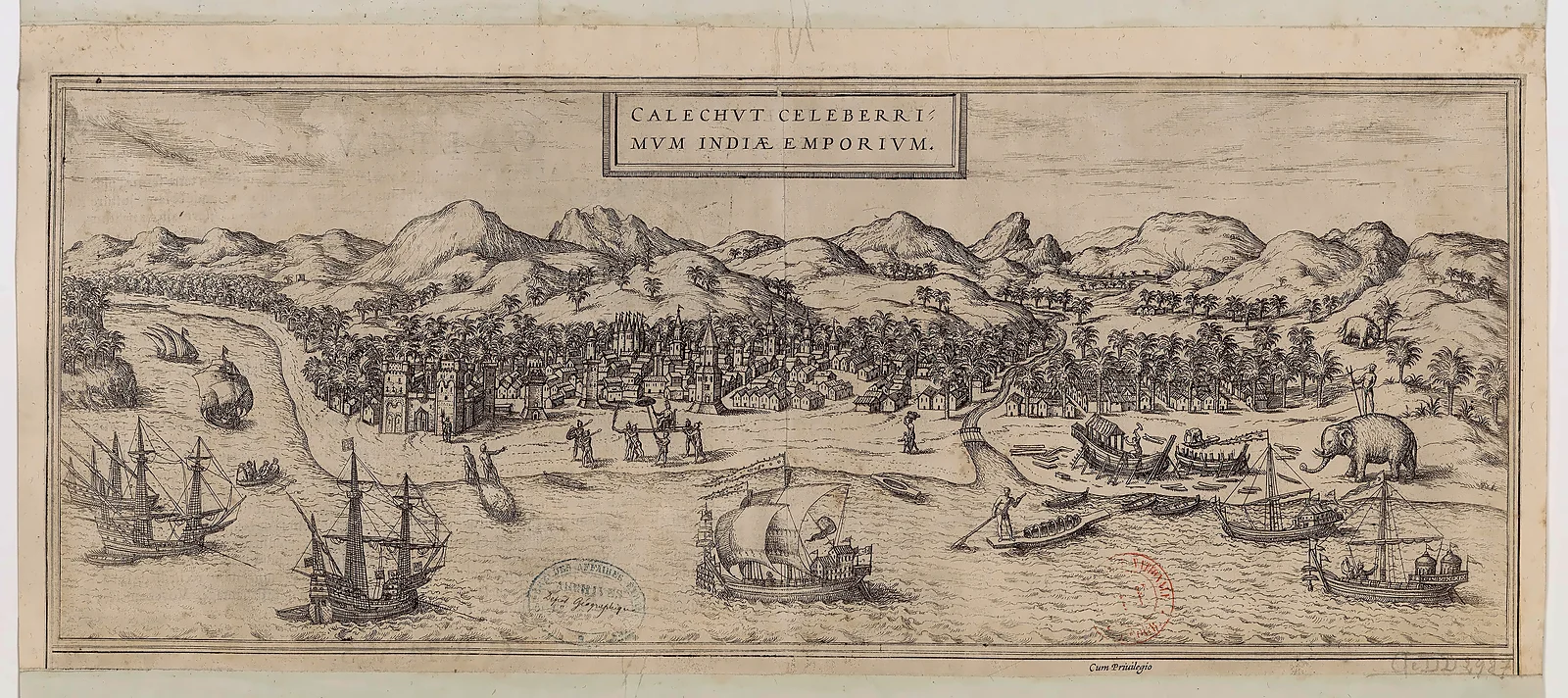
For a European of the 16th century, Calicut was the most famous port in India, the place where Vasco da Gama ended the first sea voyage from Europe to India in 1498 and opened a new age of world history. For the merchants of Arabia, Persia, Gujarat and China it had been a great market for two centuries before that. Its kings, the Zamorins, grew rich not by conquest but by keeping their port open, safe and fair to traders of every faith.
Today the city is Kozhikode, the largest city of north Kerala and, since 2023, India's first UNESCO City of Literature. This article follows its story from the Zamorins' rise to the coming of the Portuguese and the wars that followed, using old engravings, paintings and the records of travellers. As always, our own assessments are clearly marked.
At a glance
- Where: Kozhikode district, north Kerala. Kappad beach is about 16 km north of the city.
- Rulers: the Zamorins (Samoothiri) of Calicut, from about the 13th century until 1766.
- Key dates: Ibn Battuta's visits in the 1340s; Chinese fleets of Zheng He 1405–1433; Vasco da Gama arrives May 1498; Kunjali Marakkar IV falls 1600; Hyder Ali's invasion 1766; British rule from 1792.
- Known for: the spice trade, calico cloth, the Kuttichira mosques, Kozhikode halwa and a great literary tradition.
The Zamorins and the rise of Calicut
The Zamorins came from a family of chiefs called the Eradis of Nediyiruppu. After the fall of the Chera Perumals of Kodungallur in the early 12th century, Kerala broke into many small kingdoms, and the Eradis gradually won control of the coast around Kozhikode. Their title, Samoothiri, is often explained as "lord of the sea" (from Sanskrit samudra); Europeans turned it into "Zamorin". Their capital grew up around a fortified palace, and the name Kozhikode is usually traced to koyil-kotta, "the palace fort", although other explanations exist.
The Zamorins never had a large navy of their own. Their power rested on trade. Merchants were protected, debts were enforced, and goods left in warehouses were safe. A stone inscription at the Muchundi mosque in Kuttichira, from the 13th century, records a gift by the Zamorin towards its construction. Every twelve years the Zamorin presided over the great Mamankam festival at Thirunavaya on the Bharathapuzha, a festival that his rivals, the Valluvanad rulers, tried again and again to disrupt with suicide squads of warriors.
A port open to the world
The Moroccan traveller Ibn Battuta came to Calicut in the 1340s and called it one of the great ports of the world, visited by merchants from China, Sumatra, Ceylon, the Maldives, Yemen and Persia. He counted thirteen Chinese junks in the harbour and described their size with amazement. He was waiting to sail to China on one of them when a storm wrecked the fleet, and he watched his own possessions sink.
In the early 15th century the Ming admiral Zheng He brought his huge treasure fleets to Calicut, which the Chinese called Guli, on several voyages between 1405 and 1433. His interpreter Ma Huan described the city: its king, its markets, its honest weights and the way deals were struck by tapping fingers under a cloth. Tradition says Zheng He died near Calicut on his last voyage in 1433, though this is not certain. The Persian ambassador Abdur Razzaq, who came in 1442–43, was struck by how safe goods were in the city.
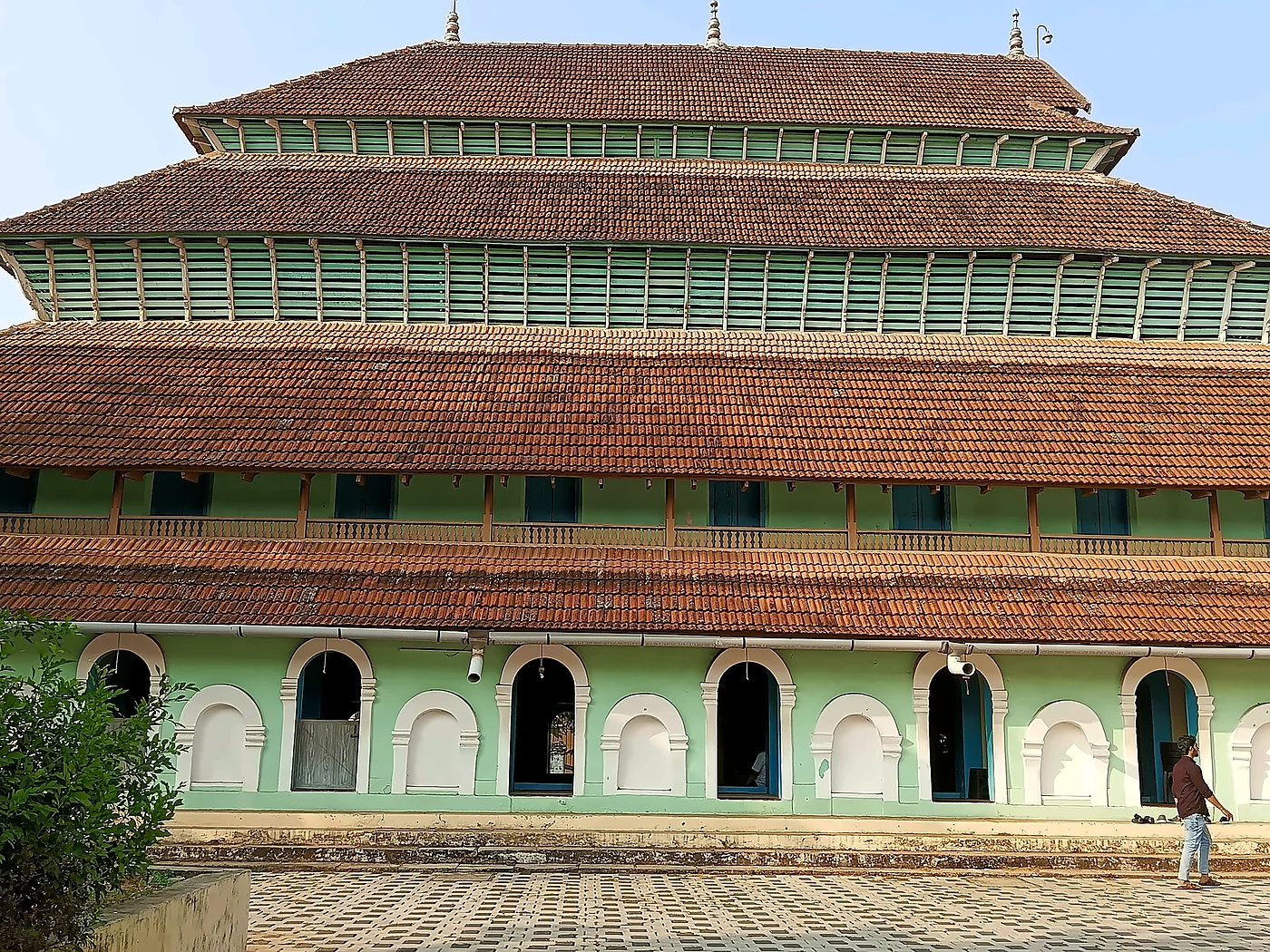
The cotton cloth exported from here gave English the word calico. Arab merchants, who had lived on this coast for centuries, built the wooden mosques of Kuttichira. The Mishkal mosque was built in the 14th century by Nakhuda Mishkal, a shipowner who traded with China and Persia. Partly burned in a Portuguese attack in January 1510, it was rebuilt and still stands, a tall timber building in the Kerala style with no dome or minaret.
1498: "Christians and spices"
Vasco da Gama left Lisbon in July 1497 with four ships, rounded the Cape of Good Hope, and at Malindi on the East African coast took on a pilot who knew the way across the Arabian Sea. In about three weeks the monsoon winds carried him to the Malabar coast. On 20 May 1498 his ships anchored off the coast a little north of Calicut.
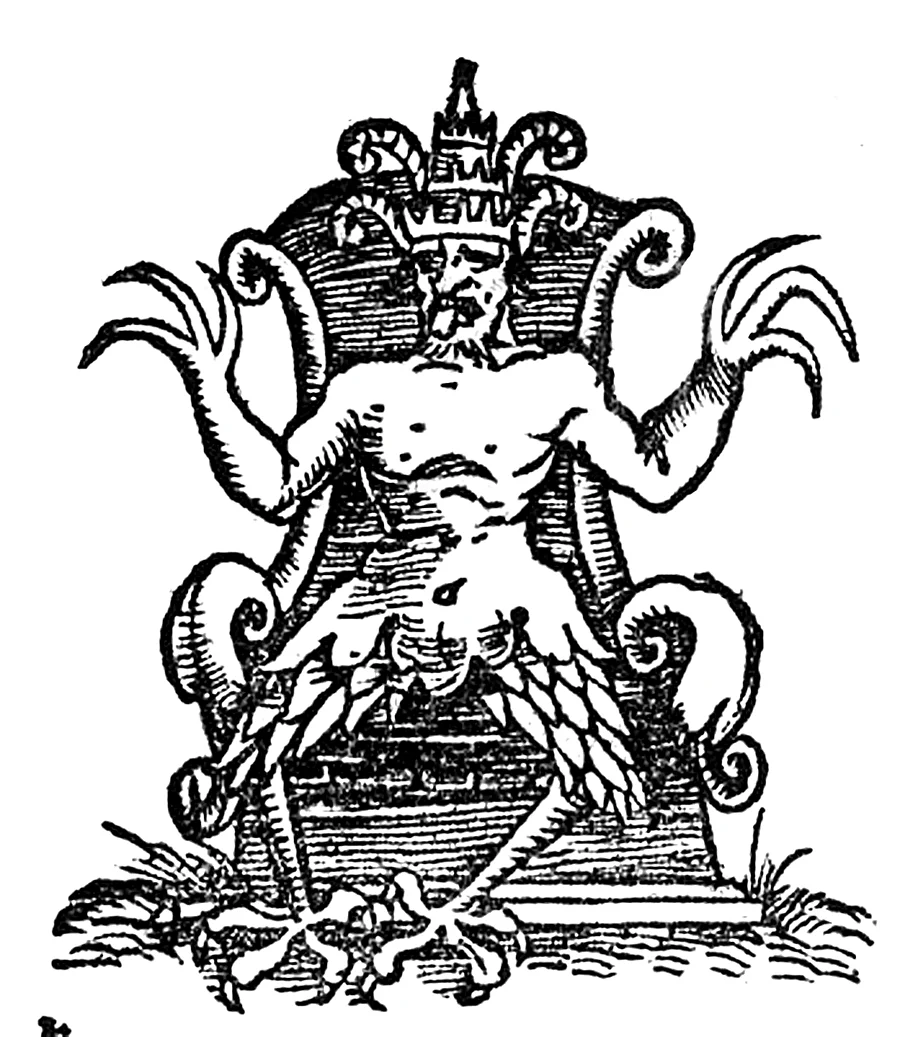
The anonymous journal of the voyage (the Roteiro, often attributed to a sailor named Álvaro Velho) records what happened next. One of the convicts carried for risky errands was sent ashore. He was taken to two merchants from Tunis who could speak Castilian and Genoese. Their first words were: "May the Devil take you! What brought you here?" He replied that they had come "in search of Christians and spices". On the advice of a pilot sent by the Zamorin, the ships soon moved to a safer anchorage at Pantalayini (near today's Koyilandy), because the monsoon was coming.
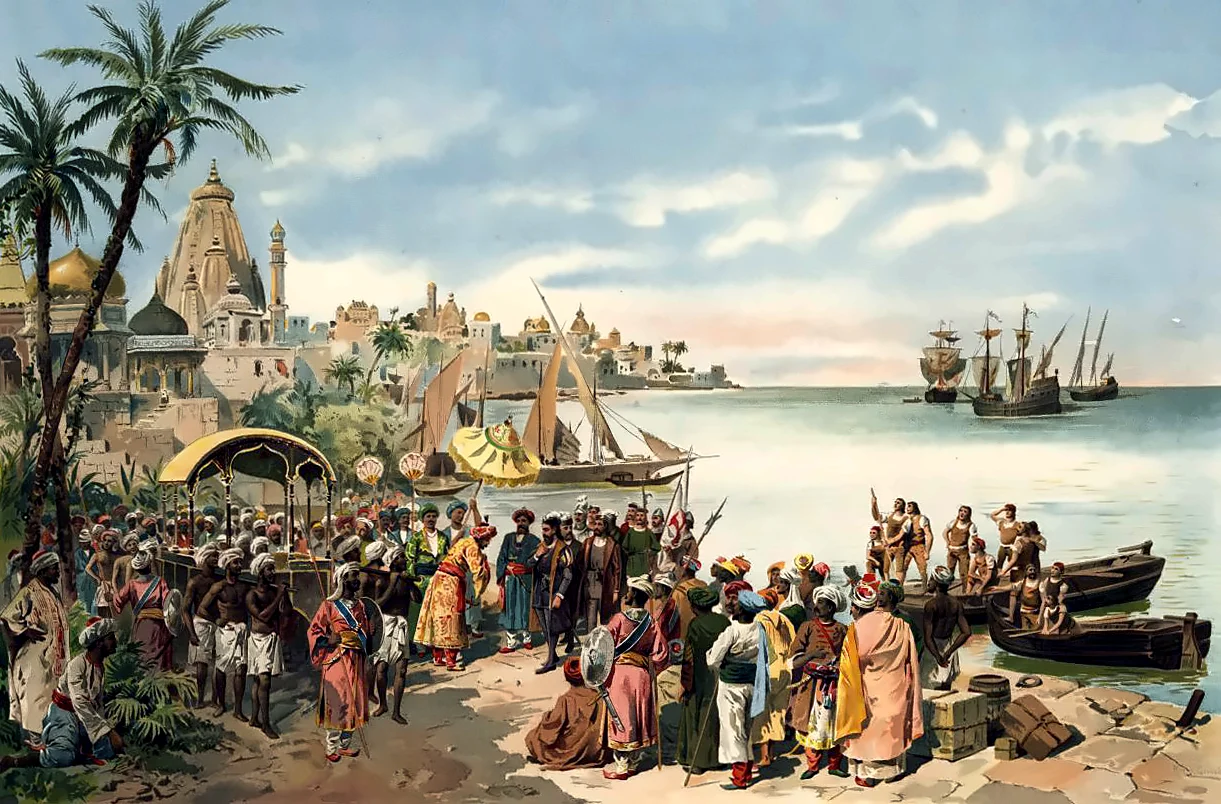
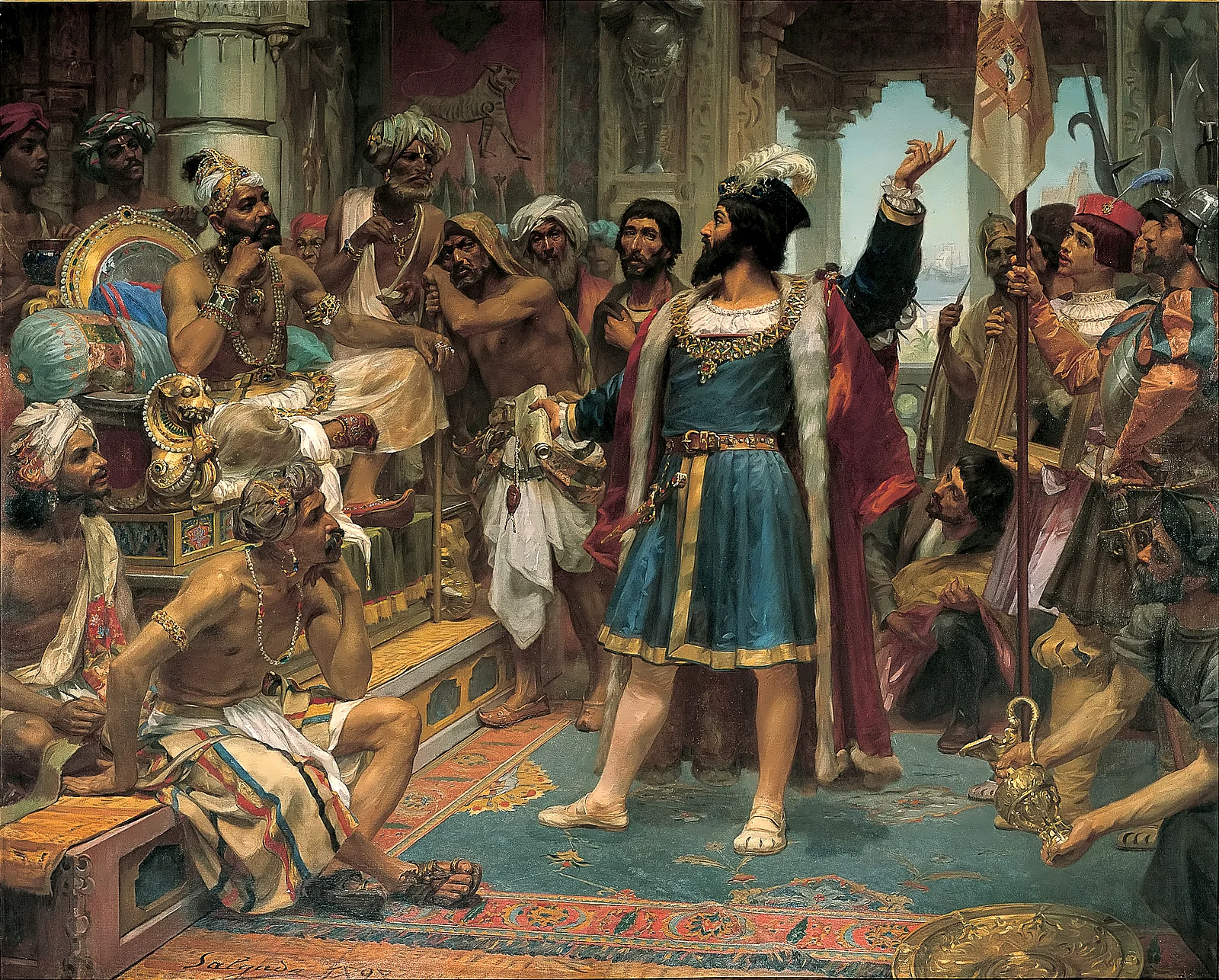
On 28 May da Gama went ashore and was carried to Calicut in a palanquin. On the way the Portuguese prayed in a temple which they took to be a church, believing the image of a goddess to be the Virgin Mary. The Zamorin received him courteously, but the visit went badly. Da Gama's gifts (cloth, hats, coral, basins, sugar, oil and honey) were mocked as fit for a poor merchant, not a king. The Muslim merchants who controlled the trade saw the newcomers as rivals, and there were arrests and hostages on both sides. Da Gama left in August 1498 with a modest cargo of spices, and reached Lisbon in 1499. Even that cargo sold for many times the cost of the voyage.
Our assessment: did Vasco da Gama really land at Kappad?
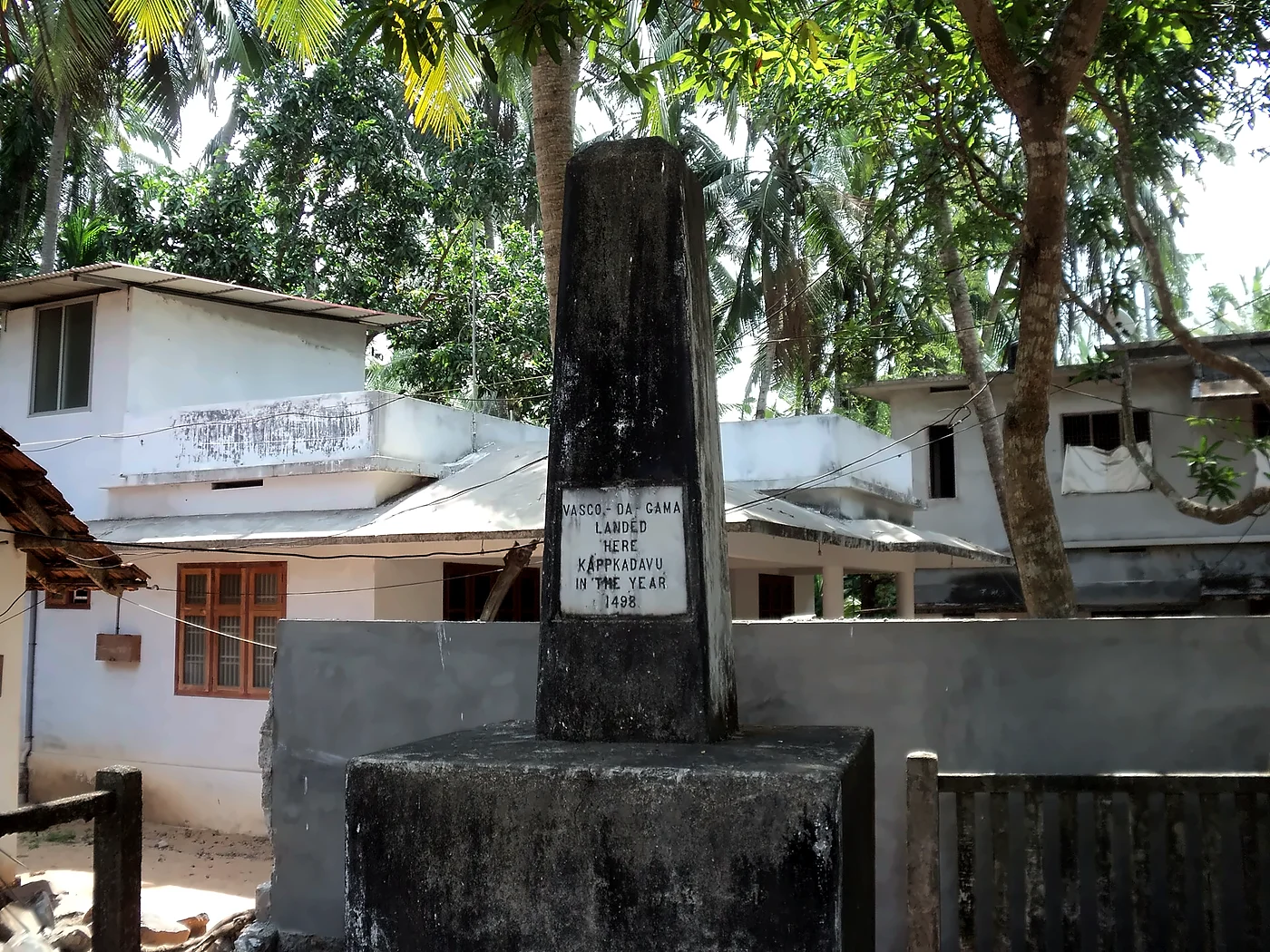
The memorial at Kappad says he did, and the beach is famous for it. But the historian M. G. S. Narayanan and others have argued that the fleet's real base was Pantalayini, a few kilometres north, which had a proper anchorage.
The journal of the voyage helps to settle it. The ships first anchored off the coast a little short of Calicut, and that first anchorage is generally placed off Kappad. But within days they moved to Pantalayini, and it was from there that da Gama himself went ashore to meet the Zamorin. Our view: Kappad marks the place where the Portuguese first reached India, and the first landing party may well have gone ashore near it; but the 'landing' of Vasco da Gama in person most probably took place at Pantalayini. Both places have a fair claim to the story.
A century of war
The friendly beginning did not last. Pedro Álvares Cabral came with a larger fleet in 1500 and set up a trading post; it was attacked by a mob and dozens of Portuguese were killed, and Cabral bombarded the city in revenge. On his second voyage in 1502, da Gama captured a ship carrying pilgrims home from Mecca, the Miri, and burned it with hundreds of men, women and children aboard, then bombarded Calicut. The Portuguese allied with the Raja of Cochin, the Zamorin's rival, and tried to force a monopoly on the pepper trade, demanding that the Zamorin expel the Muslim merchants. For a king whose wealth depended on an open port, this was impossible.
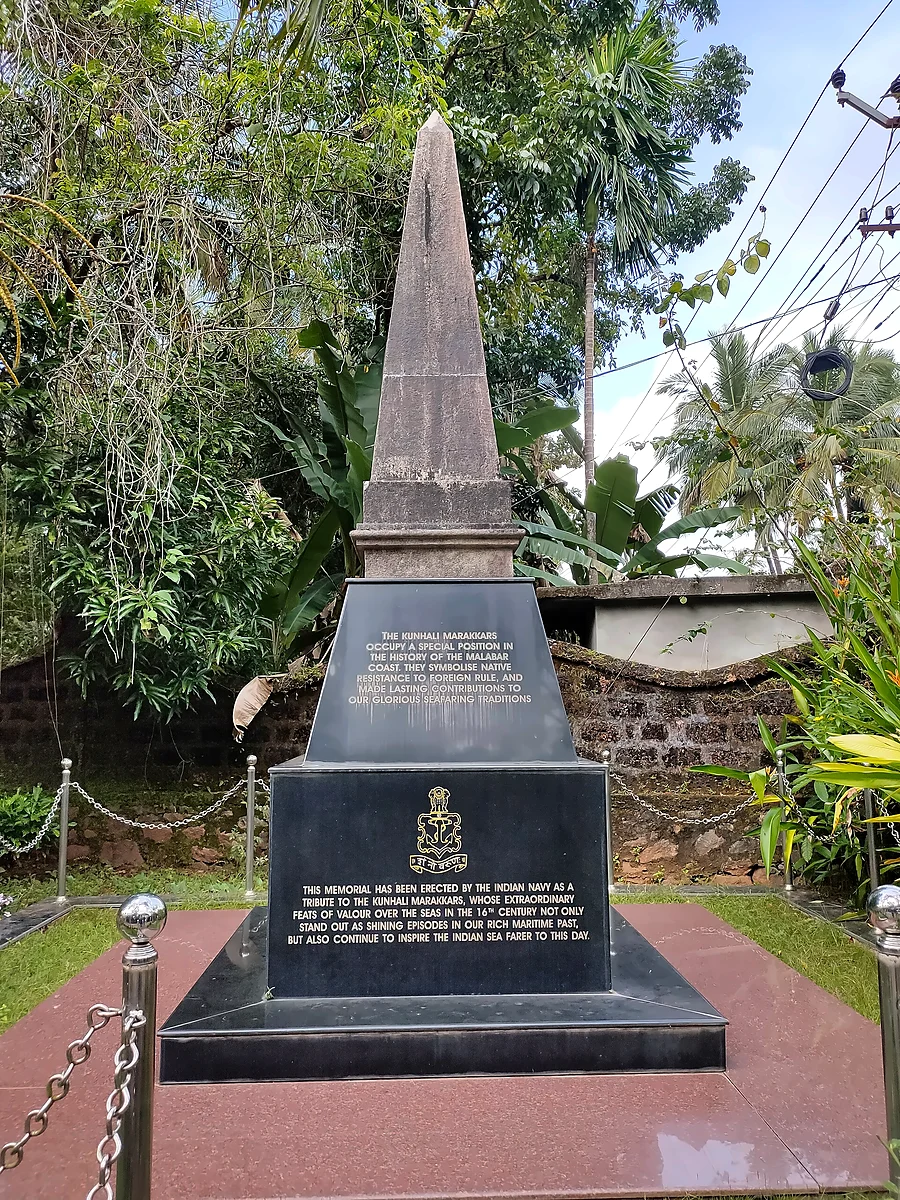
The Zamorin's answer at sea was the Kunjali Marakkars, four generations of Muslim admirals who led his fleet between about 1520 and 1600. Using small, fast boats, they harassed Portuguese shipping along the whole western coast. In 1571 the Zamorin's forces captured the Portuguese fort at Chaliyam. But the last of them, Kunjali Marakkar IV, grew so powerful in his fort at Kottakkal, near Vadakara, that the Zamorin came to fear him. In 1600 the Zamorin and the Portuguese besieged him together. Kunjali surrendered to the Zamorin on a promise that his life would be spared, but was handed over to the Portuguese, taken to Goa and executed. The Indian Navy remembers him: its shore establishment in Mumbai is named INS Kunjali.
Our assessment: why did Calicut and Portugal fail to get along?
It is often told as a clash of religions. That was part of it, but we think the deeper cause was a clash of two ideas of trade. Calicut's prosperity rested on being an open port, where anyone could trade under the king's protection and pay his customs. Portugal came with guns and a plan for monopoly: control of the sea, passes for Asian ships, and exclusion of rivals. The Zamorin could not accept that without destroying the very thing that made him rich. Cochin, a smaller kingdom, gained from siding with the newcomers. The result was a hundred years of war that weakened Calicut, enriched Cochin, and showed that European naval power, however small in numbers, could reshape the trade of the Indian Ocean.
The end of the Zamorins' power
The Zamorins survived the Portuguese, the Dutch and the English traders who followed, but not the armies of Mysore. In 1766 Hyder Ali invaded Malabar. Rather than surrender, the ruling Zamorin set fire to his palace and died in it. Tipu Sultan held the region until the Third Anglo-Mysore War, and in 1792 Malabar passed to the British East India Company. Calicut became the headquarters of the Malabar district of the Madras Presidency. The Zamorin family continued as respected landholders and patrons, and the Zamorin's Guruvayurappan College in Kozhikode still carries their name.
Kozhikode today
- Kappad beach, with its memorial and a Blue Flag certified beach.
- Kuttichira, the old Muslim quarter by the Kuttichira pond, with the Mishkal, Jami and Muchundi mosques.
- Tali temple, the Zamorins' temple, a fine example of Kerala temple architecture, and Mananchira square and tank in the heart of the city.
- SM Street (Sweetmeat Street), famous for Kozhikode halwa and banana chips, and the beach promenade at sunset.
- Beypore, at the mouth of the Chaliyar, where the wooden ships called uru are still built by hand for buyers in the Gulf, a craft centuries old.
- Kunjali Marakkar museum at Kottakkal (Iringal), near Vadakara.
In October 2023 UNESCO named Kozhikode a City of Literature, the first in India, recognising its hundreds of libraries, its book festivals and its writers, among them S. K. Pottekkatt, Vaikom Muhammad Basheer and M. T. Vasudevan Nair. The city formally celebrated the honour in June 2024.
Visiting
- Getting there: Kozhikode has an international airport (at Karipur, about 25 km away) and is on the main west-coast railway line.
- Best time: October to March. The monsoon (June to September) brings heavy rain and rough seas.
- Mosques: the Kuttichira mosques are active places of worship; visitors should dress modestly and ask before entering or photographing.
Read also: Muziris, the lost port of Kerala · Fort Kochi · Black pepper, the king of spices · Padmanabhaswamy and Thiruvananthapuram
See it for yourself, with a local driver who knows these roads.
Book a Munnar Jeep SafariSources & further reading
- Wikipedia: Kappad
- ALA blog: A snapshot of history, Vasco da Gama in Calicut, 1498
- Wikipedia: Kunjali Marakkar
- Wikipedia: Mishkal Mosque
- Onmanorama (2024): Kozhikode declared India's first UNESCO City of Literature
- Kerala Tourism: Kunjali Marakkar Museum
Figures are from the sources listed and were checked in October 2026. Park timings and road conditions change, so please confirm before you travel.