
The Wynaad Gold Rush of 1879–1882: Devala, Pandalur, Nilambur and the Mania That Floated Forty Companies
After an Australian expert's glowing report, London floated 41 gold companies for the Wynaad in nineteen months. Boomtowns rose at Devala and Pandalur, shares soared before a single mine had opened, and in July 1881 it all fell apart, leaving rusting machinery and empty bungalows in the jungle.
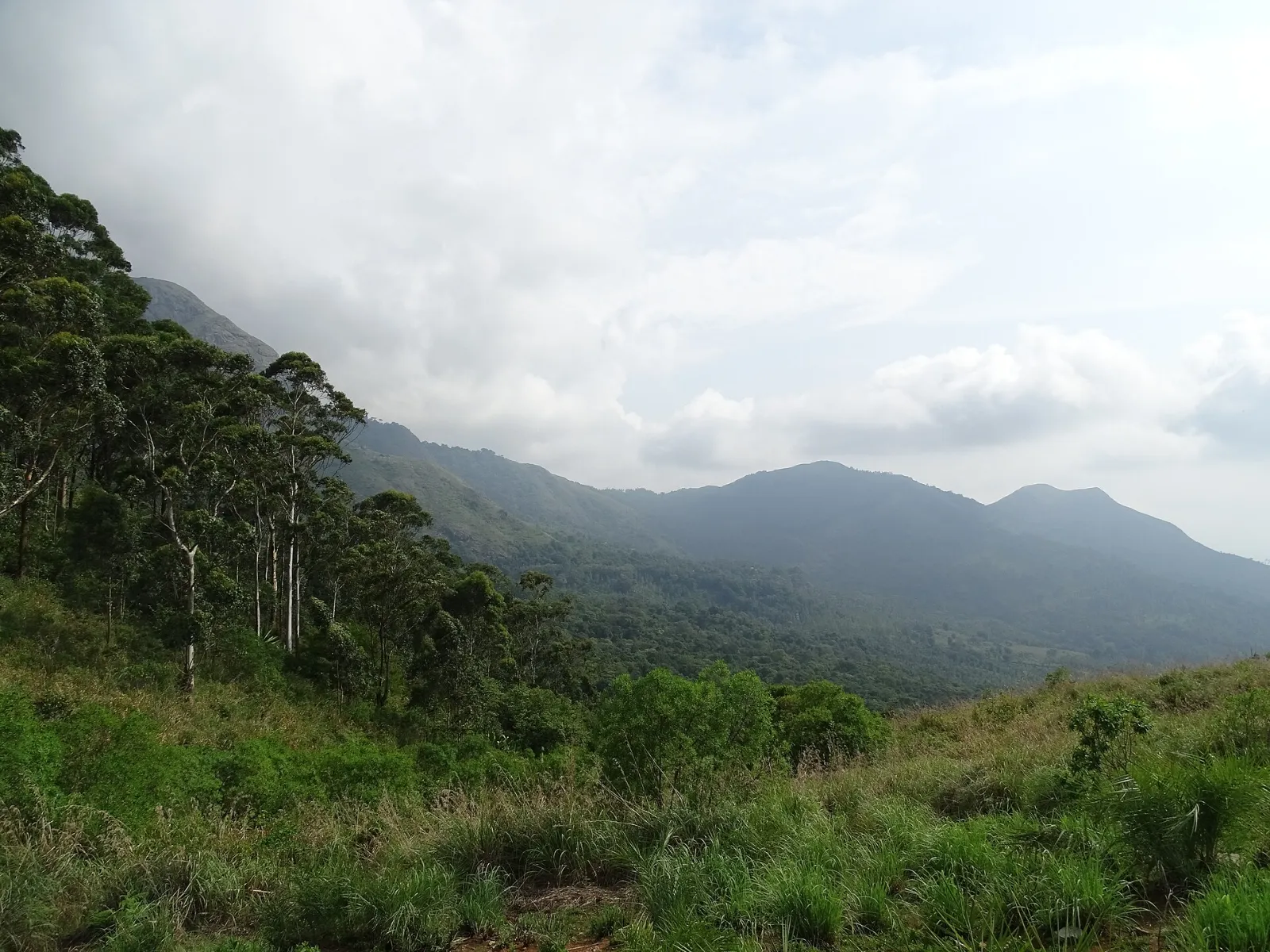
In the spring of 1880, the London stock market went mad for the Wynaad. Share certificates of companies with names like the Alpha, the Phoenix, the Glenrock and the Wala Wynaad changed hands at double their face value, though most of the mines had not been opened and the machinery had not left England. In the hills on the border of Malabar and the Nilgiris, villages of huts became towns with hotels, a saloon, a post and telegraph office and a racecourse. Within two years it was nearly all over. The machinery rusted in the jungle, and the bungalows stood empty on the hilltops.
This is the story of the Wynaad gold rush of 1879–1882, told as far as possible in the words of people who lived through it or wrote soon after. As always, our own assessments are clearly marked.
At a glance
- Where: the South-East Wynaad, around Devala, Pandalur, Cherambadi and Nellakottai, today in the Gudalur taluk of the Nilgiris district, Tamil Nadu; and the Nilambur valley of the Chaliyar in Malabar, today in Kerala's Malappuram district.
- Before the rush: gold had been washed from the streams of the Wynaad and Nilambur for centuries; British officials reported on it from 1790 onwards.
- The spark: a report written in October 1879 by Robert Brough Smyth, the former Secretary for Mines of Victoria, Australia, for the Government of India.
- The mania: from December 1879, 41 companies were floated in England within nineteen months, with a nominal capital of over five million pounds, and six more in India.
- The crash: from July 1881. Within a year fifteen of the 33 English companies that went to allotment were in liquidation; up to early 1883 the mines had produced an average of under 3 pennyweights of gold per ton of ore.
- Today: old tunnels, spoil heaps, a few bungalows and names; local people still dig and wash gold on a small scale.
Gold washed from the streams
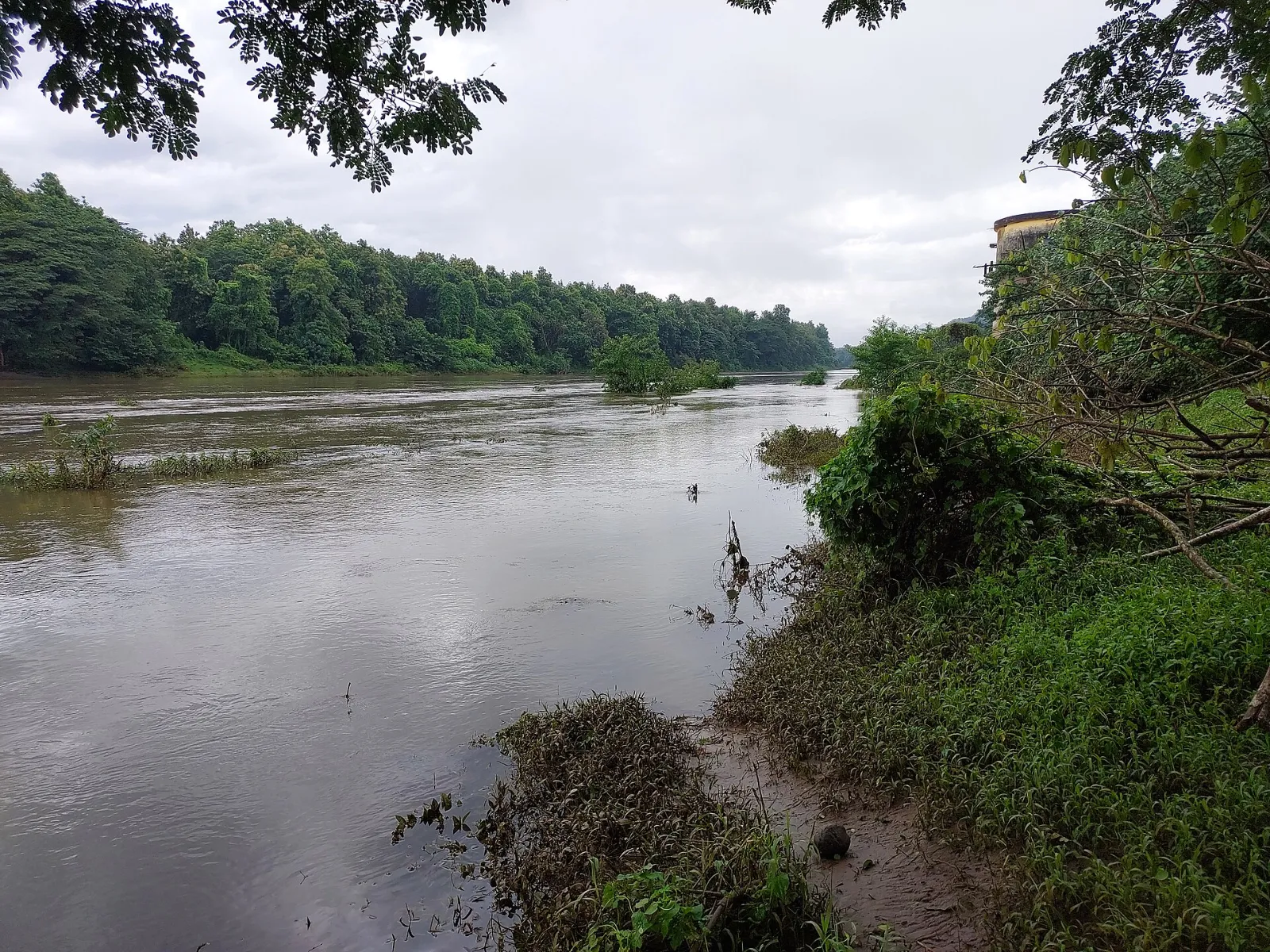
The gold of the Wynaad was no secret. In 1790 the Governor of Bombay, then responsible for Malabar, asked for information about it. In 1831 the Collector of Malabar reported that the right to collect gold in the Wynaad and the Nilambur valley below it had been farmed out for forty or fifty years, and described how it was won. W. Francis, compiling the official Nilgiris gazetteer in 1908, summarised the method:
“The earth was generally put into a shallow wooden tray, shaped like a turtle's shell and called a murriya.”
— W. Francis, Madras District Gazetteers: The Nilgiris (Madras, 1908)
The tray was rocked in a stream until only black sand, iron and gold remained; the gold was gathered with a drop of mercury, and the mercury driven off by heating the amalgam wrapped in a tobacco leaf between lumps of charcoal.
The same year a Swiss watchmaker from Cannanore, H. L. Huguenin, and Lieutenant Woodley Nicolson went looking for the source. Near Devala both were struck down with fever. In the Nilambur valley they found a regular set of mines, with shafts ten to fifty feet deep, which the gazetteer says were ‘worked by 500 or 600 Mappilla slaves belonging to the Nilambur Tirumulpad’, each required to produce a barley-corn's weight of gold a day. Old workings, pits and tunnels of earlier and unknown miners lay across the whole district.
The expert's report
In the 1870s the Geological Survey of India took an interest. William King reported hopefully on the field in 1875, more cautiously in 1878, and a couple of small companies were started. Then, in 1879, the Government of India engaged Robert Brough Smyth, for many years Secretary for Mines in Victoria and the best-known mining authority in Australia, to examine the Wynaad reefs.
His report, written in October 1879, was a gift to promoters. He counted some 200 outcrops of quartz in a tract of about 500 square miles. Assays ranged from nothing at all to 204 ounces of gold to the ton. The geologist Valentine Ball, summarising it in 1881, gave the average of 137 samples as 2 ounces 13 pennyweights a ton, or 1 ounce 8 pennyweights if two exceptionally rich samples were left out. Smyth's conclusion was ringing:
“it must be apparent to all who have given attention to this question that sooner or later gold-mining will be established as an important industry in Southern India.”
— R. Brough Smyth, report on the Wynaad gold fields (1879), quoted by Francis (1908)
Elsewhere he added a warning that turned out to be the more accurate prophecy:
“It is not unlikely however that the first attempts will fail. Speculative undertakings having for their object the making of money by buying and selling shares are commenced invariably by appointing secretaries and managers at high salaries and the printing of a prospectus.”
— R. Brough Smyth, quoted by Francis (1908)
Francis's comment, written nearly thirty years later, is dry: ‘This latter prophecy was fulfilled to the letter: the former was altogether falsified.’
The mania
The time was right for a gamble. Interest on British government stock was low, coffee planting in the Wynaad was already in decline, and estate owners with quartz on their land were happy to sell. The first company, with a capital of £100,000, was launched in December 1879. In the next nineteen months 41 companies were floated in England with a capital of over five million pounds, and six more in India with £261,000.
Of the English companies, 33 went to allotment, raising nominally £4,050,000. Of that, £2,375,500 went straight to the vendors of the land, at prices from £70 to £2,600 an acre, leaving about £1,674,500 for actually mining. Smyth himself became manager of two companies, retiring in 1882 ‘when the tide had begun to turn’.
By May 1880, Francis records, shares launched that year stood at 50, 75 and even 100 per cent premium, ‘though the reefs had not been opened out, the machinery had not been shipped and in most cases the mining staff had not even arrived on the ground’. Telegrams from India kept the prices up:
“‘The whole mountain is worth putting through the stamps,’ said one wire; ‘four feet of magnificent reef, exceedingly rich in gold,’ declared another”
— W. Francis, The Nilgiris (1908)
At company meetings in London, directors called an ounce a ton a moderate estimate and spoke of dividends of up to 50 per cent. The Economist and The Statist warned in vain. Every planter looked for reefs on his estate, and ‘mining experts’ multiplied; Francis notes that one was a former baker and another a retired circus clown, and that some reported on properties they had never seen, and at least one on a property that did not exist.
Boomtowns in the jungle
On the ground, the money built towns. Francis's description of Devala and Pandalur is the best picture we have of the boom:
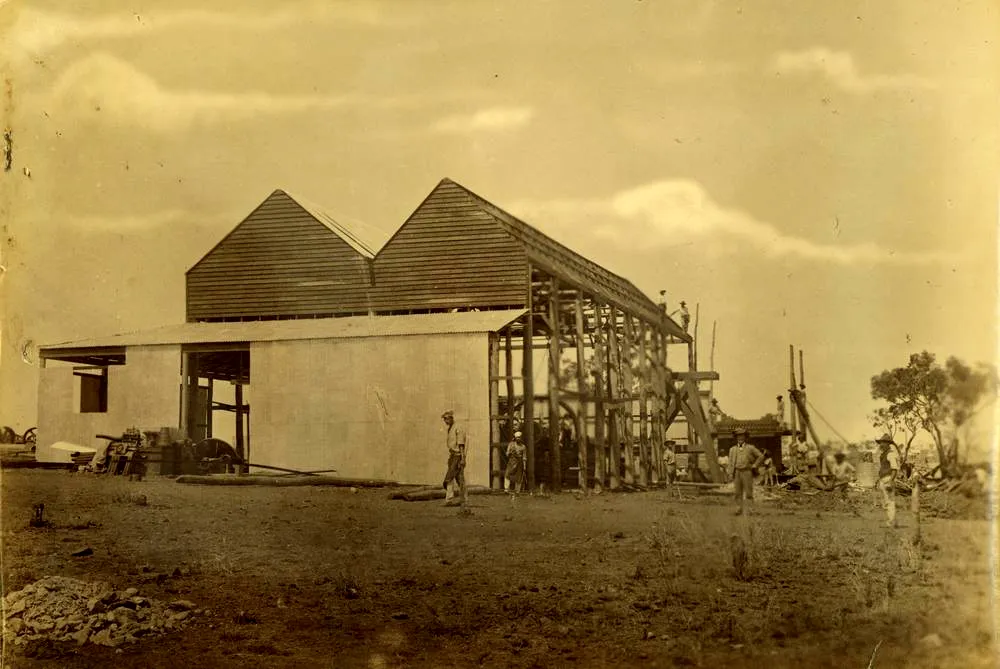
“From little clusters of native huts, Devala and Pandalur blossomed suddenly into busy mining centres with rows of substantial buildings, post and telegraph offices, a hotel, a store for the valuable quartz which was to be extracted, a saloon, and numerous mining-captains' bungalows perched on commanding sites.”
— W. Francis, The Nilgiris (1908)
Pandalur held a well-attended race meeting on a new course laid out round its paddy flat, and the Head Assistant Magistrate moved his headquarters there. Samuel Jennings, who rode out in 1881 to inspect the properties of the Indian Glenrock company, found Devala more modest: ‘At Devala there is a good hotel. It has besides a few bungalows and a native bazaar.’ He was impressed by the activity on some estates, with tunnels being driven, machinery going up, and ‘bungalows, coolie lines, and stores’ springing up in all directions.
Four ounces, then two pennyweights
Crushing was slow to start, and by May 1881 confidence was flagging. Then, early in June, London heard that one of the principal mines had begun crushing and that the result was four ounces of gold to the ton. The Alpha Company's £1 shares went to £15; others changed hands at 400 and 500 per cent premium; in a week Wynaad mining scrip rose in value by half a million pounds. Francis tells what followed:
“Then came the collapse. In the first week of July the manager of the mine in question explained that the 4 oz. was the yield of one ton only; and that the next 19 tons had given barely 2 dwts.”
— W. Francis, The Nilgiris (1908)
Shares fell by 200 and 300 per cent, ‘never to recover’. Within a year fifteen of the 33 English companies were with the liquidators. Up to the first quarter of 1883, 3,597 tons of ore had yielded 9,641 pennyweights of gold, an average of about 2.7 pennyweights a ton, not the ounce a ton the directors had promised. One mine spent £70,000 in three years and produced 7 ounces of gold. The courts in London heard the inevitable lawsuits; when the affairs of the Wala Wynaad Indian Gold Mining Company were aired before Mr Justice Chitty in 1882, newspapers as far away as New Zealand headed their report “British gullibility”.
Our assessment: why the Wynaad failed
The Wynaad had gold; it never had enough of it in one place. The reefs were real and long, but the gold in them was low-grade and patchy, and the ore was difficult, full of pyrites and arsenic that locked up the gold. Smyth's averages were pulled up by a few very rich samples, and promoters quoted the best numbers.
The decisive test came in 1901, when the Geological Survey re-opened 3,500 feet of the old Alpha and Phoenix tunnels and sampled them every ten feet: the averages were 1.6 and 2 pennyweights a ton, below even the 3 pennyweights that Smyth had thought could be worked at a profit. The rush was not a fraud from start to finish, but it was a speculation built on the most hopeful reading of thin evidence.
Ghosts in the forest
A few mines struggled on. The Phoenix reportedly paid its working costs for a time but was closed by the government because of frequent accidents; the Alpha was worked fitfully until about 1893; a local syndicate tried again in 1901–02 with newer chemical methods and gave up. In 1901 the geologists H. H. Hayden and F. H. Hatch concluded that, with the methods then available, there was no hope of gold-mining in the Wynaad becoming remunerative.
Meanwhile the coffee estates the companies had bought, all along the road from Gudalur to Cherambadi, were abandoned, so the rush ruined the older industry it had replaced. Francis described what was left in 1908, and it is a haunting passage:
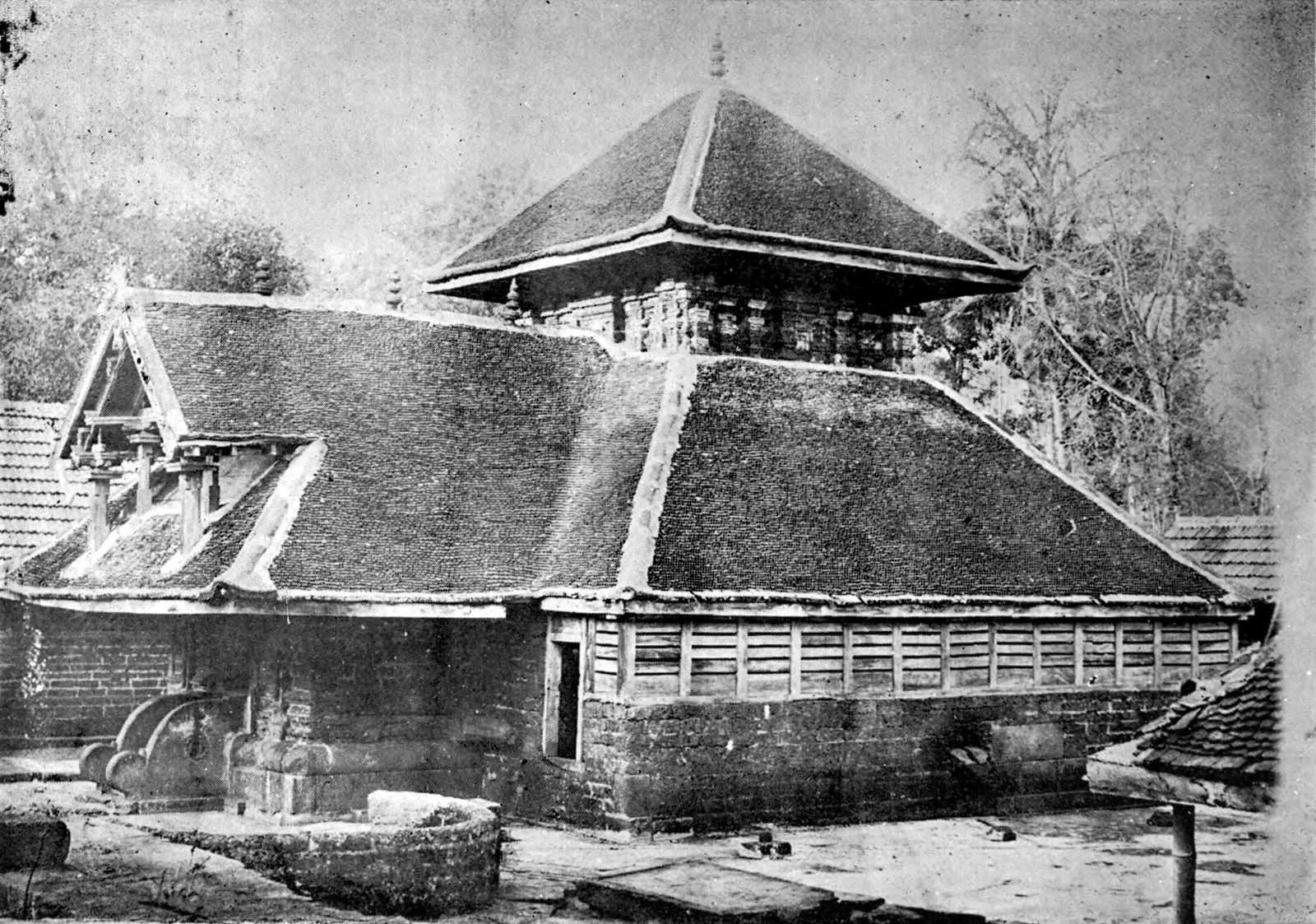
“At Pandalur three or four houses, the old store, and traces of the race-course survive; at Devala are a grave or two; topping many of the little hills are derelict bungalows and along their contours run grass-grown roads; hidden under thick jungle are heaps of spoil, long-forgotten tunnels used only by she-bears and panthers expecting an addition to their families, and lakhs' worth of rusting machinery which was never erected”
— W. Francis, The Nilgiris (1908)
Along the road towards Vythiri lay more machinery that never even reached its mine. The great South Indian gold industry that Smyth had predicted did arrive, but at Kolar in Mysore, where deep, rich reefs were worked from the 1880s for more than a century. And around Devala and Pandalur, people still dig and wash for gold on a small scale, much as their ancestors did before the Victorian promoters came.
- 1790The Governor of Bombay asks for information on Wynaad gold.
- 1831The Collector of Malabar reports on gold-washing; Huguenin and Nicolson find mines in the Nilambur valley.
- 1875–78William King of the Geological Survey reports on the field; small companies start.
- Oct 1879Brough Smyth's report for the Government of India.
- Dec 1879The first large company is floated in London.
- May 1880Shares at up to 100 per cent premium, before mining has begun.
- 1880–8141 companies floated in England in nineteen months; Devala and Pandalur boom.
- Jun 1881A reported crushing of 4 oz a ton sends Alpha shares from £1 to £15.
- Jul 1881The yield is revealed as one ton only; the market collapses.
- 1882Fifteen companies in liquidation; the Wala Wynaad case in the London courts.
- c. 1893Work at the Alpha mine ends.
- 1901Hayden and Hatch's survey confirms the ore is too poor to pay.
- 1908Francis describes the ruins of the field in the Nilgiris gazetteer.
What is proven, and what is not
Fact, tradition and simplification
- Documented: 41 gold companies floated in England in nineteen months from December 1879, with a nominal capital of over five million pounds (Francis, 1908, from Leighton, 1883).
- Documented: the collapse of July 1881, and fifteen of 33 companies in liquidation within a year.
- Geography: Devala and Pandalur are in today's Nilgiris district of Tamil Nadu, in what was called the South-East Wynaad; Nilambur is in Kerala. Popular accounts often call the whole affair the ‘Malabar gold rush’.
- Simplified: that there was ‘no gold’. There was gold, in many reefs and streams, but too little and too scattered to pay for industrial mining.
- Partly true: that the companies left ‘ghost towns’. Devala and Pandalur survive as towns; what vanished were the mining camps, bungalows, racecourse and works around them.
- Uncertain: the claim, in some recent accounts, that an Australian named Withers founded the Alpha mine in 1874. The gazetteer mentions only two small companies after 1875.
Exploring the old goldfields
- Devala, Pandalur and Cherambadi: on the Gudalur–Vythiri side of the Nilgiris, roughly an hour and a half from Sultan Bathery. Look for old roads contouring the hills and the occasional derelict bungalow.
- Stay out of tunnels and pits. Old workings are unstable and flooded, and the forests are home to elephants and bears. Small-scale gold digging here is unregulated and often illegal; do not join it or photograph people at work without permission.
- Nilambur: the Chaliyar, the teak museum and Conolly's Plot make a good day; the river's gold-washing history is part of the same story.
- From Munnar: this is a long journey north; combine it with Wayanad, Edakkal and Nilambur.
In the Wynaad, the gold was real and the fortunes were imaginary. What the rush left behind was not a mine but a lesson: that a report, a telegram and a share price can travel much faster than a ton of quartz through a stamp mill.
Read also: Edakkal Caves and the Story of Wayanad · Conolly's Plot, Nilambur · The Nilgiri Mountain Railway · Before Tea: Coffee and Cinchona
See it for yourself, with a local driver who knows these roads.
Book a Munnar Jeep SafariSources & further reading
- W. Francis, Madras District Gazetteers: The Nilgiris, vol. 1 (Madras, 1908), chapter 1, Geology: gold (Internet Archive)
- V. Ball, The Diamonds, Coal and Gold of India (London: Trübner, 1881), chapter on Wynaad gold
- Samuel Jennings, My Visit to the Goldfields in the South-East Wynaad (London, 1881)
- House of Commons, 9 April 1883: India – Mysore gold mines, grants of land (Hansard)
- 'British Gullibility': the Wala Wynaad Indian Gold Mining Company case (Papers Past, 17 November 1882)
- FIBIS wiki: gold mining in the Wynaad (Alpha, Phoenix, Balcarres, Richmond, Indian Glenrock)
- The Wire: Pandalur-Devala gold rush and British mining
- Maddy, 'The Malabar (Wynad) gold rush 1877–1892', Historic Alleys (2009)
- Onmanorama (2022): Wayanad's gold deposits and mining history
- Deccan Chronicle: Wayanad sits on gold mine
Figures are from the sources listed and were checked in November 2026. Park timings and road conditions change, so please confirm before you travel.