
The Tharisapalli Plates: Kerala's Oldest Royal Charter and the Merchants Who Signed It in Three Scripts
About 849 CE, the ruler of Kollam had a grant of land, families and trading privileges engraved on copper for a church built by a Persian Christian merchant. Its last plate carries the signatures of Muslim, Christian, Zoroastrian and Jewish witnesses in Arabic, Pahlavi and Hebrew script: a snapshot of a Kerala port eleven centuries ago.
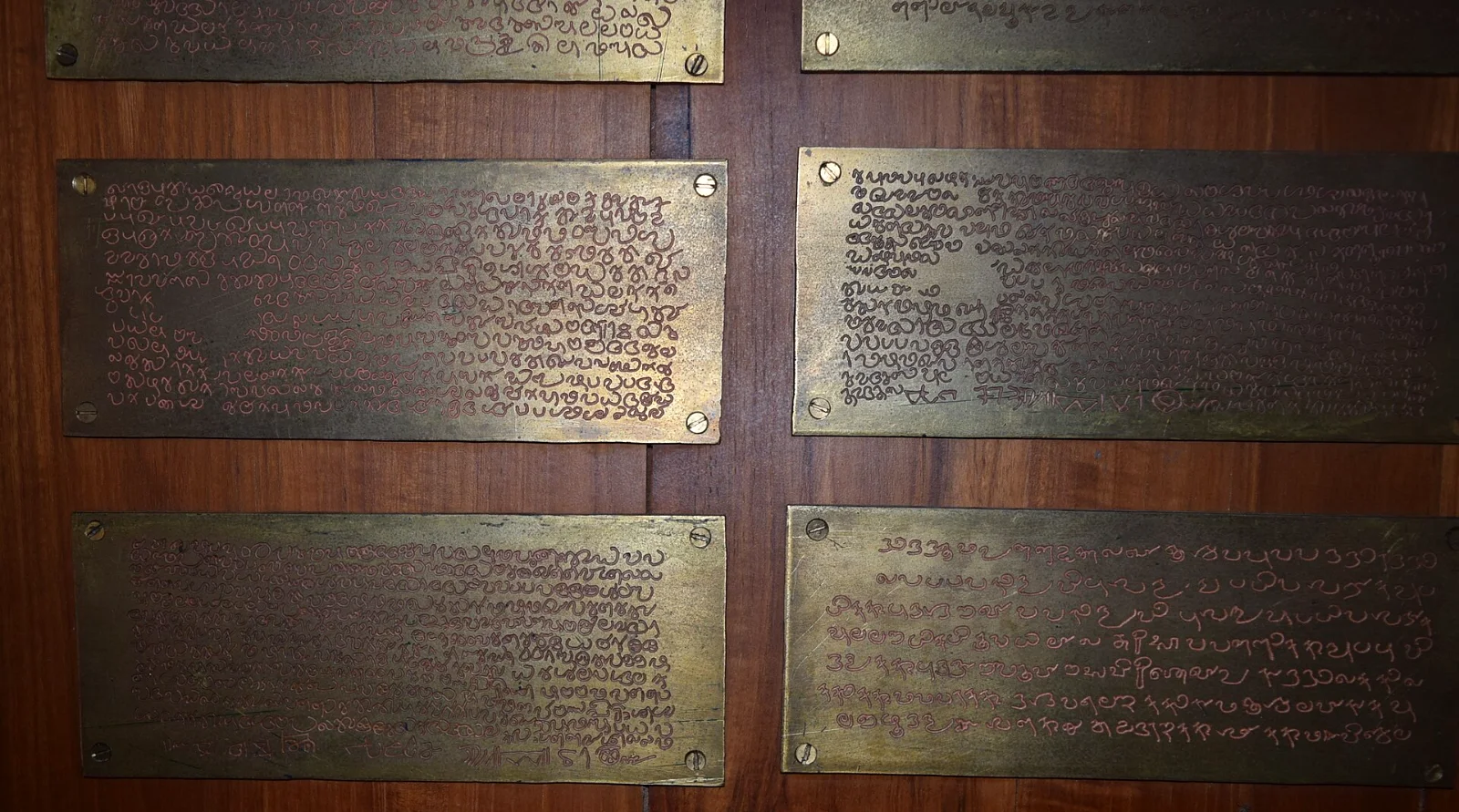
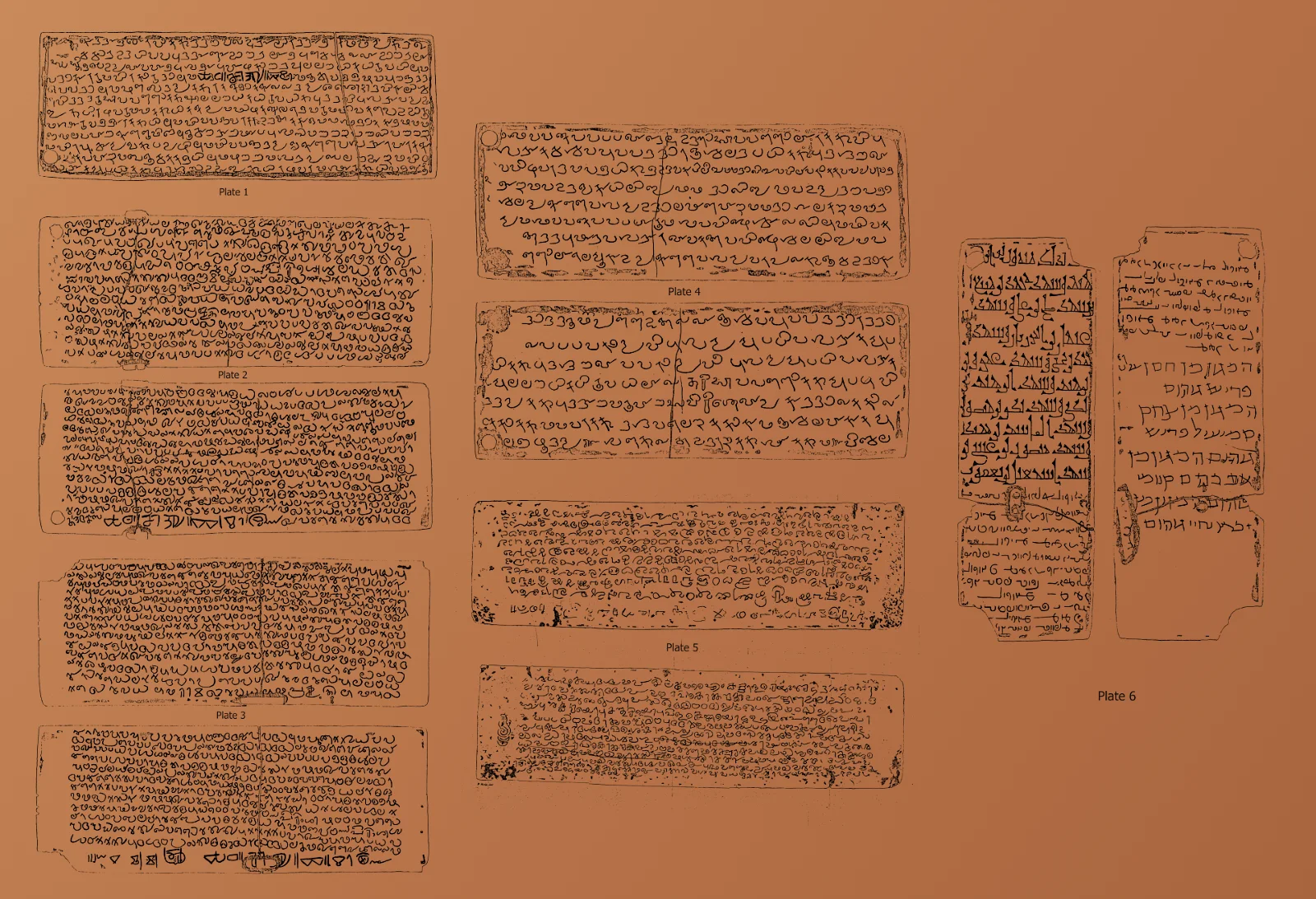
In a church treasury in Kottayam lie four rectangular sheets of copper, each a little longer than a hand, covered edge to edge with tiny incised letters. Two more lie in another church at Thiruvalla. Together they make up the oldest royal charter to survive from Kerala, and one of the most remarkable documents of the medieval world.
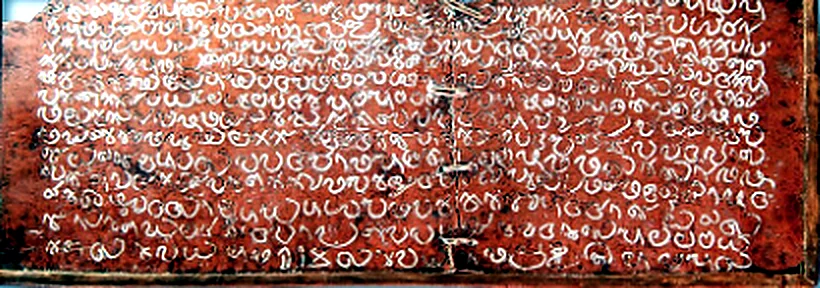
Most of the text is in Old Malayalam. It records a gift of land, families and privileges to a church at Kollam. Then, on a last, upright plate, the witnesses sign: eleven in Arabic, ten in Middle Persian written in Pahlavi script, and four or five in Persian written in Hebrew letters. Muslims, Christians, Zoroastrians and Jews, all merchants of one port, put their names to the same deed.
These are the Tharisapalli cheppedukal, the Tharisapalli copper plates, also called the Quilon or Kollam Syrian plates. This article looks at what they say, who made them, how they survived, and what scholars still argue about. As always, our own assessments are clearly marked.
At a glance
- What: a royal grant engraved on copper plates in Old Malayalam, in Vattezhuthu script with some Grantha letters. The witnesses sign on a separate plate in Arabic (Kufic), Middle Persian (Pahlavi) and Judeo-Persian (square Hebrew script).
- When: the fifth regnal year of the Chera Perumal king Sthanu Ravi, usually calculated as 849 CE (some say 849–50).
- Who: granted by Ayyan Adikal Thiruvadikal, ruler of Venad at Kollam, in the presence of the Chera prince Vijayaragadeva, to the Tarisappalli, the church built by the merchant Maruvan Sapir Iso. The merchant guilds Anjuvannam and Manigramam and the militia called the Six Hundred are named as its guardians.
- Where now: four plates at the Devalokam Aramana, Kottayam (Malankara Orthodox Syrian Church) and two at the Poolatheen Aramana, Thiruvalla (Malankara Mar Thoma Syrian Church). A replica is displayed at the Kerala Jews History Museum in Paravur.
- Why it matters: the oldest surviving inscription of the Chera Perumals, the earliest record of Kerala's great merchant guilds, and one of the earliest documents anywhere signed in Arabic, Pahlavi and Hebrew script together.
Kollam in the ninth century
By the ninth century, Kollam (Quilon) was one of the great ports of the Indian Ocean. An Arabic account of the sea route to China, the Akhbar al-Sin wa'l-Hind, written about 851, names Kulam Mali as the harbour where ships from the Persian Gulf took on water before crossing the Bay of Bengal, and where they paid dues, the big Chinese ships more than the others. The Kollam Era, still the basis of the Malayalam calendar, begins in 825 CE, and tradition connects its start with the founding, or refounding, of the town.
Kollam was the capital of Venad, a chiefdom in the far south of the Chera kingdom. Its ruler, at the time of our plates, was Ayyan Adikal Thiruvadikal. Above him, in distant Mahodayapuram (Kodungallur), ruled the Chera Perumal king Sthanu Ravi. To make Kollam rich, Ayyan Adikal needed foreign merchants, and foreign merchants needed guarantees.
Who was Sapir Iso?
The plates call the man behind the church Maruvan Sapir Iso. Sapir Iso is very likely the East Syriac name Sabrisho, ‘hope in Jesus’, common among the Christians of Persia and Iraq; Maruvan may be a form of the Syriac title Mar, ‘lord’, or a personal name. He is described as the founder of the trading town and the builder of the Tarisappalli. Tarsa was the Persian word for a Christian, and palli is Malayalam for a place of worship: the name means, simply, ‘the Christians' church’.
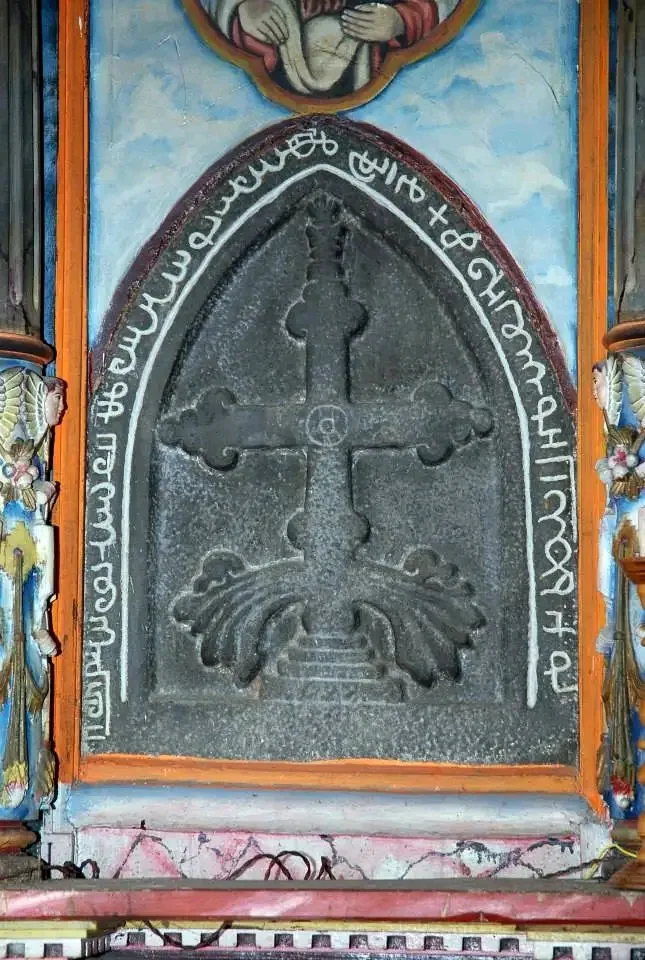
Syrian Christian tradition remembers something similar. Two holy men from Persia, Mar Sabor and Mar Proth, are said to have landed at Kollam about 823–825, with the king's permission to build a church; many old churches of Kerala claim them as founders. The Portuguese-led Synod of Diamper condemned their veneration in 1599, but they are still honoured. Many historians think the tradition and the plates remember the same moment: a wealthy Persian Christian who settled at Kollam and built a church there.
Our assessment: a merchant remembered as a saint
The plates describe Sapir Iso as a merchant and town-founder, not a bishop. Church tradition remembers two holy men. We think the simplest explanation is that the community's memory turned a powerful lay patron, and perhaps the clergy who came with him, into the saints Sabor and Proth.
That does not make the tradition false; it shows how a real event became a sacred story.
What the plates grant
The charter was drawn up in the fifth regnal year of Sthanu Ravi, in the presence of the king's representative, the prince Vijayaragadeva, of Ayyan Adikal and his heir Rama Thiruvadi, and of the officials and assemblies of Venad. It gives the church:
- Land: a plot at Kollam, with its boundaries listed, given as attipperu, a full and permanent gift, together with the people who worked it.
- Families: households of Ezhavas (Ilavar), a family of washermen (Vannar), a family of carpenters (Tachar) and families of Vellalar cultivators, attached to the church as its tenants. Their taxes were to go to the church, and only the church authorities (palliyar) could judge their offences. The Ezhava and Vannar families could trade freely in the bazaar.
- Trade: the merchant guilds received exemptions from duties on goods brought in and sold, and a share in decisions on taxes and prices. Fees for weighing and measuring goods were to be paid to the church.
- Rank: a list of seventy-two privileges, of the kind granted to high-status groups in medieval Kerala.
The grant put the church and its land under the protection of the merchant guilds Anjuvannam and Manigramam and of the Six Hundred (Arunurruvar), the militia of Venad. The Anjuvannam was an association of West Asian merchants; the Manigramam was a great guild of Indian merchants, here closely tied to the Christians. This is the earliest record of both in Kerala.
The witnesses
The upright plate is what makes the Tharisapalli grant famous. The Arabic signatures, in Kufic script, are Muslim names: Maymun son of Ibrahim, Muhammad son of Manih, Ismail son of Yaqub. The Pahlavi signatures, read by the Italian scholar Carlo Cereti in 2009, mix Christian names such as Yohanan son of Mashya with Zoroastrian ones such as Farrokh son of Narseh. The Hebrew-script signatures, in Persian, include Hasan Ali, Sahaq and Abraham Quwami: Persian-speaking Jews.
Some of the letters are badly formed, as if cut by a local engraver copying writing he could not read. A few characters, in an unknown script, have never been deciphered.
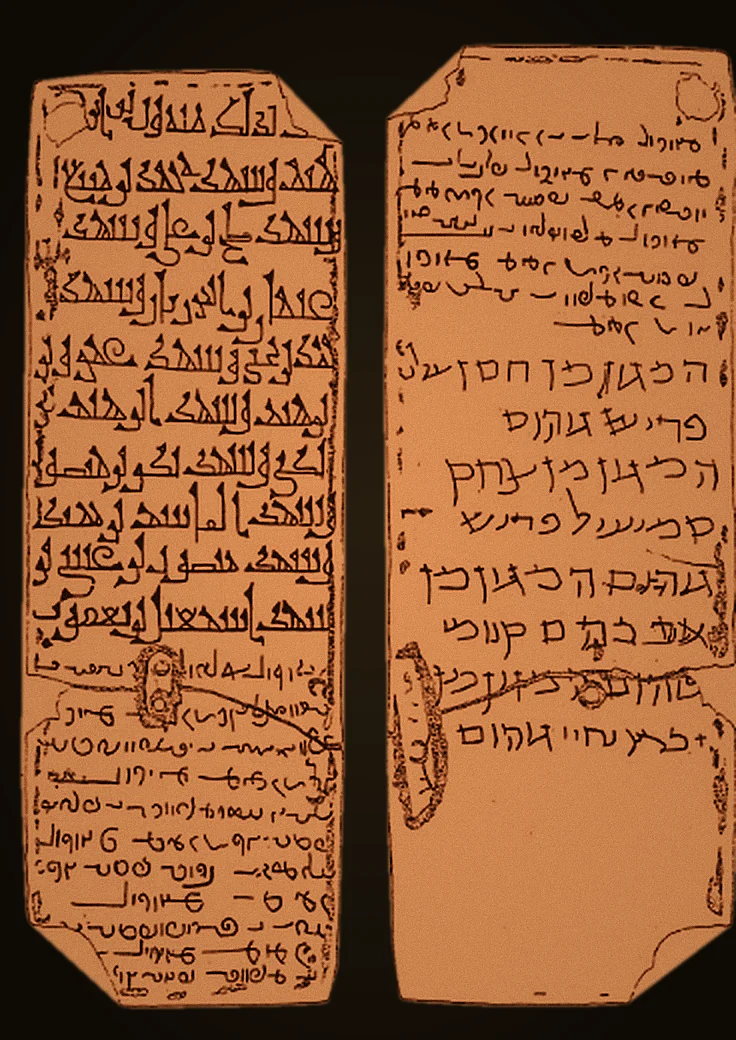
The list tells us who was trading at Kollam in the 840s: Arabs and Persians, Muslims, Christians, Jews and Zoroastrians, sitting together as the merchant community of a single port and guaranteeing a deal made by one of their number.
Our assessment: not a declaration of tolerance, but a contract
It is tempting to read the witness plate as a medieval statement of interfaith harmony. It was something more practical: the merchants of a port, of every faith, standing surety for a deal that affected them all.
That is what makes it valuable. It shows that in ninth-century Kollam, trade made Muslims, Christians, Jews and Zoroastrians partners in law, and a Hindu ruler was happy to have them so.
Two grants, or one?
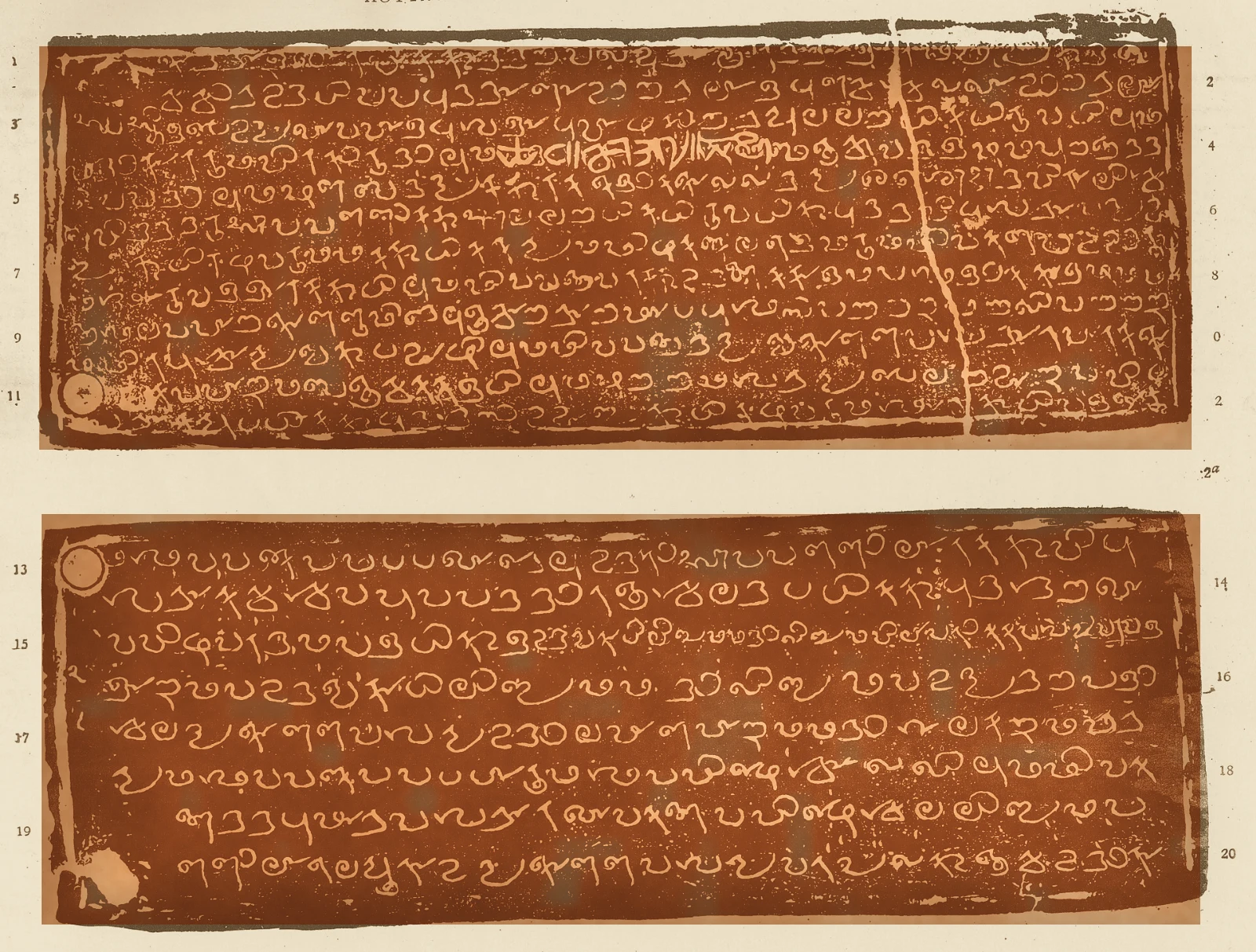
The plates have never been easy to read. They are worn, the text breaks off in the middle of the fourth plate, and the plates do not follow on neatly. For most of the twentieth century, following M. G. S. Narayanan's 1972 edition, scholars treated them as two separate grants made at different times. In 2013 the historians M. R. Raghava Varier and Kesavan Veluthat rearranged the plates and read them as one charter.
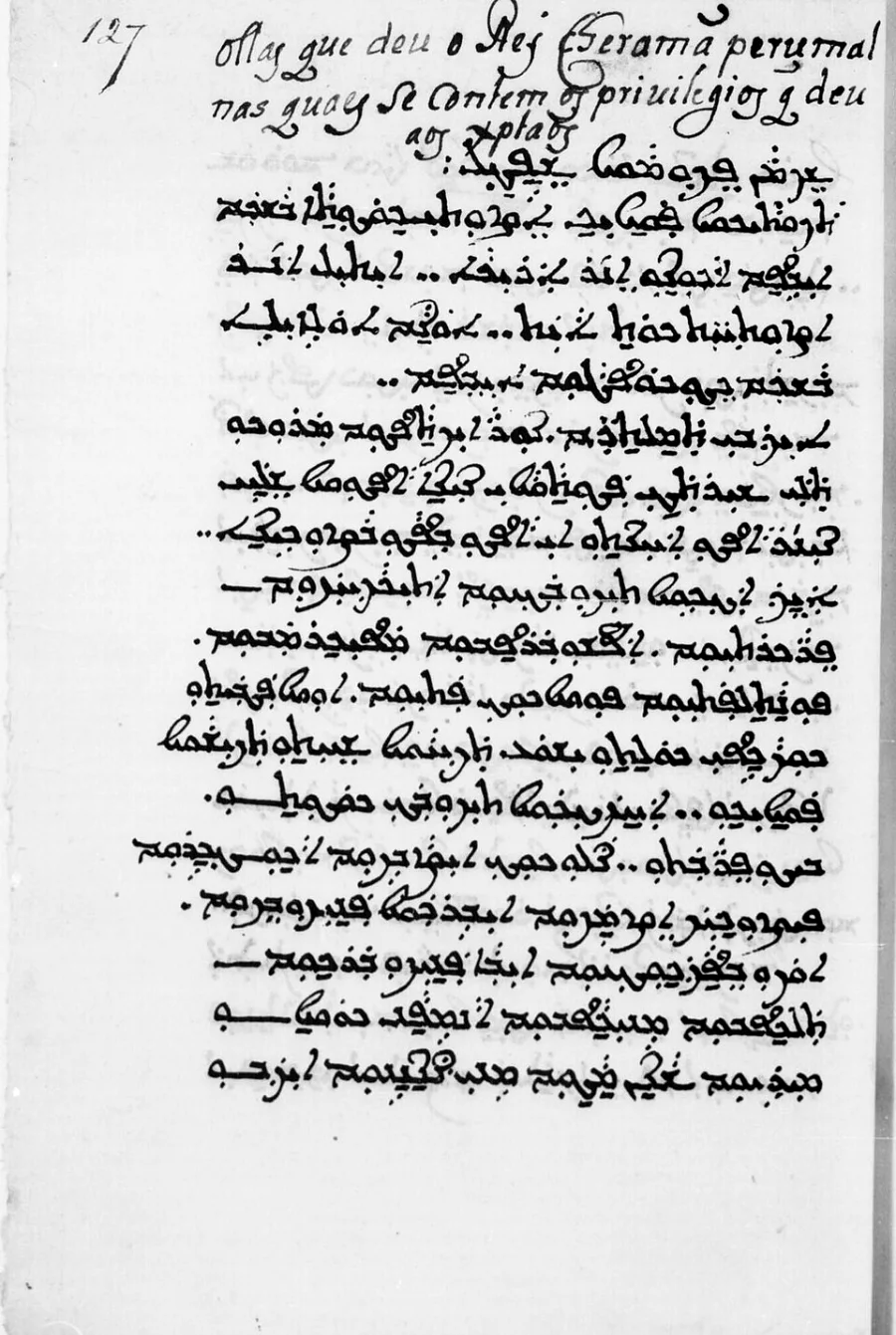
Two older copies help. In 1601 the priest Ittimani Kathanar transcribed the plates in Malayalam written in Syriac letters for the Jesuit bishop Francis Roz; the manuscript is now in the Bibliothèque nationale de France. In 1758 the French scholar Anquetil-Duperron published a translation. Ittimani's copy carries a Portuguese heading calling the plates the grants that ‘King Cheraman Perumal’ gave to the Christians: by 1601 the charter of Ayyan Adikal and Sthanu Ravi was remembered as a gift of the legendary last Chera king. Both copies continue past the point where the surviving text breaks off, with names of local notables and a passage about Thomas of Cana, the merchant whose own copper plates, given at Kodungallur, are lost. The historian István Perczel has suggested that the two grants were once re-engraved together and later split between the Christians of Kollam and Kodungallur.
A long journey
The plates passed through the hands of the Syrian Christian church, and were seen and copied by the Portuguese in the sixteenth century. According to an account published in the Indian Antiquary, the British Resident in Travancore and Cochin, Colonel Colin Macaulay, traced six copper plates after a long search in 1806. They were kept at Kottayam, which is why scholars long called them the Kottayam plates.
Drawings of them were published in London in the Journal of the Royal Asiatic Society in 1843, and the German missionary-scholar Hermann Gundert made the first scholarly translation in 1844. Today the set is divided: four plates are at the Devalokam Aramana of the Malankara Orthodox Syrian Church in Kottayam, and two at the Poolatheen Aramana of the Malankara Mar Thoma Syrian Church in Thiruvalla.
In July 2017, on the first visit of an Indian prime minister to Israel, Narendra Modi presented Benjamin Netanyahu with replicas of the Tharisapalli plates, made with the help of the Mar Thoma Church, as an early record of Jewish trade with India.
The church that vanished
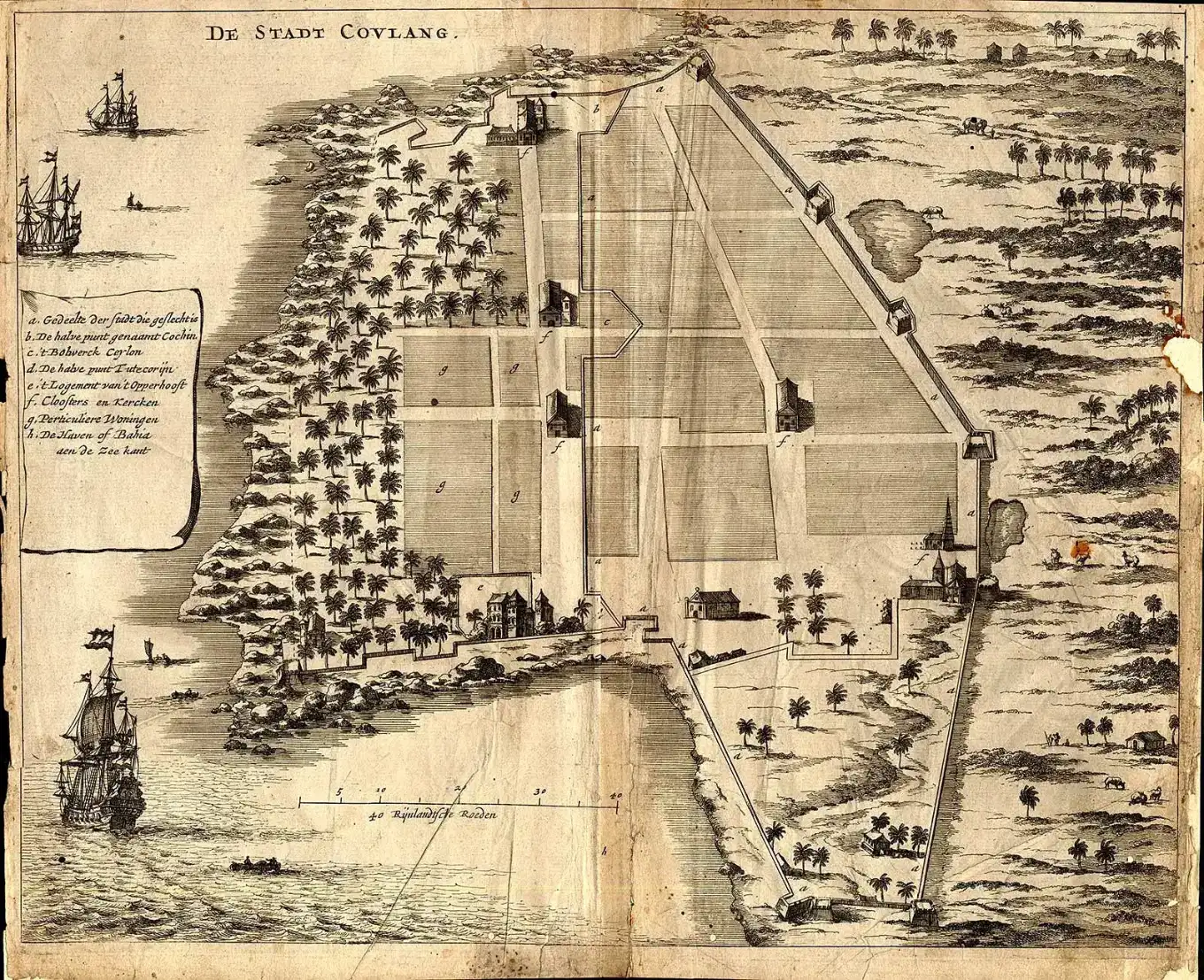
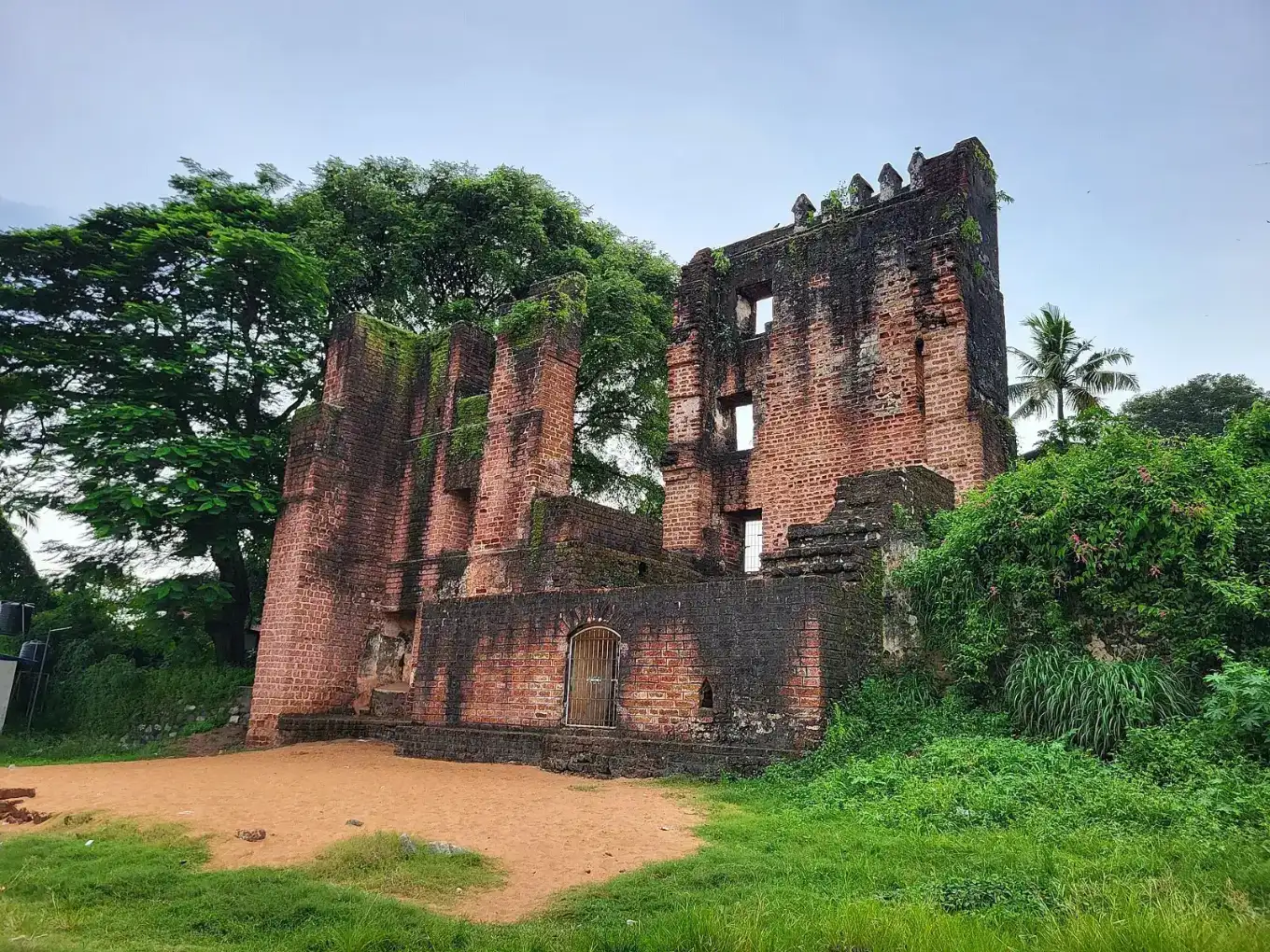
The Tarisappalli itself is gone. Its site is usually placed at Tangasseri (Thangassery), the headland at Kollam where the Portuguese built their fort of St Thomas in the sixteenth century. A Dutch bird's-eye view published by Philip Baldaeus in 1672 shows the walled town as it was then. Today only a fragment of the fort's laterite wall stands near the lighthouse, and the sea has taken much of the old shore.
Our assessment: a treasure that few Keralites have seen
The plates are among the most important documents in Indian history, yet the originals are rarely shown, and most Keralites know them only from textbooks.
A high-quality digital edition of all six plates, with a modern translation, and a permanent public display of replicas in Kollam, the town they describe, would honour them better than any vault.
What is proven, and what is not
Fact, tradition and debate
- Documented: Ayyan Adikal of Venad granted land, families and privileges to a church at Kollam (the plates themselves).
- Calculated: the date of 849 CE. The plates give only Sthanu Ravi's fifth regnal year; 849 rests on Narayanan's Chera chronology, which is widely accepted.
- Documented, as far as is known: that it is the oldest surviving Chera Perumal inscription. No earlier dated Chera record has been found.
- Documented: Muslim, Christian, Zoroastrian and Jewish merchants witnessed it, signing in Arabic, Pahlavi and Hebrew script.
- Possible: that Maruvan Sapir Iso is the Mar Sabor of church tradition. Names and dates fit, but the plates call him a merchant, not a bishop.
- Debated: whether the plates are one charter or two grants (Varier and Veluthat, 2013, against Narayanan, 1972).
- Hypothesis: that they were once joined to the lost Thomas of Cana plates (Perczel, from the 1601 and 1758 copies).
- Tradition: that the Tarisappalli stood at Tangasseri. No remains have been excavated.
Visiting notes
- Thangasseri, Kollam: the ruins of the Portuguese St Thomas fort and the lighthouse, on the headland where the Tarisappalli is believed to have stood.
- Kerala Jews History Museum, Paravur synagogue: a replica of the plates is displayed, with the story of Kerala's Jewish merchants. Part of the Muziris Heritage Project; usually closed on Mondays.
- Kottayam Valiyapally (St Mary's Knanaya church): Persian crosses with Pahlavi inscriptions, from the same world of Persian Christians as the Pahlavi witnesses.
- Devalokam Aramana, Kottayam, and Poolatheen Aramana, Thiruvalla: the originals are church treasures and are not normally on public view; enquire well in advance.
- From Munnar: Kottayam is roughly four hours by road; Kollam about six.
Read also: The Jews of Kerala · Kollam: the port of Quilon · Kerala's ancient scripts · Paravur synagogue · Cheraman Juma Masjid
See it for yourself, with a local driver who knows these roads.
Book a Munnar Jeep SafariSources & further reading
- M. G. S. Narayanan, Perumals of Kerala (CosmoBooks, 2013), pp. 277-278, 295; and 'Kottayam Syrian copper-plates of Sthanu Ravi', Cultural Symbiosis in Kerala (1972)
- M. R. Raghava Varier and Kesavan Veluthat, Tharissappally Pattayam (National Book Stall, 2013)
- C. G. Cereti, 'The Pahlavi Signatures on the Quilon Copper Plates (Tabula Quilonensis)', Exegisti Monumenta (Harrassowitz, 2009), pp. 31-50
- K. J. Tintu, 'The Syrian Christian Copper Plate of Tarisappally, and the Jewish and Muslim Merchants of Early Malabar', Proceedings of the Indian History Congress 80
- 'The Tarisappalli Copperplate Grant and the early Christians of India', Nidan 5:2 (2020), pp. 5-26
- Indian Antiquary vol. 53, on Colonel Macaulay's search for the plates in 1806
- Ittimani Kathanar's 1601 transcript, Bibliotheque nationale de France, MS Syriaque 186
- PMO India: PM's gifts to PM Benjamin Netanyahu (July 2017)
- Malankara Mar Thoma Syrian Church: the Tharissapalli plates at Thiruvalla
- Wikipedia: Quilon Syrian copper plates
- Wikipedia: Tarisappalli
- Wikipedia: Mar Sabor and Mar Proth
Figures are from the sources listed and were checked in November 2026. Park timings and road conditions change, so please confirm before you travel.