
Old Goa: The Churches of the 'Rome of the East' and the Last Colony
Albuquerque's conquest in 1510, a golden city that rivalled Lisbon, the tomb of St Francis Xavier, the Inquisition, and fourteen years of Portuguese rule after India's independence that ended in December 1961. The story of Old Goa and its churches, with old engravings and maps.
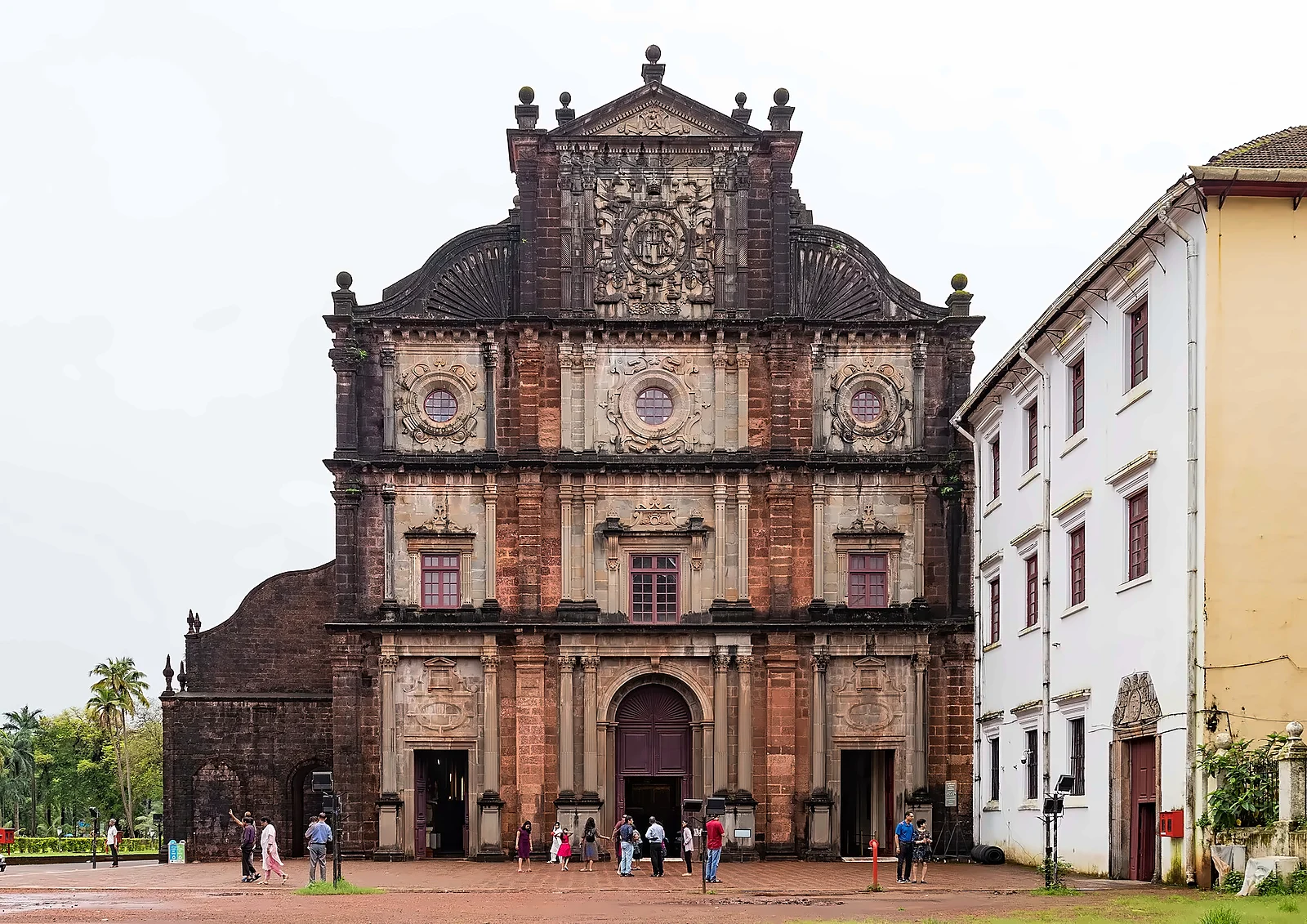
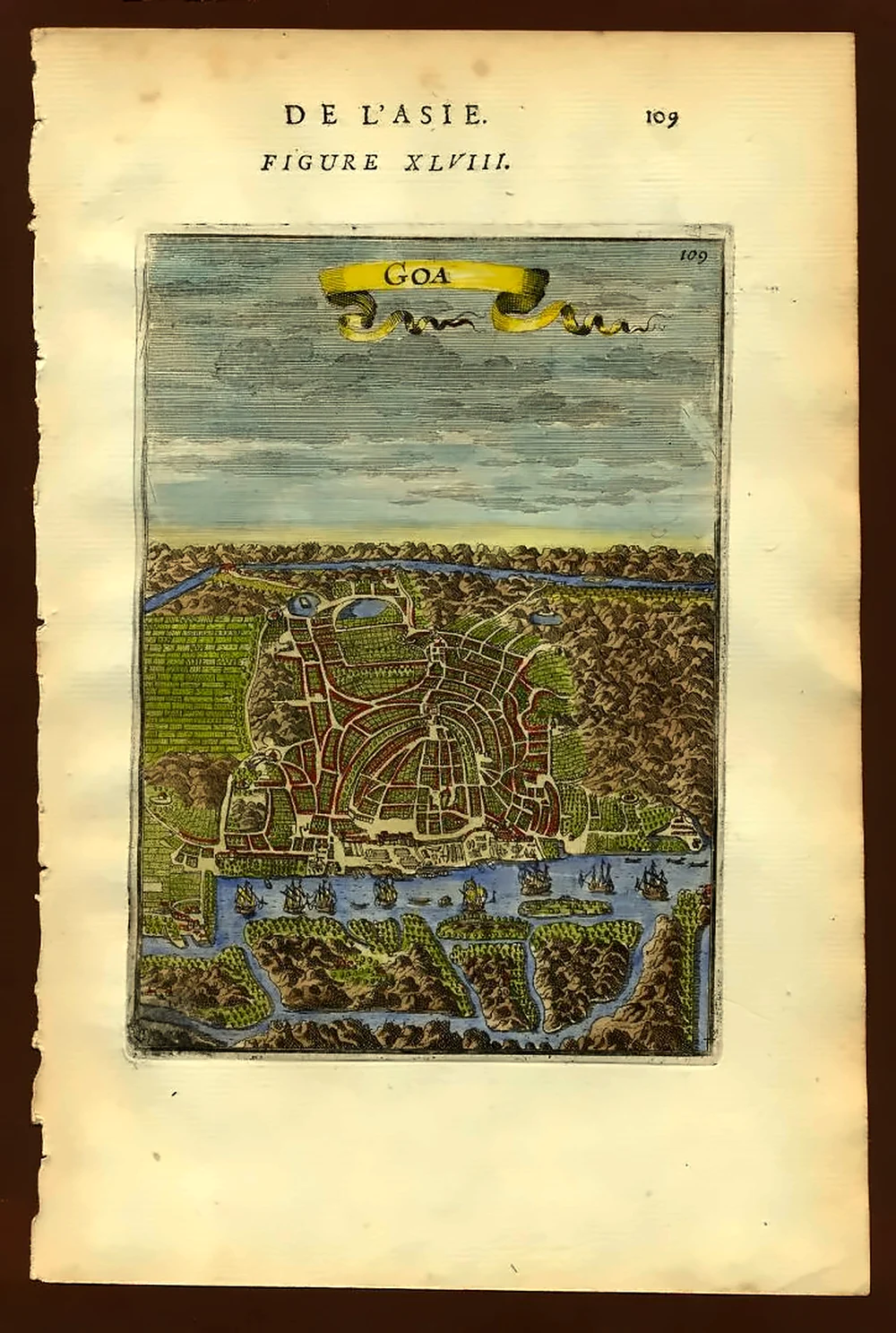
On the south bank of the Mandovi river, a few kilometres upstream from Panaji, great white and red-laterite churches stand among lawns and palm trees, with hardly a house around them. This is Old Goa (Velha Goa), once the capital of the Portuguese empire in Asia, a city that Europeans called "Golden Goa" and "the Rome of the East", and which, at its height in the 16th century, may have rivalled Lisbon in size. Within two centuries it had been abandoned to disease and the jungle. Only its churches remained.
Goa was Portugal's first territory in India and its last. It remained a Portuguese colony for fourteen years after India's independence, until December 1961. This article tells the story of the city and its churches, from Albuquerque's conquest to the liberation, with old engravings, maps and our own assessments.
At a glance
- Where: Old Goa, about 10 km east of Panaji, on the Mandovi river.
- Portuguese rule: 1510 to 19 December 1961, 451 years.
- Key churches: Basilica of Bom Jesus (1594–1605), Sé Cathedral (1562–1619), St Francis of Assisi, St Cajetan, the ruined St Augustine tower, Our Lady of the Rosary.
- Status: "Churches and Convents of Goa", UNESCO World Heritage Site since 1986.
- Relics: the body of St Francis Xavier, shown to the public about once a decade (most recently 21 November 2024 – 5 January 2025).
Albuquerque and the conquest of 1510
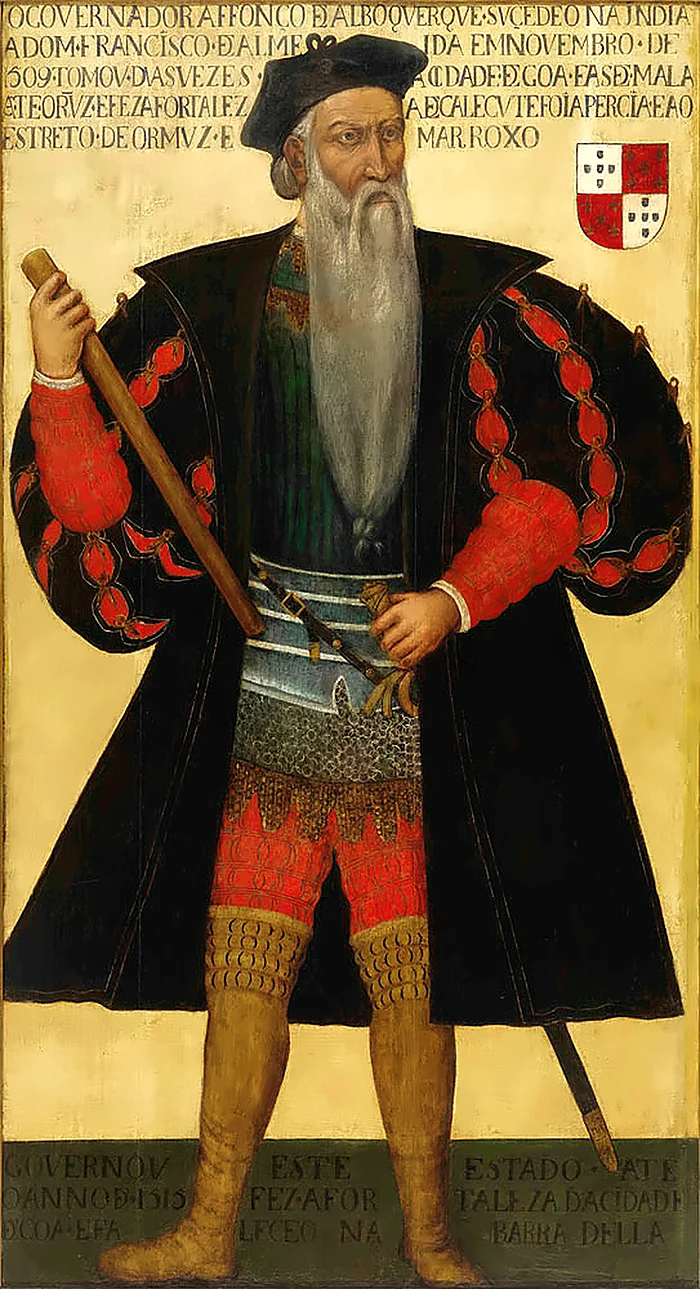
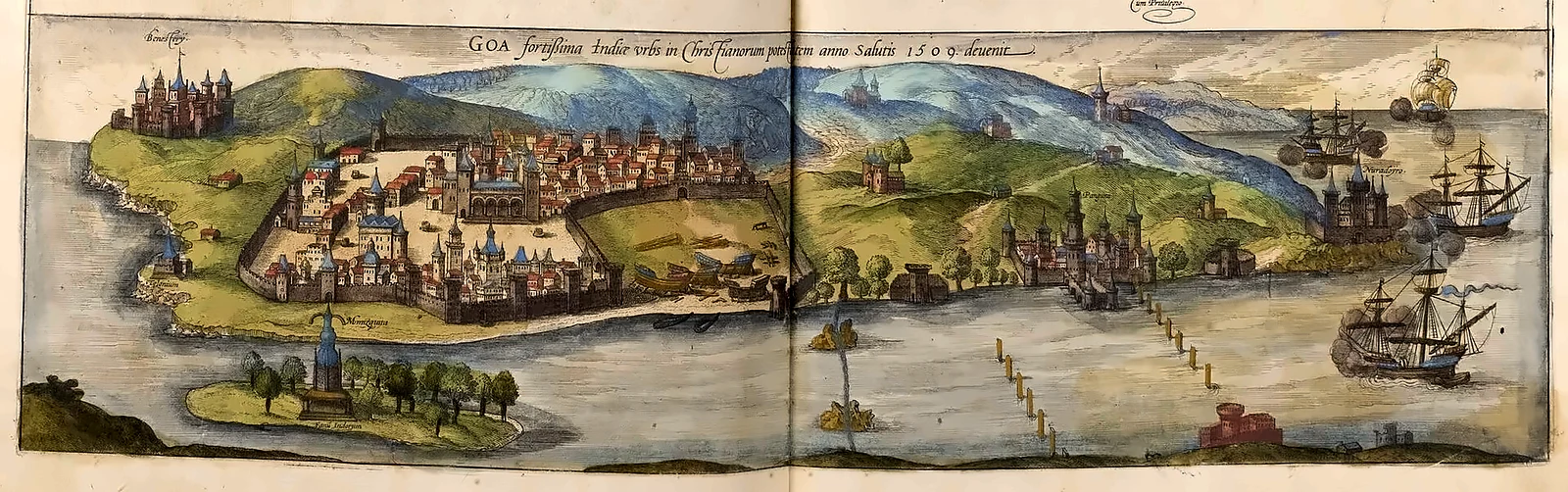
Before the Portuguese, Goa was a busy port of the Bijapur Sultanate, famous for its trade in Arabian horses, which the kingdoms of the Deccan and Vijayanagara bought for their cavalry. In 1510 Afonso de Albuquerque, the Portuguese governor of India, seized the city, lost it to the Bijapur army, and recaptured it on 25 November 1510, the feast of St Catherine. Albuquerque understood that Portugal needed a permanent base, not just trading posts like Kochi, and Goa, an island city in a river mouth, was ideal. He made it the capital of the Estado da Índia, the Portuguese state in Asia, which stretched from Mozambique to Macau.
Golden Goa
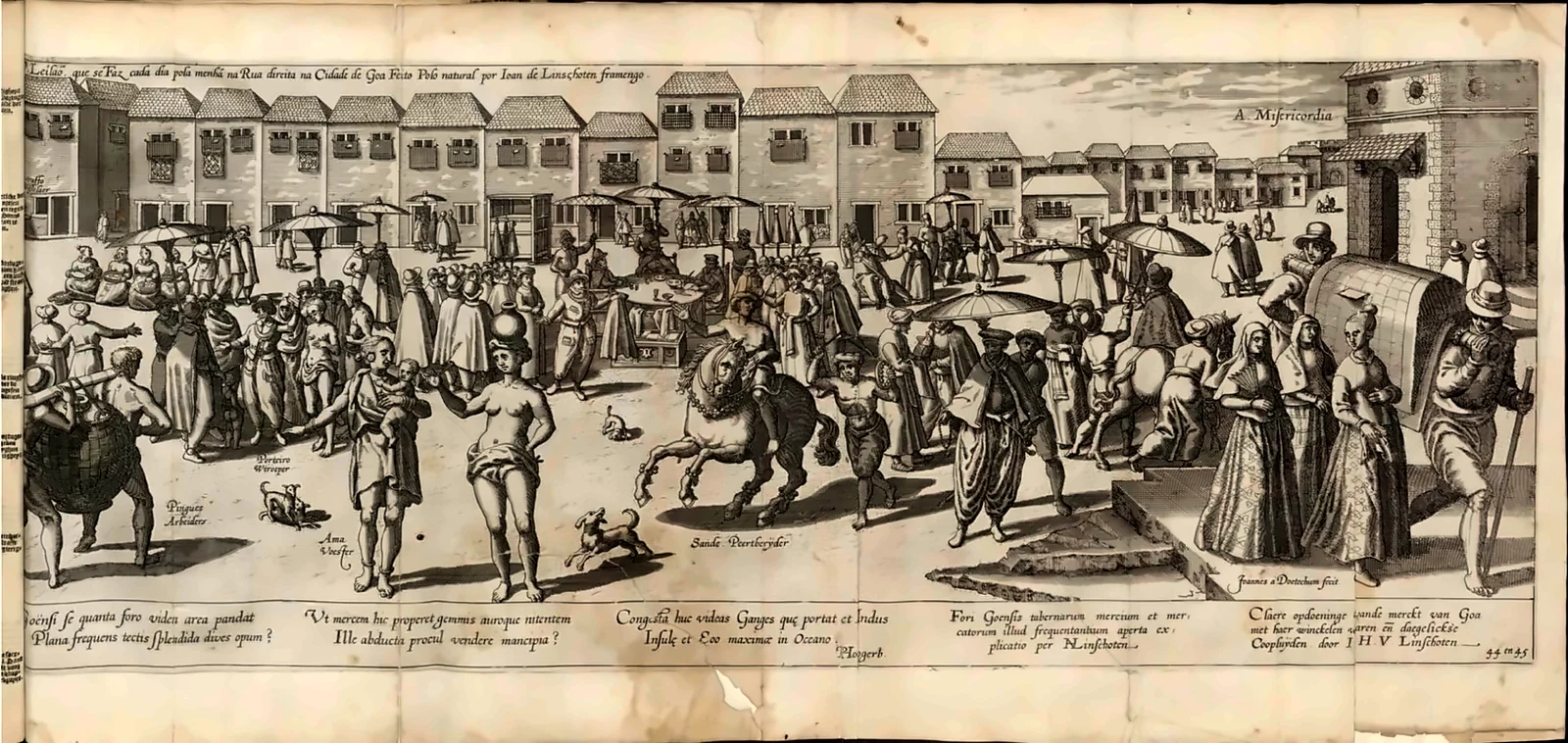
In the 16th century Goa became one of the great cities of Asia. Pepper from Kerala, horses from Arabia, silks from China and spices from the East Indies passed through its markets. Its population was reported at around 200,000. The Dutch traveller Jan Huyghen van Linschoten, who lived there in the 1580s as secretary to the archbishop, described the Rua Direita, the main street, where auctions of goods and slaves were held every morning. His book, published in 1596, also revealed Portuguese navigational secrets to the Dutch and English, and helped end Portugal's monopoly of the sea route to Asia.
The churches
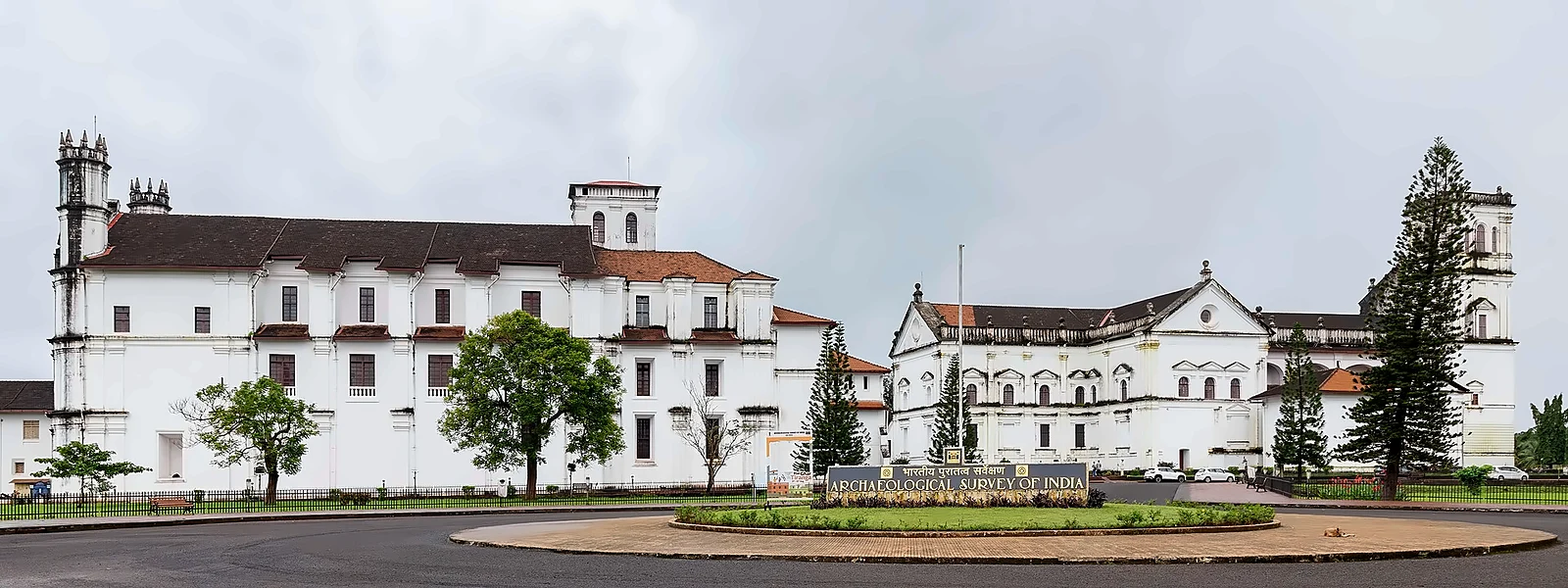
The religious orders, Franciscans, Dominicans, Augustinians, Jesuits and Theatines, filled the city with churches, convents and colleges, many built of the local red laterite and covered in white lime plaster. Those that survive form one of the finest groups of colonial religious architecture in Asia.
- Sé Cathedral, dedicated to St Catherine, on whose feast Goa was taken. Begun in 1562 and completed in 1619, it was consecrated in 1640 and is one of the largest churches in Asia, about 76 m long. Its Golden Bell, famous for its rich tone, still hangs in the surviving tower; the second tower collapsed in the 18th century.
- Basilica of Bom Jesus ("Good Jesus"), the Jesuit church, built 1594–1605. Its façade is the finest baroque front in India. Inside, in a chapel on the right, lies the body of St Francis Xavier in a silver casket, raised on a tomb of Italian marble and jasper given by Cosimo III de' Medici, Grand Duke of Tuscany, at the end of the 17th century.
- Church and Convent of St Francis of Assisi, beside the cathedral, rebuilt in 1661 on an earlier church, with a richly painted and gilded interior; the convent is now the Archaeological Museum, with portraits of the Portuguese governors.
- Church of St Cajetan (17th century), built by Italian Theatine monks and modelled on St Peter's in Rome.
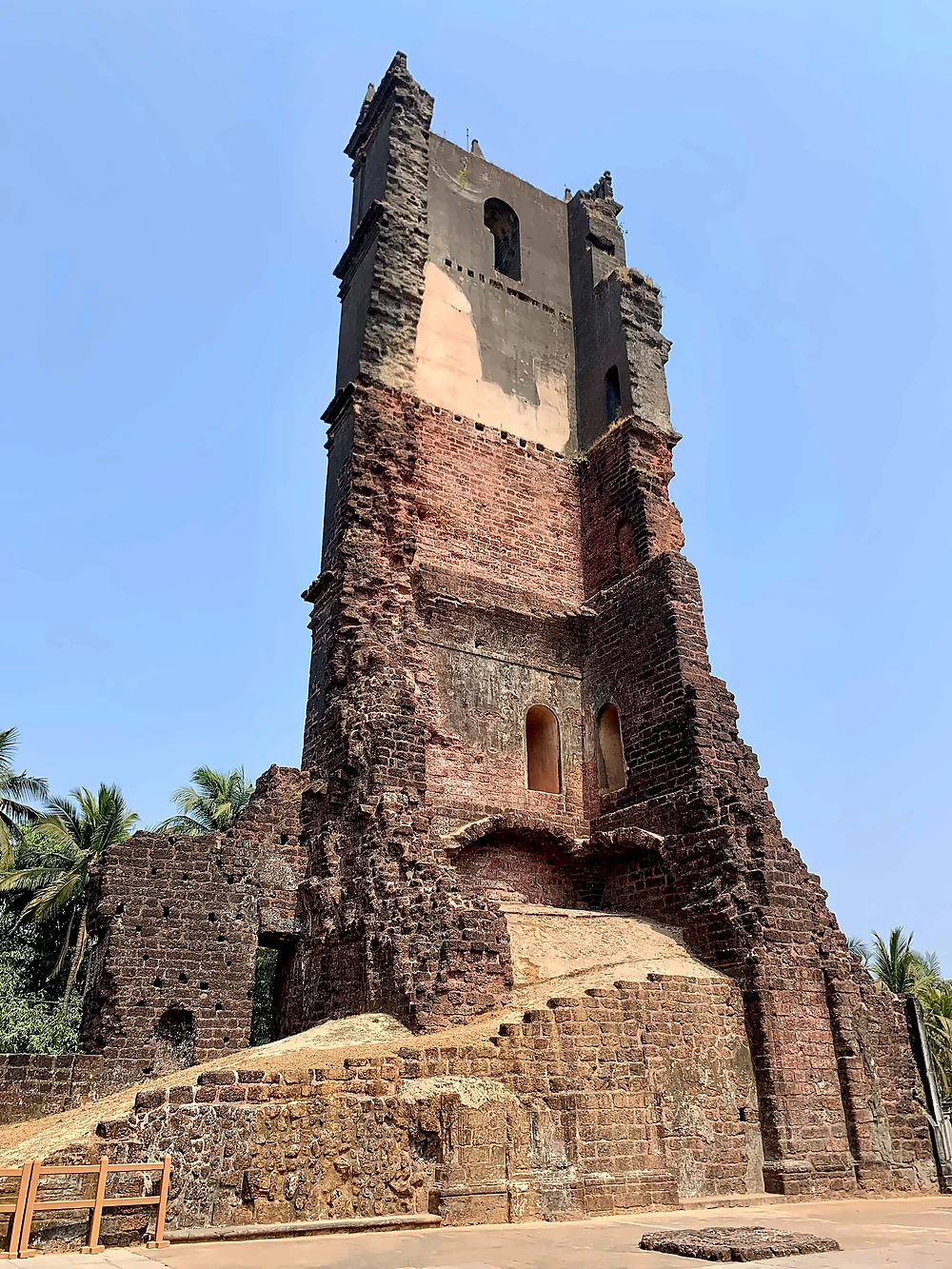
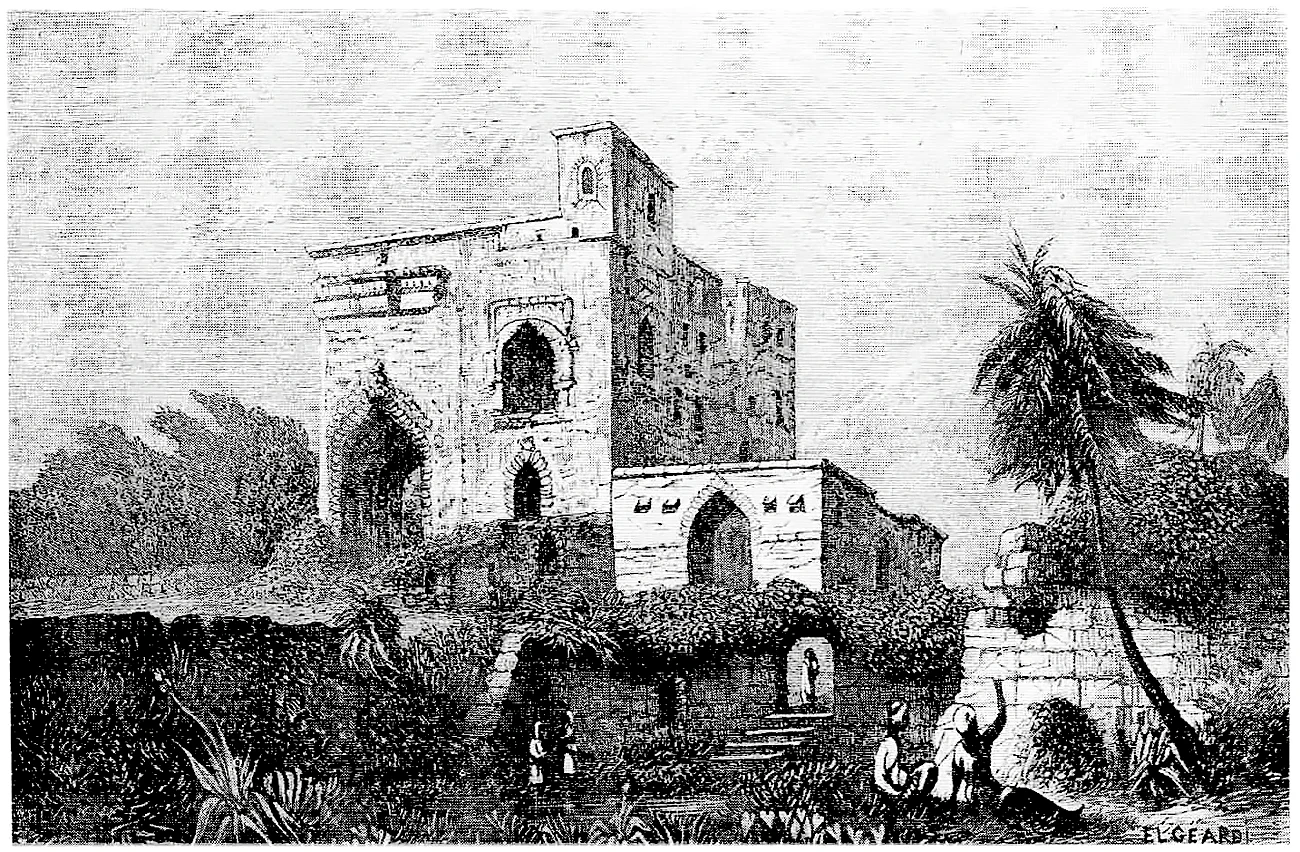
- Church of St Augustine, built in 1602, once one of the largest churches in Goa. Abandoned after the religious orders were suppressed in 1835, its vault fell in 1842 and much of the remainder in the 20th century. Only half of its great tower, about 46 m high, still stands.
- Church of Our Lady of the Rosary (1540s), one of the oldest, built in the Manueline style on the hill from which Albuquerque is said to have watched the battle.
St Francis Xavier
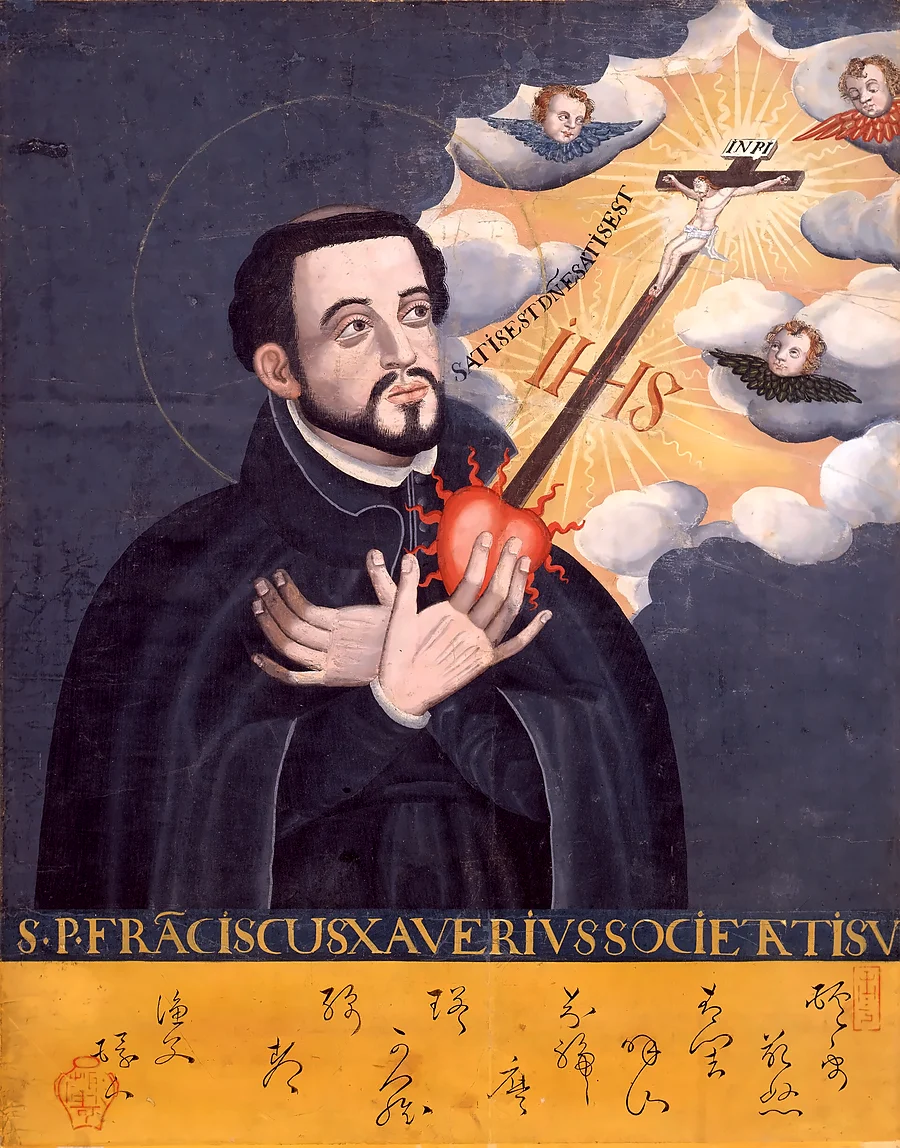
The Spanish Jesuit Francis Xavier, one of the founders of the Society of Jesus, reached Goa in 1542. From there he travelled along the coasts of south India, including the fishing villages of the Travancore and Tamil coasts, where he baptised thousands, and then to Malacca, the Moluccas and Japan. He died on 3 December 1552 on Shangchuan island off the coast of China, waiting for a ship to the mainland. His body, buried in lime, was found still fresh when it was exhumed, and was brought to Goa in 1554, where huge crowds venerated it. He was canonised in 1622.
His body is now shown to the public roughly once every ten years in the Exposition, which draws pilgrims from all over the world. The most recent was held from 21 November 2024 to 5 January 2025.
The Inquisition
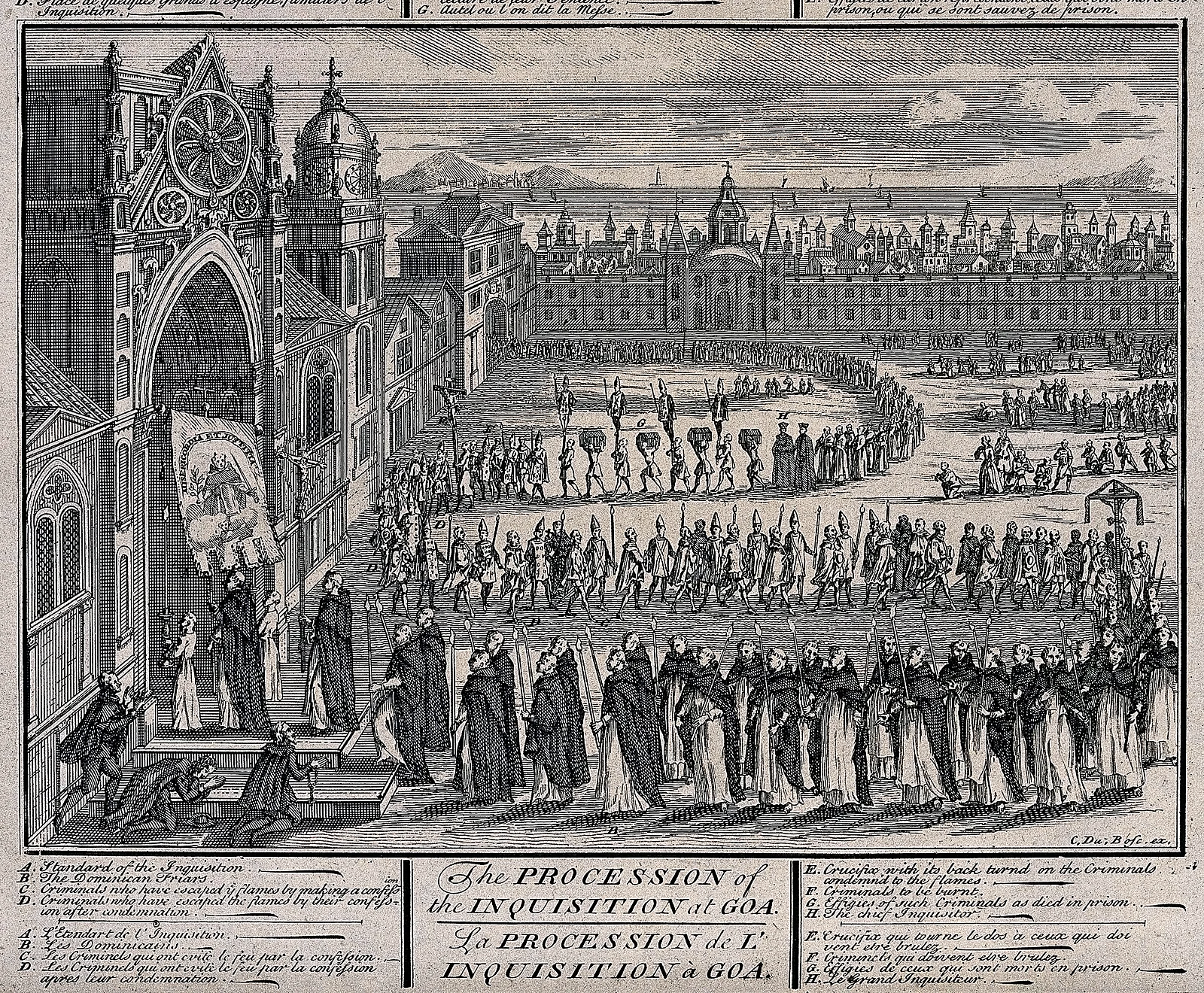
Golden Goa had a darker side. In 1560, partly at Xavier's earlier request, the Goa Inquisition was established. Its main targets were "New Christians" accused of secretly practising Judaism, and converts suspected of keeping Hindu or Muslim customs. Hindu rites were banned in Portuguese territory, temples were destroyed, and many Hindu families fled to neighbouring kingdoms with their deities, which is why many of Goa's oldest temples now stand in the "New Conquests" outside the old Portuguese lands. The Inquisition was suspended in 1774, restored in 1778 and finally abolished in 1812; most of its records were destroyed.
Its influence reached Kerala too. In 1599 the Archbishop of Goa, Aleixo de Menezes, held the Synod of Diamper (Udayamperoor) near Kochi, forcing the ancient St Thomas Christians of Kerala to accept Latin practices and burning many of their Syriac books. Resentment led to the Coonan Cross Oath of 1653 at Mattancherry, when thousands of them swore never to submit to the Portuguese clergy.
Our assessment: why was Golden Goa abandoned?
Many causes worked together. From the late 16th century the Dutch and English broke Portugal's grip on the sea trade. The Mandovi began to silt up. Above all, the low, marshy city was struck again and again by epidemics, cholera, malaria and plague, which killed tens of thousands in the 17th century. The viceroys moved out to Panjim in 1759; by 1775 only about 1,500 people remained in the old city, and in 1843 Panjim (Nova Goa) became the official capital. The religious orders were expelled in 1835, leaving their churches empty. Our view: Old Goa died of the same things that killed many colonial port cities, disease and shifting trade, but its churches survived because they remained sacred, cared for by the Church even after the city around them had gone.
After 1947: the last colony
When India became independent in 1947, Britain left; France would hand over Pondicherry, Karaikal, Mahé and Yanam peacefully from 1954. But Portugal, under the dictator António Salazar, refused to negotiate. In 1951 it declared its colonies "overseas provinces", claiming that Goa was as much a part of Portugal as Lisbon.
Inside Goa, the freedom movement had already begun on 18 June 1946, when the socialist leader Ram Manohar Lohia defied a ban on public meetings in Margao; the day is still marked as Goa Revolution Day. Goan nationalists such as Tristão de Bragança Cunha, "the father of Goan nationalism", and Telo de Mascarenhas were jailed or deported to Portugal. In 1954 volunteers freed the small Portuguese enclaves of Dadra and Nagar Haveli. On 15 August 1955, unarmed satyagrahis from all over India marched across the border into Goa; Portuguese police opened fire, and at least two dozen were killed and many wounded. India cut diplomatic relations and imposed an economic blockade, but Nehru was reluctant to use force.
By late 1961, after more firing incidents and growing pressure at home and from newly independent nations in Africa, India acted. In Operation Vijay, launched on 17–18 December 1961, about 30,000 Indian soldiers, supported by the navy and air force, entered Goa, Daman and Diu. Salazar ordered his troops to fight to the last man and destroy everything, but the Governor-General, Manuel António Vassalo e Silva, refused to sacrifice the city or its people, and surrendered on 19 December 1961. About 22 Indians and 30 Portuguese died. Vassalo e Silva was later court-martialled and expelled from the army in Portugal, but in Goa he is remembered with gratitude; Portugal restored his honours after the 1974 revolution.
Goa, Daman and Diu became a union territory. In 1967 Goans voted in an opinion poll to remain separate rather than merge with Maharashtra, and on 30 May 1987 Goa became India's 25th state, with Konkani as its official language. Portugal formally recognised Indian sovereignty in 1974.
Our assessment: liberation, or annexation?
In India, 19 December is celebrated as Goa Liberation Day; Portugal long called it an invasion, and some Western governments at the time criticised India's use of force. We think the evidence supports the Indian view on the main point: Goa was a colony acquired by conquest, Portugal refused every offer of negotiation for fourteen years, and peaceful protest was met with gunfire. The 1967 opinion poll and Goa's flourishing as an Indian state since then show that Goans themselves embraced the outcome, while choosing to keep their own distinct identity. At the same time, Goa's Catholic churches, Konkani language, cuisine and music are a living inheritance of the 451 years, and most Goans see them not as foreign, but as their own.
Visiting
- Getting there: Old Goa is about 20 minutes by road from Panaji; Goa has two airports (Dabolim and Mopa) and is on the Konkan Railway.
- Dress: the churches are places of worship; cover shoulders and knees, and keep quiet during services.
- Best time: November to February. The Feast of St Francis Xavier on 3 December draws huge crowds.
- Also see: the Archaeological Museum in the St Francis convent, the Viceroy's Arch, the Museum of Christian Art, and the Fontainhas Latin quarter in Panaji.
Read also: Fort Kochi, where the Portuguese first built in India · Kozhikode and Vasco da Gama · Muziris and Kottappuram Fort · Hampi and Vijayanagara
See it for yourself, with a local driver who knows these roads.
Book a Munnar Jeep SafariSources & further reading
- Wikipedia: Old Goa
- Wikipedia: Sé Cathedral, Goa
- The Goan: Chronology of expositions of the relics of St Francis Xavier
- Live History India: Goa's liberation from the Portuguese
- The Quint: Goa, the forgotten war of freedom
- The Week (2025): Operation Vijay, how India liberated Goa in 36 hours
Figures are from the sources listed and were checked in October 2026. Park timings and road conditions change, so please confirm before you travel.