
Anakulam: The Village Where Wild Elephants Come to Drink
Every evening in the dry months, herds of wild elephants walk out of the forest at Anakulam, near Mankulam, and drink from one particular stretch of a small stream, watched from the other bank by villagers and visitors. Why that water, and how a farming village learned to live beside them.
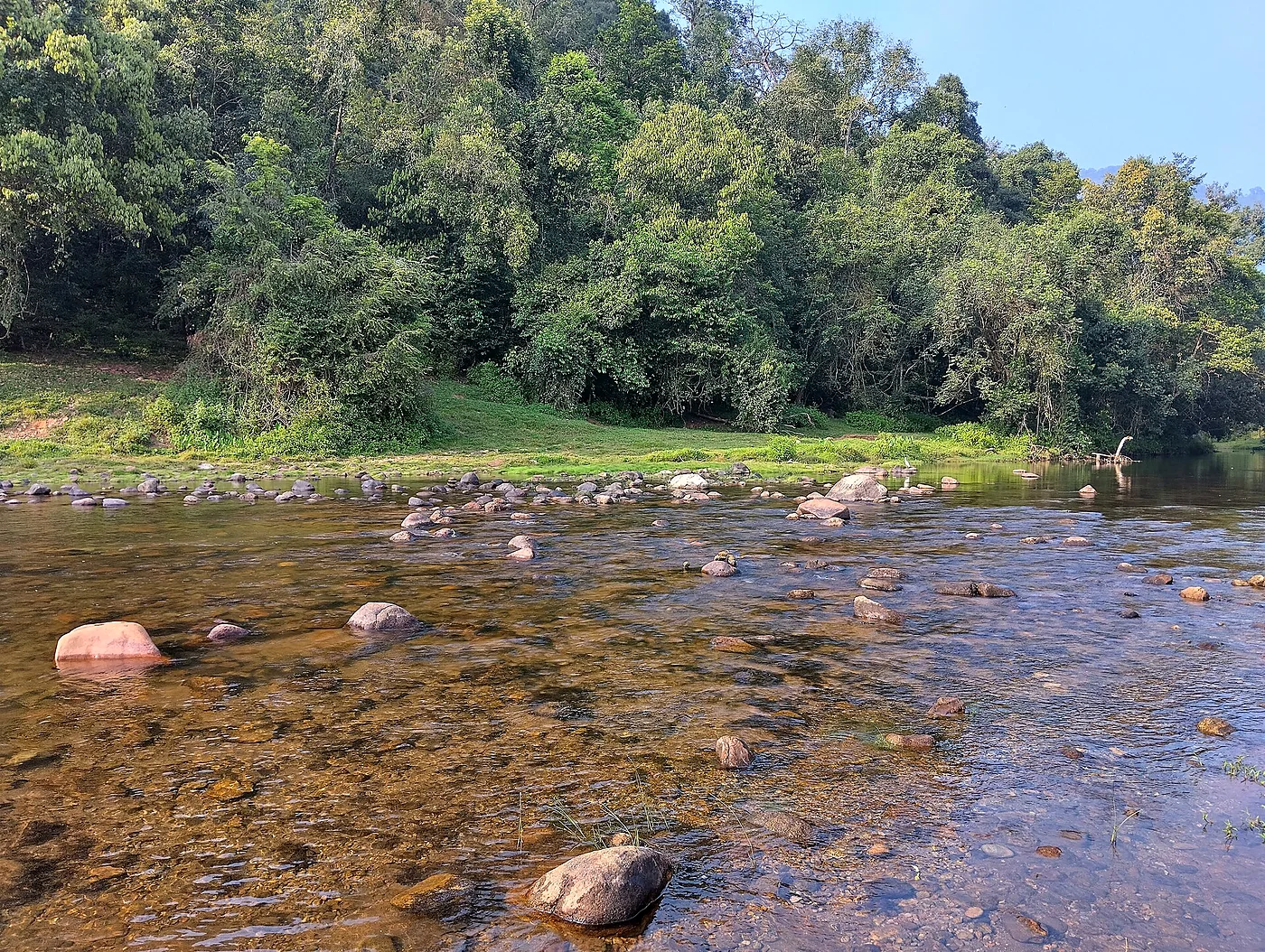
There are many streams in the forests around Mankulam, in the north of Idukki district. Yet every evening, especially in winter and early summer, wild elephants walk past most of them to reach one particular stretch of a small river at Anakulam, a farming village about 8 km beyond Mankulam town. They wade into the shallows, lower their trunks to the riverbed and drink for a long time, sometimes for hours. On the opposite bank, a few metres away across the water, villagers, children and visitors stand and watch.
The village's name says it all: ana is elephant and kulam a pond or pool, so Anakulam (also written Anakkulam or Aanakkulam) is "the elephants' pool".
Where it is
Anakulam lies in Mankulam panchayat, in the forested country west of Munnar. The usual route is from Kallar on the Adimali–Munnar road: about 18 km to Mankulam, then about 8 km to Anakulam. From Adimali it is roughly 40 km. The village sits right at the edge of the forest: houses, small shops, rubber, cardamom and pepper on one side of the stream, and on the other, unbroken forest that stretches towards the Pooyamkutty and Edamalayar valleys.
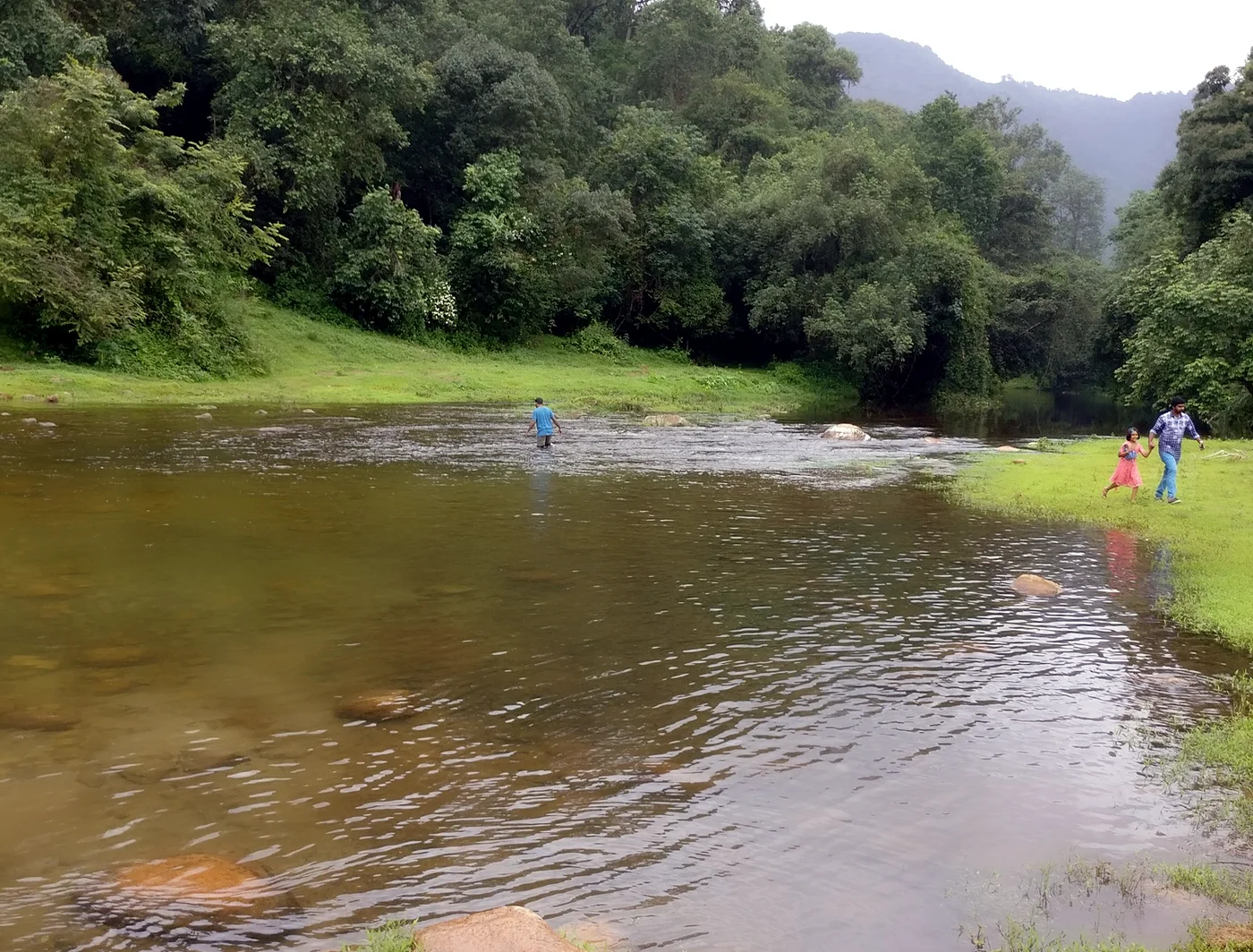
The stream itself is the Eetacholayar (also spelled Idacholayar), a small tributary that eventually joins the Periyar. Most of the year it is shallow and clear, running over pebbles and rounded stones. It looks like a hundred other forest streams. The elephants clearly think otherwise.
Why here? The "oru" water
Local people call the special spot the oru, a Malayalam word for brackish or salty water. At certain points in the riverbed, bubbles rise from below and the water has a faintly salty taste. Elephants go straight to these points and drink there, often lining up and taking turns.
The best explanation is minerals. A former Divisional Forest Officer who had water samples tested told The News Minute that they showed traces of salt, and that mineral-rich water appears to seep up through the rocks of the riverbed. Elephants, like many plant-eating animals, need more sodium and other minerals than their diet of grass, leaves and bark provides. Across India and Africa they seek out salt licks: patches of mineral-rich earth they dig and eat, or springs they drink from. Anakulam's oru seems to be a natural salt lick in liquid form. Exactly where the minerals come from, in rock at this altitude, has not been explained. Reports say the Geological Survey of India collected samples too, but no findings have been published that we could trace.
Unsurprisingly, a place like this gathers stories. Some villagers used to say that a "heady cocktail" bubbles up from the spring and makes the elephants tipsy, earning the stream the nickname "elephant pub". Another tale blamed illicit brewers who supposedly buried their fermenting wash in the riverbed. Visitors have described herds becoming boisterous after drinking, pushing each other and splashing, but there is no evidence of anything stronger than salty water. Elephants are social animals, and an evening at the waterhole is also an evening with the family.
A long habit
This is not a new behaviour. According to forest officials quoted in the press, records show elephants coming to this stretch of river since at least 1912, long before the farming village grew up. When settler families moved into these forests in the mid-twentieth century (read the story of Idukki's settlers), they built their homes beside an elephant path that was already old.
Herds of twenty or thirty animals are commonly reported, often with very young calves; one visitor counted 31. A herd may stay at the river for several hours and occasionally until the next morning. When one group leaves, another sometimes arrives. Reporters who watched noticed that the elephants mostly drink here rather than bathe, as if they treat it as a drinking place.
Living with the herds
What makes Anakulam unusual is not just that elephants come, but that people and elephants mostly manage to share the place. The stream acts as an informal border. The elephants come to the water and, for the most part, go back to the forest without crossing into the village. Villagers say that if they leave the animals alone, the animals leave them alone.
It is not all peaceful. Elephants do raid crops: coconut, jackfruit, banana and tapioca are irresistible. Farmers lose harvests, and over the years there have been angry protests about compensation and protection. And it is not only the elephants who cause problems. Residents complain about visitors who shout, chase the herds for photographs, or flash headlights and torches at night, and they worry that harassed elephants will become aggressive.
The Forest Department's response has been a mix of barriers and technology:
- A 1.2 km "crash guard" rope fence along the riverside, from Anakulam towards Valiyaparakkuty, was installed by the Mankulam Forest Division as a pilot project, with testing support from IIT Palakkad. It is designed to stop elephants without injuring them.
- A 24-hour night-vision camera watches the oru, feeding an AI system that alerts forest staff when elephants arrive. The project was developed with teachers from the Government Engineering College, Idukki.
- The camera also feeds a public Telegram channel, reported as "Anakkulam Elephant Oru", where people can check whether elephants are at the stream.
These measures are part of a wider effort across Idukki to reduce conflict. (Read more in Living with Wild Animals in Munnar, and about two famous individual elephants, Arikomban and Padayappa.)
Watching elephants at Anakulam: the courtesy of a guest
If you go, remember that you are standing at the edge of the elephants' home, not in a zoo.
- Timing: elephants usually come in the evening, often around dusk and sometimes later at night. Winter and the early part of summer are the most reliable months; in the monsoon, with water everywhere in the forest, visits are less predictable. Nothing is guaranteed.
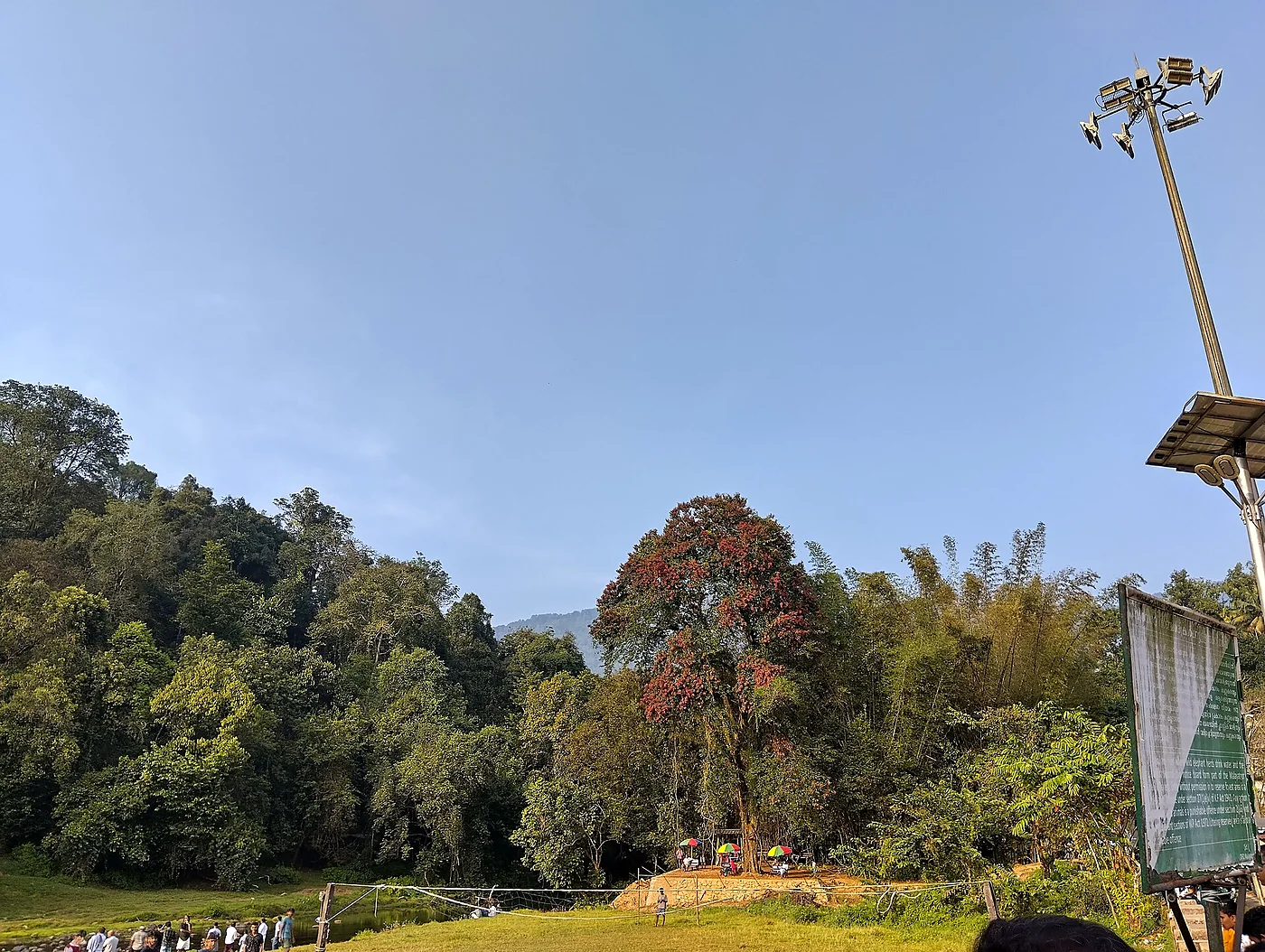
- Stay on your side. Watch from the village bank and stay behind any fence. Never cross the stream towards the herd.
- Be quiet and dark. No shouting, no flash photography, no headlights or torches pointed at the animals, no drones.
- Mothers with calves are the most dangerous. If an elephant turns towards you, raises its head, spreads its ears or trumpets, move away calmly.
- Respect the water. By day the river is a pleasant place to paddle, but it can be deeper than it looks, and it rises quickly after rain.
- Follow the instructions of forest staff and local people. They live here every day.
At a glance
- Where: Anakulam, Mankulam panchayat, Idukki district, about 8 km from Mankulam and 26 km from Kallar.
- What: wild elephants drinking at a natural mineral-water spot (the "oru") in the Eetacholayar stream.
- When: evenings, mostly in the dry months. Sightings are never guaranteed.
- Nearby: the waterfalls around Mankulam and Viripara. (See Idukki's waterfalls.)
- Not known: the exact source of the minerals has not been scientifically explained.
Read also: Wildlife of Munnar · Wild animals of the Western Ghats · Anayirangal, the lake where the elephants come down
See it for yourself, with a local driver who knows these roads.
Book a Munnar Jeep SafariSources & further reading
- The News Minute: Why Kerala's Anakulam river is elephants' favourite watering hole
- Onmanorama (2024): Anakkulam, Mankulam elephant herd and live camera
- Onmanorama (2018): Idacholayar, the 'elephant pub' of Anakulam
- Wikipedia: Aanakkulam
Figures are from the sources listed and were checked in October 2026. Park timings and road conditions change, so please confirm before you travel.