
The KDHP Tea Museum, Munnar: A Century of Tea Under One Roof
Housed at the Nallathanni estate just outside Munnar town, the Tea Museum keeps the machines, photographs and odd relics of more than a hundred years of High Range tea, from a 1905 rolling machine to a sundial and a 2,000-year-old burial urn. What to look for, and the stories behind the exhibits.
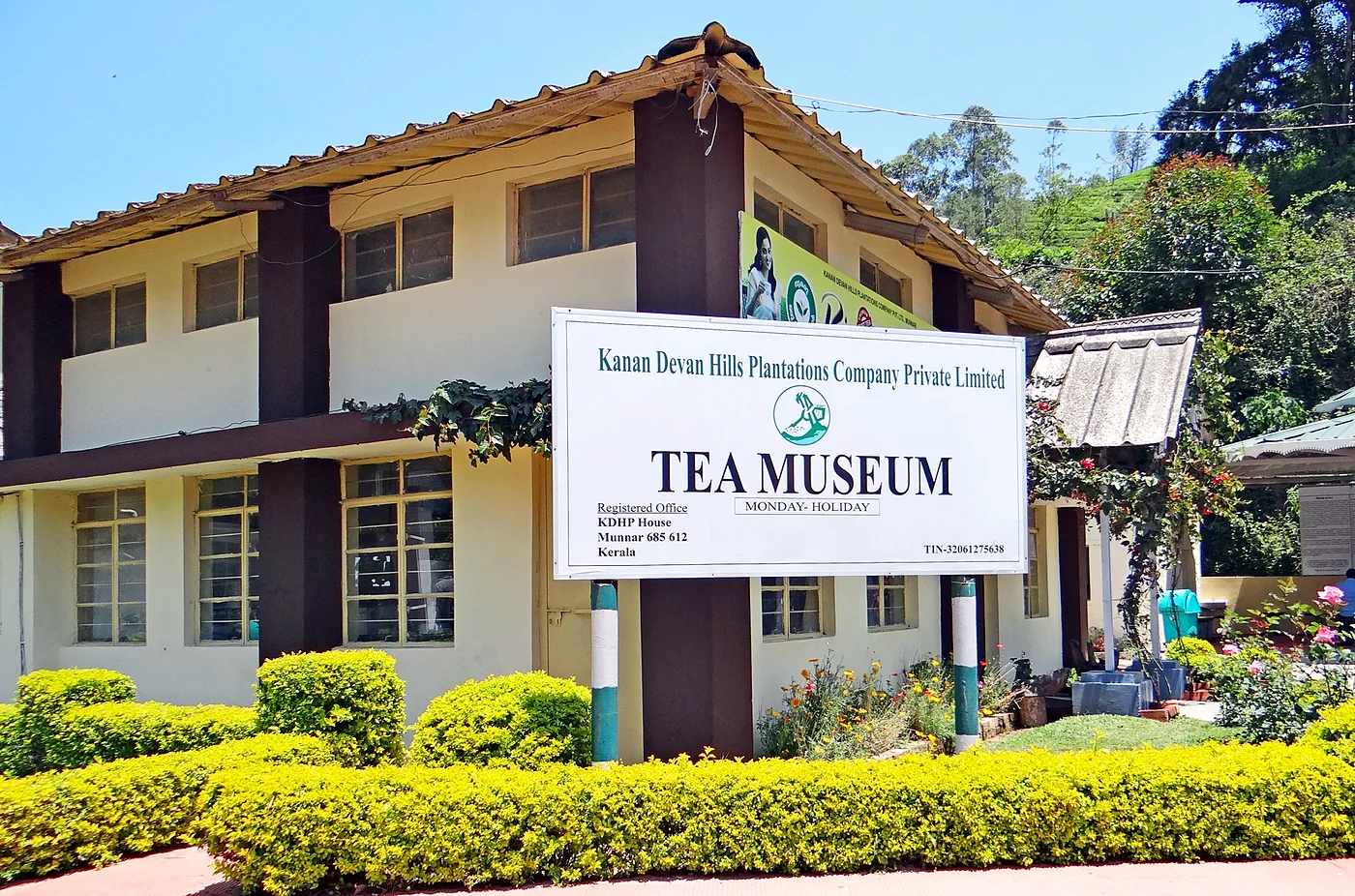
Most people come to Munnar for the tea hills. Far fewer stop to ask how a green shoot plucked on a misty slope becomes the dark, crumbly tea in a packet, or how this industry came to cover the High Range in the first place. The Tea Museum at Nallathanni, about one and a half kilometres from Munnar town, answers both questions.
A museum in a tea estate
The museum was opened on 1 April 2004 by Tata Tea, which then owned most of the plantations around Munnar. In 2005 Tata handed over the estates to the newly formed Kannan Devan Hills Plantations Company (KDHP), in which the workers and staff themselves became shareholders, and the museum passed to KDHP. It stands among working tea fields on the Nallathanni estate, on the road towards Pallivasal and Mattupetty, in a building that looks like what it once was: a small tea factory.
The aim was to keep the relics of more than a century of planting, from the days when the Kannan Devan concession was opened up by British planters in the late nineteenth century (read the history of Munnar), before they were scrapped or lost.
What you will see
The collection is a mix of the grand and the homely:
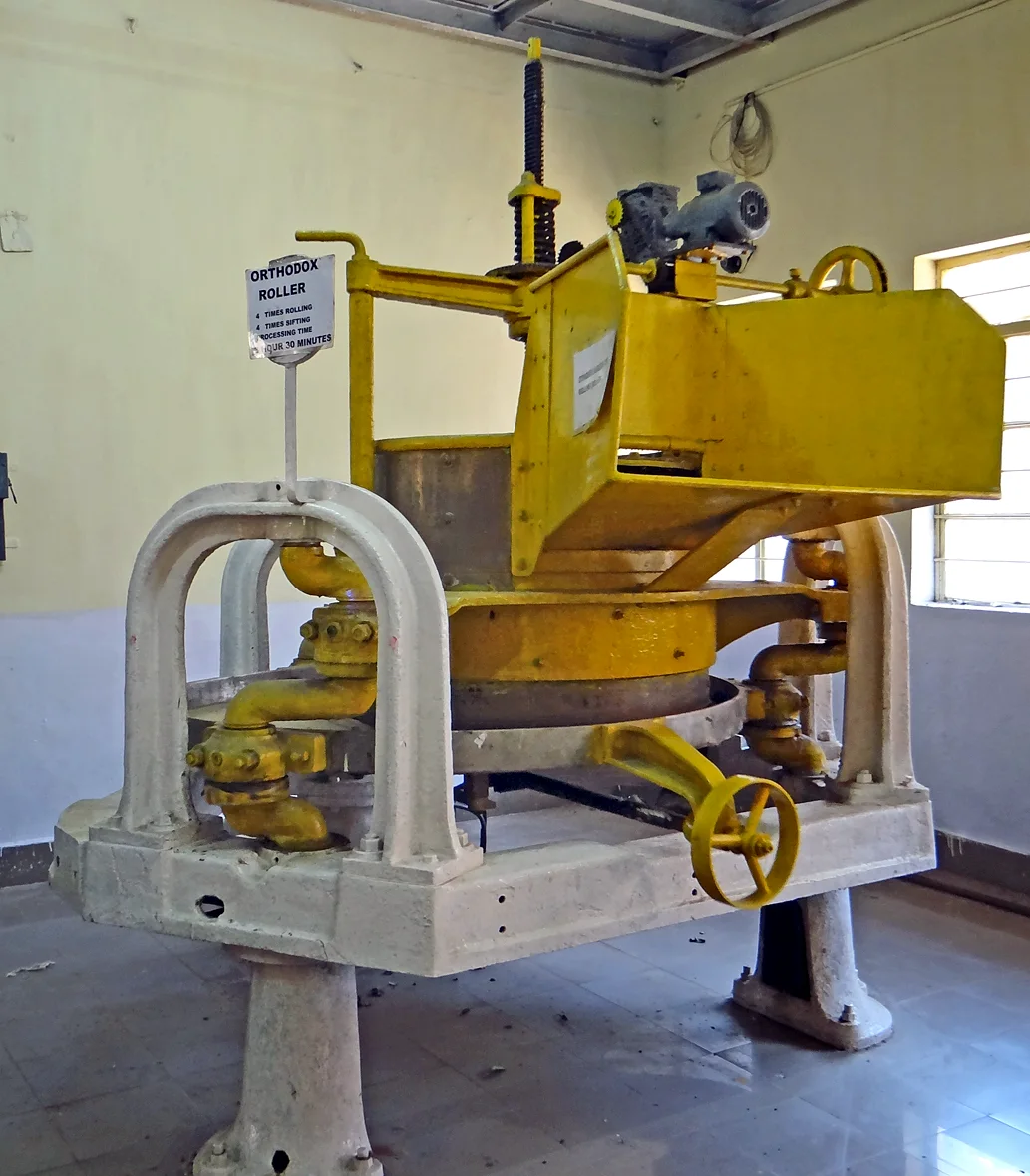
- A 1905 tea rolling machine, the oldest machine on display. Rolling is the step that twists and bruises the withered leaf so that its juices start to oxidise. (Some descriptions online call this a "1905 rotorvane", but that is a mistake: the rotorvane was not invented until the late 1950s.)
- Early power machinery, including parts of a plant from the 1920s and a Pelton wheel, the kind of water turbine that powered estate factories before the grid arrived. (See Pallivasal, Kerala's first hydroelectric project.)
- A wheel from the Kundala Valley Railway, the little hill railway that carried tea from the estates towards Top Station until the great flood of 1924 destroyed it. (Read the story of the ropeway and railway and see the flood in old Munnar photographs.)
- Colonial office furniture and equipment: desks, typewriters, ledgers, telephones and the everyday tools of estate management.
- Photographs of the early planters, the workers, the factories and the town.
- A burial urn from Periyakanal, dated to around the second century CE, a reminder that people lived and buried their dead in these hills long before the tea came. (See the megaliths of Marayoor.)
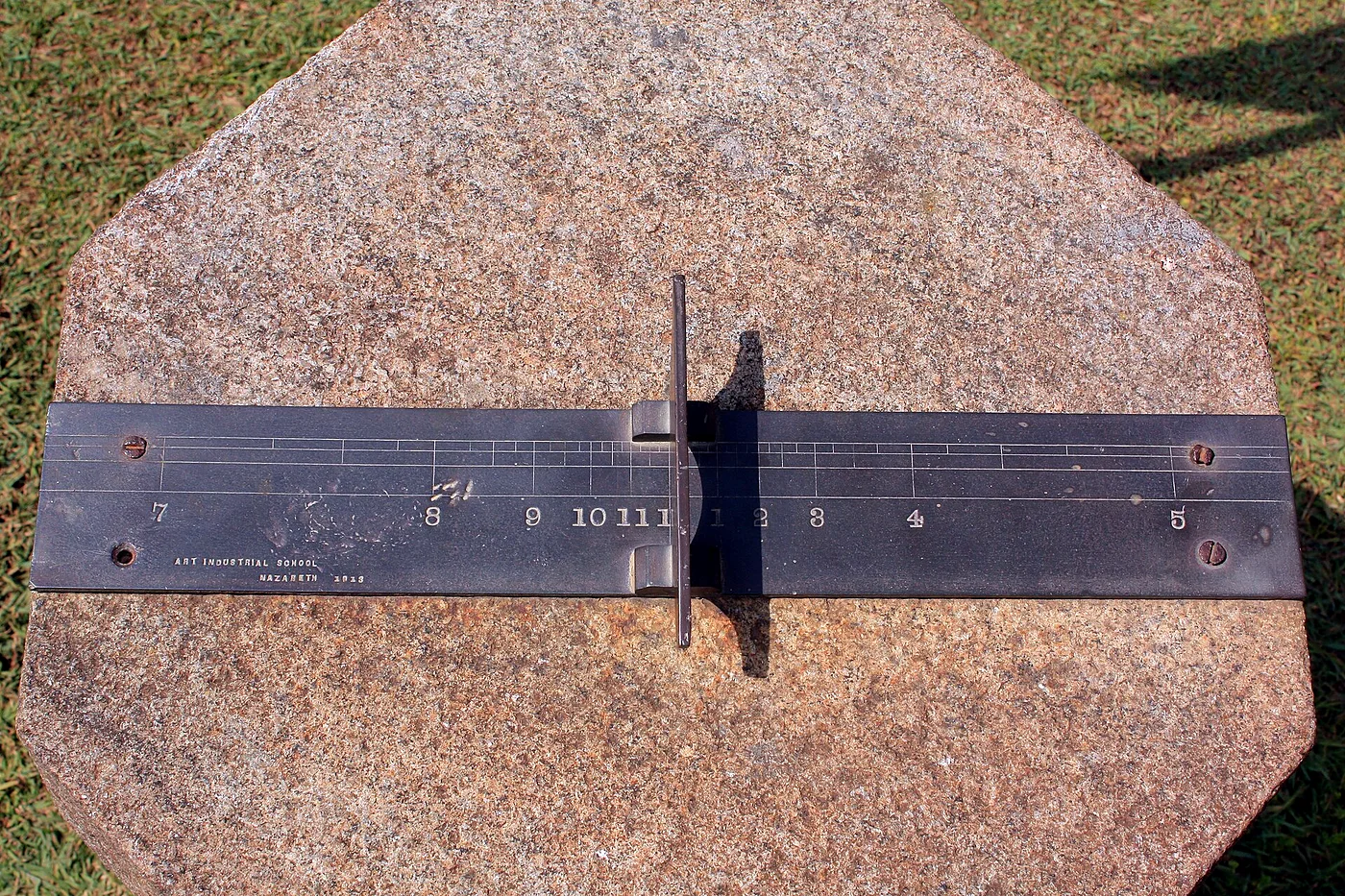
- A sundial of 1913 in the grounds, still faithfully telling the time on sunny days.
From leaf to cup
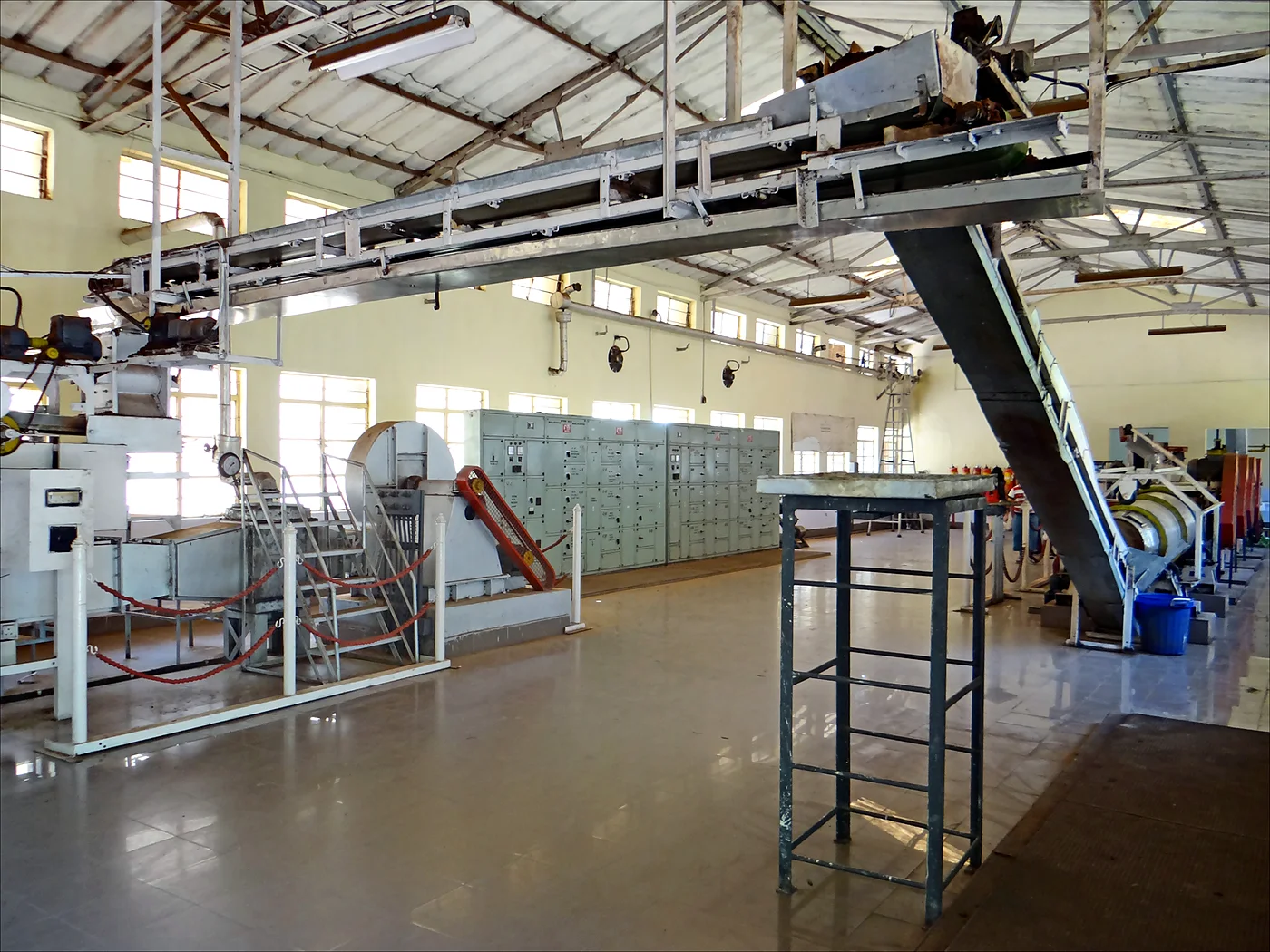
The heart of a visit is the processing demonstration. A short documentary film tells the story of the High Range and its tea, and then you can walk along a small working line and watch the leaf go through the main stages. In outline:
- Plucking: "two leaves and a bud" are picked from the bushes, by hand or with shears.
- Withering: the fresh leaf is spread in troughs and air is blown through it to remove moisture and make it limp.
- Rolling or cutting: in the orthodox method, rollers twist the leaf; in the CTC method (crush, tear, curl), developed in Assam in the 1930s, the leaf is passed through toothed rollers that cut it into small granules. Most Munnar tea today is CTC, which brews strong and quick.
- Fermentation (oxidation): the bruised leaf is left to react with air and turns from green to coppery brown.
- Drying (firing): hot air stops oxidation and dries the tea.
- Grading and packing: sifters sort the tea by particle size into grades.
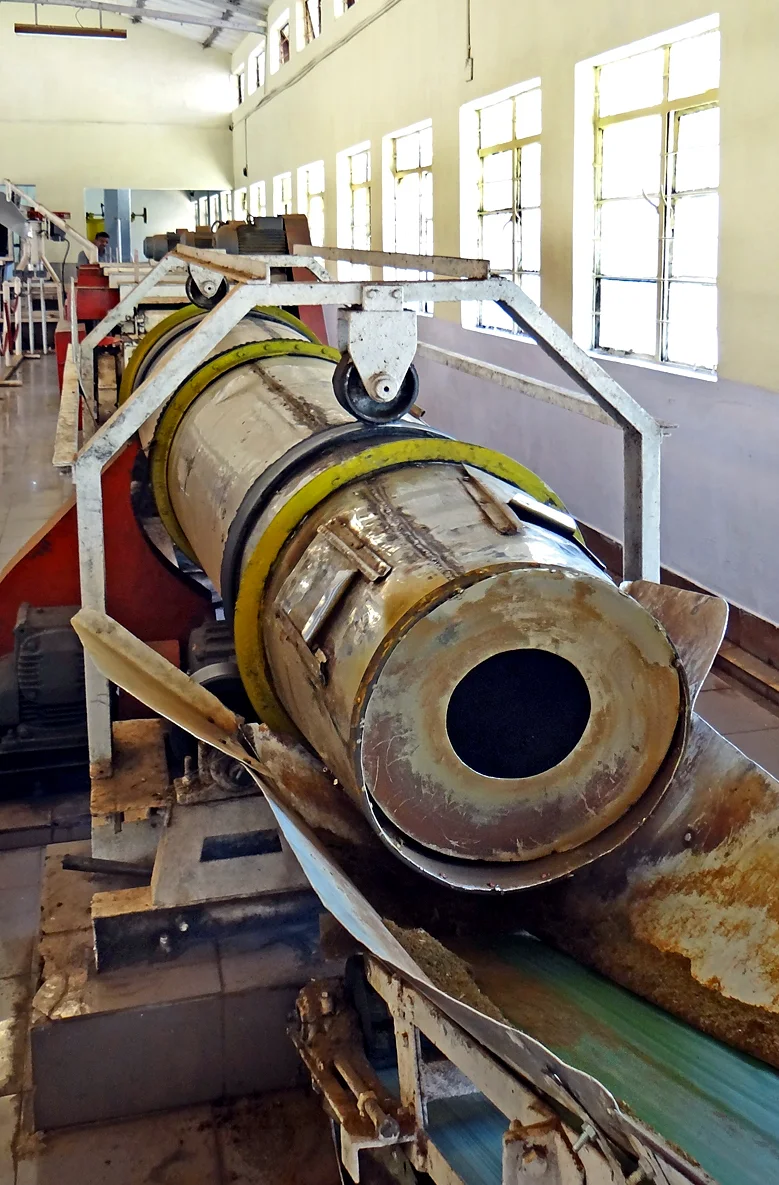
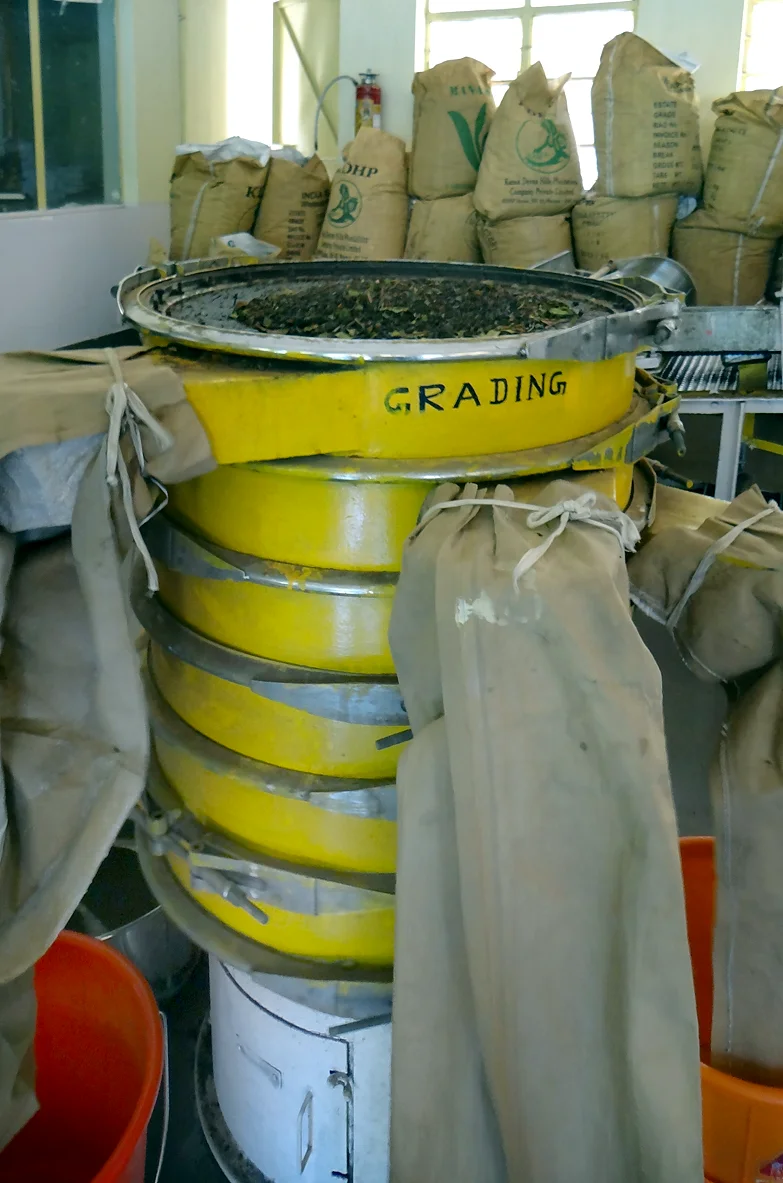
The museum usually ends with a tasting counter, where you can try different grades, and a shop selling KDHP's teas.
Why it matters
A museum built by a plantation company inevitably tells the story from the company's side: the machines, the managers, the achievements. It is worth remembering that the High Range was built just as much by the labour of thousands of Tamil workers, most of them women, who plucked the leaf for generations in hard conditions. Their story is told in The People Who Made Munnar's Tea and the 2015 Pembilai Orumai strike. Read the museum alongside those, and it becomes a much richer place.
Visiting
- Where: Nallathanni estate, about 1.5 km from Munnar town.
- Hours: generally 9 am to 5 pm, closed on Mondays. Timings and ticket prices change, so please check locally before you go.
- Time needed: about an hour, including the film and demonstration.
- Photography: rules inside the museum vary; ask at the counter.
Read also: Munnar Tea · Kolukkumalai, the highest tea estate · Munnar sightseeing guide
See it for yourself, with a local driver who knows these roads.
Book a Munnar Jeep SafariSources & further reading
- Wikipedia: KDHP Tea Museum
- Kannan Devan Hills Plantations Company
- Wikimedia Commons: Le musée du thé (Munnar, Inde), photograph by Jean-Pierre Dalbéra
Figures are from the sources listed and were checked in October 2026. Park timings and road conditions change, so please confirm before you travel.