
The Heartbeat of the Muthirapuzha: The History of the R.A. Headworks Dam
How a historic weir in the centre of Munnar town helped spark Kerala's first major hydroelectric dream.
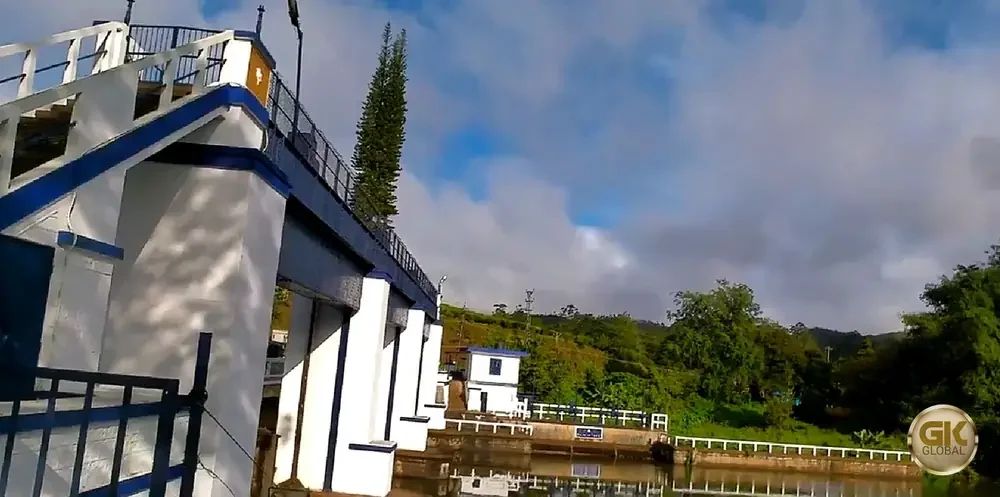
Most visitors arriving in Munnar are immediately captivated by the sprawling tea estates and mist-clad peaks of the High Range. Yet right beside the bustling town, straddling the rushing waters of the Muthirapuzha, lies a piece of engineering history that most people pass without a second glance: the Ramaswamy Aiyar Headworks, known to everyone simply as the R.A. Headworks.
Long before the great reservoirs of Mattupetty or Idukki filled, this modest masonry weir became part of the system that set the stage for Kerala's power grid.
At a glance
- Where: on the Muthirapuzha at Munnar, where the streams that give the town its name come together, about 15 km downstream of the Mattupetty dam.
- Type: masonry diversion weir, about 10.9 m high and 39.6 m long, with three vertical spillway gates.
- Completed: 1944, as part of the Pallivasal Hydro Electric Project.
- Named after: Sir C. P. Ramaswamy Aiyar, Dewan of Travancore.
- Storage: tiny, about 0.22 million m³: its job is to divert water, not to store it.
The need for power
As the Kannan Devan Hills became South India's most famous tea country in the late 19th and early 20th centuries, the demand for power grew alongside the tea bushes. The fast-falling rivers that made railway building so treacherous were also an immense untapped resource.
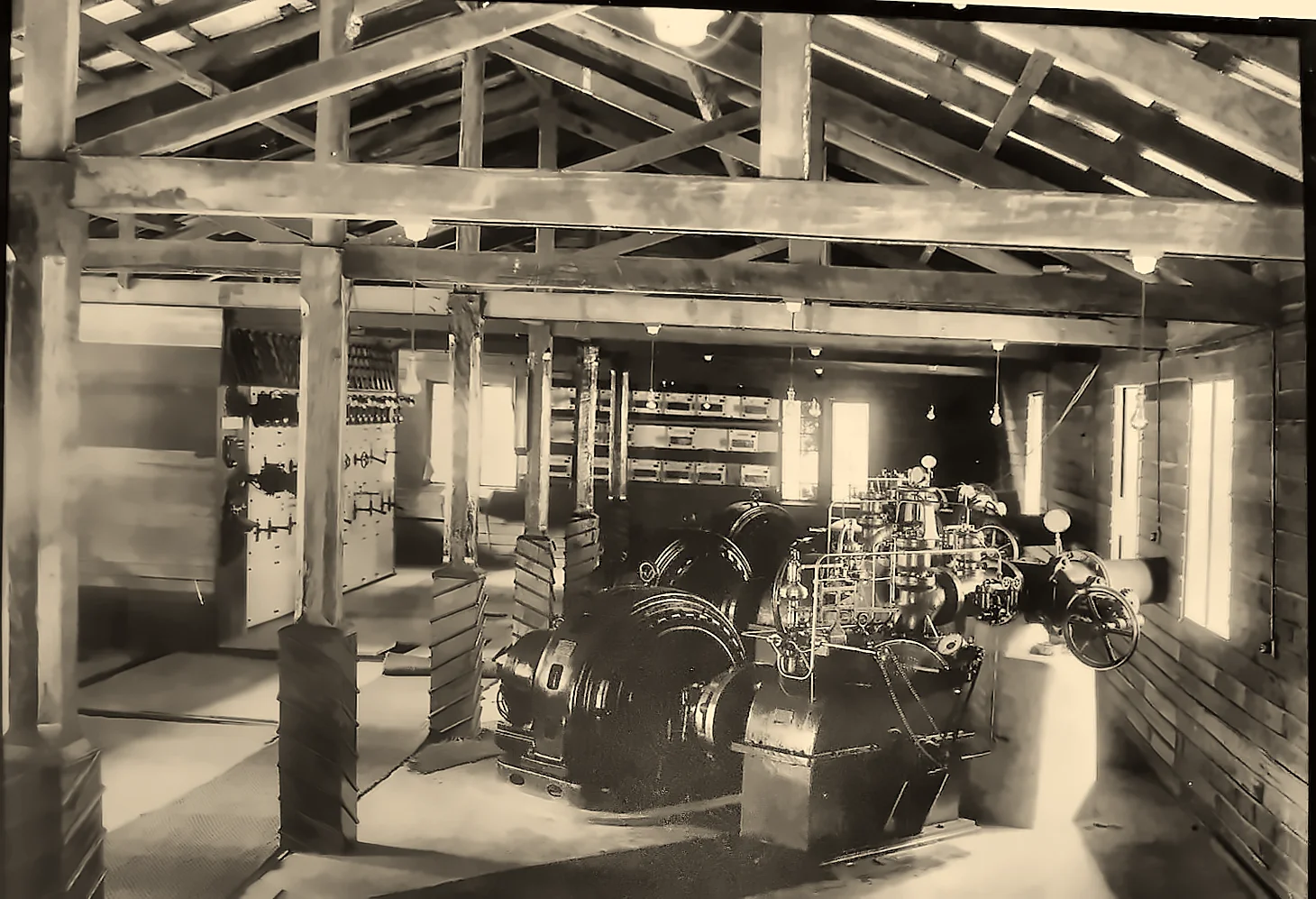
The planters were the first to try. In the early 1900s, the tea company built its own small power house at Pallivasal to drive the machinery of its factories, and as early as 1900 a little hydroelectric plant on the Ghats escarpment was driving the company's ropeway at Top Station. (Read the Top Station ropeway.) But as the decades passed, the government of Travancore saw that the Muthirapuzha could power far more than tea rollers: it could power a developing state.
The Pallivasal project and Sir C. P. Ramaswamy Aiyar
In the 1930s, Travancore began the Pallivasal Hydro Electric Project. Its first generating unit was inaugurated in March 1940 by the formidable Dewan of Travancore, Sir C. P. Ramaswamy Aiyar, and it is widely celebrated as Kerala's first major hydroelectric scheme. (Read Pallivasal: where Kerala's electricity began.)
To run the power house reliably, the engineers needed a dependable way to control the river and lead its water to the turbines. That was the task of the R.A. Headworks, completed in 1944 and named in honour of the Dewan.
A weir, not a reservoir
Unlike the storage dams later built upstream at Kundala (1947) and Mattupetty (in the 1950s), the R.A. Headworks was never meant to hold back a lake. It is a diversion weir: a low masonry barrier that raises the level of the river just enough to turn part of its flow into a water-conducting system on the right bank, which carries it down to the power house at Pallivasal. When the river runs high, the surplus spills through its three gates and continues downstream.
The whole scheme works as a chain. Water stored at Kundala and Mattupetty is released down the Muthirapuzha; at the Headworks it is caught and sent to Pallivasal; and after it has turned Pallivasal's turbines, it is caught once more and reused by the Sengulam project lower down the valley.
Completed in 1944, the Headworks is the oldest of the Kerala State Electricity Board's dams in the Munnar area, older than Kundala and Mattupetty, and it has been doing the same quiet job through more than eighty monsoons.
Where three rivers meet
The site was not chosen by chance. Munnar is usually explained as "three rivers" in Malayalam and Tamil, and the town grew up where mountain streams come together to form the Muthirapuzha. The R.A. Headworks stands just below that meeting point: according to the Kerala State Electricity Board's own description, it collects the waters of the Mattupetty river (released from the Kundala and Mattupetty dams), the Nallathanni and the Lakshmi (Lakshmiyar) streams, and sends them into the tunnel to Pallivasal. One modest weir thus gathers the run-off of a great part of the High Range. (Read our introduction to Munnar.)
Built after the deluge
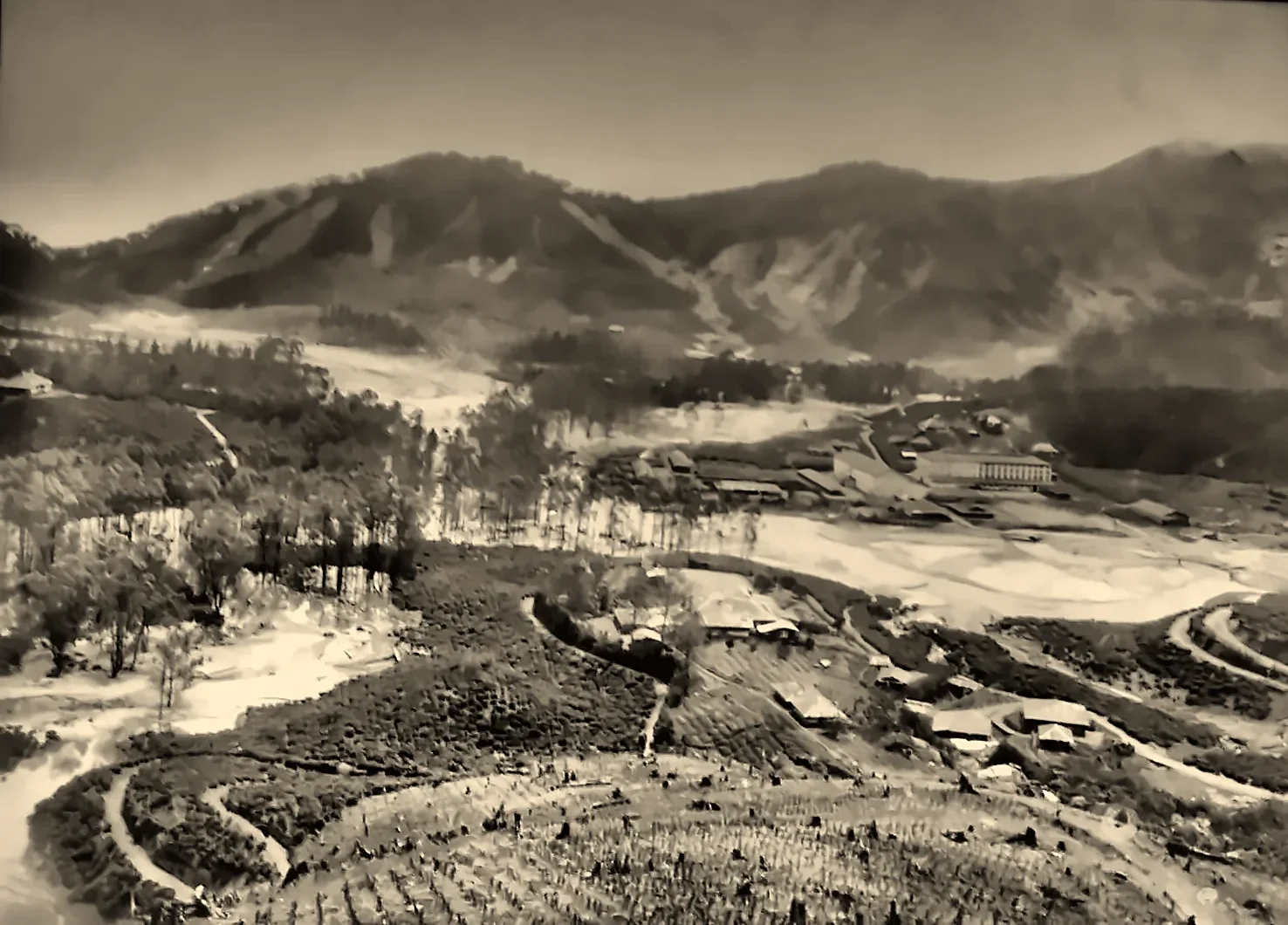
The engineers who built the Headworks knew exactly how violent this river could be. Only twenty years earlier, in July 1924, the Great Flood of '99 had torn through the same valley, burying the Munnar bazaar under water and silt, sweeping away the Kundala Valley Railway and wrecking factories, bungalows and bridges. (See the flood in Old Munnar in Photographs.)
When the river rises again
The Muthirapuzha has not lost its power. In August 2018, during Kerala's worst floods in nearly a century, heavy rain and the opening of all three shutters of the Mattupetty dam sent the river surging through Munnar. Large parts of the town and Old Munnar were inundated, roads were cut, and the district administration asked tourists to stay away. Since then, the dams of Idukki have been fitted with sirens to warn people before their shutters open.
A second life: the Pallivasal Extension
For decades, much of the water that reached the Headworks in the wet months could not be used, because the old Pallivasal power house could only take so much. To use that surplus, the KSEB built the Pallivasal Extension Scheme: a new power station beside the old one, with two 30 MW generators, adding 60 MW and about 154 million units of electricity a year. After long delays, it was inaugurated in March 2026, at a cost of nearly ₹600 crore, in the same week that Kerala celebrated fifty years of the Idukki project. More than eight decades after it was built, the little weir at Munnar is feeding more turbines than ever.
Munnar's silent witness
Today the R.A. Headworks is part of the everyday backdrop of Munnar town, its gates and walkway familiar to everyone who lives there. Stand near the water and watch the Muthirapuzha pour through the gates, much as it did in 1944, and you are looking at the point where the untamed river of the High Range is turned to work.
A century ago, the rivers of Munnar dictated where people could travel. Today, thanks to structures like the R.A. Headworks, they help power the state. (Read about the great dams of the district in The Titans of the Ghats, and about the town's past in the history of Munnar.)
Visiting
- The Headworks can be seen from the road and public areas near Munnar town.
- It is a working KSEB installation: keep out of restricted areas, follow the instructions of staff, and check before photographing the structure.
- Never enter the river near the weir; gates can be opened and the water can rise quickly, especially in the monsoon.
Plan your Idukki journey with GK Global
The R.A. Headworks is an easy addition to a trip through Idukki's high ranges. From our base in Adimali, the gateway to Munnar, GK Global runs Munnar jeep safaris, elephant-spotting drives and scenic day trips, and helps you find a stay to suit your plans. See it for yourself with a local driver who knows these roads and their history.
Explore our jeep safarisFind a staySee it for yourself, with a local driver who knows these roads.
Book a Munnar Jeep SafariSources & further reading
- KSEB Dam Safety: Madupetty dam (Pallivasal project, with R.A. Headworks)
- Wikipedia: R. A. Headworks
- Wikipedia: Pallivasal Hydro Electric Project
- Onmanorama (Mar 2026): Pallivasal expansion project inauguration
- The News Minute (Aug 2018): Munnar cut off as shutters of Mattupetty dam lifted
Figures are from the sources listed and were checked in October 2026. Park timings and road conditions change, so please confirm before you travel.