Old Munnar in Photographs, 1900–1953: A Picture Album of the High Range
Bullock-drawn monorails and palanquins, planters in sun helmets and the workers who built the estates, the great flood of 1924, the first power house and Munnar's first Independence Day: half a century of the High Range, in restored historic photographs.
By GK Global, Adimali, Munnar · Trails & Tales by GK
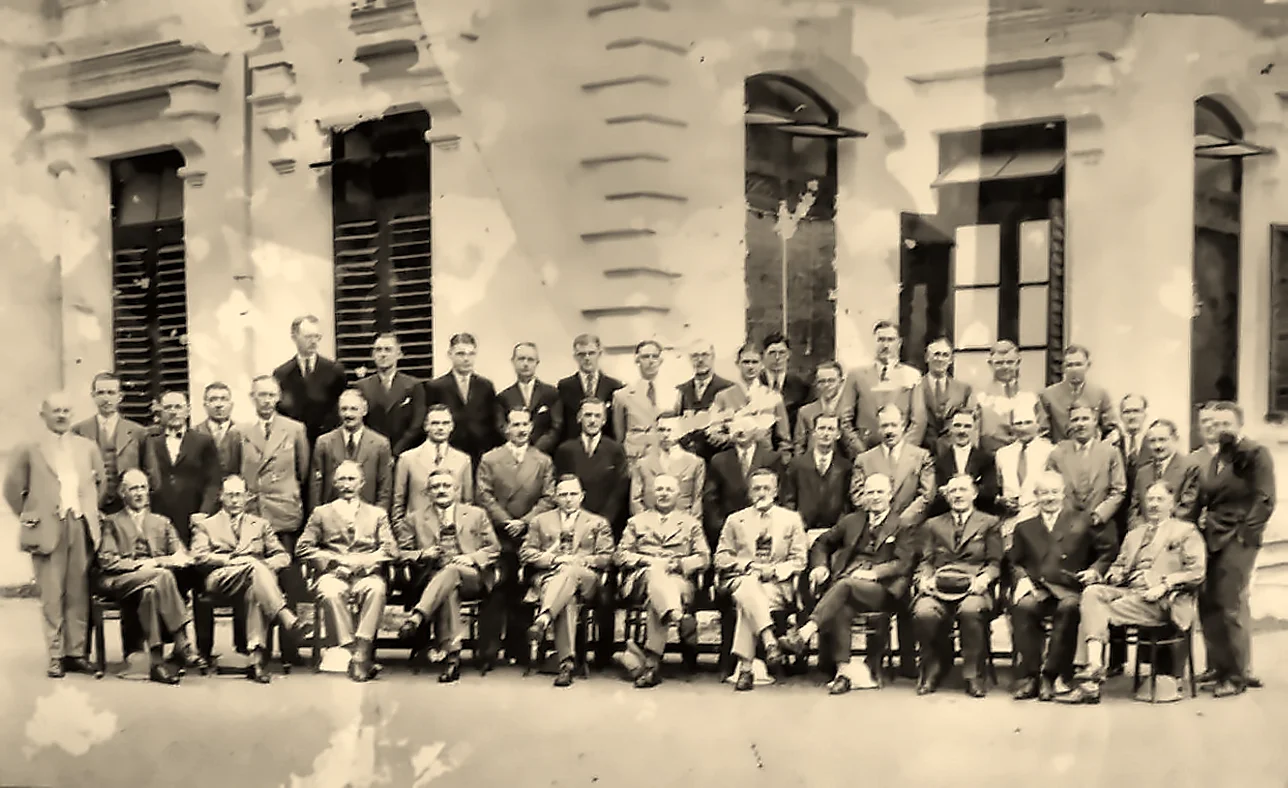
Long before Munnar became a holiday destination, its hills were a world of tea estates, company engineers and thousands of workers, connected to the plains by bullock carts, a monorail, a narrow-gauge railway and aerial ropeways. Photographs from those years survive as old prints on the walls of Munnar, faded and water-stained. We have photographed, straightened, cleaned and restored them, and gathered them here with what we know about each one.
The captions follow the labels on the prints. Where those labels are uncertain or conflict with other records, we say so. (For the full story, read the history of Munnar.)
The monorail and the railway, 1902–1924
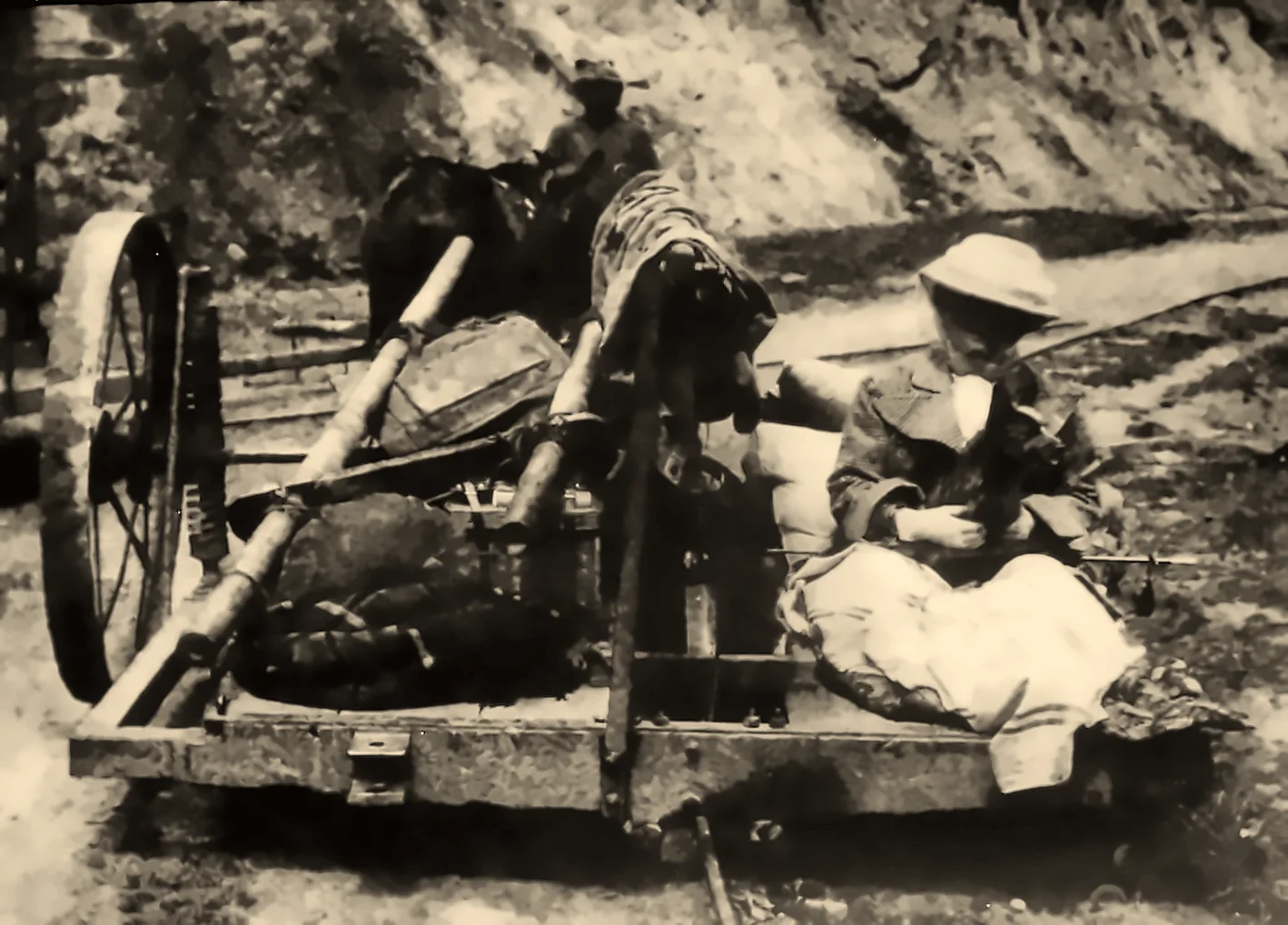
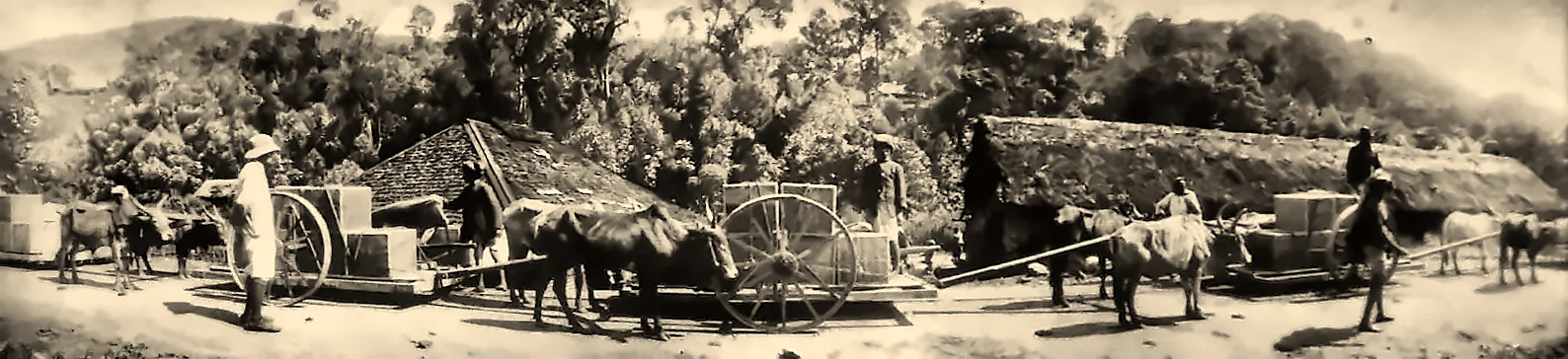
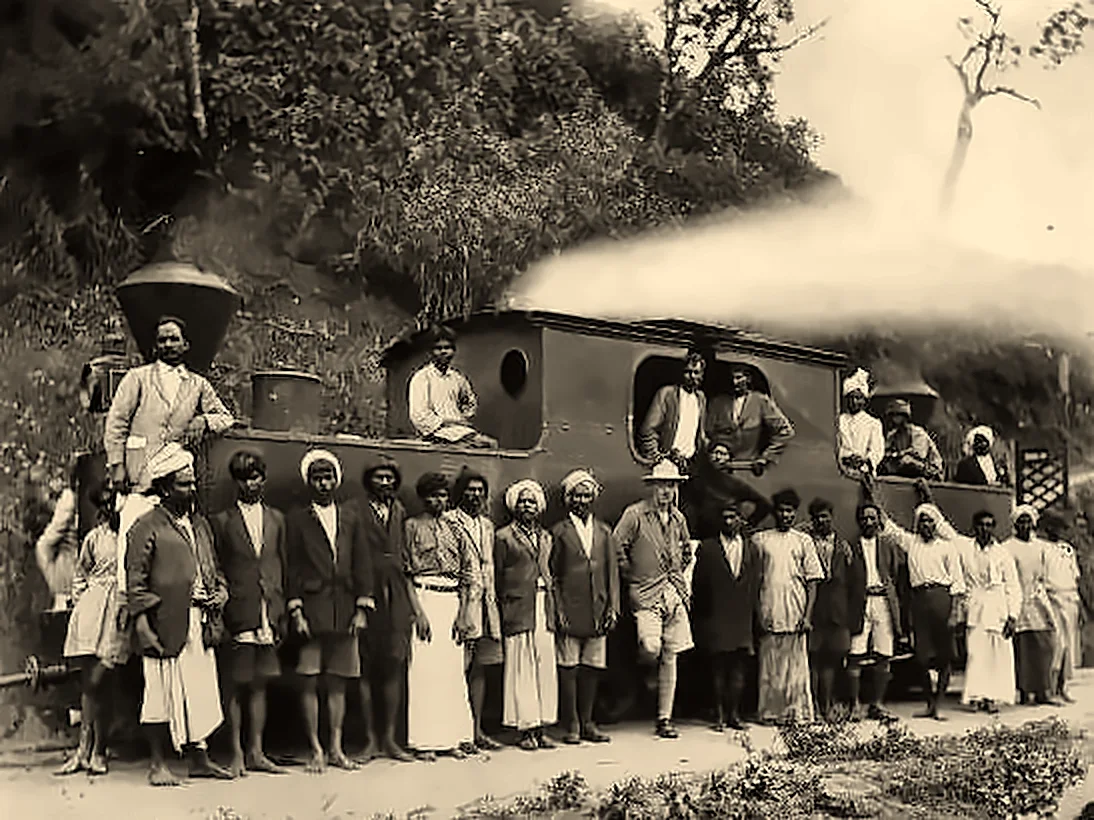
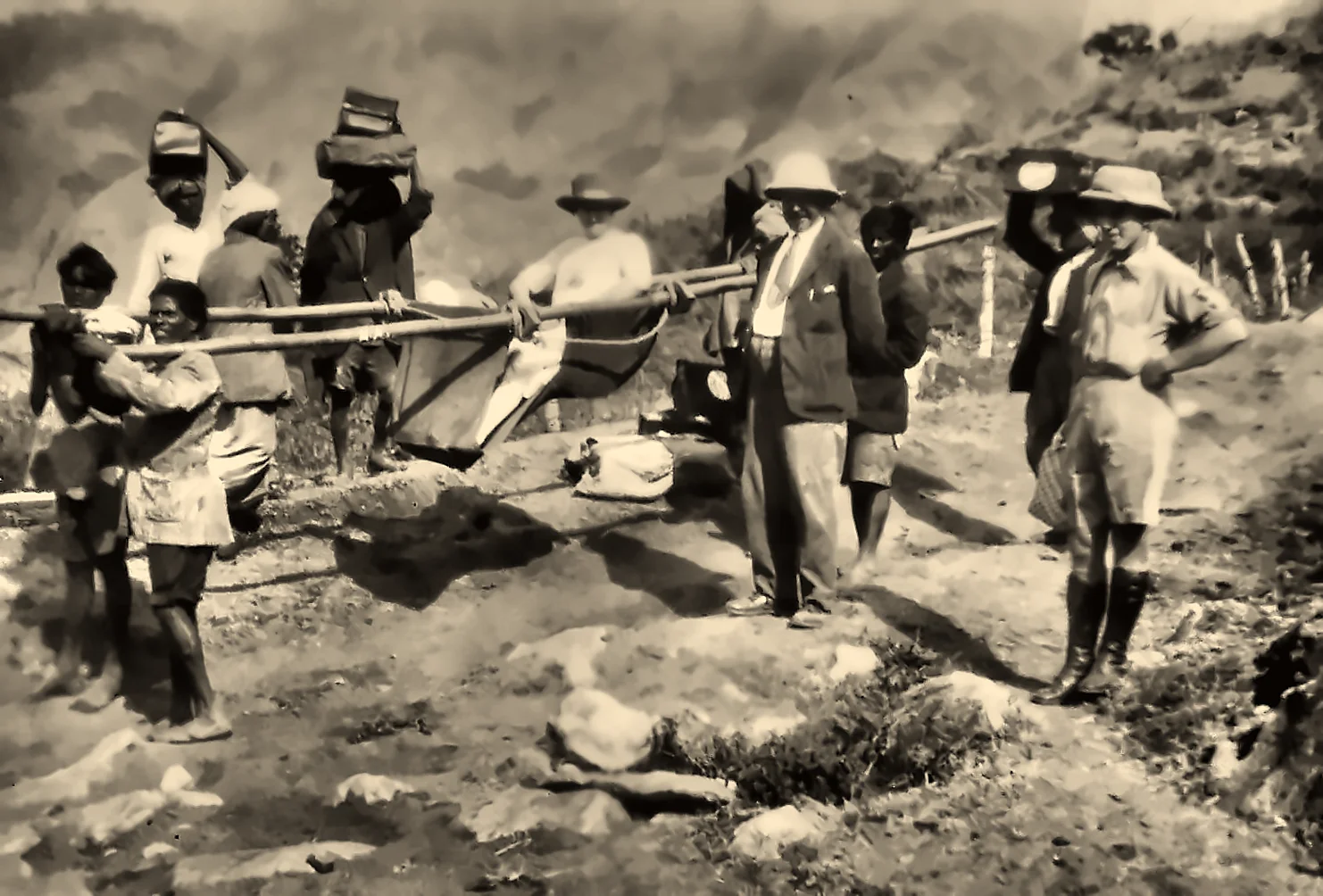
In 1902 the planters opened a bullock-drawn monorail to carry tea from Munnar towards Top Station; in 1908 it was replaced by a 2 ft narrow-gauge railway, which ran until the flood of 1924. From Top Station, goods went down the escarpment by ropeway, and people on foot or by palanquin.
Mrs A. W. John on the bullock-drawn monorail, between 1902 and 1908. Public domain, via Wikimedia Commons; restored by GK Global.Monorail transport at Blair Hill, Munnar: bullocks haul the single-rail carriages, loaded with tea chests (print labelled c. 1900; the monorail ran 1902–1908). Display print; restored by GK Global.A locomotive of the Kundala Valley (High Range) light railway with its crew, before 1924. Public domain, via Wikimedia Commons; restored by GK Global.N. S. Cole and Mrs Cole carried by dhooli (palanquin) from the Bottom Station to Top Station, 1921. Display print; restored by GK Global.
Planters, workers and machines
The estates were run by a small number of European managers and engineers, but built and worked by thousands of Indian workers, mostly Tamil families recruited from the plains. These photographs show both worlds, and the machines that linked them. (Read the history of Munnar's tea workers and the early European settlers.)
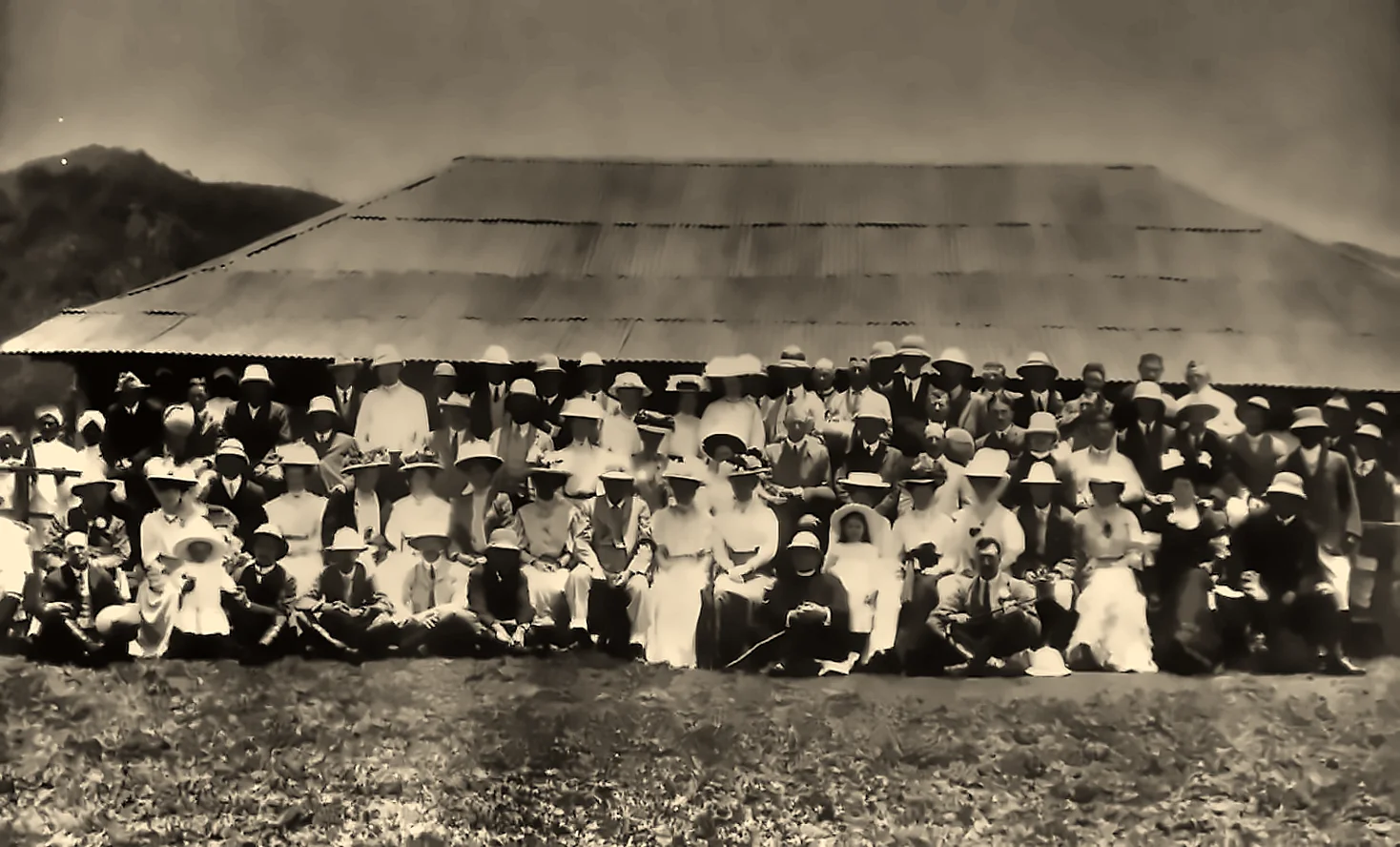
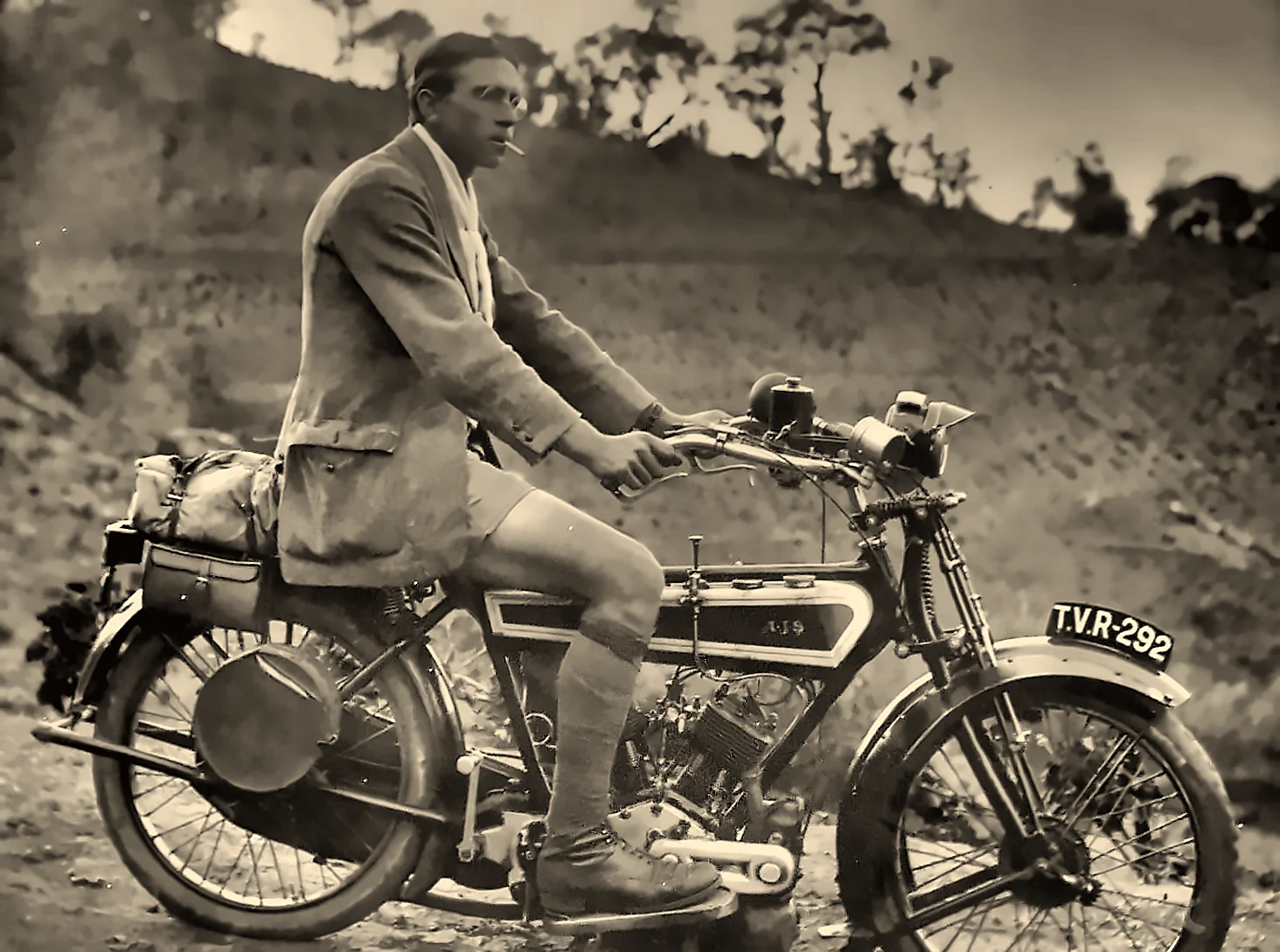
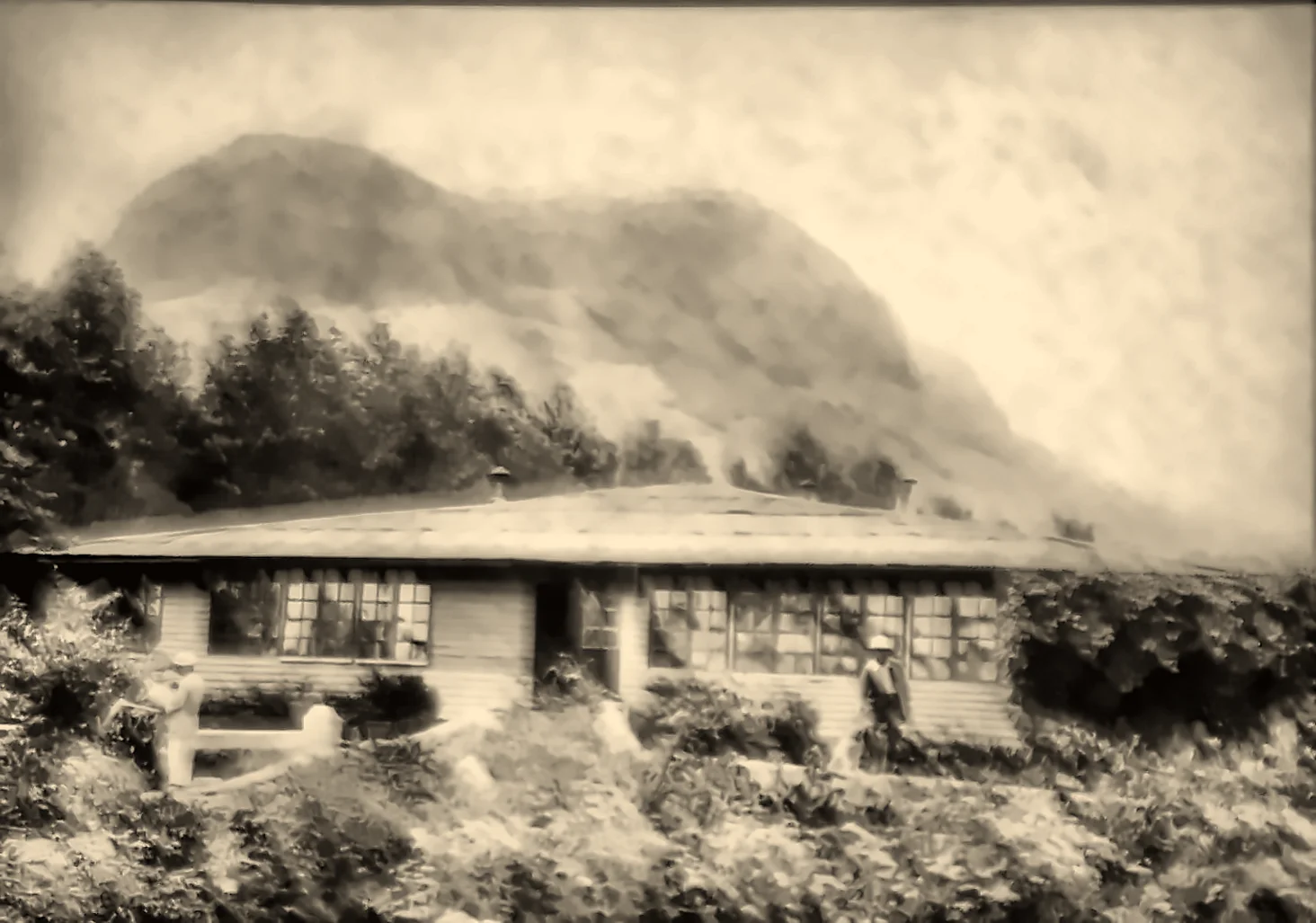
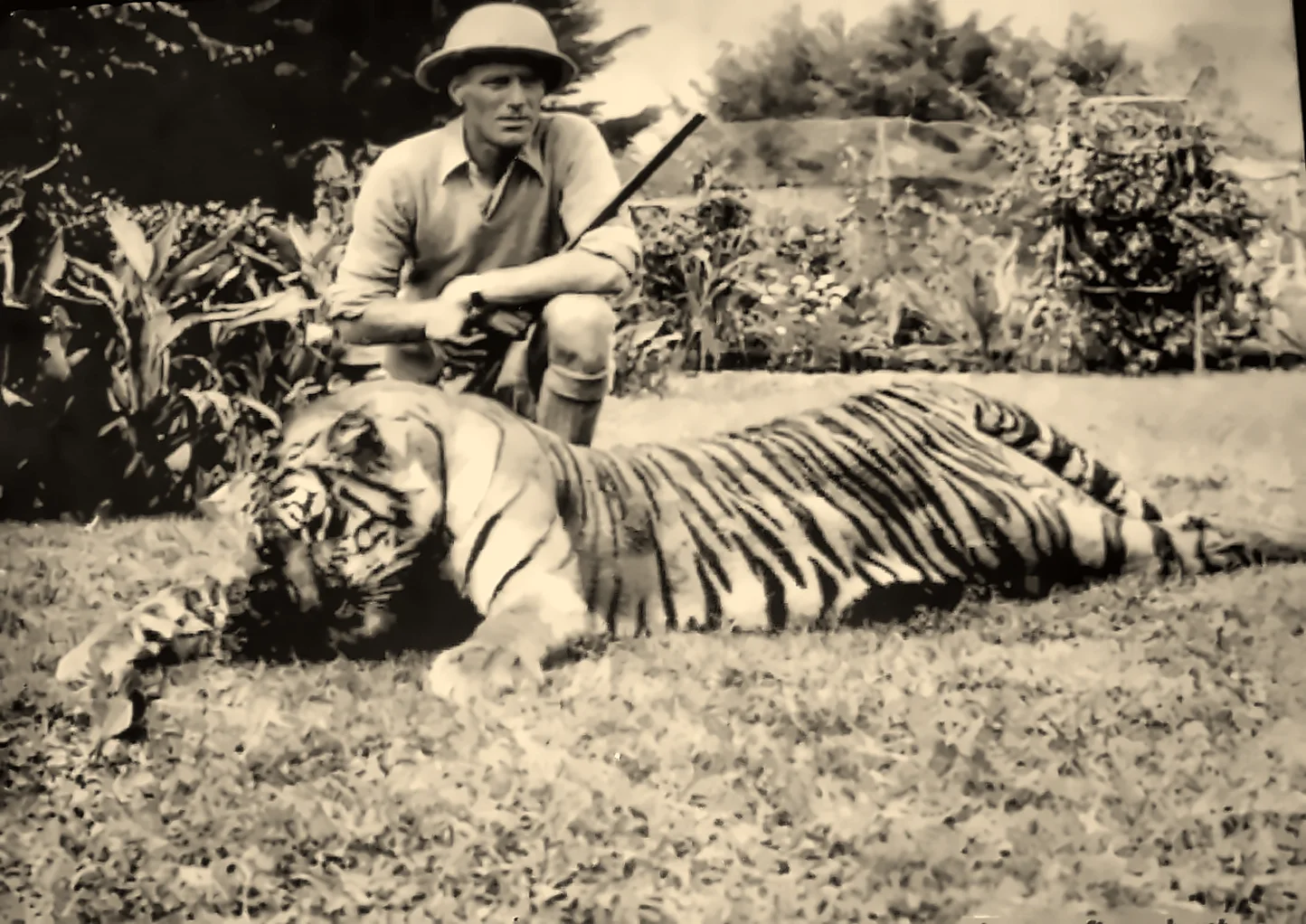
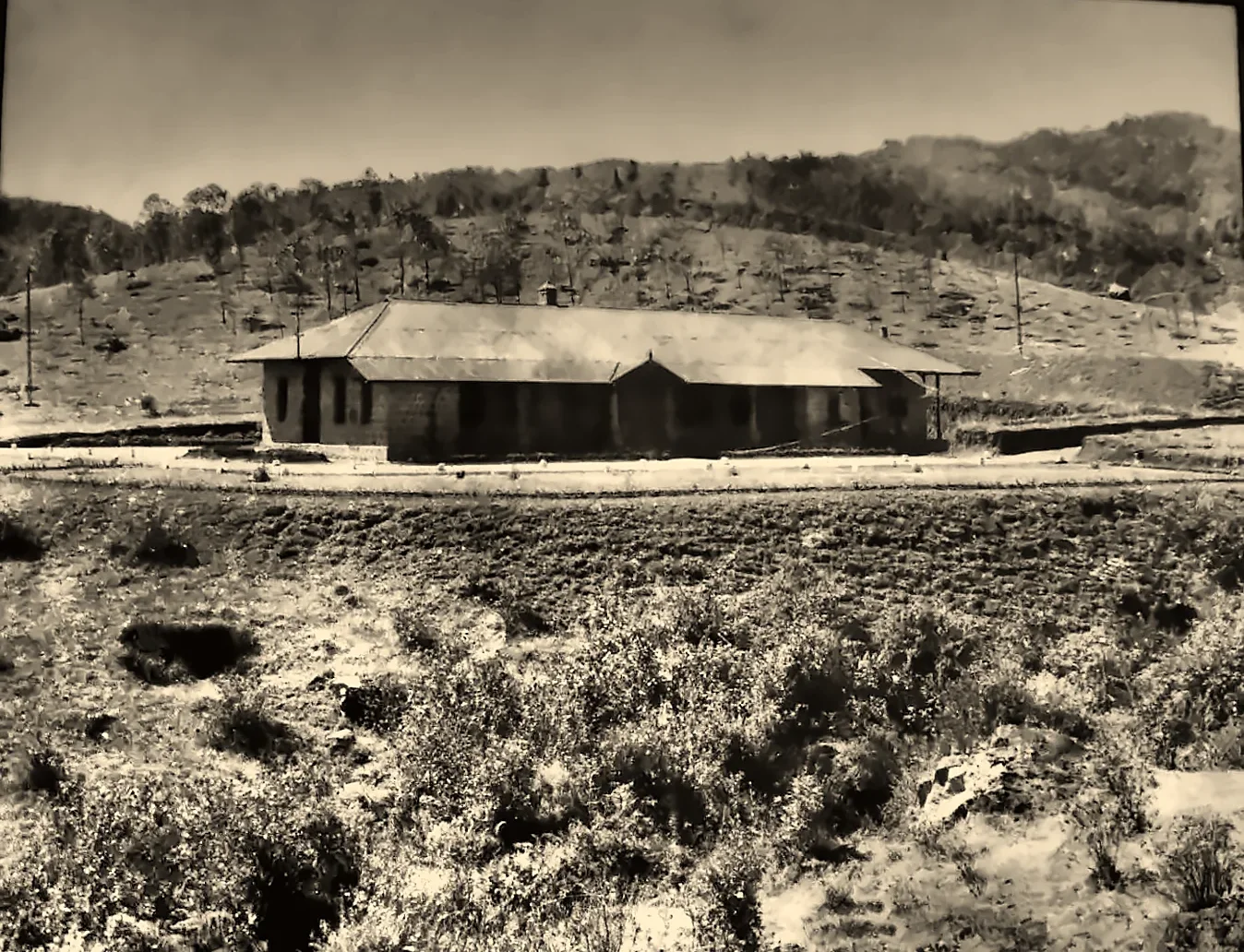
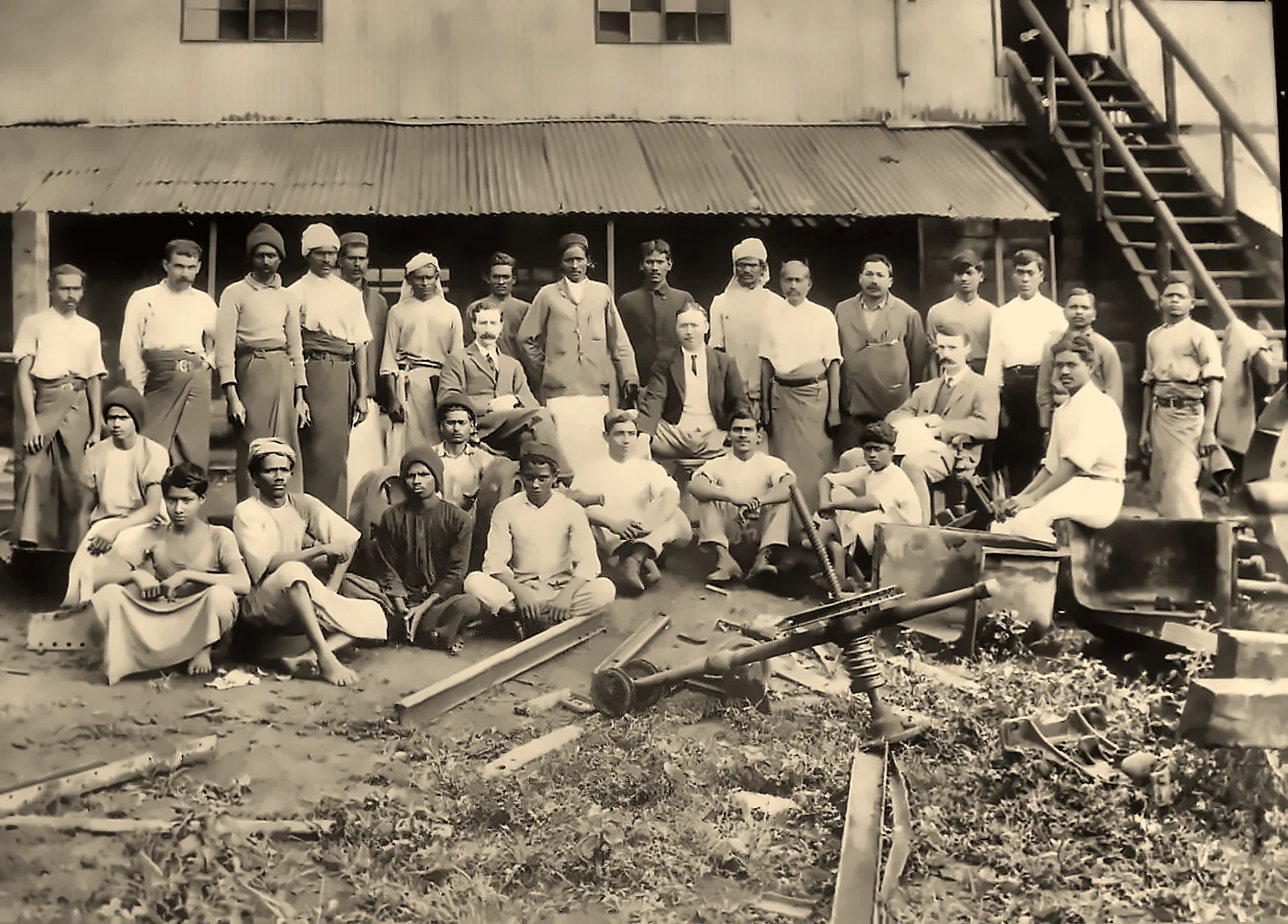
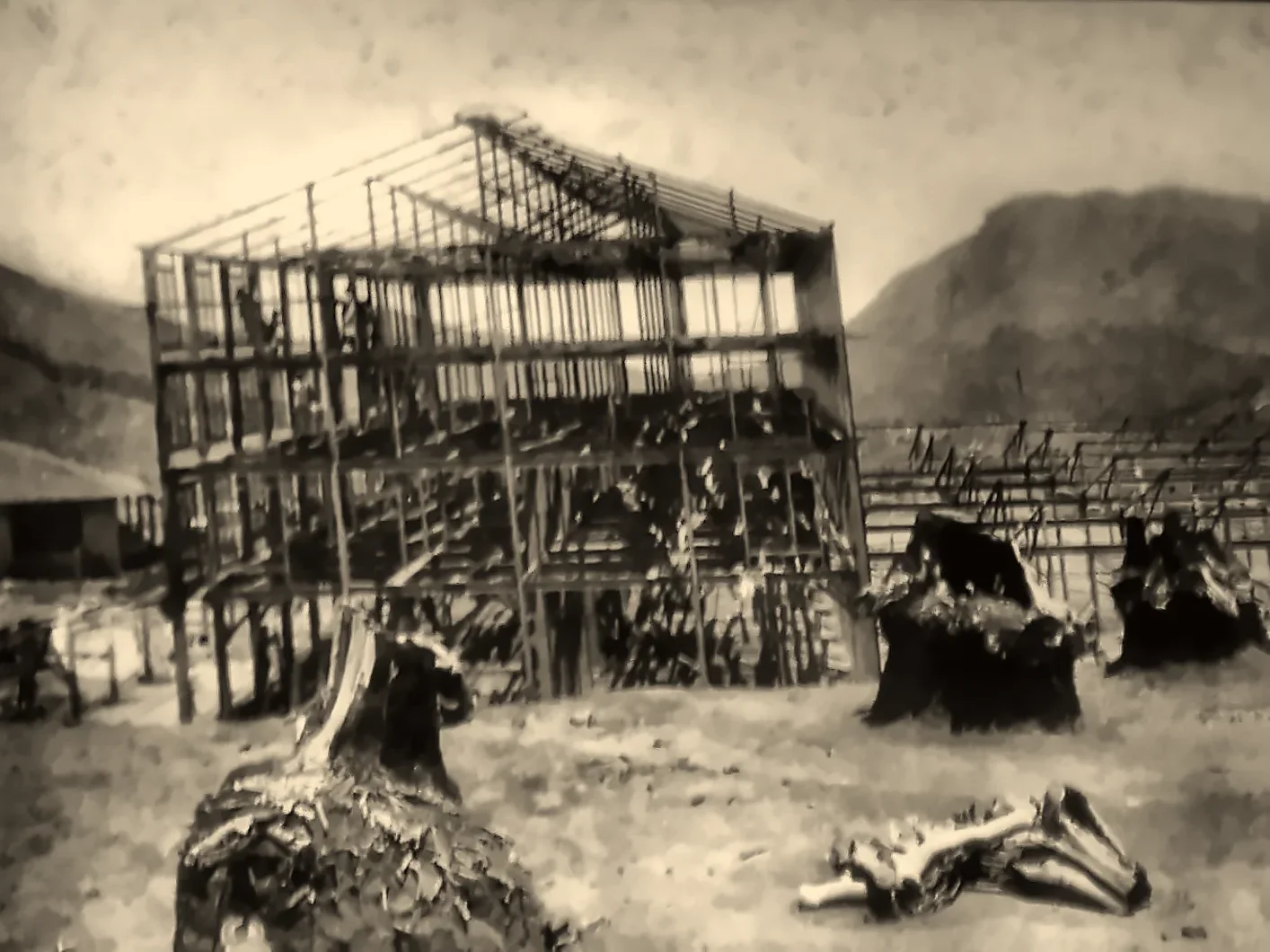
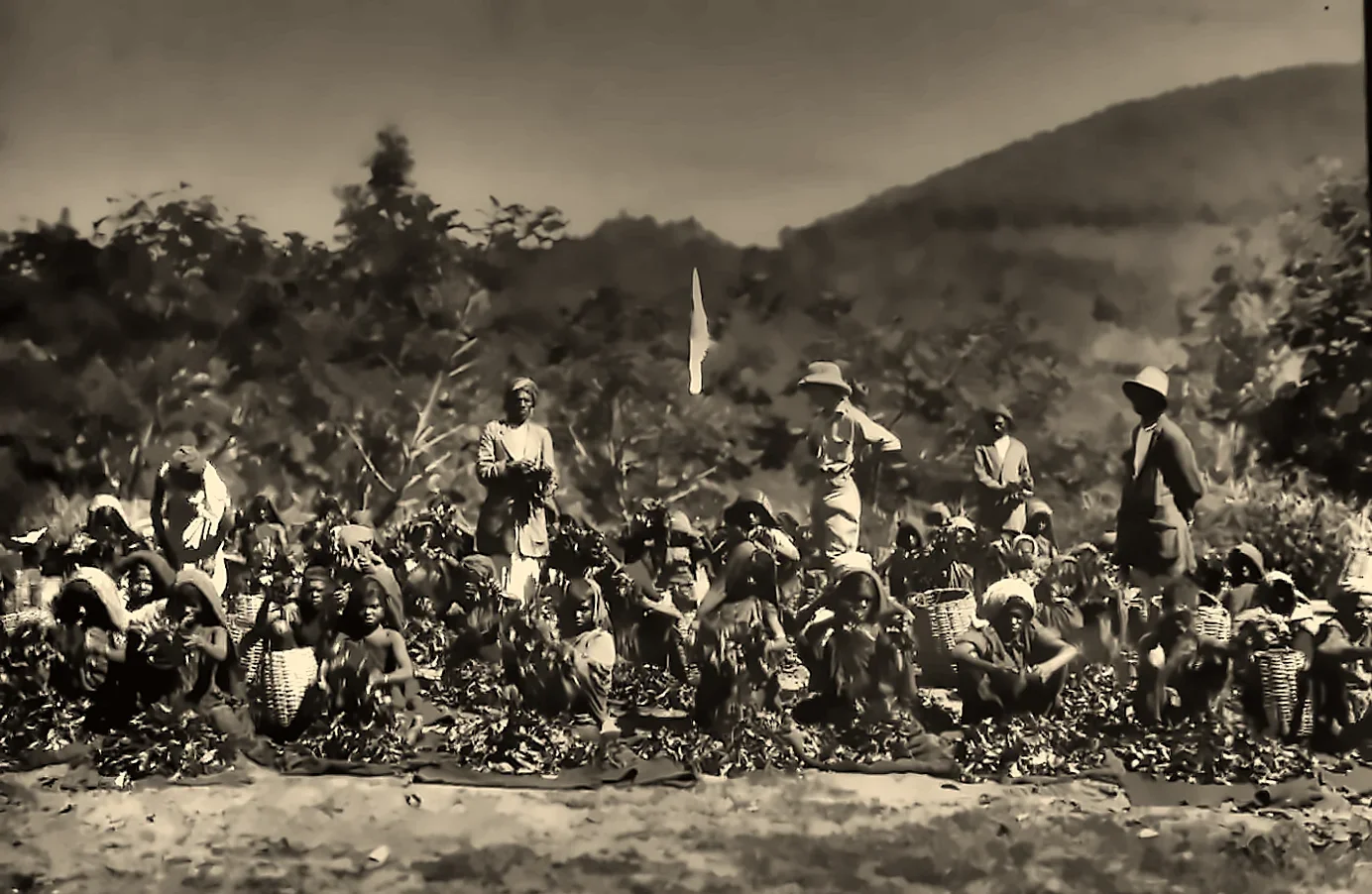
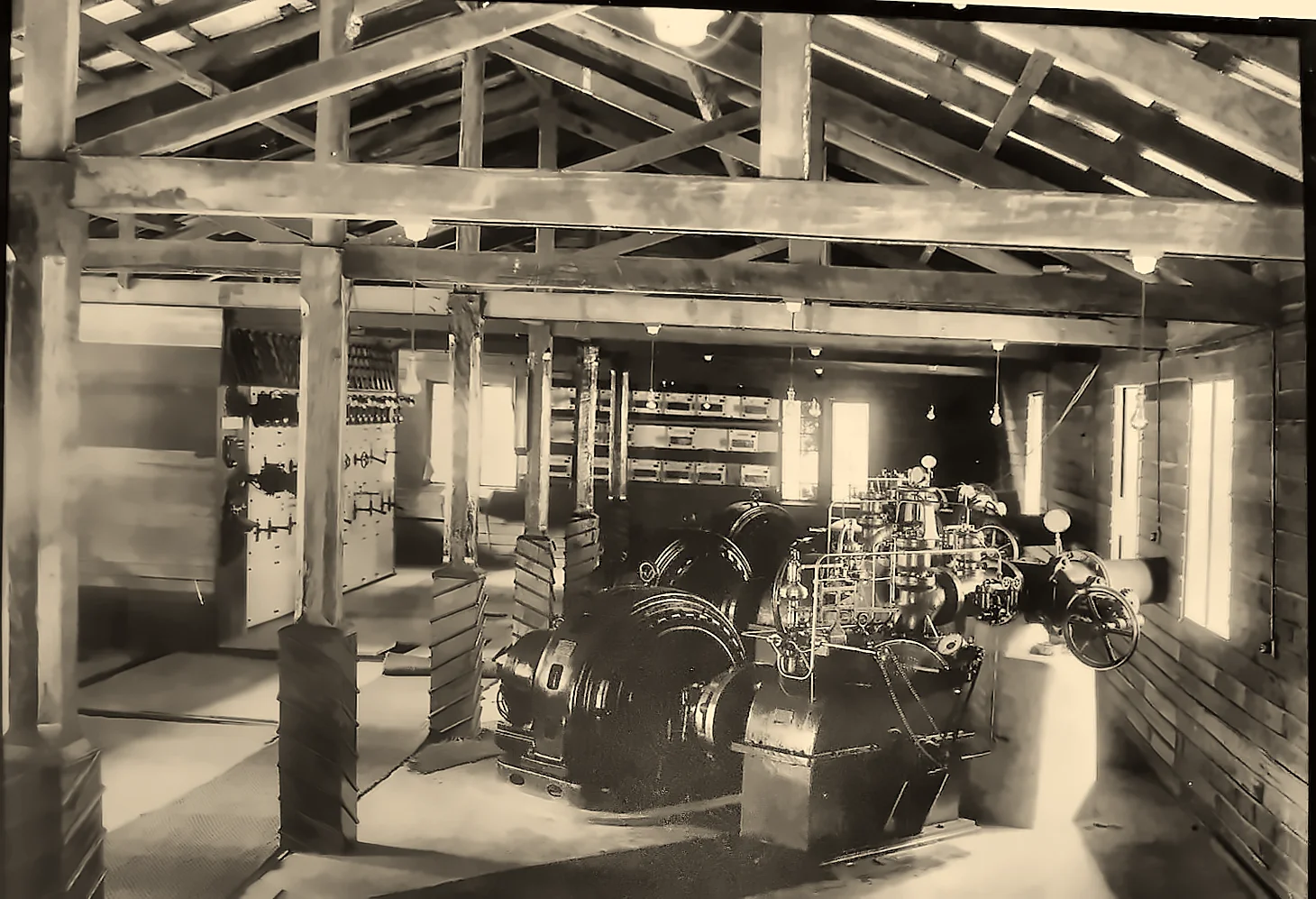
Planters and their families at the Kundaly (Kundala) Club, c. 1900, as labelled on the print. In the years before the High Range Club was founded in Munnar, the planters gathered at estate clubs like this one for sports, meetings and social events. Display print; restored by GK Global.Eric Francis on his motorcycle, 1911. The tank bears the name AJS, and the plate, T.V.R-292, is a Travancore registration. A motorcycle would still have been a rare sight in the hills. Display print; restored by GK Global.The Nyamakad estate bungalow, c. 1921, with Anamudi, the highest peak in South India, rising behind. The print identifies the manager, Eric Francis, among the figures; part of its label is illegible. (A label added to the print, naming the peak, has been removed.) Display print; restored by GK Global."Planter after a hunt": a planter kneels with his rifle beside a tiger he has shot. Hunting tigers, leopards and other big game was a common pastime of the planters; tigers are now protected by law in India, under the Wildlife (Protection) Act of 1972, and the forests around Munnar are among their refuges. Display print; restored by GK Global.A plantation bungalow under construction, around 1918: a long, low house of stone with a hipped roof on a levelled terrace, the hillside behind newly cleared and planted. Display print; restored by GK Global.The company's workshop staff in the 1920s, including the engineers G. A. Cole and C. A. V. Grant, with machine parts and lengths of rail on the ground before them. Most of the men are Indian mechanics, fitters and smiths, whose names the print does not record. Display print; restored by GK Global.The bare frame of the Rajamallay factory, among the stumps of felled trees, below the hills. The label on the print is cut off, so its date and the reason for the bare frame (construction, or rebuilding) are not known. Display print; restored by GK Global."Picking over leaf" at Chokanad (Chokkanad) estate in the 1920s: workers, mostly women and including children, sort the freshly plucked leaf by hand, removing coarse leaves and stalks, while supervisors stand by. Child labour was common on plantations at the time. Display print; restored by GK Global.Inside the tea company's power house at Pallivasal before 1924 (erected 1904, according to the print). Display print; restored by GK Global.
The Great Flood of 1924
In July 1924, days of extraordinary monsoon rain brought what Kerala still calls the Great Flood of '99, after the year 1099 of the Malayalam calendar. Landslides and torrents swept through the valleys, destroying the railway, roads, factories and houses.
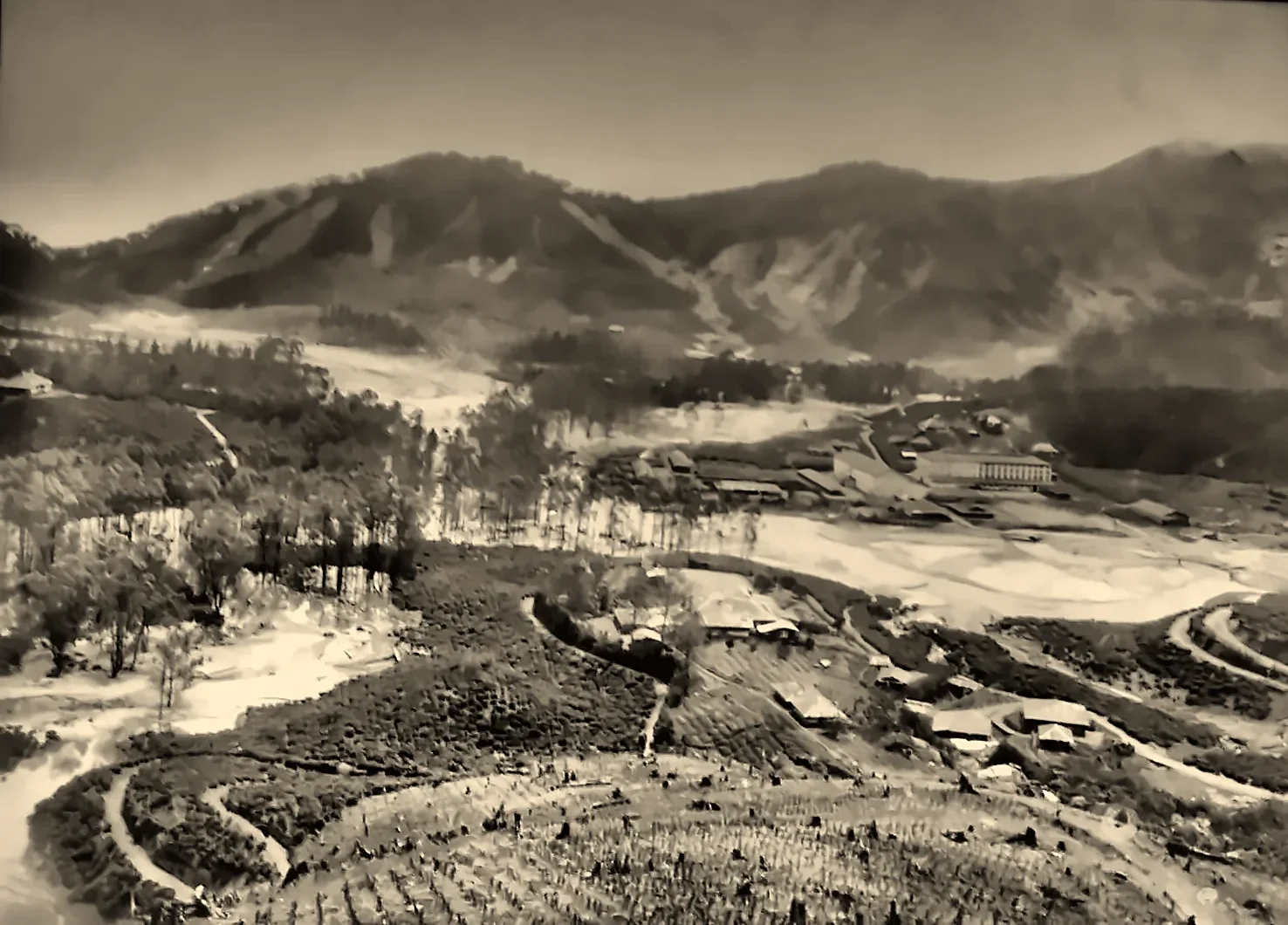
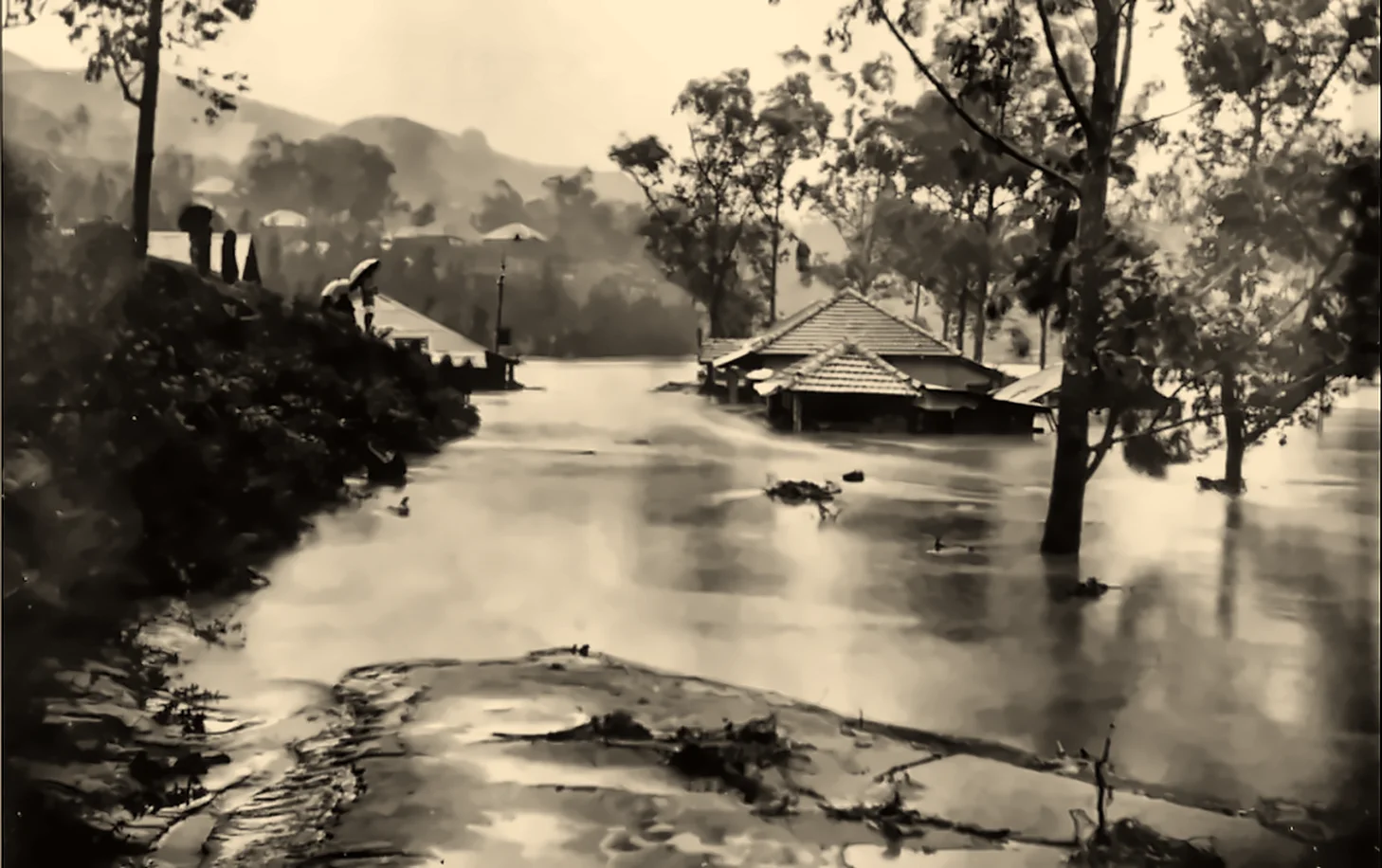
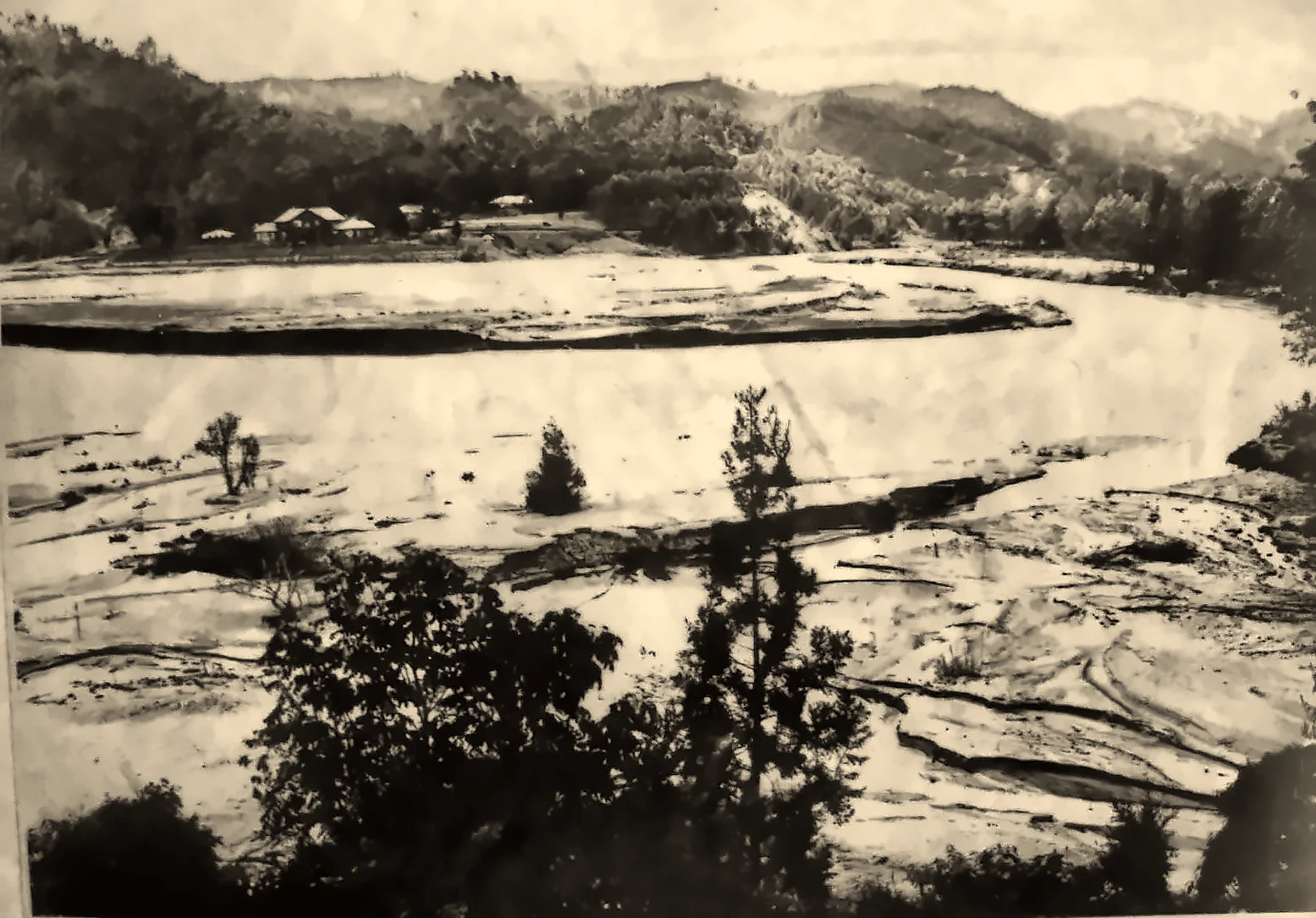
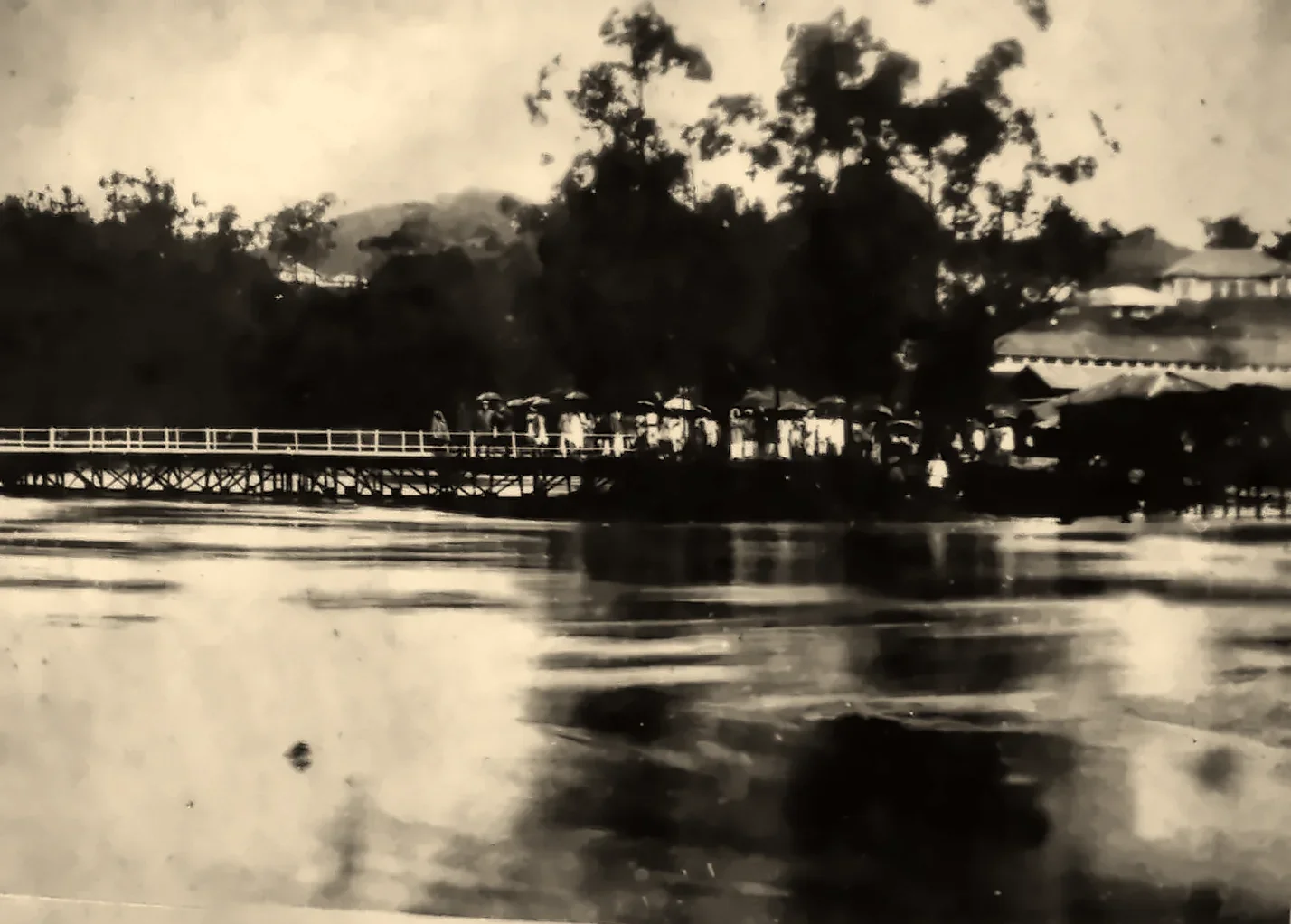
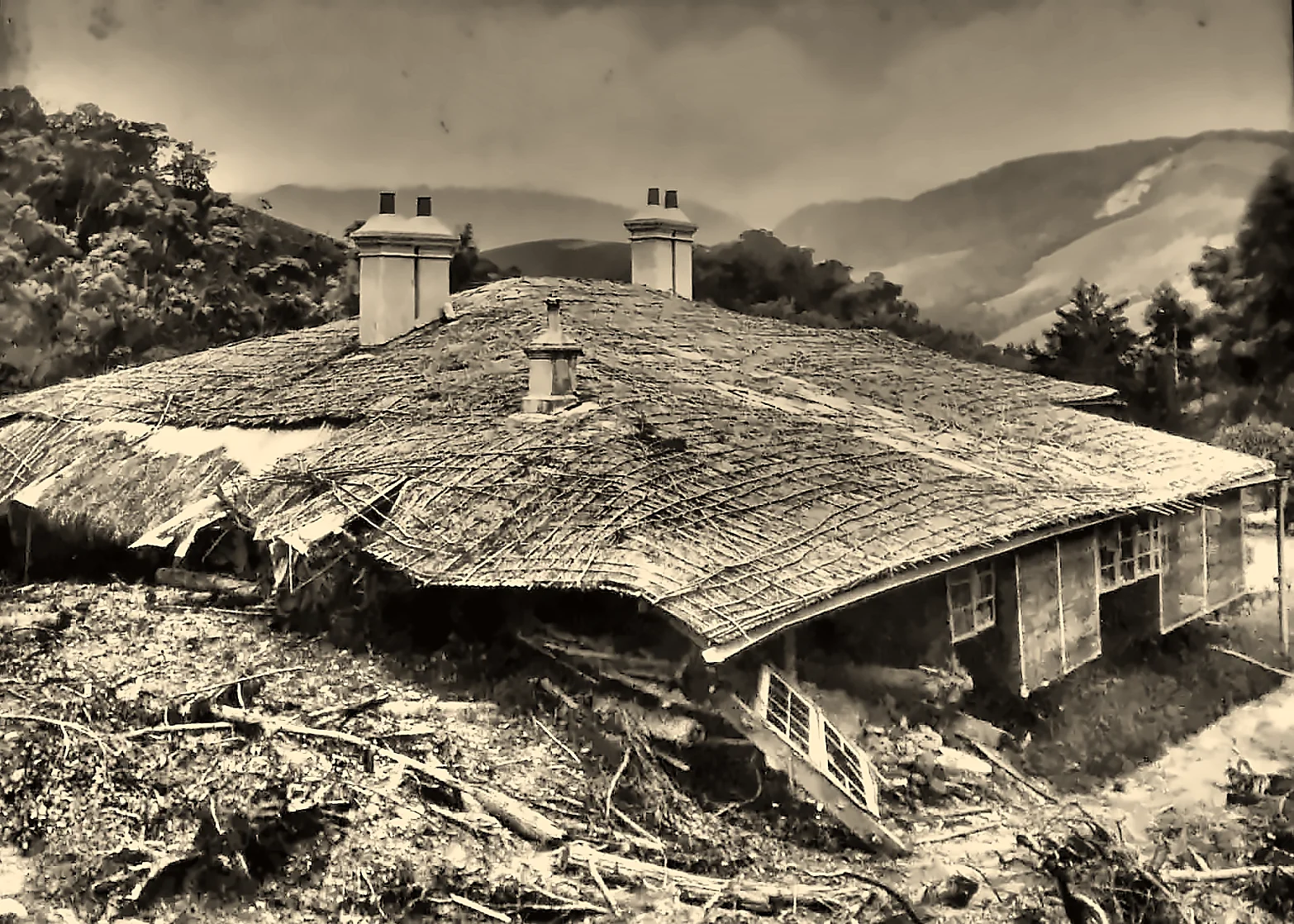
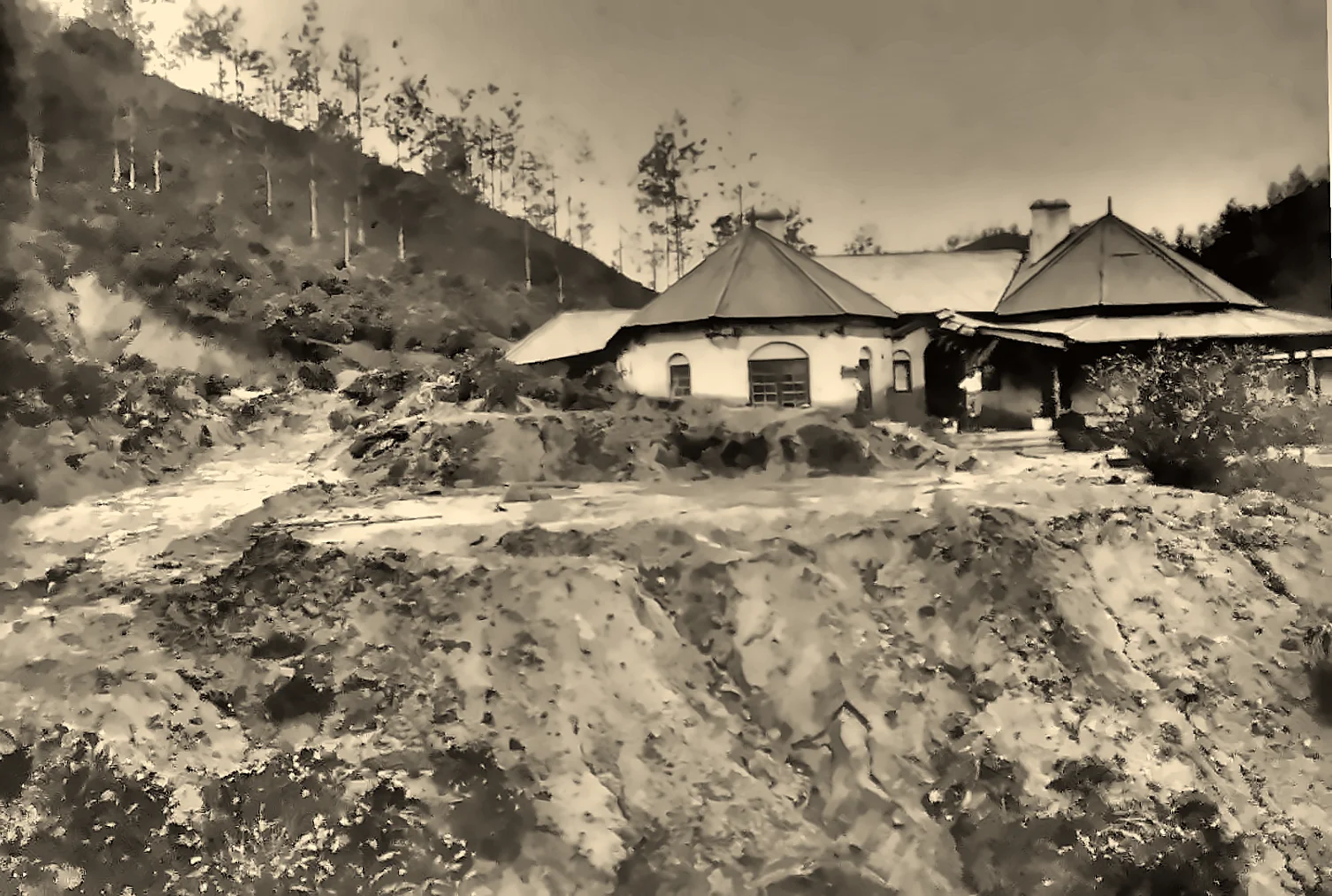
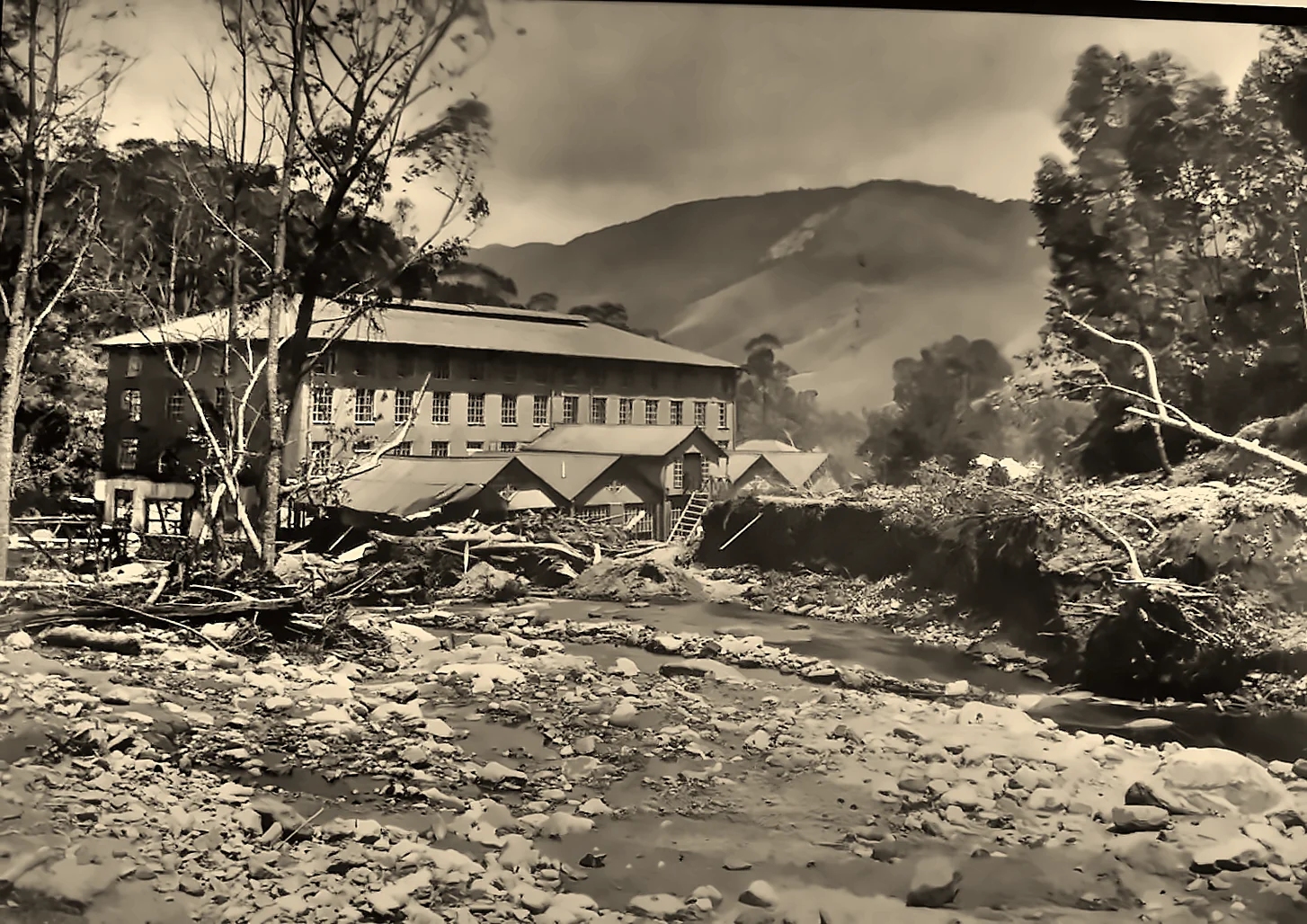
The Munnar valley after the Great Flood of 1924, its floor buried under sand and silt. Display print; restored by GK Global.The Munnar bazaar submerged by the flood of 1924: tiled roofs rise just above the water, trees stand in the flood, and people with umbrellas watch from the high ground on the left. Historic photograph, believed to be in the public domain owing to its age; restored by GK Global.The valley after the 1924 flood: the river has spread across the valley floor, leaving a wide waste of sand and silt below the bungalows on the far bank. Display print; restored by GK Global.Watching the rising floodwaters of 1099 (1924): crowds with umbrellas gather on a timber bridge over the swollen river in Munnar, with the building of the present High Range Club nearby, as the display print notes. Display print; restored by GK Global.The Madupatty (Mattupetty) bungalow after the 1924 floods. Display print; restored by GK Global.The Sevenmallay bungalow after the 1924 floods. Display print; restored by GK Global.The Madupatty tea factory after the 1924 floods. Display print; restored by GK Global.
Rebuilding: ropeways, roads and power
After the flood, the railway was never rebuilt. The estates turned to aerial ropeways and roads, and in the 1930s Travancore began the Pallivasal hydroelectric project. (Read the Pallivasal story.)
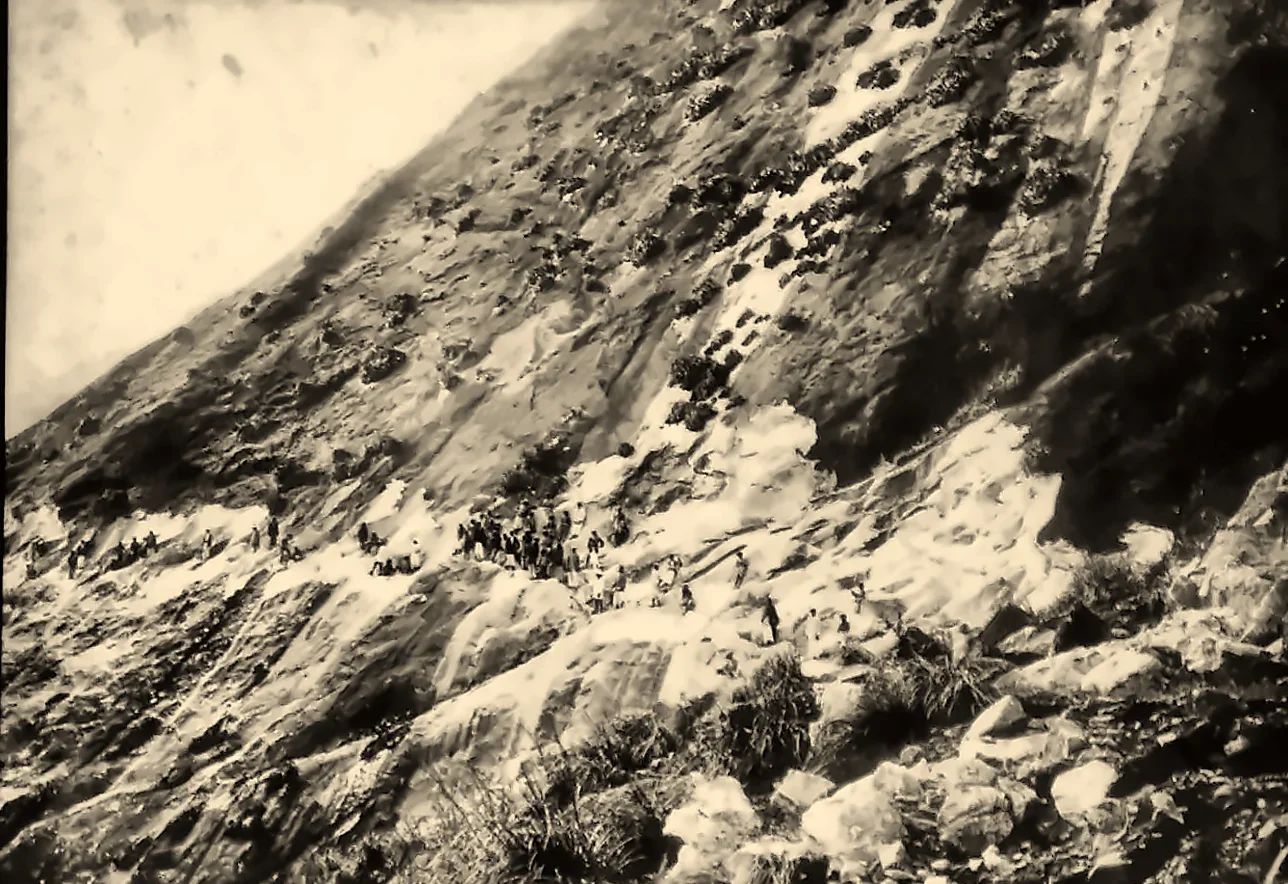
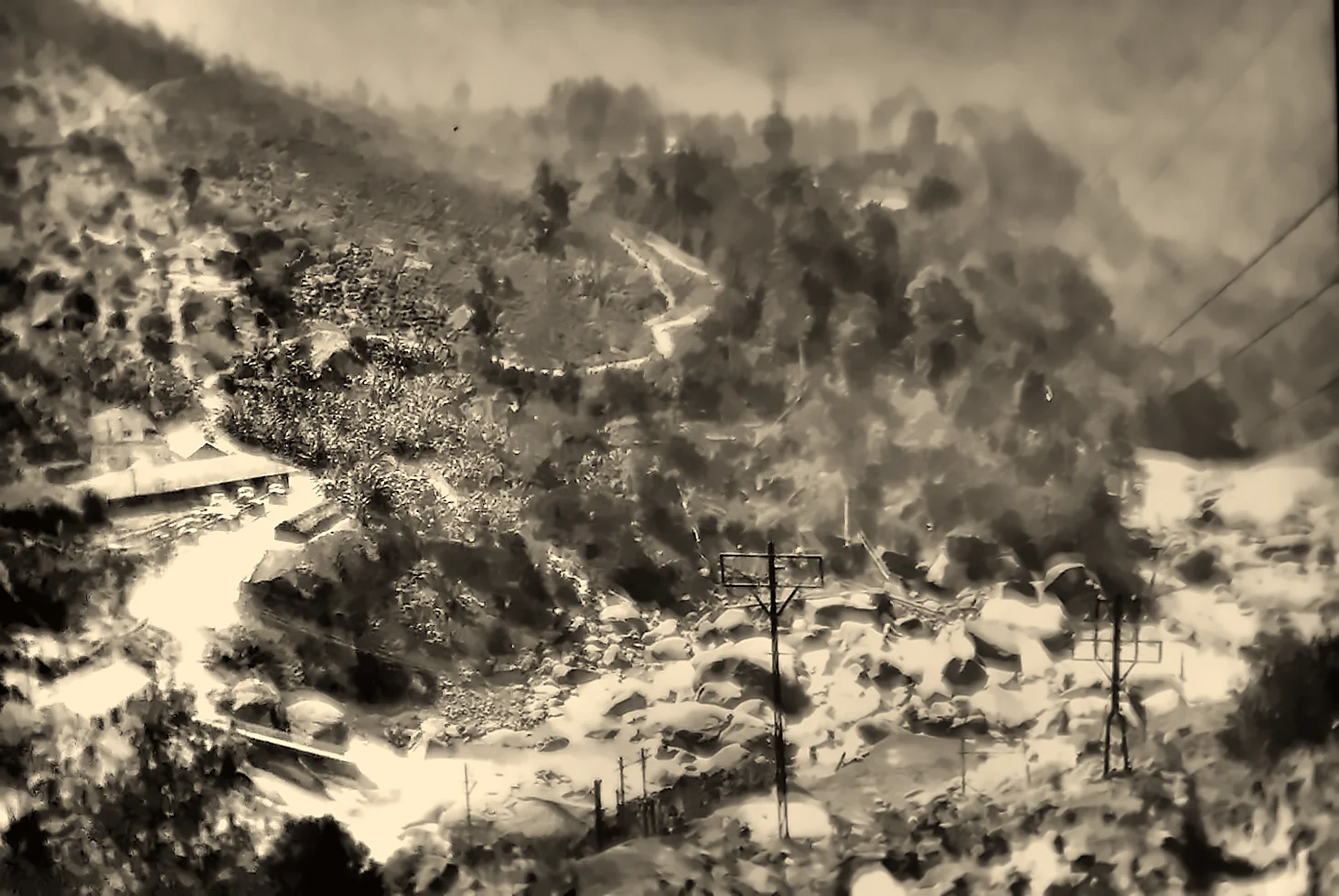
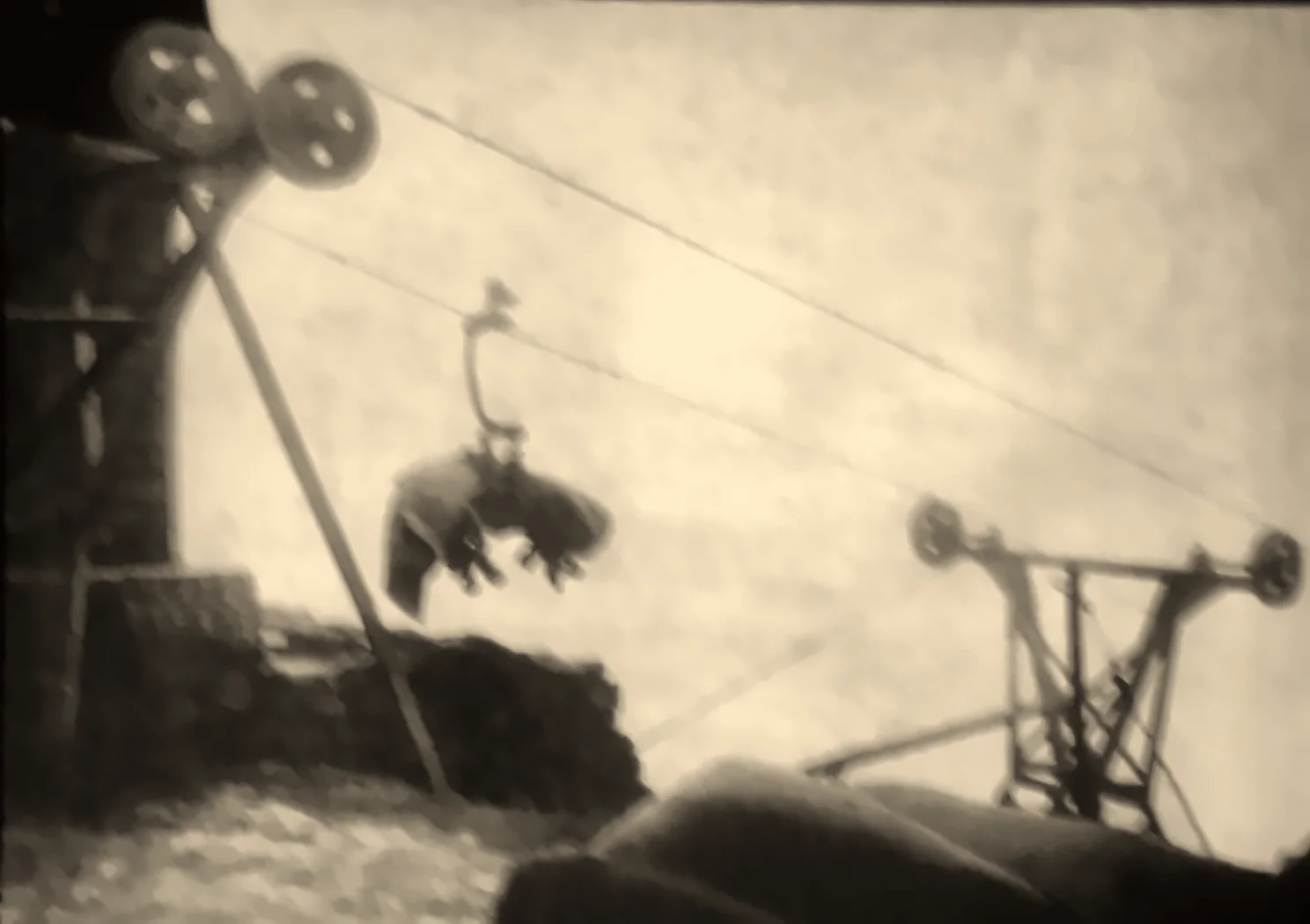
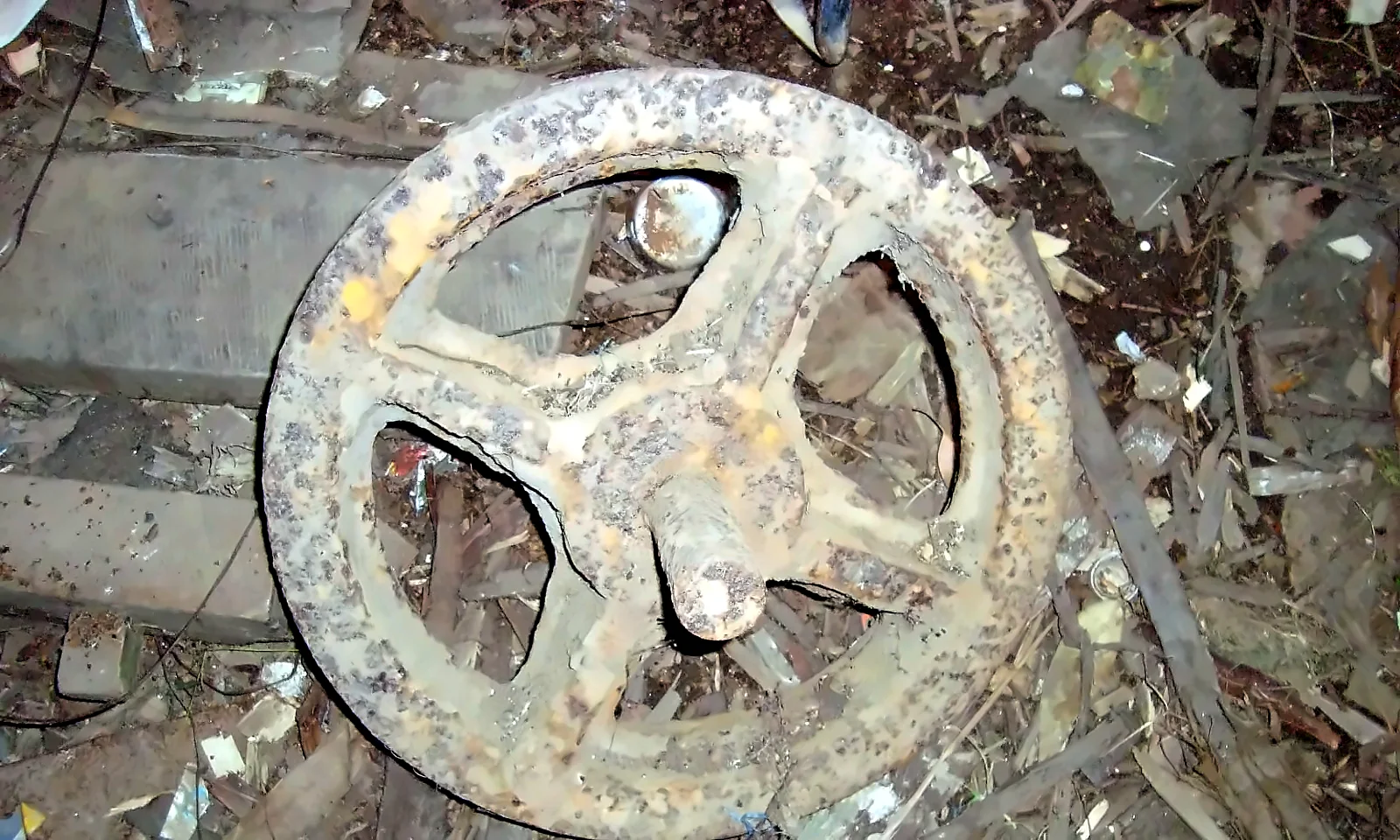
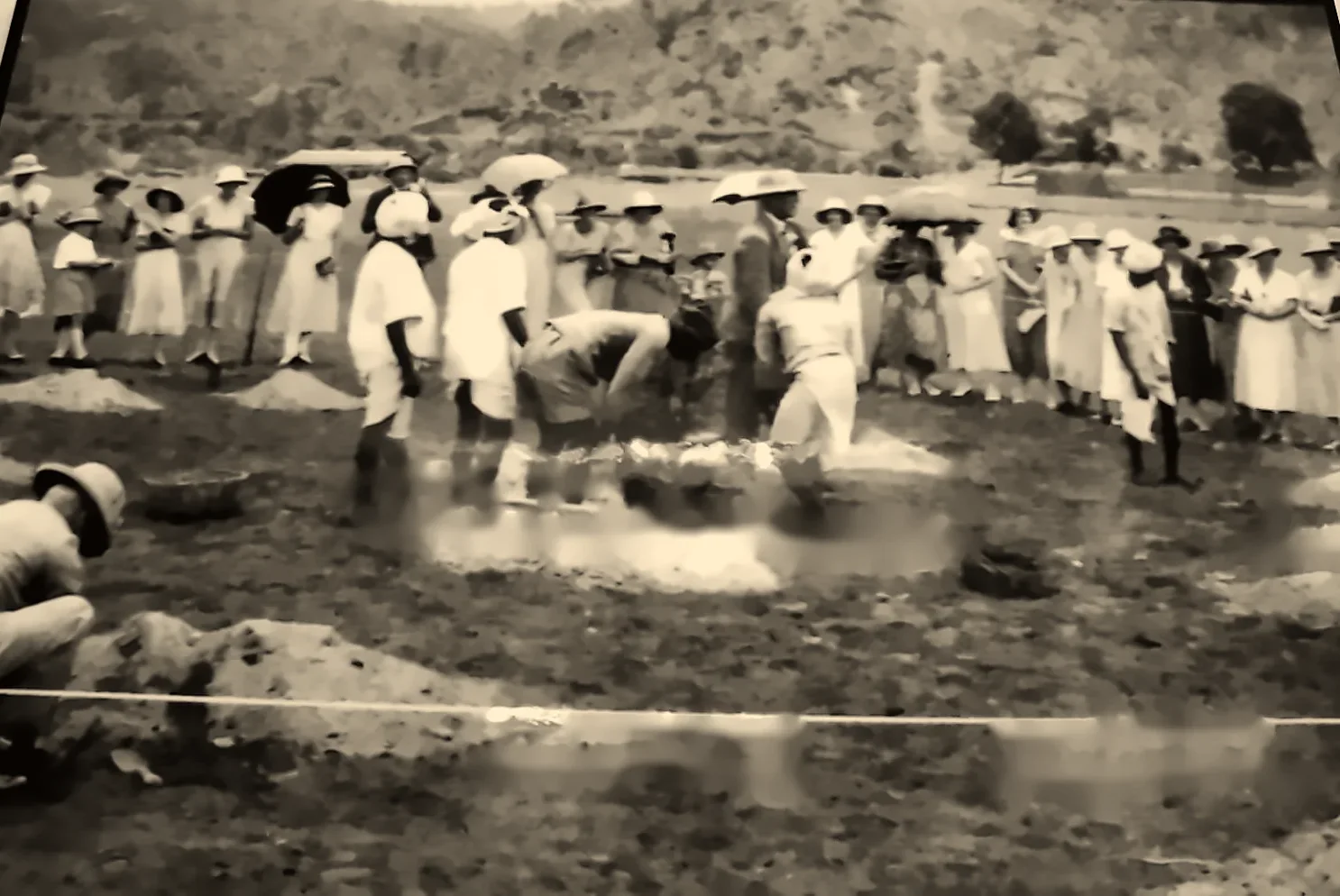
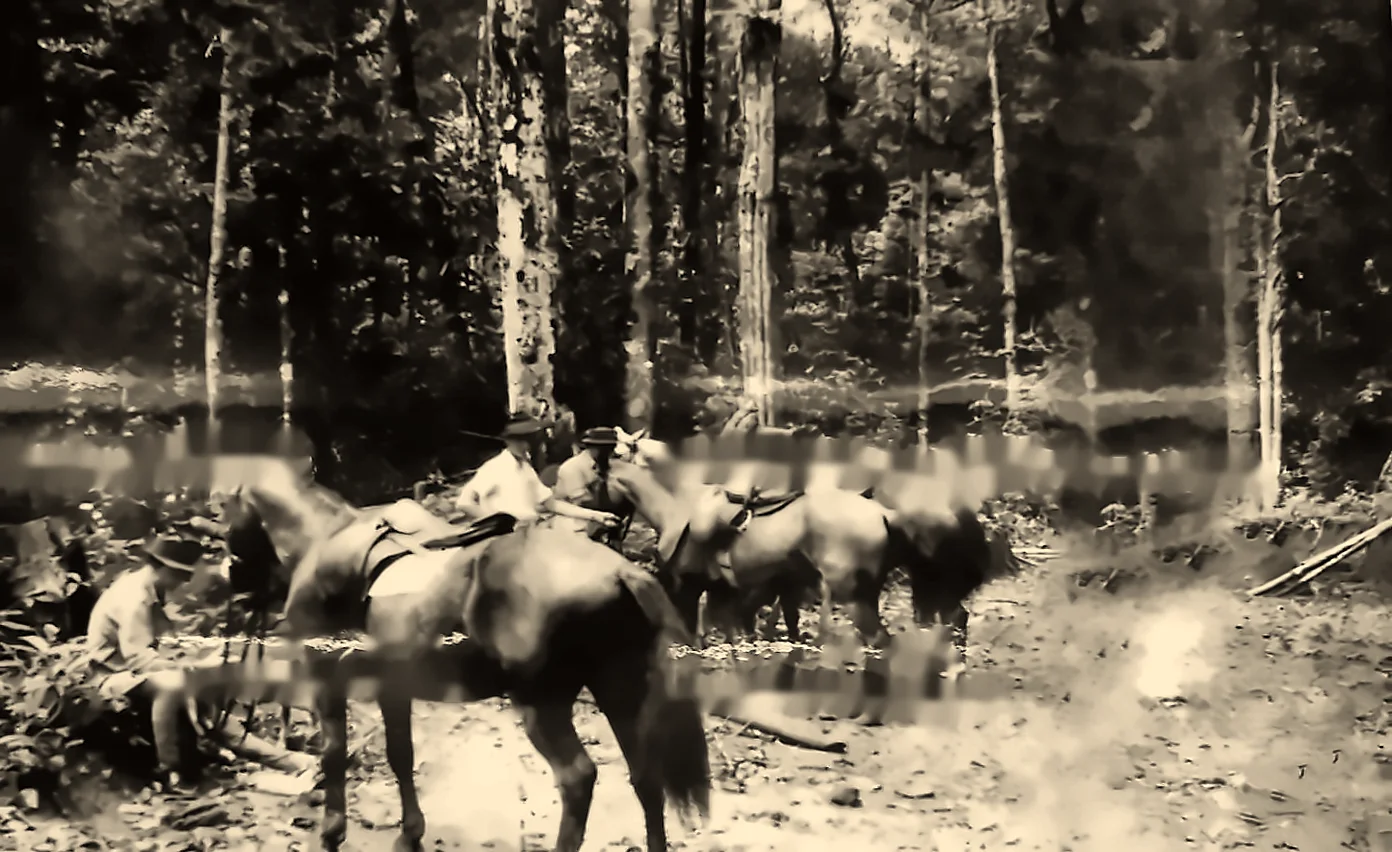
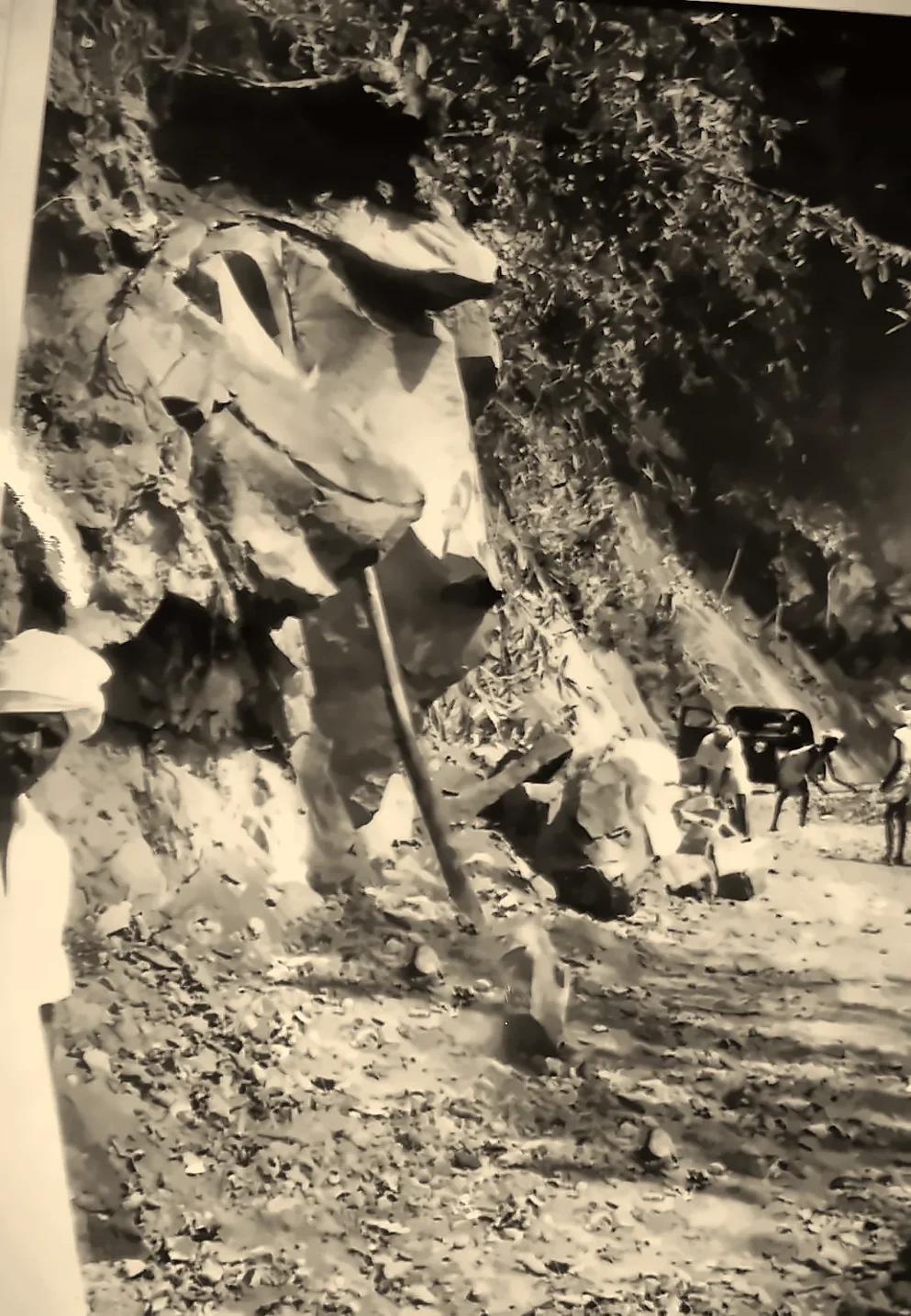
Rebuilding the Periakanal road ("Cole's Road") after the 1924 floods: a line of workers clears a path across a mountainside scoured by landslides. Display print; restored by GK Global.The ropeway at Pallivasal, 1929, and the bottom of Attukad ("Arthukad") tea. Display print; restored by GK Global.A carrier on Munnar's old aerial ropeway; date not known. Display print; restored by GK Global.A rusting pulley wheel said to come from one of Munnar's old aerial ropeways, as it survives today. The annual general meeting of the United Planters' Association of Southern India (UPASI), 1930, as titled on the mount. UPASI, founded in 1893, brought together the planters of the south; the place where this photograph was taken is not stated. The print is water-stained. Display print; restored by GK Global.Planting a tree at the High Range Club during the Viceroy of India's visit to Munnar in 1938, as described on the print (the Viceroy at the time was Lord Linlithgow). Glare spots on the print have been retouched. Display print; restored by GK Global."Main mode of transport in High Ranges: horse (1939)", says the print: riders and saddled horses pause on a forest track. Heavy glare from the glass has been retouched; some marks remain. Display print; restored by GK Global.Building the Munnar–Aluva road, 1939. Display print; restored by GK Global.
Freedom and a new era, 1947–1953
After Independence, Munnar's story began to change: Travancore joined India, new dams were built for power, and the old planters' institutions slowly gave way. (Read Munnar's first Independence Day and the High Range Club.)
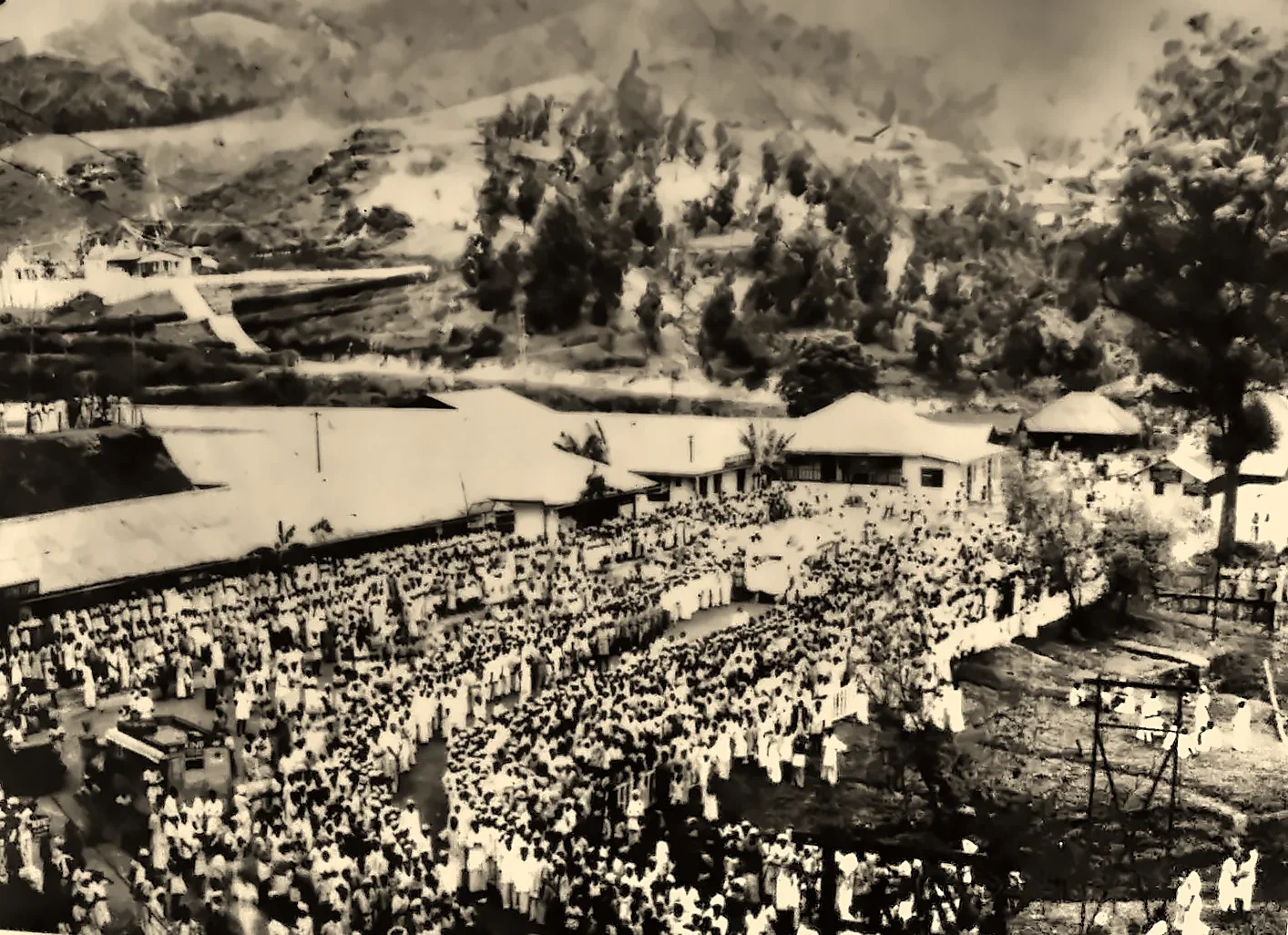
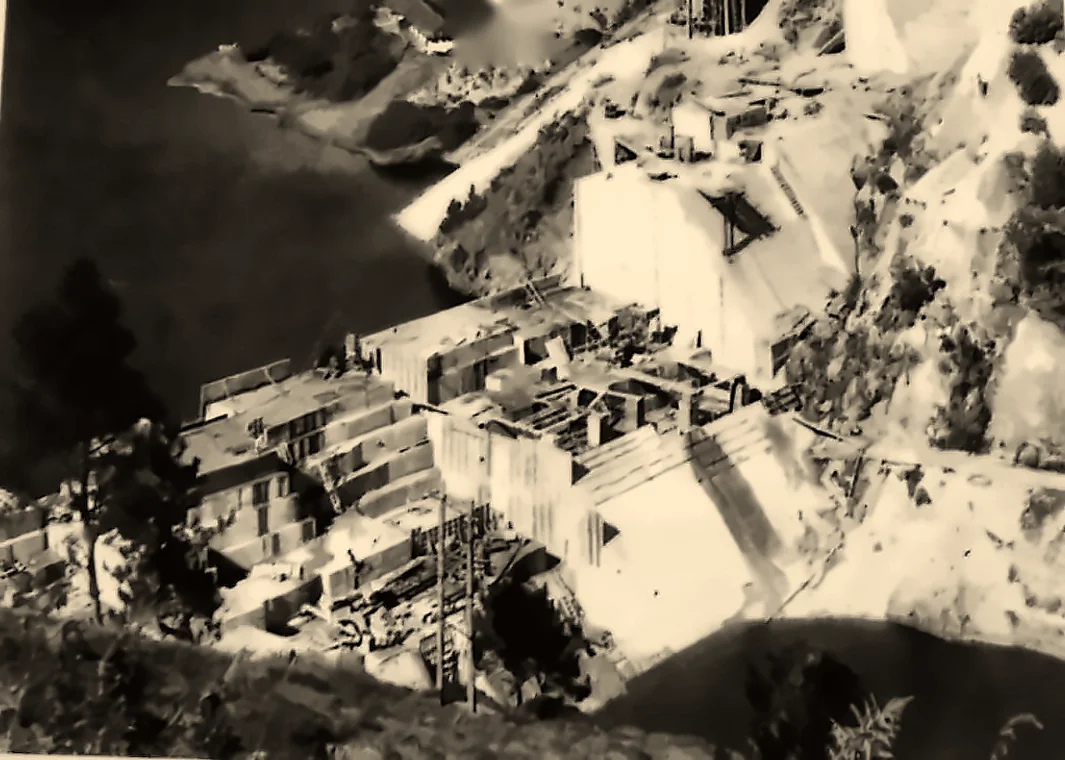
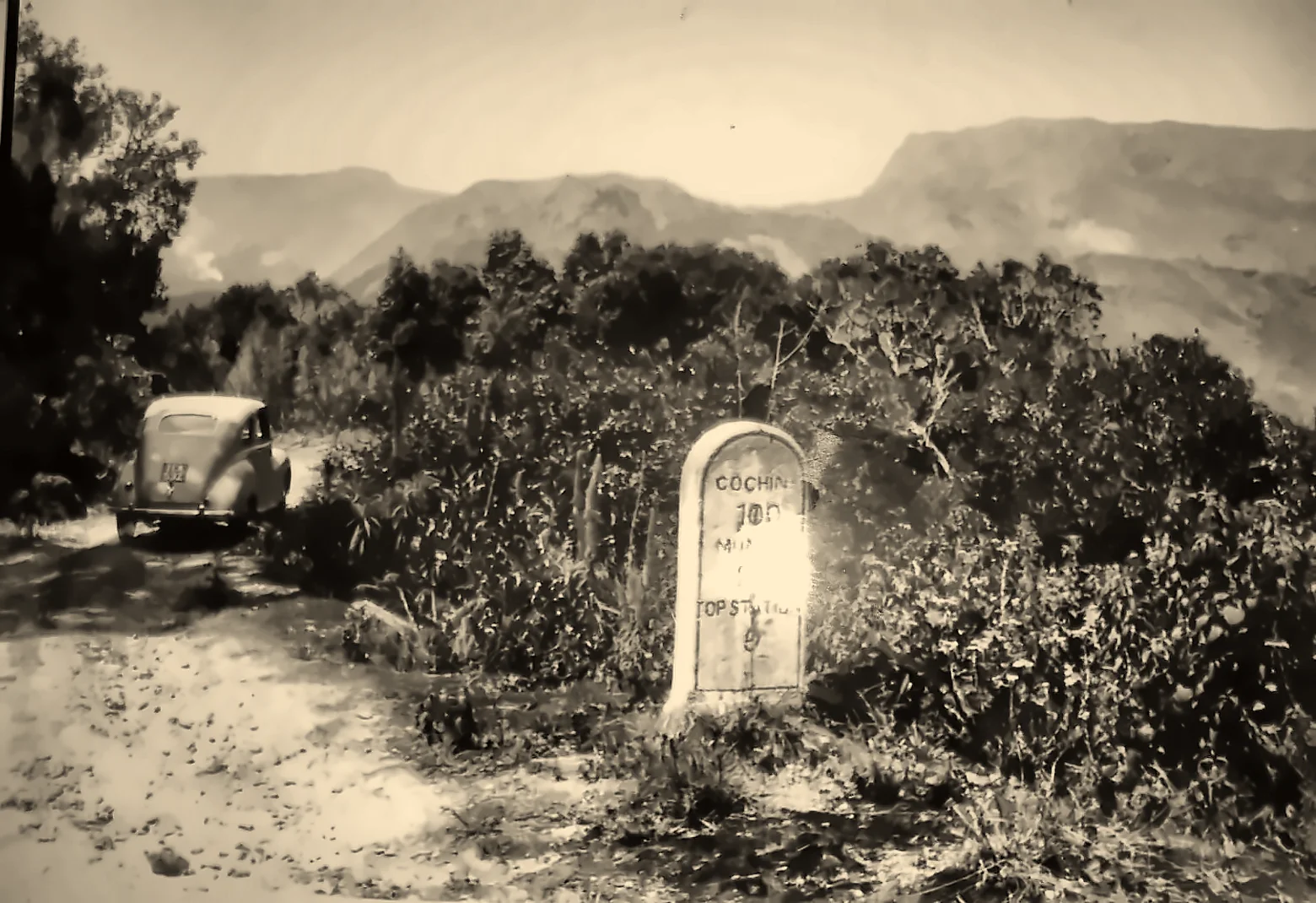
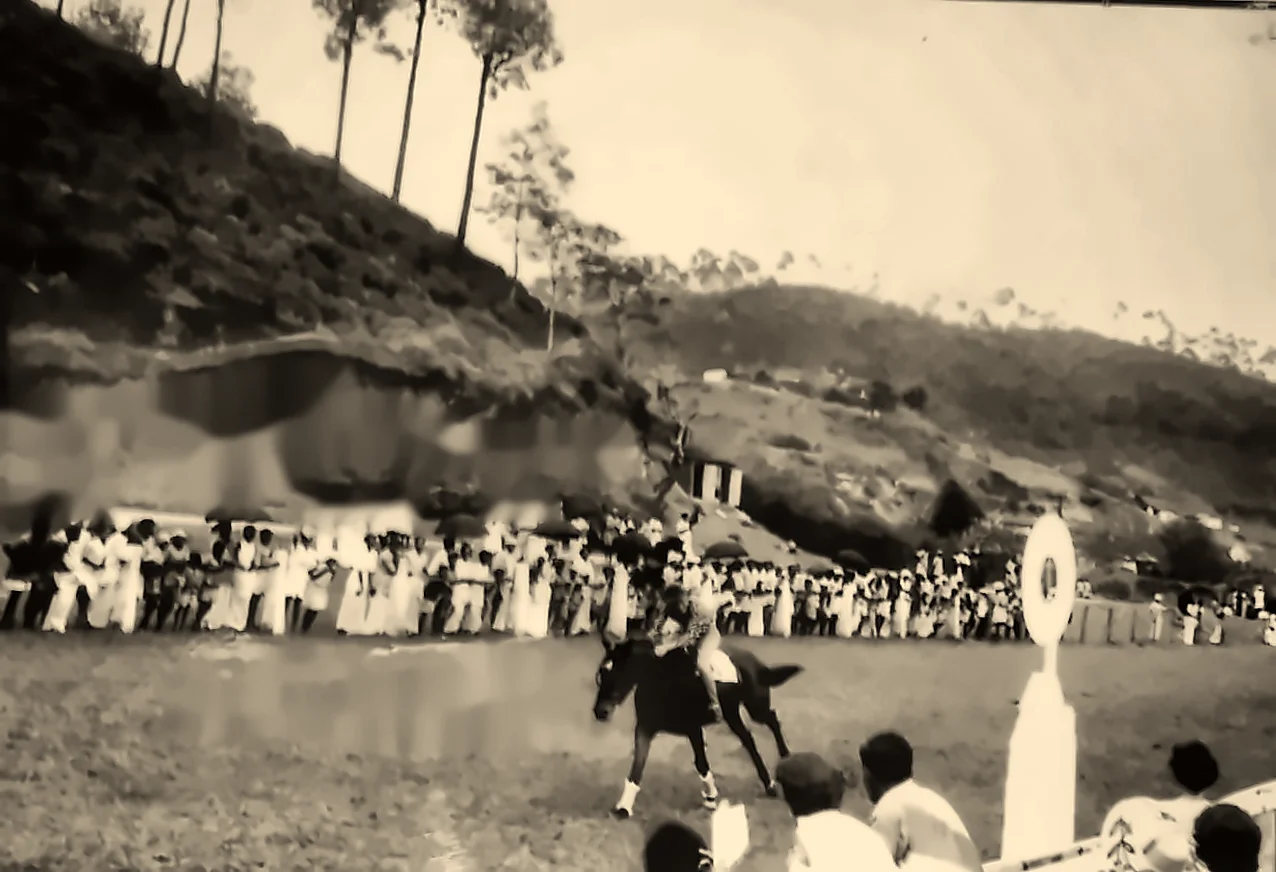
Munnar on 15 August 1947, the first Independence Day. Display print; restored by GK Global.The Mattupetty dam under construction, 1953. Display print; restored by GK Global.The main road from Top Station to Kundaly (Kundala), 1953: a car on the dirt road and a milestone giving distances to Cochin, Munnar and Top Station (the numbers are partly hidden by glare on the print). Display print; restored by GK Global.A horse race at the Munnar Gymkhana in 1953, on the ground that, according to the print, is now Munnar's High Altitude Training Centre. Glare from the glass has been retouched. Display print; restored by GK Global.
About these photographs
Apart from the present-day picture of a ropeway wheel, these photographs are copies of historic prints on display in Munnar, which we photographed and then restored: straightening, cropping, removing glare and grain, and toning them in sepia. They are believed to be in the public domain owing to their age. Two come from Wikimedia Commons, as credited.
The names, places and dates come from the labels on the prints and have not all been independently verified.
If you recognise a place or person in these photographs, or have old photographs of the High Range of your own, please contact us.
See it for yourself, with a local driver who knows these roads.