
The Heartbeat of the Muthirapuzha: The History of the R.A. Headworks Dam
How a modest masonry weir in the centre of Munnar town helped power Kerala's first major hydroelectric dream.
Most visitors arriving in Munnar are immediately captivated by the sprawling tea estates and mist-clad peaks of the High Range. Yet right in the heart of the bustling town, straddling the rushing waters of the Muthirapuzha, lies a piece of engineering history that is often passed by: the Ramaswamy Aiyar Headworks, commonly known as the R.A. Headworks or Munnar Headworks.
Long before the great concrete walls of Mattupetty or the arch of Idukki were poured, this modest masonry structure helped set the stage for modern Kerala's power grid.
At a glance
- Where: Munnar town, Devikulam taluk, Idukki district, about 15 km downstream of the Mattupetty dam.
- River: the Muthirapuzha, a tributary of the Periyar.
- Type: masonry diversion weir, about 10.9 m high and 39.6 m long.
- Completed: 1944, named after Sir C. P. Ramaswamy Iyer, Dewan of Travancore.
- Purpose: diverting water through a conduit system to the Pallivasal power station; it is part of the Pallivasal Hydro Electric Project, run today by the KSEB.
The need for power
As the Kannan Devan Hills became South India's most famous tea country in the late 19th and early 20th centuries, the demand for power grew alongside the tea bushes. The fast-falling mountain rivers that made railway building so treacherous were also an immense untapped resource.
The planters had already begun to use it. As early as 1898–1900, the company's electric ropeway down the cliff at Top Station was driven by a small water-powered station, and in the early 1900s it built its own small power house at Pallivasal to run the machinery of its tea factories. (Read the Top Station ropeway.) But as the decades passed, the Travancore government saw that the Muthirapuzha could power far more than tea rollers: it could power a developing state.
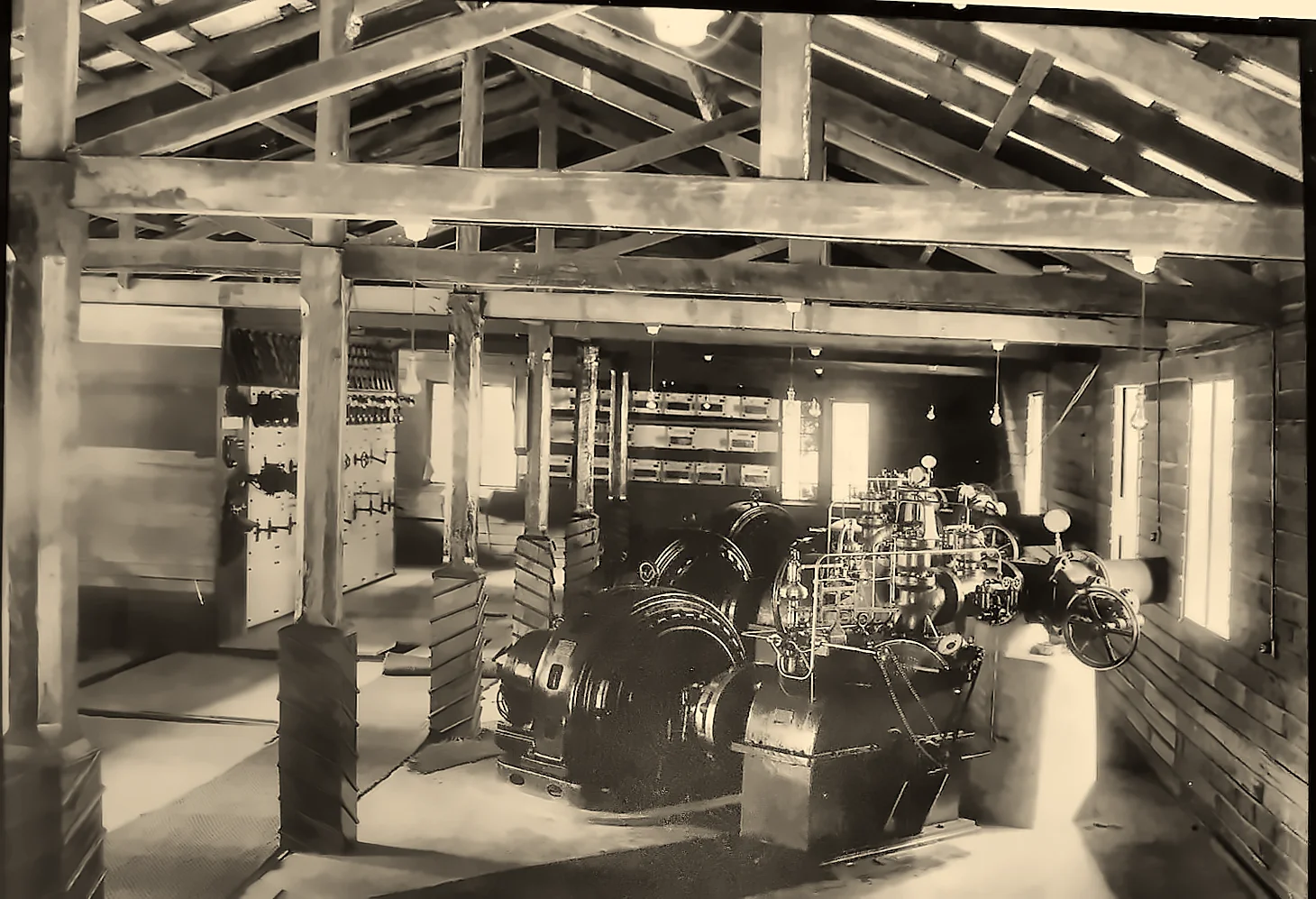
The Pallivasal project and Sir C. P. Ramaswamy Iyer
In the 1930s, Travancore began the Pallivasal Hydro-Electric Project. Its first generating unit was inaugurated in March 1940 by the Dewan, Sir C. P. Ramaswamy Iyer, and it is widely celebrated as Kerala's first major public hydroelectric scheme. (Read Pallivasal: where Kerala's electricity began.)
To run the power house reliably, the engineers needed a dependable way to take water from the river. That was the job of the R.A. Headworks, completed in 1944 across the Muthirapuzha at Munnar and named in honour of the Dewan.
A weir, not a reservoir
Unlike the reservoirs created later at Kundala (1947), Mattupetty and Anayirangal, the R.A. Headworks was never meant to store great volumes of water. It is a diversion weir: a low masonry barrier that raises the river just enough to turn a steady, controlled flow into the water-conducting system that carries it down to the turbines at Pallivasal, on the right bank of the river below the town. The storage dams upstream hold the monsoon rain; the headworks takes what they release and sends it to work.
Built of solid masonry, it is the oldest of the hydroelectric dams of the Munnar area still in service, and it has come through more than eighty monsoons, including the floods of 2018, while quietly doing the job it was designed for.
Munnar's silent witness
Today the headworks is part of the everyday backdrop of Munnar town, and many people cross the river nearby without a second glance. Stand near the water and watch the Muthirapuzha spill over the weir, and you are looking at the point where the untamed rivers of the High Range were first harnessed on a large scale to bring light to the valleys below.
A century ago, the rivers of Munnar decided where people could travel. Today, thanks to structures like the R.A. Headworks, they help decide how a state is powered. (Read more in The Titans of the Ghats, Sengulam, which reuses Pallivasal's water, and the history of Munnar.)
Visiting
- The headworks is a KSEB installation: view it from public roads and bridges, keep out of restricted areas, and check before photographing the structure.
- Never enter the river near the weir; water levels can rise suddenly in the monsoon.
Plan your Idukki journey with GK Global
The R.A. Headworks is an easy addition to a trip through Idukki's high ranges. From our base in Adimali, the gateway to Munnar, GK Global runs Munnar jeep safaris, elephant-spotting drives and scenic day trips, and helps you find a stay to suit your plans. See it for yourself with a local driver who knows these roads and their history.
Explore our jeep safarisFind a staySee it for yourself, with a local driver who knows these roads.
Book a Munnar Jeep SafariSources & further reading
- Wikipedia: R. A. Headworks
- Wikipedia: Pallivasal Hydro Electric Project
- KSEB Dam Safety: Madupetty dam (Pallivasal scheme)
- KSEB Dam Safety: Kundala dam
Figures are from the sources listed and were checked in October 2026. Park timings and road conditions change, so please confirm before you travel.