
The Vaults of Sree Padmanabhaswamy: The 2011 Inventory, Nilavara B and the Supreme Court, Fact and Legend
What was found when the temple's vaults were opened in 2011, why Nilavara B is still shut, what the courts and auditors actually said, and which famous stories about curses, cobras and sea tunnels have no basis in the record.
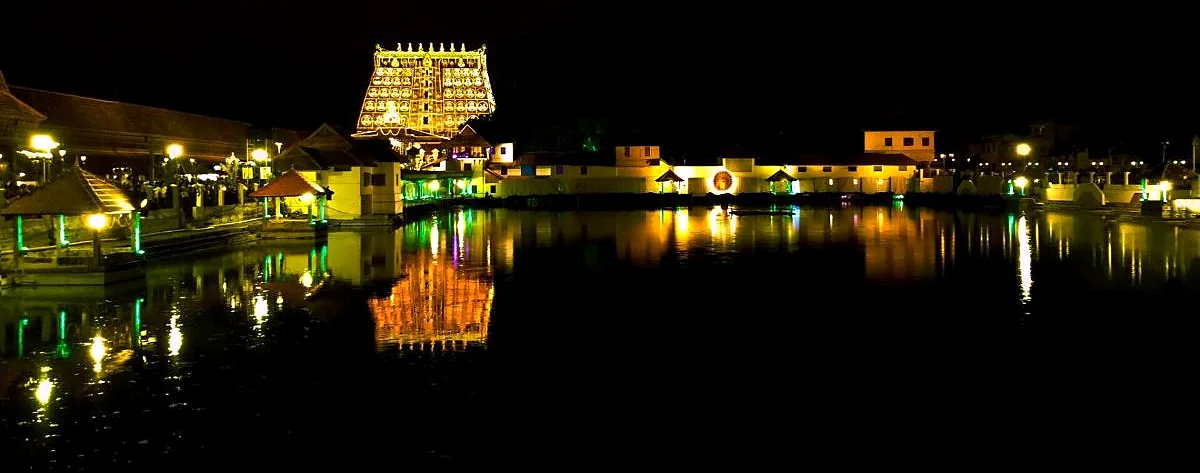
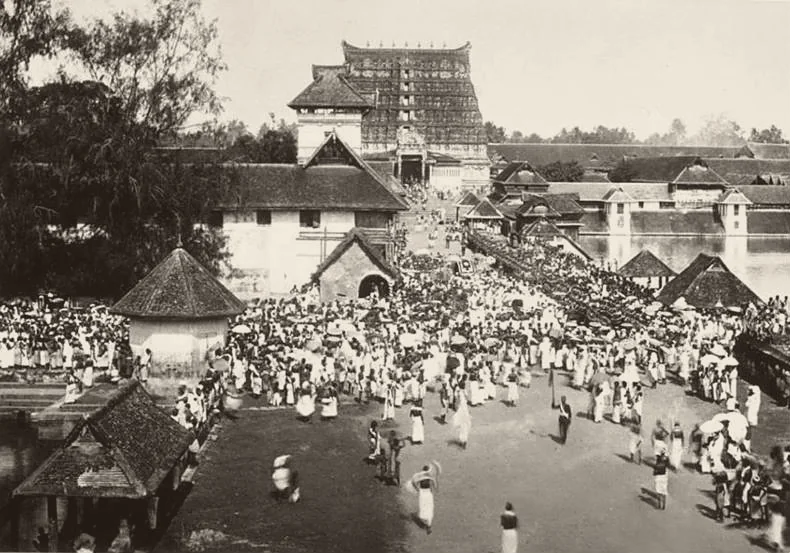
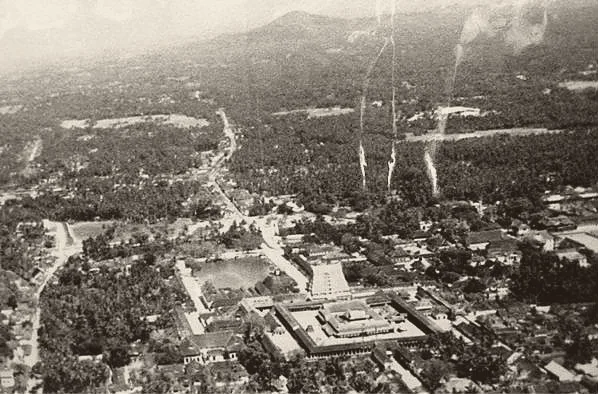
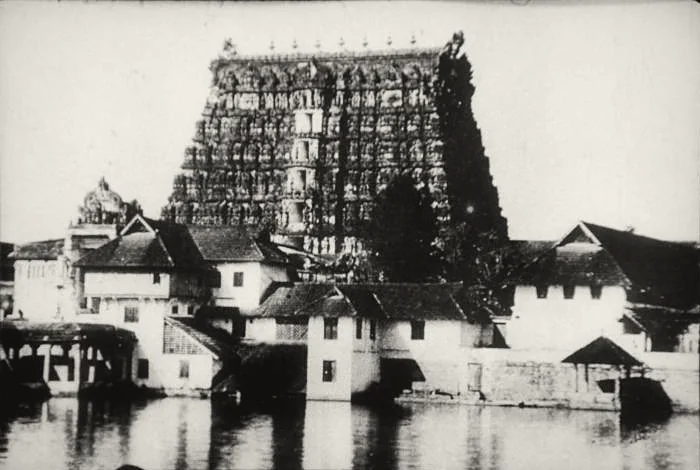
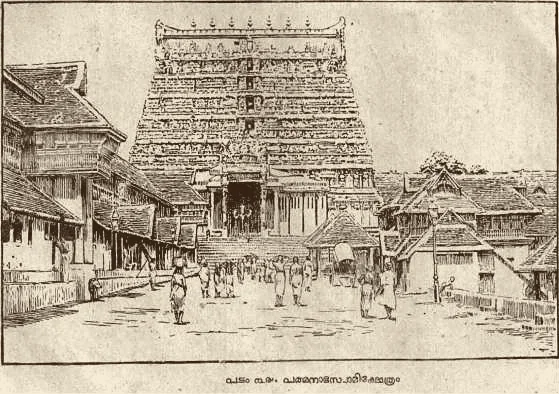
In the heart of old Thiruvananthapuram, inside the walls of East Fort, Vishnu lies asleep. In the dim sanctum of the Sree Padmanabhaswamy temple the god reclines on the coils of the serpent Ananta, an image so long that worshippers see it in three parts through three doors: the face, the navel from which a lotus rises, and the feet. Above the granite colonnades and the Kerala-style roofs rises a seven-tiered gopuram in the Tamil manner, the meeting of two architectural traditions in one compound.
For most of its history, the temple was famous for its god. In the last week of June 2011 it became famous for its gold. A committee appointed by the Supreme Court of India began opening the temple's nilavaras, the stone strongrooms beneath and around the shrine, and within days reports of crowns, chains, coins and sacks of gems were travelling around the world. One vault, Nilavara B, stayed shut, and has remained shut ever since. Few questions in modern Kerala have produced as much law, faith, rumour and sheer invention.
This article sets out what is actually known. It draws on the judgments of the Kerala High Court (2011) and the Supreme Court (2020), the reports of the court's amicus curiae and special auditor as they were reported, contemporary journalism, and older printed sources. Where figures are estimates or claims, we say whose they are. Where we offer our own reading, it is marked as our assessment. For the temple's architecture, rituals and wider history, see our companion article, Padmanabhaswamy and Thiruvananthapuram: the city of the sacred serpent.
At a glance
- The vaults: six known nilavaras, labelled A to F for the 2011 inventory; two more, G and H, were identified later in the proceedings.
- Opened in 2011: A, C, D, E and F, from 27 June 2011, before court-appointed observers.
- Not opened: Nilavara B, whose outer door was opened in 2011 but whose inner chamber was not entered.
- Value: never officially published; media estimates of about ₹1 lakh crore (roughly US$22 billion in 2011) refer to the opened vaults only and are not an official valuation.
- Law: on 13 July 2020 the Supreme Court upheld the royal family's rights as shebait (custodian of the deity) and left any decision on Nilavara B to the temple's administrative and advisory committees.
- Status in 2026: Nilavara B remains closed. In August 2025 the committees referred the question to the temple's chief priest.
The sleeping lord and the vaults
A nilavara (literally 'ground room', a cellar or underground room) is a strongroom. Court papers and the press usually call these rooms kallara, but in Malayalam that word also means a burial or cremation chamber, so we use nilavara, the word the 2014 special audit also used ('B Nilavara'). Like many large South Indian temples, Padmanabhaswamy kept its valuables in such rooms: the ornaments put on the deity for festivals, the vessels used in ritual, offerings of gold and silver, and coin. The temple's own registers, the mahazar books kept by the treasury staff, record when a room was opened and what went in or out. None of this was secret in principle; what was unknown was the scale.
Two things turned an administrative inventory into a world story. The first was the sheer quantity of precious metal found in the opened rooms. The second was the refusal, on religious grounds, to open the last one. A locked door in a living temple, a royal family that said its god did not wish it opened, and a court that hesitated to decide: these are the ingredients from which modern legends are made.
Historical and dynastic foundations
An old shrine in the records
The temple is one of the 108 Divya Desams, the shrines sung by the Alvar poet-saints of the Sri Vaishnava tradition. Nammalvar, usually dated to the ninth century, praises the Lord of 'Ananthapuram' in his hymns; this is the earliest secure literary witness. Claims that the shrine is mentioned in Sangam poetry, or that it is thousands of years older, rest on tradition and on interpretations that historians do not agree on.
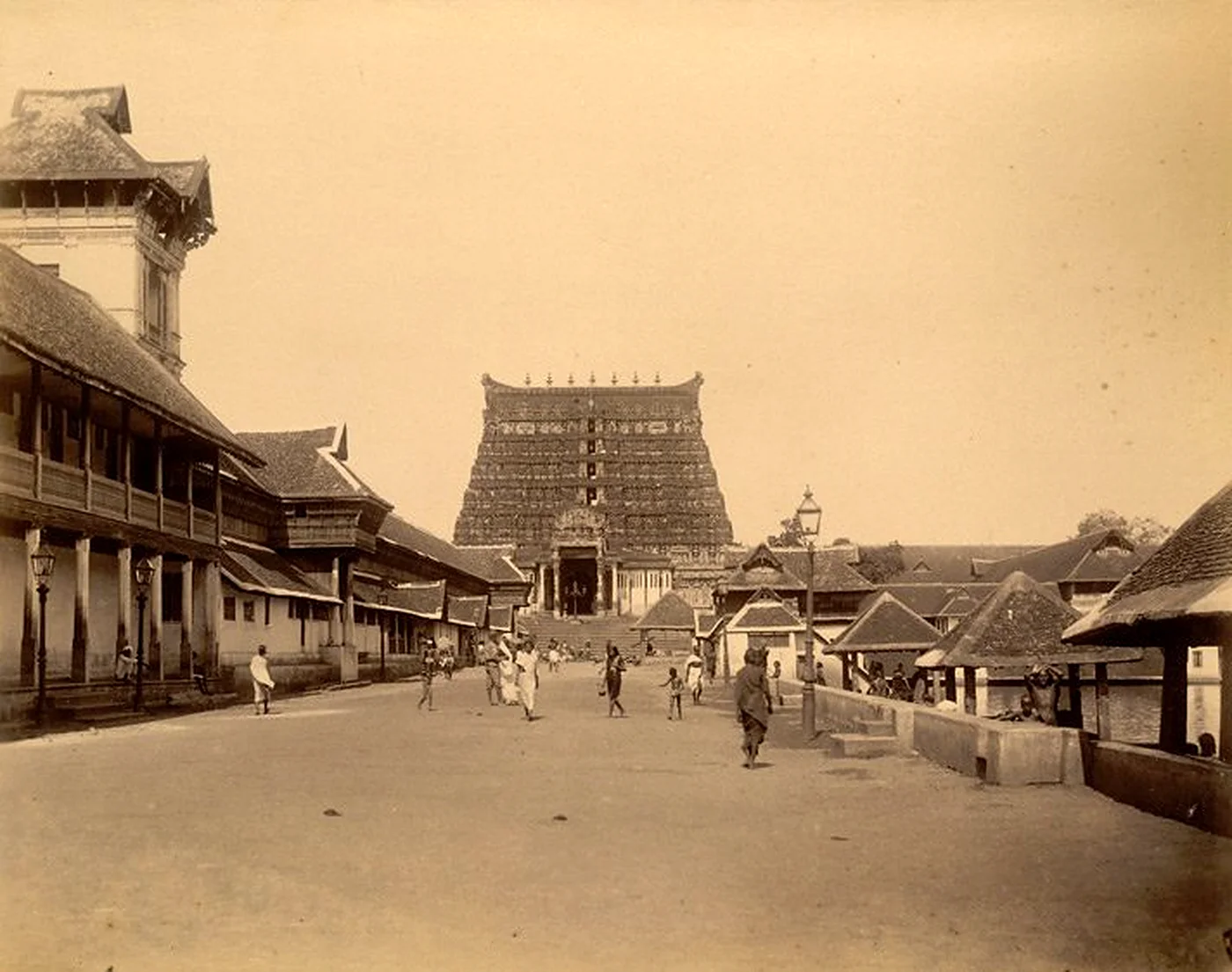
From the fourteenth century the documentary record becomes rich. The Mathilakam records (from mathilakam, 'within the walls', the fortified temple precinct) are the temple's palm-leaf archive: an estimated 30 lakh leaves in some 3,000 bundles, written in Vattezhuthu, Kolezhuthu, Tamil and Malayalam. They record the meetings of the temple council, grants of land, offerings, festivals and disputes, and are now held in Thiruvananthapuram's archives. Between 1937 and 1940 the poet Ulloor S. Parameswara Iyer supervised printed transcriptions of selected records, and parts of the collection were digitised from 2011. Only a small fraction has ever been studied in detail. See also our article on the ancient scripts of Tamil and Malayalam.
Marthanda Varma and the gift of a kingdom
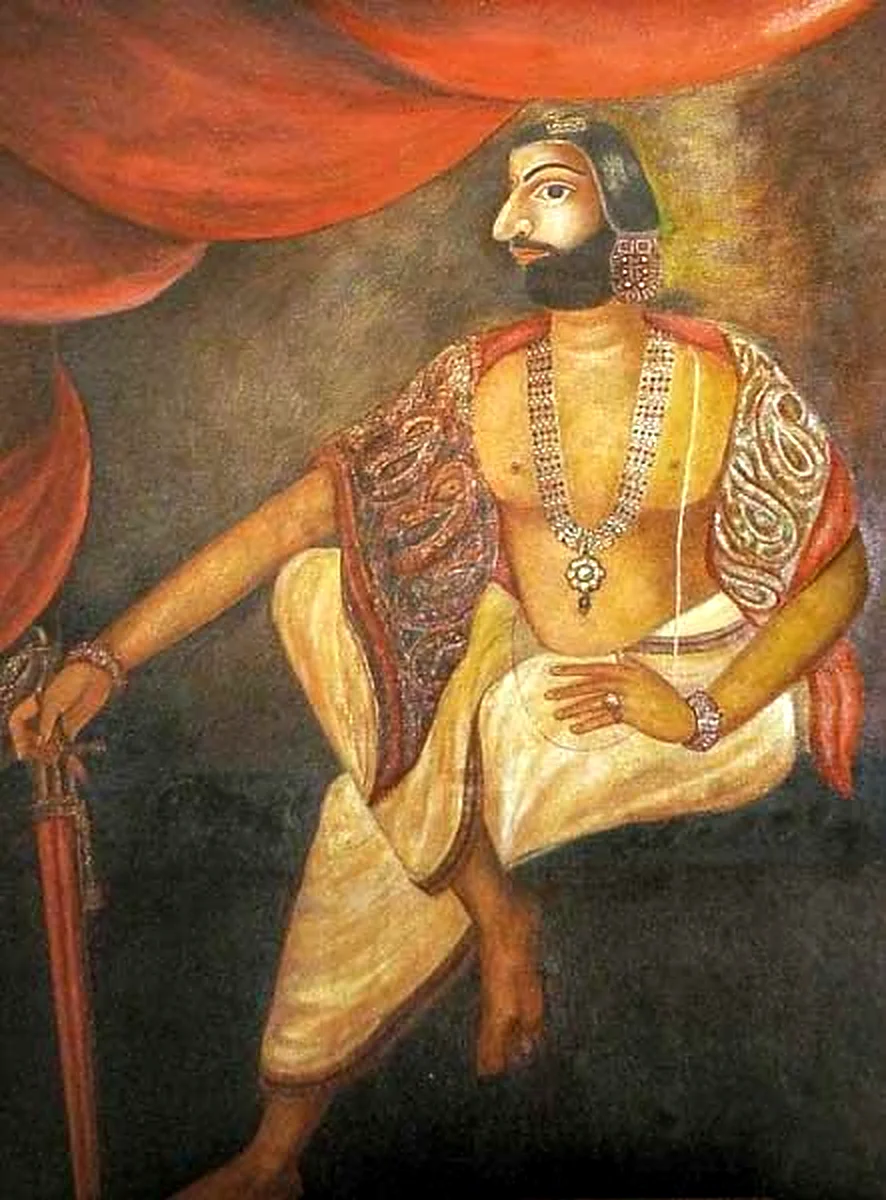
A fire in 1686 badly damaged the temple. Its reconstruction in the present form is the work of Anizham Thirunal Marthanda Varma (r. 1729–1758), the king who created modern Travancore by conquering or absorbing the small states between Kanyakumari and Kochi, and who defeated the Dutch East India Company at Colachel in 1741. Work began in the early 1730s; the great granite corridor and the gopuram followed in the following decades.
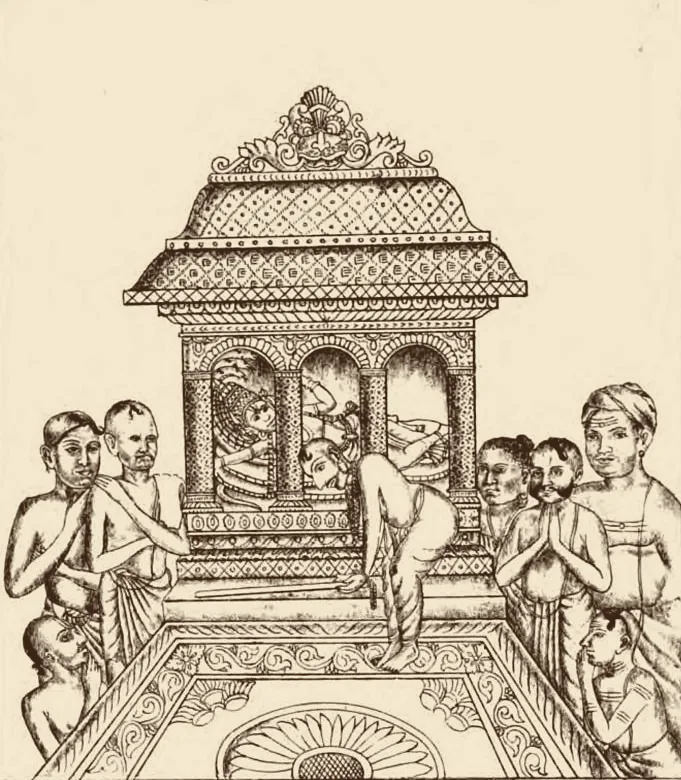
In January 1750 (sources give the 3rd or the 17th) Marthanda Varma performed the act known as Trippadidanam, literally 'gift at the holy feet'. He laid his sword before the deity, surrendered the kingdom to Padmanabha, and received it back to rule as the god's servant. From then on the kings of Travancore styled themselves Padmanabhadasa, 'servant of Padmanabha', and the state's emblems used the god's conch. Whatever its piety, the act was also politically shrewd: it placed a newly conquered kingdom under a single divine owner whom no rival could challenge.
Why so much wealth gathered in one temple
No document tells the whole story, and the full inventory has never been published, so any explanation is partly inference. The likely sources, all historically attested in general terms, are these:
- Centuries of offerings. Kings, nobles, merchants and pilgrims gave gold, jewels and vessels, as at every great temple. Royal ceremonies such as the tulapurushadanam (gifting one's weight in gold) and hiranyagarbham poured gold into temple and Brahmin hands.
- The blurring of state and temple treasuries. After 1750 the kingdom itself belonged to the deity. Reserves of the Travancore state seem to have been kept in the temple's strongrooms, and both the temple and the palace treated parts of the hoard as a reserve for emergencies.
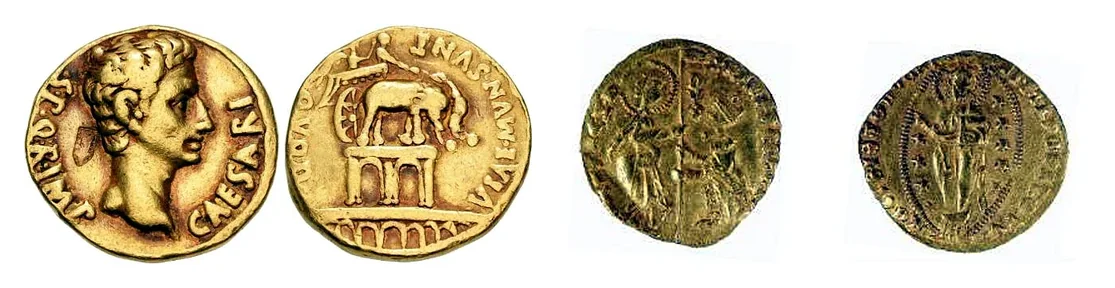
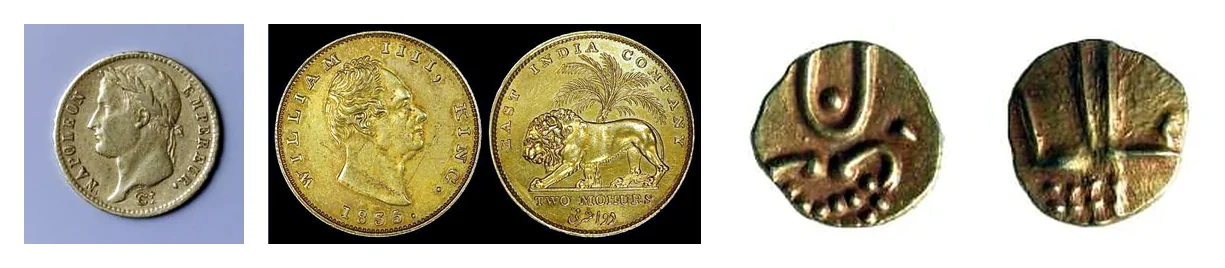
- Trade. The Malabar coast earned gold and silver for pepper, cardamom, cloth and other goods for two thousand years. Roman gold coins, Venetian ducats and later European coins circulated in Kerala's ports long after they were minted, so their presence does not mean they reached the temple in ancient times.
- Tribute and war. Conquered chiefs and tributary rulers paid in kind and in coin; the war treasury of an expanding state needed a safe place.
- Refugee wealth. During the Mysore invasions of Malabar in the 1760s–1790s, chiefs and temples of northern Kerala fled south to Travancore. It is often said that some of their valuables were deposited in Thiruvananthapuram; this is plausible but not documented in published sources.
From a newspaper claim to the Supreme Court
Sree Chithira Thirunal Balarama Varma, the last ruling Maharaja, signed the Covenant of May 1949 that merged Travancore with Kochi and brought the new state into the Indian Union. Article VIII of that Covenant guaranteed that control of the Sree Padmanabhaswamy temple would remain with the Ruler. The Travancore-Cochin Hindu Religious Institutions Act of 1950, which created the Travancore Devaswom Board for other temples, wrote this into law: under Chapter III (sections 18 to 23), the temple was to be administered by 'the Ruler of Travancore' through an executive officer.
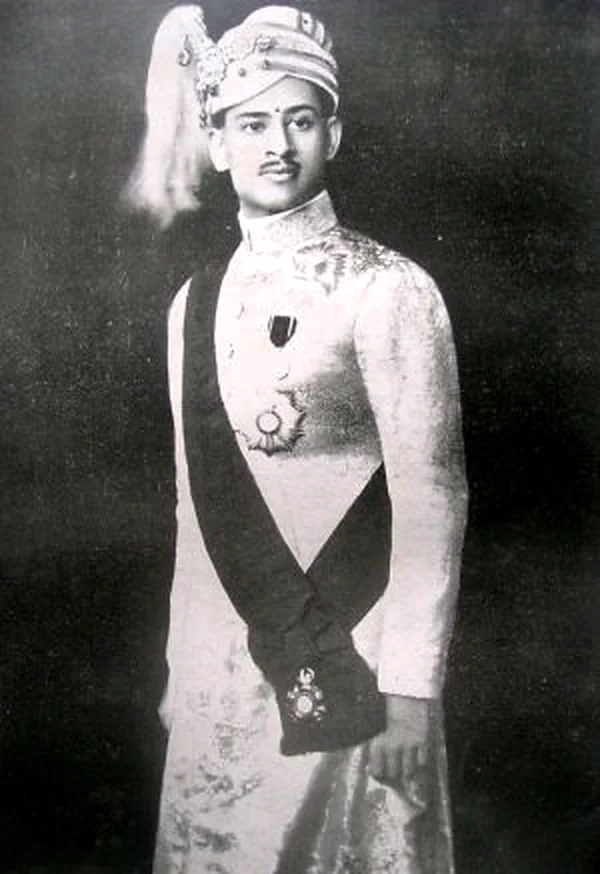
In 1971 the 26th Amendment to the Constitution abolished the privy purses and derecognised the former rulers, changing the definition of 'Ruler' in Article 366(22). Chithira Thirunal continued to manage the temple until his death in July 1991. His younger brother, Uthradom Thirunal Marthanda Varma, then took over.
The trouble began, according to the Kerala High Court, with a newspaper story. In September 2007 the Malayalam daily Kerala Kaumudi reported a claim, attributed to the new head of the family, that the temple's treasures were the family's property; he had also arranged for the treasures to be photographed. Devotees took the matter to court. Suits in the Thiruvananthapuram courts led to orders against the opening of the vaults; the family took the question to the High Court. In 2009 T. P. Sundararajan, a former police officer turned lawyer who lived within the temple precinct, filed a writ petition asking the state to take over the temple and protect its assets.
On 31 January 2011 a Division Bench of the Kerala High Court (Justices C. N. Ramachandran Nair and K. Surendra Mohan) ruled that after the death of the last Ruler no one could inherit that status, and directed the state government to set up a body corporate or trust, on the lines of the Guruvayur Devaswom, to take over the temple, its assets and its management. It also directed that the vaults be opened and inventoried.
The family appealed. On 2 May 2011 the Supreme Court stayed the High Court's direction to take over the temple but ordered a detailed inventory of the vaults, to be carried out before observers. It later appointed an expert committee, headed by C. V. Ananda Bose, to document and value the articles. Sundararajan himself served on the inventory panel; he died on 17 July 2011, and his death was widely interpreted in the city as a sign of divine displeasure. The case then ran for nine years.
Anatomy of the vaults and the 2011 inventory
The vaults were labelled A to F for the inventory. Their traditional names, and their exact positions, have been described only loosely in public; no measured plan has been published, and visitors may not enter the inner precinct with cameras. What follows is drawn from the court record as reported and from journalism of the time. Itemised lists were never officially released, so the contents described below are reported contents, and figures varied between reports.
| Vault | Status | What was reported | Purpose / notes | Legal or ritual status now |
|---|---|---|---|---|
| A | Opened from 27 June 2011 | The great bulk of the hoard: a gold idol of Mahavishnu about 3.5–4 ft tall set with gems; a gold 'anki' (ceremonial covering) of about 30 kg; gold chains, among them one about 18 ft long; a large gold sheaf and a gold veil; hundreds of crowns and thousands of necklaces; sacks of gold coins of many periods; diamonds, rubies and emeralds, some wrapped in cloth. | Long-term reserve. | Inventoried and photographed; closed. No public display. |
| B | Outer door opened in 2011; inner chamber not entered | Unknown. The 2014 audit cited registers recording that silver ingots were taken out of, and gold vessels put into, its antechamber in 1990 and 2002. | Two rooms: antechamber ('Bharathakone Nilavara') and inner chamber ('Sreepandara Nilavara'). | Left by the Supreme Court (2020) to the administrative and advisory committees; referred to the chief priest in 2025. |
| C | Opened 2011 | Reported as about 1,469 groups of objects, mainly ornaments and vessels used in rituals and festivals. | Working store, opened regularly. | In routine ritual use. |
| D | Opened 2011 | Reported as about 617 groups of objects, of the same working kind. | Working store, opened regularly. | In routine ritual use. |
| E | Opened 2011 | Together with F, about 40 groups of objects reported; ritual articles. | Used for festivals. | In routine use. |
| F | Opened 2011 | See E. | Used for festivals. | In routine use. |
| G | Identified later in the proceedings | Not opened; contents unknown. | Reported as old, long-unused cellars. | Not opened. |
| H | Identified later in the proceedings | Not opened; contents unknown. | As G. | Not opened. |
Sources: news reports of 2011 summarised in the Wikipedia article on the treasure, Outlook, Hinduism Today and Onmanorama; the court record as reported by LiveLaw and Scroll. Counts of 'groups of objects' are as reported and are not official totals.
The names that caught the world's imagination come mostly from Vault A: the golden Mahavishnu, the 18-foot chain, the 'Sarappoli mala' (a necklace of gold coins, of which Outlook reported some 1,200), golden coconut shells, a golden bow and arrows, gold-handled ceremonial umbrellas, and hundreds of kilos of rasi, among the earliest gold coins struck in Kerala. Coins reported from the vaults ranged from Roman issues to Venetian ducats, Napoleonic gold and East India Company coinage.
Bullion value and historical value
The figure of ₹1 lakh crore (about US$22 billion in 2011) was widely reported within days and has been repeated ever since, often inflated to 'a trillion dollars' online. It was never an official valuation: the expert committee's documentation was not published, and the 2011 Devaprasnam (below) opposed valuation altogether. A melt-value estimate also misses the point. A gold idol of the eighteenth century, a coin necklace assembled over centuries, or a ducat that travelled from Venice to Kerala has value as history, art and evidence of trade that no weight of gold can express. Conversely, numismatic prices for rare coins, sometimes quoted in crores per coin, cannot be multiplied across a hoard. The honest statement is that the hoard's value is very large, unknown, and in a sense incalculable.
The enigma of Nilavara B
What the door actually is
When the inventory team reached Nilavara B in July 2011, they opened its outer iron grille and wooden door but found a further, heavier door within that they could not open without force. They considered calling a locksmith; before that could happen, the Supreme Court was asked to intervene, and on the court's orders the inner chamber was left alone. The record and the family's own statements describe B as two rooms: an antechamber known as the Bharathakone Nilavara, and an inner chamber, the Sreepandara Nilavara.
The Devaprasnam of August 2011
A Devaprasnam (literally 'question to the god') is an astrological ritual, widely used in Kerala temples, in which astrologers read signs to learn a deity's will. In this case it took the form of an Ashtamangala Devaprasnam arranged by the royal family. A team of astrologers led by Madhur Narayana Ranga Bhat and K. Padmanabha Sharma conducted it from about 8 to 11 August 2011. Their reported findings were sweeping: Nilavara B was bound up with the chaitanya (divine presence) of the deity, held an idol older than the present temple, and must not be opened; the treasures of the other vaults should not be valued, photographed, videographed or exhibited; and opening B would bring suffering, including death in the family of anyone who did it.
The royal family, the temple's thantri (hereditary chief priest) and many devotees relied on this reading in court. The family's position has been consistent: Nilavara B is not part of the temple treasury but is closely tied to the deity, and the decision whether to open it belongs to the thantri. Aswathi Thirunal Gowri Lakshmi Bayi has said repeatedly that, to her knowledge, the vault has never been opened.
The court's decision, 2014–2020
In August 2012 the Supreme Court appointed the senior advocate and former Solicitor General Gopal Subramanium as amicus curiae. His report of April 2014, said to run to 577 pages, alleged serious mismanagement: unaccounted assets, a gold-plating machine found on the premises, unfiled tax returns, and a mahazar register showing that Nilavara B had been opened at least seven times between July 1990 and December 2002. On 24 April 2014 the court placed the temple under an interim committee headed by the Thiruvananthapuram District Judge and asked the former Comptroller and Auditor General Vinod Rai to conduct a special audit. Subramanium later urged that B be opened, arguing that only 'useless suspicion' was being generated about it.
On 13 July 2020 a bench of Justices U. U. Lalit and Indu Malhotra delivered judgment. It set aside the High Court's ruling, holding that the death of the last Ruler did not end the family's shebaitship, the right to serve and manage the deity's property, which passes according to custom. The court approved a new structure of administrative and advisory committees (shown below), ordered an audit of the previous 25 years, and on Nilavara B declined to decide. Its earlier orders of 2014 and 2017 had recorded that B was not opened and that any inventory of it needed the court's express permission; it now left the question to the two committees.
Since then the vault has stayed closed. In September 2021 the Supreme Court rejected a plea by the Sree Padmanabhaswamy Temple Trust, a family trust formed in 1965, to be exempted from the 25-year audit. In August 2025 the Kerala government's nominee on the administrative committee raised Nilavara B at a joint meeting of the committees; since the question is religious, they decided to seek the thantri's opinion first. As of this writing, no decision to open it has been announced.
Fact and fiction
Nilavara B has become a magnet for stories, many of them copied from website to website without sources. Here we set the most common claims against what can actually be documented.
| Claim | What the evidence shows |
|---|---|
| The door has no handles, bolts or keyhole and is sealed by a Naga Bandham (serpent bond) that only a Garuda mantra chanted by an adept can release. | Nothing in the court record describes such a door or lock. The inventory team opened B's outer doors in 2011 and met an inner door it could not open without a locksmith, which is to say an ordinary locked door. The widely shared 'cobra door' images are illustrations or photographs of other doors; no verified photograph of B's inner door has been published. One 2011 report mentions a snake insignia near the entrance, which would not be unusual in a Kerala temple. The mantra story appears in no published primary source we could find. |
| Secret tunnels connect the vault to the Arabian Sea, about 3 km away; opening it will flood the city. | Folklore. No tunnel has been recorded, and nothing is known about the vault's construction that would support it. The family has spoken of a 'secret passage' in a religious sense; this is not evidence of a sea tunnel. |
| Explorers in 1908 fled from cobras. | This comes from Emily Gilchrist Hatch's Travancore: A Guide Book for the Visitor (1933), which recalls an aborted attempt in 1908 and a better-equipped opening in 1931. It is a secondhand anecdote in a guidebook, and it does not say which vault was involved. |
| The vault was opened in 1931. | The Hindu reported an opening of 'one of the vaults' on 6 December 1931, in the presence of the Maharaja, with brass chests of coins, a granary-like store of gold and silver coins, and gold pots. The reports did not identify the vault as B, and it is not established which one it was. |
| Vault B has never been opened. | The temple's mahazar registers, cited by the amicus and by Vinod Rai's audit in August 2014, record openings of 'B' on 8 June and 9 July 1990 and five times in 2002, when silver ingots were taken out and gold vessels deposited. The royal family's answer is that these entries concern the antechamber only, and that the inner chamber has not been opened. The audit itself placed the ingots in the antechamber. Both statements can be true. |
| The treasure is worth a trillion dollars. | No official valuation exists. The widely reported figure for the opened vaults was about ₹1 lakh crore (about US$22 billion in 2011); 'trillion-dollar' claims have no source. |
| Sundararajan died because he opened the vaults. | He died on 17 July 2011. His death was interpreted by many as divine retribution; that is a belief, not a finding. |
Sources for each point are listed at the end of the article.
The audit and the missing gold
Vinod Rai's special audit, reported in instalments from 2014 to 2016, was the most serious documentary challenge to the old administration. Reports of it said that records of the weight and purity of gold and silver were incomplete; that of 893 kg of gold issued for ornamentation and gold-plating works, only about 627 kg came back, leaving some 266 kg unaccounted for; and that gold pots used for festivals had been numbered up to 1,988, implying far more pots than the 397 later handed over to the committees, so that 769 pots weighing 776 kg (valued at about ₹186 crore) could not be traced. The report recommended a committee to investigate.
The royal family rejected these findings as one-sided, said it had not been consulted, and pointed to gaps in the auditors' own verification. Neither the audit nor the amicus report amounts to a judicial finding of theft; the Supreme Court's 2020 judgment responded to the problem chiefly by ordering a fresh 25-year audit and an independent administrative structure.
Our assessment: what is actually unknown
- The contents of the inner chamber of B. Everything said about it, from 'an ancient idol' to 'the largest share of the treasure', is speculation or religious reading. The 2014 records concern the antechamber.
- The value of the opened vaults. An expert documentation was made but has not been published. Until it is, every figure is a journalist's estimate.
- The history of the hoard. The Mathilakam archive almost certainly records many deposits and withdrawals over centuries, but most of it has never been read with the vaults in mind. That is where the real answers lie.
- Our view: the strongest argument for opening B is accountability, since a public institution should know what it holds; the strongest argument against is that the court, after nine years, chose to leave a ritual question to the ritual authorities. Both deserve respect. What is not deserved is the cloud of invented curses and fake photographs that has grown around the door.
Primary sources and how the story has been told
- The Mathilakam records. The temple's palm-leaf archive from the fourteenth century onwards, now in Thiruvananthapuram's archives. A selection was printed under Ulloor S. Parameswara Iyer between 1937 and 1940; the State Archives Department began digitising records in 2011, and some are displayed in the Palm-leaf Manuscript Museum at Fort.
- Mahazar registers and treasury books. The temple's working records of openings and movements of valuables. Their entries for 1990 and 2002 are the basis of the audit's statements about B.
- Travancore histories. P. Shungoonny Menon's A History of Travancore (1878) and V. Nagam Aiya's Travancore State Manual (1906) record the Trippadidanam and the dynasty's dealings with the temple. Under the regency of Rani Gowri Lakshmi Bayi, with the British Resident Colonel John Munro as Dewan (1811–1814), hundreds of temples were taken under government management; Padmanabhaswamy remained with the ruler.
- The 1931 reports in The Hindu and Emily Gilchrist Hatch's 1933 guidebook, the main early sources for vault openings and for the cobra story.
- The Covenant of May 1949 (Article VIII) and the Travancore-Cochin Hindu Religious Institutions Act, 1950 (Chapter III), which define the temple's legal position.
- The judgments. Kerala High Court, 31 January 2011 (W.P.(C) 36487/2009 and 4256/2010); Supreme Court interim orders from May 2011; and the final judgment of 13 July 2020 in Sri Marthanda Varma (D) through LRs v. State of Kerala (Civil Appeal 2732 of 2020).
- The amicus curiae's reports (2014, 2017) and the special audit (2014–2016), known to the public mainly through press reports.
- The family's own account. Aswathi Thirunal Gowri Lakshmi Bayi's book Sree Padmanabha Swamy Temple (Bharatiya Vidya Bhavan, 1998) is the fullest insider description of the temple and its rituals.
Conservation, governance and the future
The practical problems of a treasure in a living temple are less dramatic than the legends but more important. Gold does not tarnish, but gems loosen, silver corrodes, textiles and wood rot, and documents fade in a hot, humid climate. A complete digital catalogue, with photographs, weights and purity, is the basic protection against loss, and the audit found exactly that missing. At the same time, the Devaprasnam forbade photography, valuation and exhibition, and the court has left ritual matters to the thantri. Cataloguing without disturbing the sanctity of the objects is therefore the central challenge.
Proposals to exhibit part of the treasure in a museum, made in 2011 and since, have run into that ritual objection and into security concerns. In 2011 Kerala's Chief Minister Oommen Chandy stated that the wealth belonged to the deity alone, and no government has since proposed to treat it as public property. The temple's day-to-day finances are a separate matter: in September 2021 the administrative committee told the Supreme Court that, during the Covid closures, offerings did not cover monthly expenses of about ₹1.25 crore. Great wealth locked in vaults does not pay salaries, a point that is often forgotten.
Whether Nilavara B is ever opened will be decided not in a courtroom but in the temple, by people bound by both law and ritual. The court record shows that the structure of the vault, the history of its antechamber, and the gaps in the old accounts are matters of fact, not mystery. What lies in the inner chamber is not known to anyone, and it is better to say so than to invent it.
Timeline
- c. 9th centuryNammalvar's hymns praise the Lord of Ananthapuram; the temple is one of the 108 Divya Desams.
- 14th centuryThe Mathilakam palm-leaf records begin to document the temple's affairs.
- 1686Fire damages the temple.
- 1730sMarthanda Varma begins rebuilding; the granite corridor and gopuram follow.
- January 1750Trippadidanam: the kingdom is dedicated to Padmanabha; rulers become Padmanabhadasa.
- 1795Thiruvananthapuram becomes the capital of Travancore.
- 1908An attempt to open a vault is abandoned, according to Emily Hatch (1933).
- 6 December 1931A vault, not identified in the reports, is opened before the Maharaja (The Hindu).
- 1936The Temple Entry Proclamation opens the temple to all Hindus.
- May 1949The Covenant (Article VIII) keeps the temple under the Ruler.
- 1950Travancore-Cochin Hindu Religious Institutions Act, Chapter III.
- 197126th Amendment abolishes privy purses and derecognises former rulers.
- 1990, 2002Mahazar registers record openings of B's antechamber.
- July 1991Death of Chithira Thirunal; Uthradom Thirunal takes over.
- September 2007Newspaper claim that the treasures are family property; lawsuits follow.
- 2009T. P. Sundararajan's writ petition.
- 31 January 2011Kerala High Court orders a state takeover and an inventory.
- 2 May 2011Supreme Court stays the takeover, orders the inventory.
- 27 June 2011Vaults begin to be opened; A's contents make world news.
- 17 July 2011Death of T. P. Sundararajan.
- 8–11 August 2011Devaprasnam advises against opening B, valuation and display.
- December 2013Death of Uthradom Thirunal Marthanda Varma.
- April 2014Amicus report; interim committee under the District Judge; special audit ordered.
- August 2014Audit cites register entries of B openings in 1990 and 2002.
- 2015–2016Audit reports on gold unaccounted for in ornament works and missing gold pots.
- 13 July 2020Supreme Court upholds shebaitship; leaves Nilavara B to the committees.
- 22 September 2021Court rejects the family trust's plea for exemption from the 25-year audit.
- 7 August 2025Committees refer the question of Nilavara B to the thantri.
Questions people ask
How many vaults does the Padmanabhaswamy temple have?
Six were known in 2011 and labelled A to F. Two more, G and H, were identified later in the court proceedings and have not been opened.
Has Vault B ever been opened?
Its outer door was opened in 2011. Temple registers cited by the 2014 audit record openings in 1990 and 2002, which the royal family says concerned only the antechamber. The inner chamber has not been opened in living memory, as far as the public record shows.
Who decides whether Vault B is opened?
Under the Supreme Court's 2020 judgment, the temple's administrative and advisory committees. In 2025 they referred the matter to the thantri, the chief priest.
How much is the treasure worth?
There is no official figure. Reports in 2011 estimated the opened vaults at about ₹1 lakh crore. Claims of a trillion dollars have no source.
Who owns the treasure?
In law, the deity. The royal family is the shebait (custodian), and the temple is run by court-approved committees. The Kerala government has said the wealth belongs to the deity alone.
Is there a cobra or curse on the door?
That is folklore. No court document describes a serpent lock or mantra seal, and the widely shared 'cobra door' pictures are not verified photographs of Vault B.
Can visitors see the treasure?
No. Nothing from the vaults is on public display, and the inner precincts are closed to cameras. Entry to the temple is for Hindus, with a dress code.
(Read also Padmanabhaswamy and Thiruvananthapuram, Padmanabhapuram Palace, Travancore’s palace of wood and Kuthiramalika Palace.)
See it for yourself, with a local driver who knows these roads.
Book a Munnar Jeep SafariSources & further reading
- Supreme Court of India: judgment of 13 July 2020, Sri Marthanda Varma (D) thr. LRs v. State of Kerala
- Kerala High Court judgment of 31 January 2011 (Indian Kanoon)
- Supreme Court record of proceedings, SLP(C) 11295/2011
- LiveLaw: SC upholds rights of erstwhile royal family; committee functions (2020)
- LiveLaw: committees to consider whether Kallara B is opened (2020)
- Vinod Rai, ISAS Insights: The Sree Padmanabhaswamy Temple Case (2020)
- Scroll: the amicus curiae's report and Vault B
- Onmanorama: SC verdict; Vinod Rai's report on B openings (2020)
- The News Minute: myths of the unopened Vault B
- The News Minute: royal family's reply on missing gold
- Deccan Herald: 776 kg gold lost, audit report
- Khaleej Times (IANS): 266 kg gold missing, audit (2015)
- Asianet Newsable: royal family on the antechamber
- India TV: Devaprasnam warns against opening Vault B (2011)
- Hinduism Today: Kerala temple's wealth astounds India (2011)
- Outlook: The Fault in Vault B
- The Week: timeline of the case
- The Hindu's 1931 report and Emily Hatch's account, reproduced (2011)
- LiveLaw: SC rejects trust's plea against 25-year audit (2021)
- The Week (PTI): panel to seek chief priest's opinion on Vault B (2025)
- French Institute of Pondicherry: Travancore Matilakam records
- Hinduism Today (The Hindu): digitising the Mathilakam records (2011)
- Wikipedia: Padmanabhaswamy Temple treasure
Figures are from the sources listed and were checked in November 2026. Park timings and road conditions change, so please confirm before you travel.