
Kilimanoor Palace: Raja Ravi Varma's Birthplace and the House that Gave Travancore its Founder
The palace village near Varkala where Marthanda Varma's father and Raja Ravi Varma were born. The Kilimanoor family's story, the painter's life, his famous press, and what you can see at the palace and studio today.
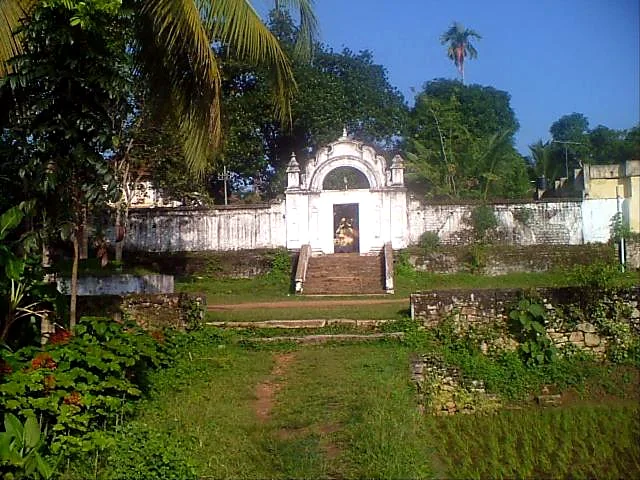
Forty kilometres north of Thiruvananthapuram, just off the Main Central Road, a quiet lane leads to a whitewashed gateway among coconut palms. Behind it lies Kilimanoor Palace: not one grand building but a cluster of old houses, a temple, ponds and a painting studio with tall glass windows. Two people born here changed Kerala's history. One was Raghava Varma, father of Marthanda Varma, who founded the kingdom of Travancore. The other was Raja Ravi Varma, the painter whose gods and heroines still hang in homes all over India.
This guide tells the story of the Kilimanoor family, the painter's life and work, the press that took his pictures to millions, and what you can see at Kilimanoor today.
At a glance
- Where: Kilimanoor, Thiruvananthapuram district, on the MC Road; about 40 km from Thiruvananthapuram, 20 km from Varkala and 12 km from Attingal.
- What: the ancestral home of the Kilimanoor royal house, a branch closely tied to the Travancore royal family.
- Born here: Raghava Varma, father of Marthanda Varma, and Raja Ravi Varma (1848–1906).
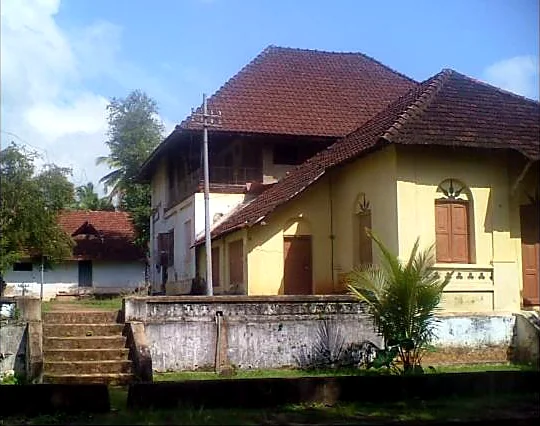
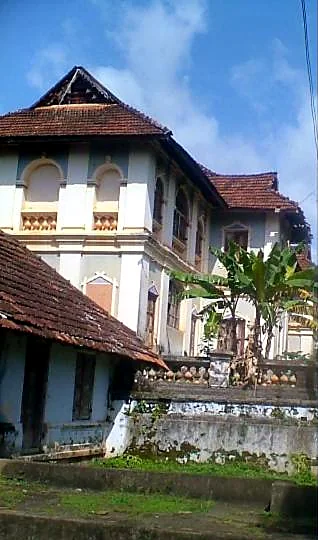
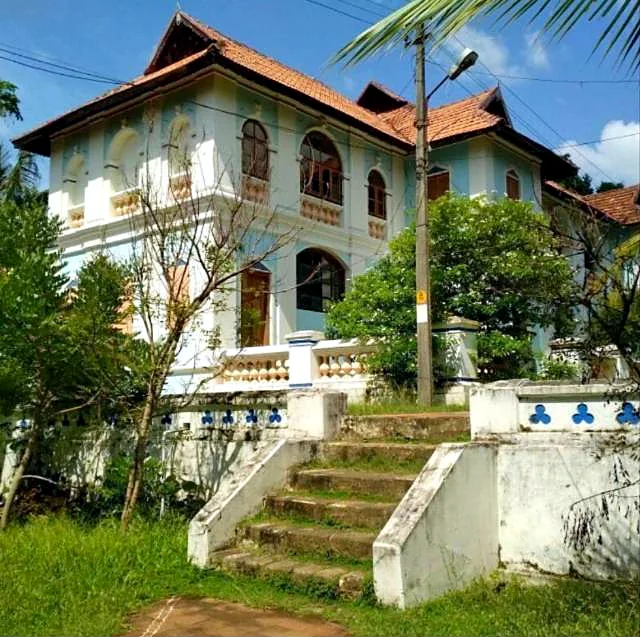
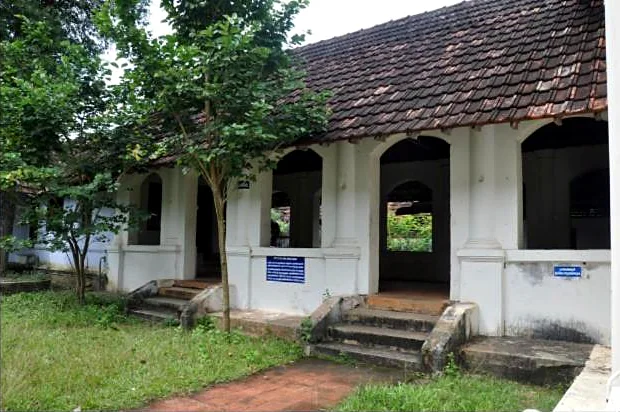
- See: the gateway, the old and new mansions, the Chitrashala studio (built around 1875), the performance hall and the family temple.
- Nearby: the Raja Ravi Varma Memorial and Cultural Centre, about half a kilometre away.
- Note: the palace is still a family home, run by the Kilimanoor Palace Trust; check access before you go.
The house that gave Travancore its founder
Kilimanoor, "the land of the bird and the deer", was once held by a Nair chieftain of the Pillai families. In the early 18th century, the queens of Venad followed the matrilineal custom of the royal house and adopted princesses from a family in northern Kerala. With them came two princes, Rama Varma and Raghava Varma, who settled at Kilimanoor and married into the Venad line. Raghava Varma's son was Marthanda Varma, who became king of Venad in 1729 and built it into the kingdom of Travancore. The story of his conquests is told in our article on Krishnapuram Palace.
When the Kilimanoor chieftain rebelled, Marthanda Varma confiscated the estate and gave it to his father's family. The bond went deeper: a Kilimanoor prince married Marthanda Varma's sister, and their son became the great king Dharma Raja. In 1740, during the wars against the Dutch and their allies, a Dutch officer named Hockert led an allied force against Venad. A small army from Kilimanoor met it and drove it back. It was a minor action, but local histories proudly call it one of the first defeats of a European force by an Indian army. In gratitude, Marthanda Varma in 1753 made the Kilimanoor lands free of tax and gave the family a measure of self-rule. The present palace complex was built in the years that followed. The horse, mount of the family deity Dharma Sastha, became the emblem of the Kilimanoor house.
The boy who drew on the walls
Ravi Varma was born at Kilimanoor on 29 April 1848, the son of Umamba Thampuratti and the scholar Neelakandan Bhattathiripad. The family was full of poets, scholars and artists. The story goes that as a small boy he covered the palace walls with charcoal drawings of animals and everyday scenes. His uncle, Raja Raja Varma, himself a painter, saw that the drawings were remarkable and began to teach him.
At fourteen he was taken to Thiruvananthapuram and presented to Maharaja Ayilyam Thirunal, who became his patron. The court painter, Rama Swamy Naidu, is said to have refused to teach him. In 1868 the European portrait painter Theodore Jensen came to paint the royal family. Jensen would not take a pupil either, but Ravi Varma watched him at work and taught himself the secrets of oil paint. Within a few years he was mixing European realism, with its light, shadow, perspective and lifelike skin, with Indian subjects. Nobody had done this so convincingly before.
Fame: Madras, Vienna, Chicago
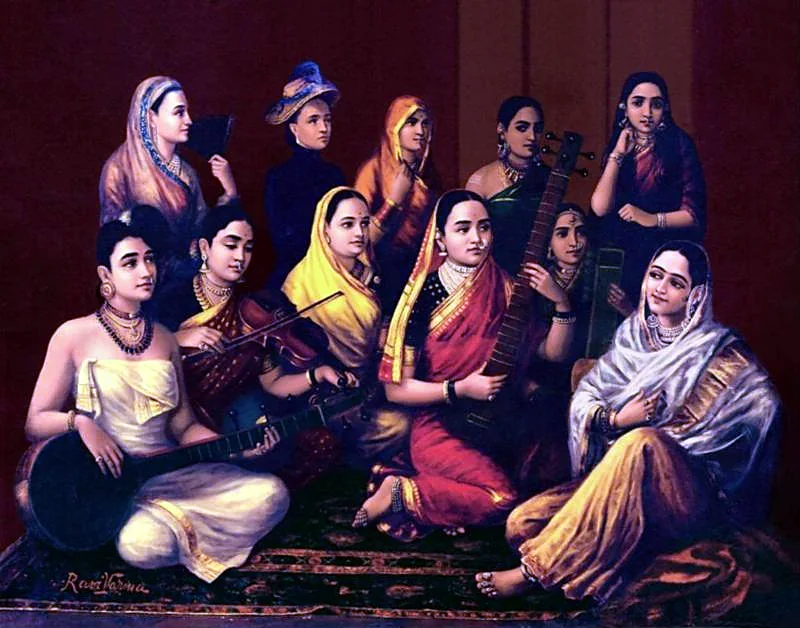
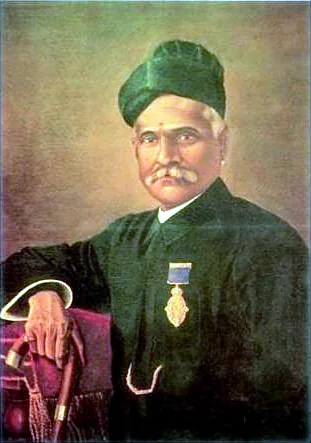
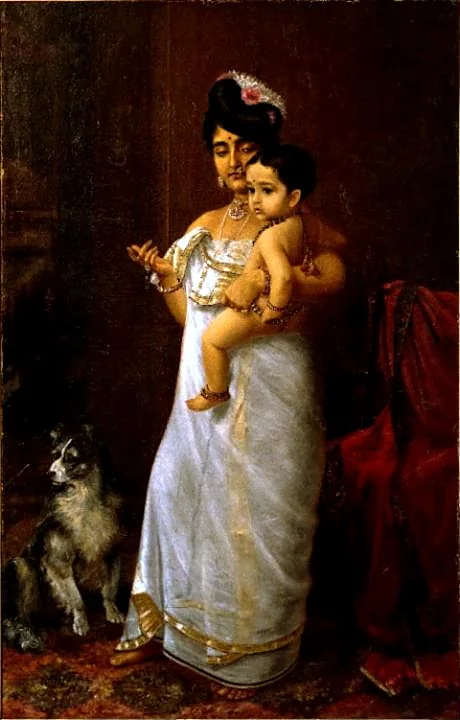
Success came quickly. In 1873 he won the Governor's gold medal at the Madras fine arts exhibition, and in the same year a painting he sent to the Vienna exhibition won an award. Indian painting had seldom been seen in Europe like this before. Commissions followed from the courts of Baroda, Mysore and Udaipur, and from British officials and visiting royalty. He painted portraits, scenes of Kerala and Maharashtrian life, and above all stories from the Ramayana, the Mahabharata and the Puranas.
| Year | Event |
|---|---|
| 1848 | Born at Kilimanoor Palace, 29 April. |
| c. 1862 | Taken to the Travancore court at Thiruvananthapuram. |
| 1866 | Marries Bhageerathi Bayi of the Mavelikara royal family. |
| 1868 | Watches Theodore Jensen paint in oils at the Travancore court. |
| 1873 | Gold medal at Madras; award at the Vienna exhibition. |
| 1881 onwards | Major commissions from the Maharaja of Baroda. |
| 1893 | Paintings shown at the World's Columbian Exposition in Chicago. |
| 1894 | Opens his lithographic press in Bombay. |
| 1899 | The press moves to Malavli, near Lonavala. |
| 1904 | Awarded the Kaiser-i-Hind medal. |
| 2 October 1906 | Dies, aged 58. |
Dates follow the biographies listed under Sources; a few details, such as the place of death, vary between accounts.
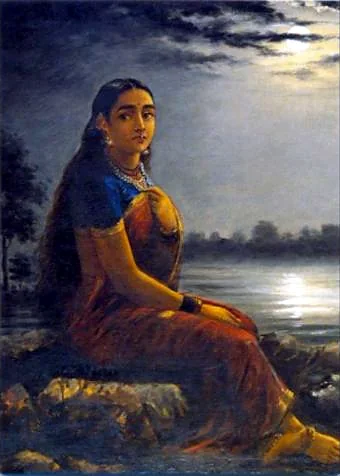
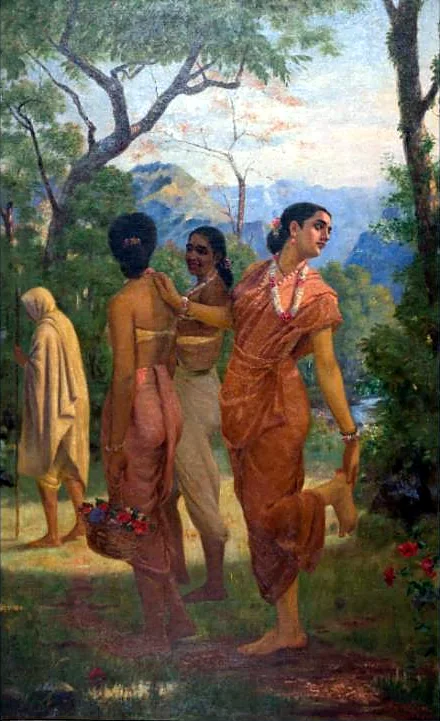
Gods for every home: the Ravi Varma Press
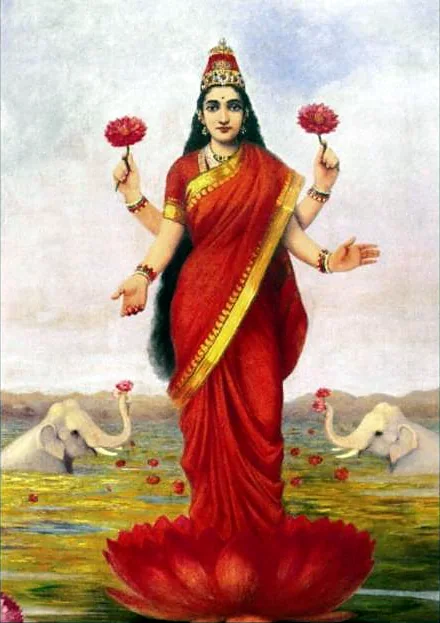
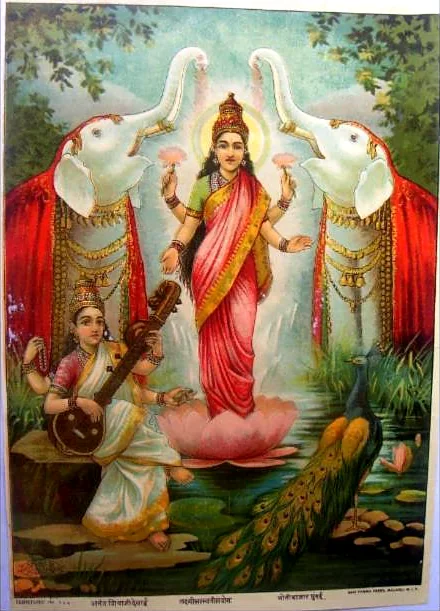
Ravi Varma's paintings hung in palaces, where ordinary people never saw them. Encouraged by the former Diwan of Travancore, Sir T. Madhava Rao, he and his brother set up a lithographic press in Bombay in 1894, with German machinery and printers. It was one of the first presses in India to print in colour. It turned his paintings of Lakshmi, Saraswati, Krishna, Rama and Shiva into cheap, bright oleographs, and its first prints of Lakshmi and Saraswati came out in September 1894. In 1899 the press moved to Malavli, near Lonavala.
The effect was enormous. For the first time, families across India could hang a beautiful, lifelike picture of their gods on the wall. Ravi Varma's faces, saris and settings shaped how Indians imagined their gods for a century, through calendar art, film and comics. The press was later sold to its German technician, Schleicher, and kept printing long after the painter's death until a fire destroyed it in 1972.
Last years
His brother C. Raja Raja Varma had been his assistant, manager and fellow painter for decades, and his death shortly before Ravi Varma's own was a heavy blow. Ravi Varma, who also suffered from diabetes, returned to Kerala and died on 2 October 1906, aged 58. Some of his last, unfinished canvases are kept at Kilimanoor. Two of them were shown to the public for the first time on his 175th birth anniversary in 2023.
What you see at Kilimanoor today
The palace grounds cover about 15 acres of gardens, groves and paddy fields. You enter through a small padippura, a gatehouse. The buildings mix traditional Kerala forms with the European touches of the 19th century:
- The Chitrashala: Ravi Varma's studio, designed by him and built around 1875 as an extension of the old residence. Big glass windows on the north-east let in steady light. An old easel still stands where he worked, and reproductions of his paintings line the walls.
- Pazhaya Malika: the old mansion where the painter lived.
- Puthen Malika: the newer mansion, a tall building with arched windows, said to have been designed by Ravi Varma himself.
- Natakashala: the performance hall, where Kathakali and other performances were staged for the family.
- The temple and ponds: the family's Ayyappa temple, bathing tanks and sacred groves, laid out in the old Kerala manner.
The Raja Ravi Varma Memorial
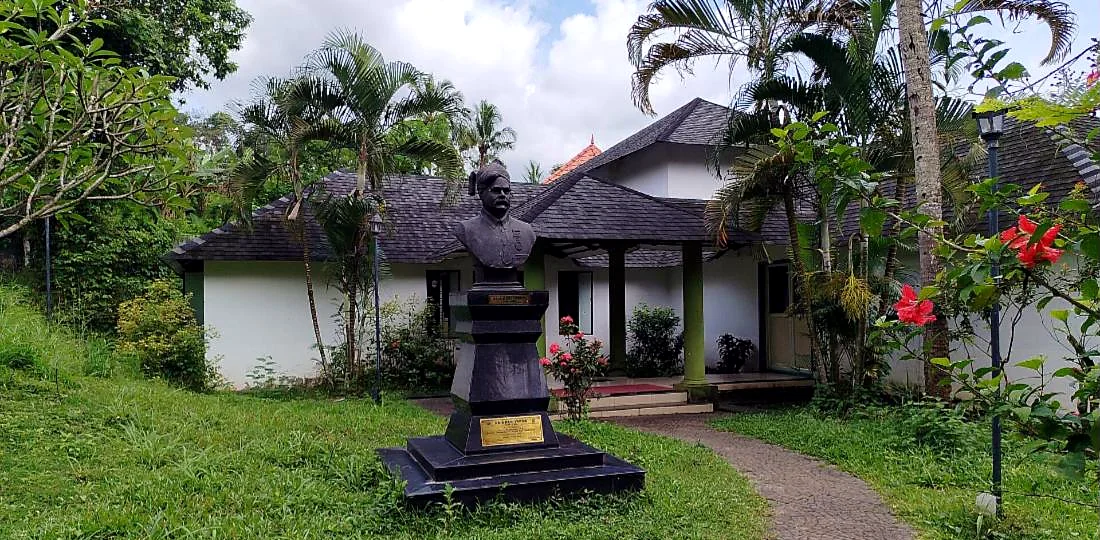
About half a kilometre from the palace is the Raja Ravi Varma Memorial and Cultural Centre, run with the Kerala Lalithakala Akademi. It has a bronze bust of the painter, a small gallery of reproductions and, since 2022, an artists' residency studio. Here painters from across India can stay and work in the village where he was born.
Where to see the originals
Very few original Ravi Varma paintings are at Kilimanoor. The largest public collection is in Thiruvananthapuram, at the Raja Ravi Varma Art Gallery opened in 2024 beside the Sree Chitra Art Gallery. Read our guide to the Napier Museum and its galleries. Other famous works hang in the Jaganmohan Palace in Mysore, the Lakshmi Vilas Palace in Vadodara and the National Gallery of Modern Art in New Delhi.
Planning your visit
| Details | |
|---|---|
| Getting there | By road on the MC Road (SH 1) from Thiruvananthapuram (about 1 hour 15 minutes), or from Varkala (about 40 minutes). Buses run to Kilimanoor town; the palace is a short auto ride away. |
| Nearest railway | Varkala Sivagiri, about 20 km; Chirayinkeezhu, about 15 km. |
| Access | The palace is a family home managed by the Kilimanoor Palace Trust. Visitors are usually allowed to see the studio and grounds in daytime hours, but call ahead or check locally, especially on holidays and family occasions. |
| Time needed | About an hour for the palace and the memorial. |
| Best time | October to March; 29 April (his birth anniversary) and 2 October (his death anniversary) bring cultural events. |
| Etiquette | Dress modestly, remove footwear where asked, and ask before photographing inside buildings or the temple. |
Make a day of it
- Varkala: the cliffs and beach, 20 km west; read the story of the Varkala cliffs.
- Anjengo Fort: the East India Company's old fort on the coast; see Anjengo Fort and the Attingal revolt of 1721.
- Thiruvananthapuram: the Napier Museum, Kuthiramalika and the Padmanabhaswamy Temple; see Kuthiramalika.
- Jatayu Earth's Center: the giant bird sculpture at Chadayamangalam, about 20 km north; see Jatayu Earth's Center.
Questions people ask
Where was Raja Ravi Varma born?
At Kilimanoor Palace, about 40 km north of Thiruvananthapuram, on 29 April 1848.
Can tourists visit Kilimanoor Palace?
Yes, in general. The palace is still a family home run by a trust, but visitors are usually allowed to see the studio and grounds in the daytime. It is wise to check before you go.
Are Ravi Varma's original paintings at Kilimanoor?
Only a few. Most of the studio's pictures are reproductions; the largest public collection of originals is in the Raja Ravi Varma Art Gallery in Thiruvananthapuram.
Why was Kilimanoor exempt from tax?
In 1753 Marthanda Varma made the Kilimanoor lands tax-free in gratitude for the Kilimanoor army's victory over a Dutch-backed force in 1740.
What was the Ravi Varma Press?
A lithographic press Ravi Varma set up in Bombay in 1894, later moved to Malavli near Lonavala, which printed cheap colour oleographs of his paintings of gods and goddesses.
How far is Kilimanoor from Varkala?
About 20 km, around 40 minutes by road.
(Read also Padmanabhapuram Palace, the Hill Palace, Tripunithura and the history of Kathakali.)
See it for yourself, with a local driver who knows these roads.
Book a Munnar Jeep SafariSources & further reading
- Wikipedia: Kilimanoor Palace
- Wikipedia: Kilimanoor
- Kerala Tourism: Kilimanoor Palace
- Britannica: Ravi Varma
- Wikipedia: Raja Ravi Varma
- Live History India: Ravi Varma, art for all times
- Museum of Art & Photography (Google Arts & Culture): the Ravi Varma Press
- Open magazine: Raja Ravi Varma, when the gods came home
- Hearitage: Kilimanoor Palace, remembering Raja Ravi Varma
- The Hindu via inkl: Ravi Varma's unfinished works unveiled at Kilimanoor (2023)
- The Hindu via inkl: Artists' residency studio opened at Kilimanoor (2022)
Figures are from the sources listed and were checked in November 2026. Park timings and road conditions change, so please confirm before you travel.