
O. V. Vijayan and the Legends of Khasak: The Novelist, the Cartoonist and Thasrak
A novel that divided Malayalam literature into 'before' and 'after', a cartoonist who mocked the powerful with sadness, and a village near Palakkad that became Khasak. The life and work of O. V. Vijayan and the memorial at Thasrak.
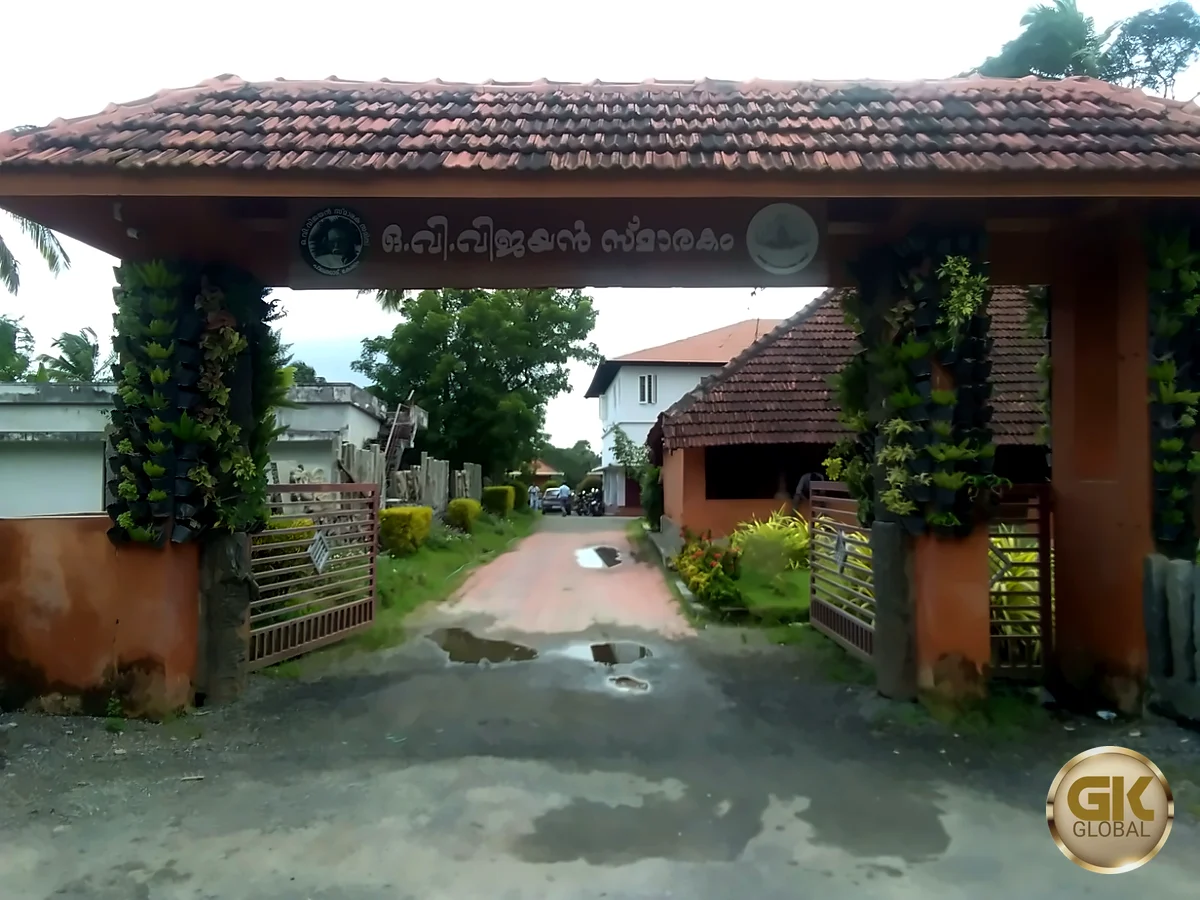
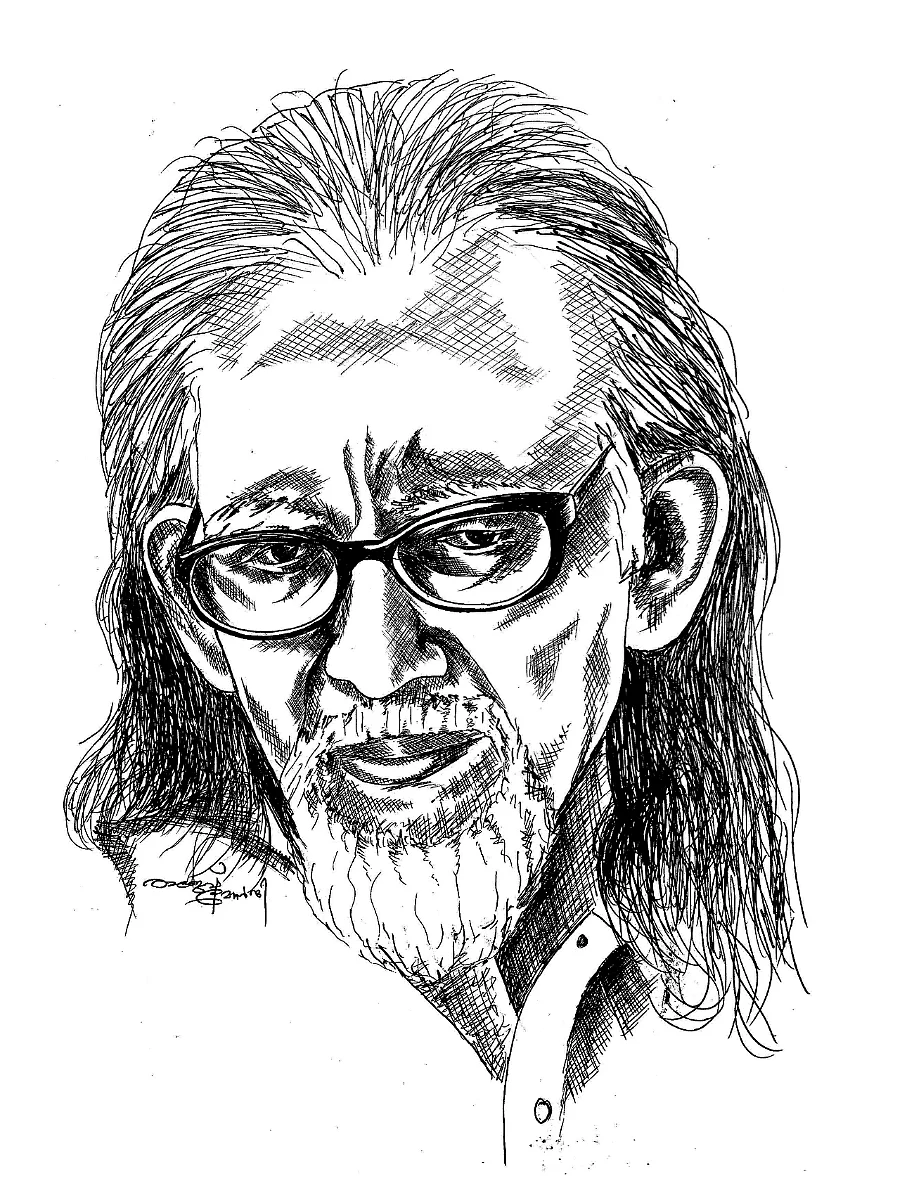
Every literature has a book after which nothing is quite the same. In Malayalam it is Khasakkinte Itihasam (The Legends of Khasak), the first novel of O. V. Vijayan, published in 1969. Critics speak of Malayalam fiction "before Khasak" and "after Khasak". A small, dusty village near Palakkad, a young man running away from guilt, a one-room school, a mullah, a madman, a beautiful girl and a snake: out of these Vijayan made a book that generations of Malayalis have read, quoted, argued over and loved.
Vijayan was also one of India's finest political cartoonists, whose drawings in Delhi's newspapers for three decades mocked the powerful with a sadness rare in the art. This article tells the story of the man, the novel, the cartoons, and the village of Thasrak, the real Khasak, where his memorial now stands. As always, our own assessments are clearly marked.
At a glance
- Full name: Ottupulackal Velukkutty Vijayan (O. V. Vijayan).
- Born: 2 July 1930, Vilayanchathanoor, Palakkad district. Died: 30 March 2005, Hyderabad.
- Known for: Khasakkinte Itihasam (1969), Dharmapuranam (1985), Gurusagaram (1987); political cartoons for Shankar's Weekly, Patriot, The Statesman and The Hindu.
- Honours: Sahitya Akademi Award (1990), Vayalar Award (1991), Ezhuthachan Puraskaram (2001), Padma Bhushan (2003).
- Memorial: O. V. Vijayan Smarakam, Thasrak, near Kannadi, about 12 km from Palakkad town.
A boy from the Palakkad plains
Vijayan was born on 2 July 1930 at Vilayanchathanoor in Palakkad, a premature child, born in the seventh month. His father, O. Velukkutty, was an officer in the Malabar Special Police, the armed police of British Malabar, and the family moved with his postings. A sickly child, Vijayan was taught mostly at home, and went to school for the first time only at twelve, entering the sixth standard at the Raja's High School, Kottakkal, in 1942. He later studied at Victoria College, Palakkad, and took a master's degree in English literature at Presidency College, Madras. For a short time he taught English at Malabar Christian College, Kozhikode, and at Victoria College.
His first short story, "Tell Father Gonsalves", appeared in 1953, and his first collection, Moonnu Yuddhangal (Three Wars), in 1957. In those years he was close to the Communist movement, like many young Malayali intellectuals, though his doubts about it would grow.
The cartoonist in Delhi
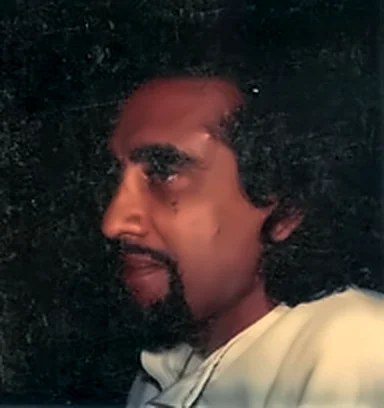
In 1958 Vijayan left Kerala for Delhi at the invitation of K. Shankar Pillai, the father of Indian cartooning, to draw for Shankar's Weekly, the magazine where a whole generation of Indian cartoonists learned their trade. In 1963 he became staff cartoonist of the daily Patriot, and later drew for The Statesman and The Hindu, and as a freelancer for other papers, including the Far Eastern Economic Review. He drew mostly in English for the national press, while writing his fiction in Malayalam. "For me, fiction can only be written in Malayalam," he once said.
His cartoons were unlike anyone else's. They were sparse, philosophical and often melancholy, using a recurring pair, a father and a son, to comment on politics that never seemed to change. During the Emergency (1975–77), when the press was censored, his work became more oblique and allegorical; one of his Malayalam cartoons from that time shows a train whose compartments look like police lock-ups, under the caption "Oh, here comes the train that runs on time", mocking the Emergency boast that trains now ran punctually. A selection of his Malayalam cartoons was published as Ithiri Nerambokku, Ithiri Darshanam (A Little Pastime, a Little Philosophy), and he later wrote a memoir in English, A Cartoonist Remembers. He stopped drawing in the early 1990s, as illness made the fine work of the pen difficult.
About the cartoons
Vijayan's cartoons are still protected by copyright, so we cannot reproduce them here. Many are displayed in the cartoon gallery of the memorial at Thasrak, and in published collections.
Thasrak: the real Khasak
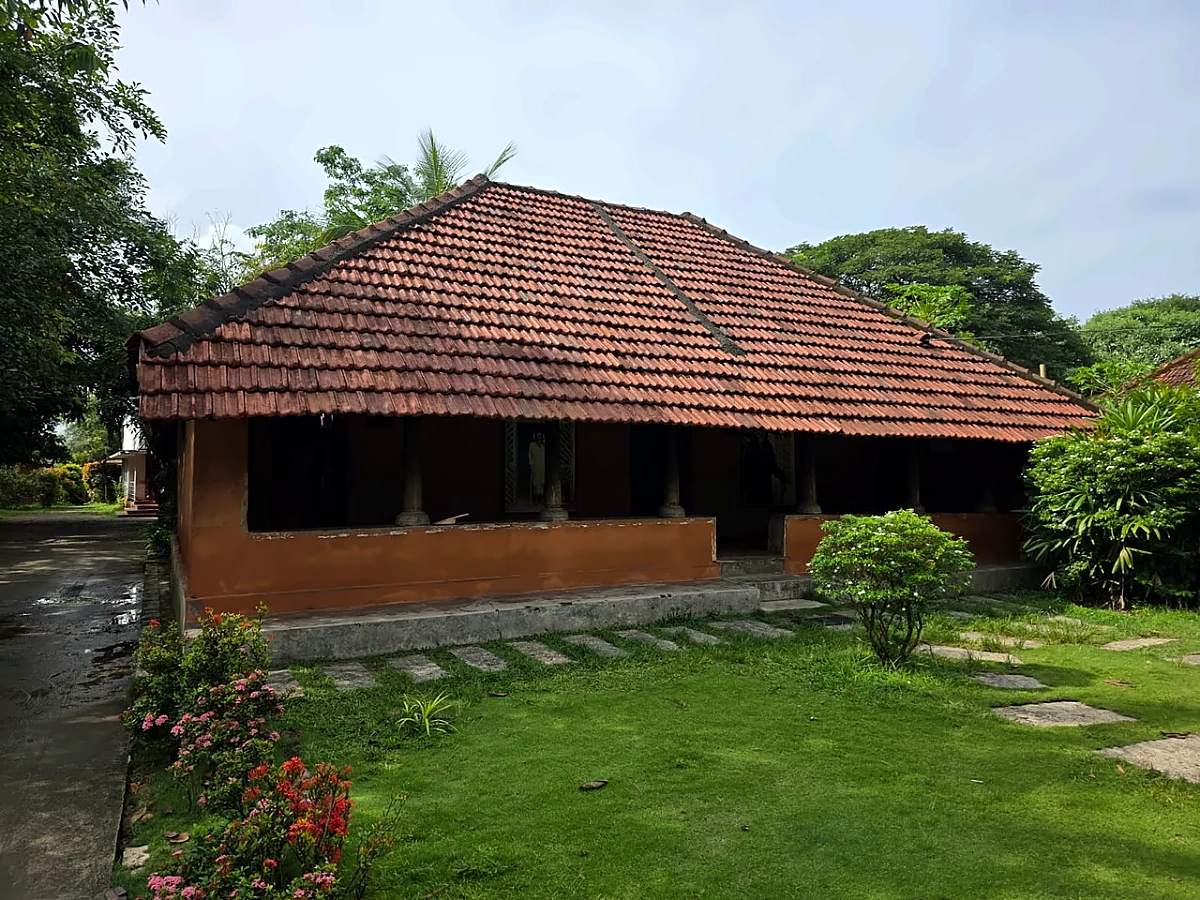
In 1956, Vijayan's sister O. V. Shantha (later Shantha Gangadharan) took a post as teacher of a small single-teacher school at Thasrak, a quiet village of paddy fields, palmyra palms and red earth near Kannadi, south-east of Palakkad town, with a mixed Hindu and Muslim population and its own mosque. The family stayed in a rented room of a farmhouse, its njattupura (the seedling barn of a paddy farm), and Vijayan came to stay with them. He watched the villagers, listened to their stories and their dialect, and is said to have sketched some of them. From these weeks grew the idea of Khasak.
The novel took him about twelve years to write and rewrite, much of it in Delhi, far from the village. It was serialised in Mathrubhumi Weekly from 28 January 1968, in 28 instalments, and published as a book in 1969.
Our assessment: were the characters real?
Tradition in Thasrak, and reports by visitors and journalists, connect several of the novel's characters with real people of the village in the 1950s: Allappicha Mollakka, the mullah of the mosque school; Appukkili, the simple-minded boy; Nizam Ali, the rebel; Kunjamina, the child pupil; and Maimoona, the beautiful, wilful young woman. A woman identified as the original Maimoona lived into the 2020s and was invited to commemorations. The school, the mosque beside it, the farmhouse and the pond called Arabikkulam are all said to be real.
Our view: Thasrak certainly gave Vijayan his setting, his faces and much of his language, and some of its people recognised themselves in the book. But Khasak is not a report on Thasrak. Vijayan spent only a short time there, wrote the novel over twelve years far away, and filled it with myth, dream, the legends of the Sheikh and the 'Kingdom of the Leaves', and his own inner struggles. The characters began from real people and became something larger: they belong both to Thasrak and to the imagination. Claims about exactly how long he stayed (some say three weeks, some a year) also differ between sources.
The Legends of Khasak
The novel follows Ravi, a brilliant student in Madras who abandons his studies, his career and his girlfriend Padma, haunted by guilt over an affair with his stepmother. He drifts into Khasak, a remote village in the Palakkad plains, to run a newly opened single-teacher school. There, an outsider among villagers who live by legend, superstition and desire, he becomes absorbed in their world: the mullah who resents his school, the children, the toddy-tappers, the madmen and holy men, Maimoona, the smallpox that sweeps the village. Rational inquiry loses its meaning for him. At the end, in the monsoon rain, Ravi waits for the bus that will take him away, and a snake bites him; he lies down in the rain, as the snake slips back into its hole.
What made the novel revolutionary was its language as much as its story. Vijayan wrote in a mixture of literary Malayalam, the dialects of Palakkad's villages and phrases from Tamil and Arabic, moving from the coarse to the mystical within a sentence. He broke with chronological storytelling, mixed myth and fact without explanation (critics later compared the book with Latin American magic realism, though it was written independently), and wrote about sex and the body with a frankness that shocked both conservatives and the left. Young readers took to it at once: lines from the book became catchphrases, and the novel has been reprinted more than fifty times.
Vijayan translated it himself into English as The Legends of Khasak (Penguin, 1994). The English version is a reworking rather than a translation, reflecting the more spiritual outlook of his later years, and many readers of the Malayalam original feel it loses the music of the village speech. It has also been translated into French and German.
Our assessment: why does Khasak still matter?
We think there are three reasons. First, it changed how Malayalam could be written: after Khasak, the speech of ordinary villagers, and a fractured, poetic way of telling, became possible in serious fiction. Second, it caught a generation's mood: the disillusionment of young Malayalis in the 1960s with ideologies, including the Communist movement that Vijayan himself had once followed, and their search for meaning elsewhere. Third, it is a book of place: through one obscure village of the Palakkad plains it speaks of guilt, death, desire and grace in a way that readers far from Palakkad recognise as their own.
The later novels
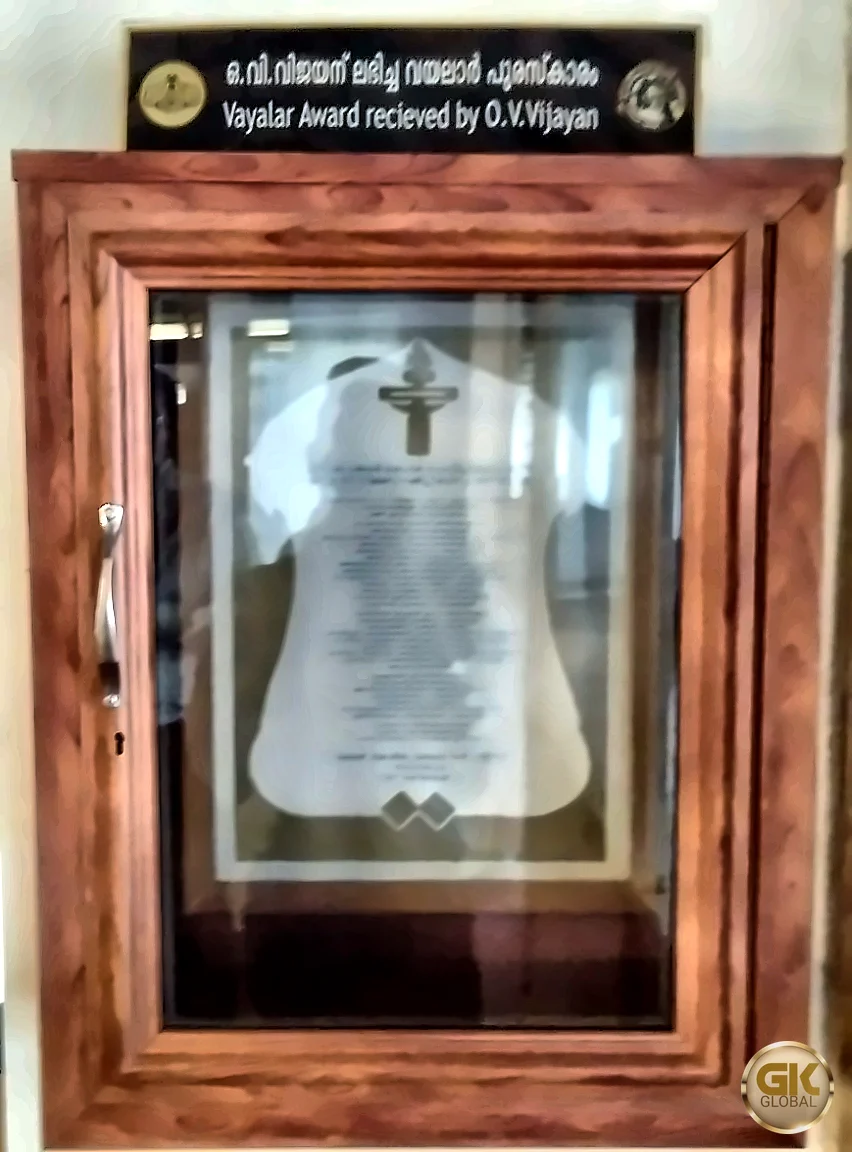
Vijayan's later books were very different. Dharmapuranam (The Saga of Dharmapuri, 1985), a savage political satire written in the shadow of the Emergency, imagines a grotesque tyrant and his court; it was so scatological and direct that publishers hesitated, and it became his best-known book in English. Gurusagaram (The Infinity of Grace, 1987), written after he became a disciple of the spiritual teacher Karunakara Guru of Santhigiri, is a quiet novel of a journalist's search for grace amid the Bangladesh war; it won the Sahitya Akademi Award and the Kerala Sahitya Akademi Award in 1990 and the Vayalar Award in 1991. Madhuram Gayathi (1990), Pravachakante Vazhi (The Path of the Prophet, 1992) and Thalamurakal (Generations, 1997), a family saga drawing on his own Palakkad roots, followed, along with collections of stories and essays.
Family, illness and death
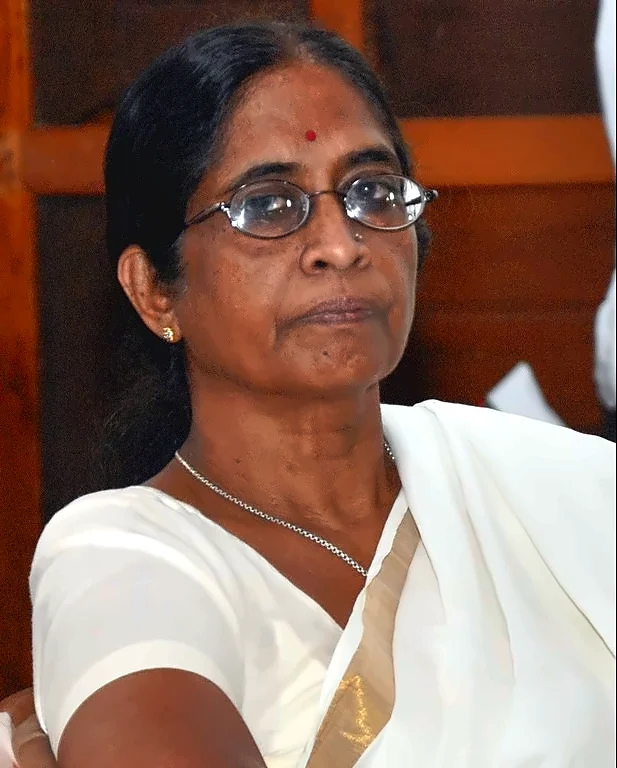
Vijayan married Theresa Gabriel, an academic; their son, Madhu, lives in the United States. He was the eldest in his family and had two sisters. The youngest, O. V. Usha (born 1948), is a well-known Malayalam poet, short-story writer and lyricist, and was director of publications at Mahatma Gandhi University, Kottayam. Her short story "Inquilab Zindabad" was made into a film in 1971, for which she also wrote a song, perhaps the first by a woman lyricist in modern Malayalam cinema; she won the Kerala State Film Award for Best Lyrics in 2000 for Mazha. His other sister, O. V. Shantha (Shantha Gangadharan), was the schoolteacher whose single-teacher school at Thasrak brought the family to the village. The cartoonist Ravi Shankar is his nephew.
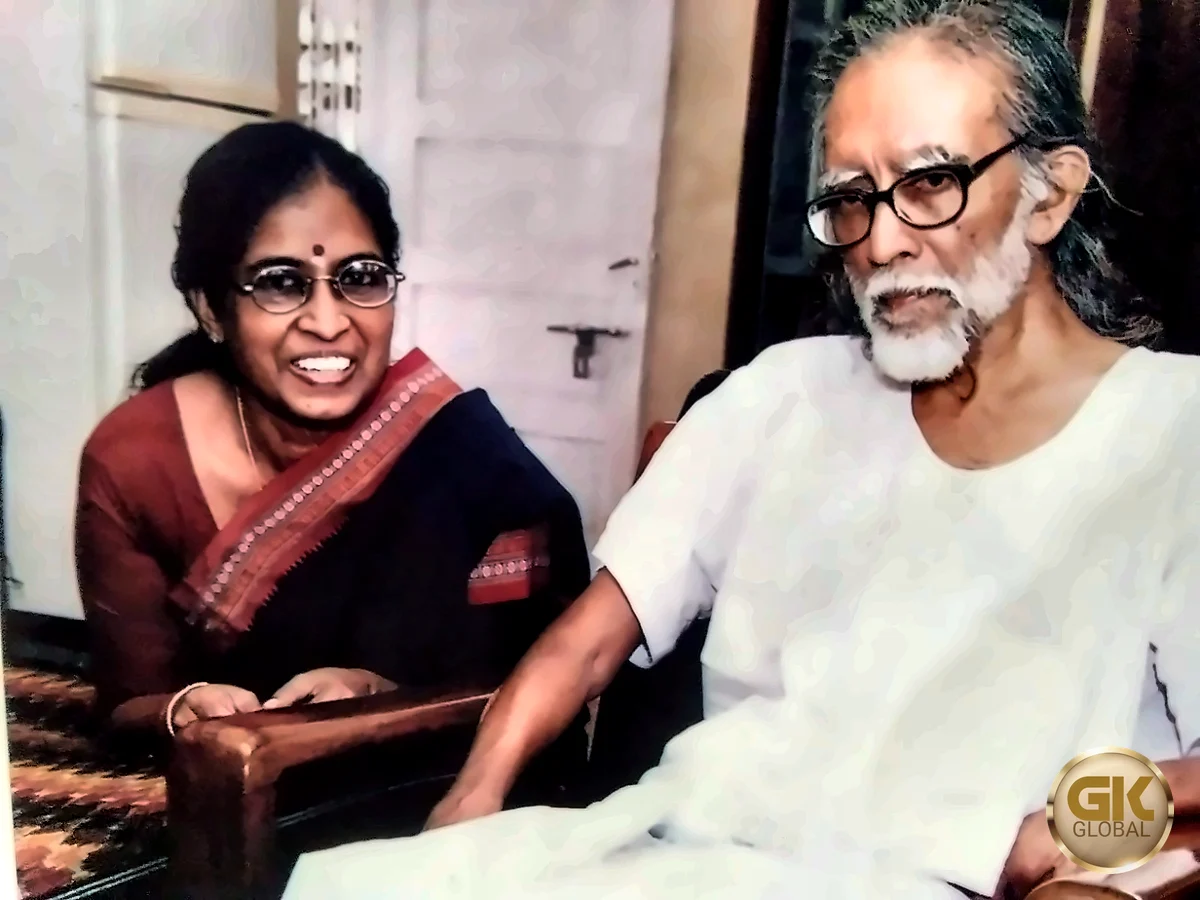
For about twenty years Vijayan suffered from Parkinson's disease, which slowly took away his ability to draw and later to write by hand. In his last years he lived with his family in Secunderabad. He was admitted to a hospital in Hyderabad in March 2005 and died there on 30 March 2005, aged 74. His body was flown to Kerala and cremated with full state honours at the Ivor Madom crematorium at Pambadi, near Thiruvilwamala, on the banks of the Bharathapuzha, the river of his childhood country. Ravi Shankar lit the pyre. Theresa died a year later.
The memorial at Thasrak
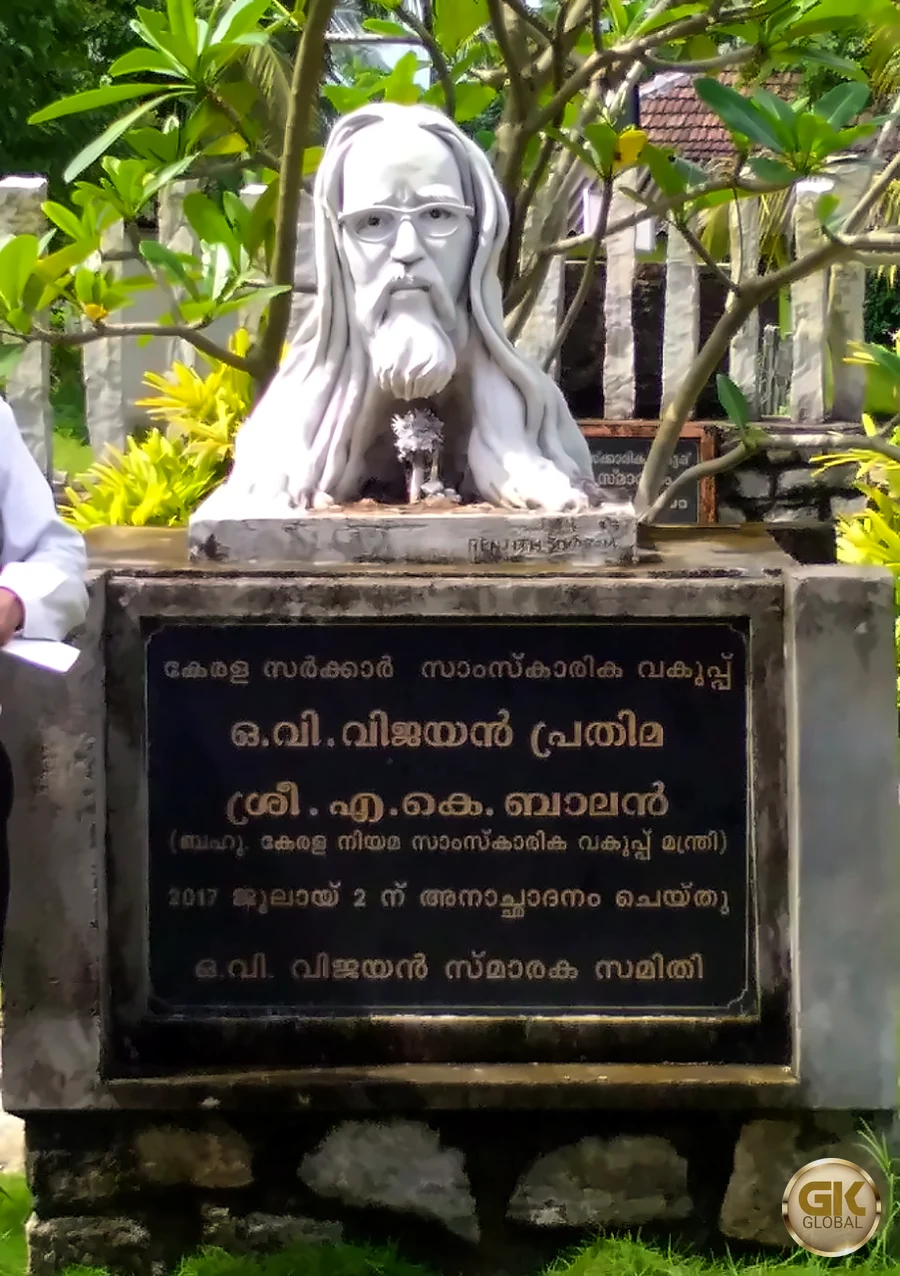
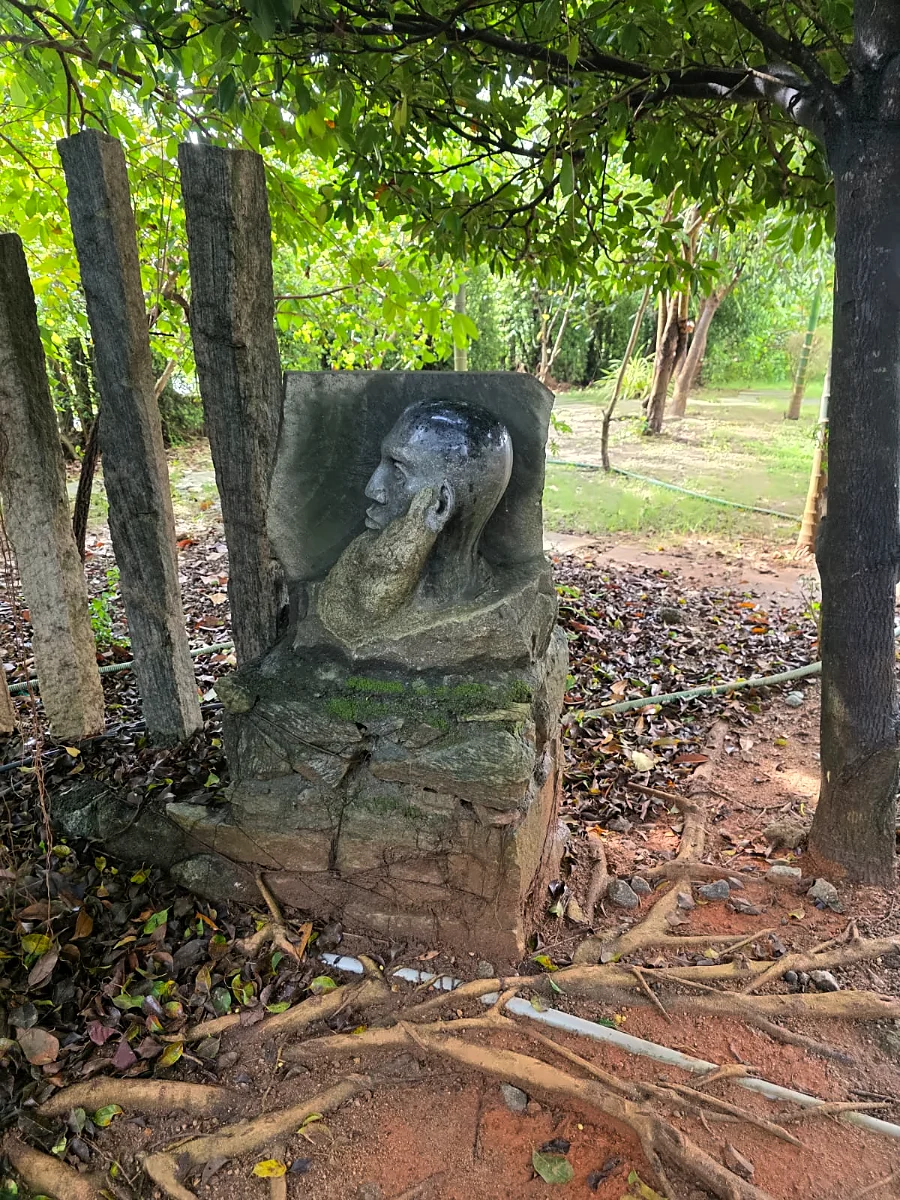
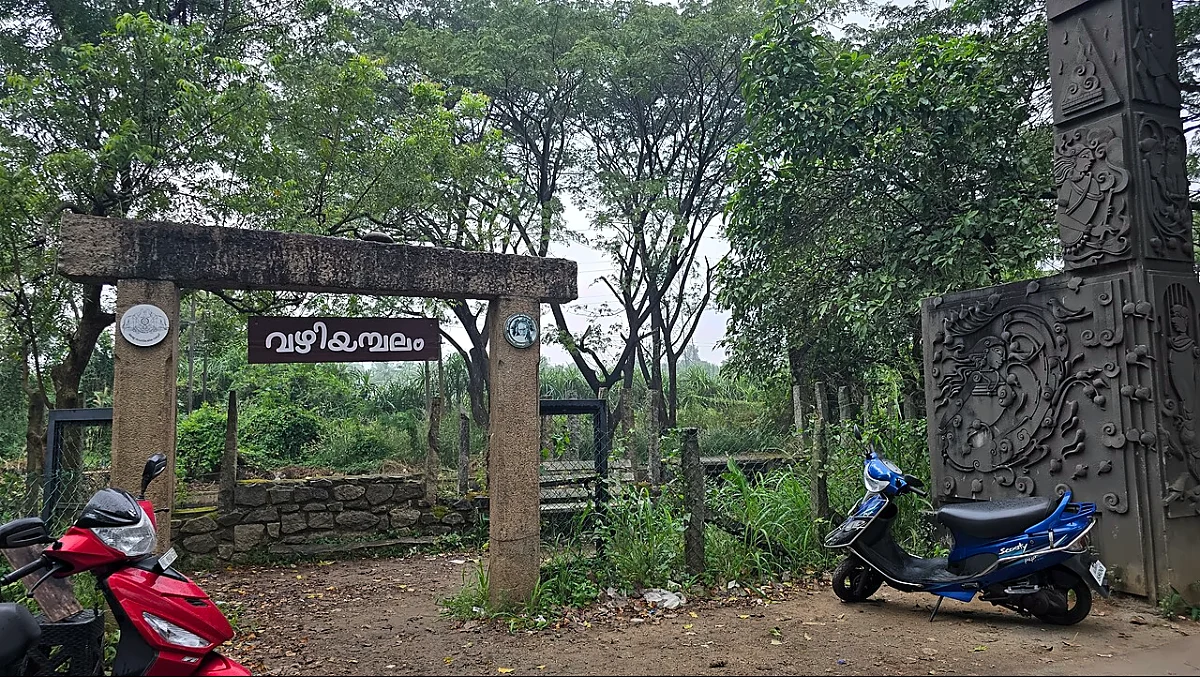
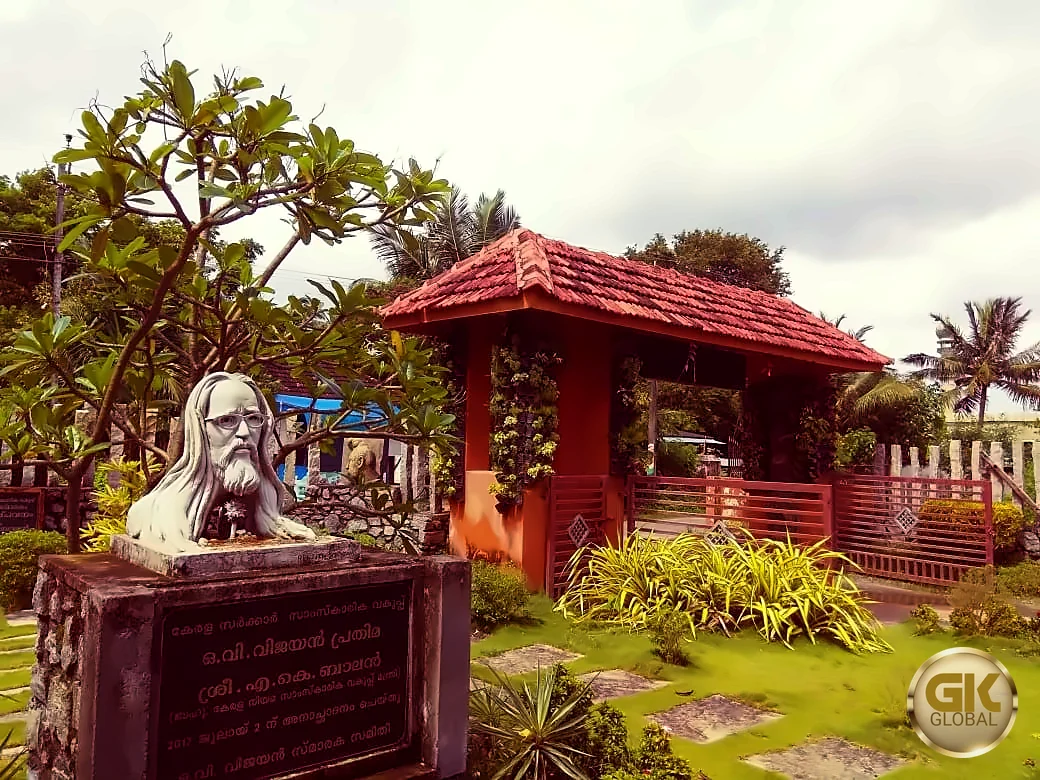
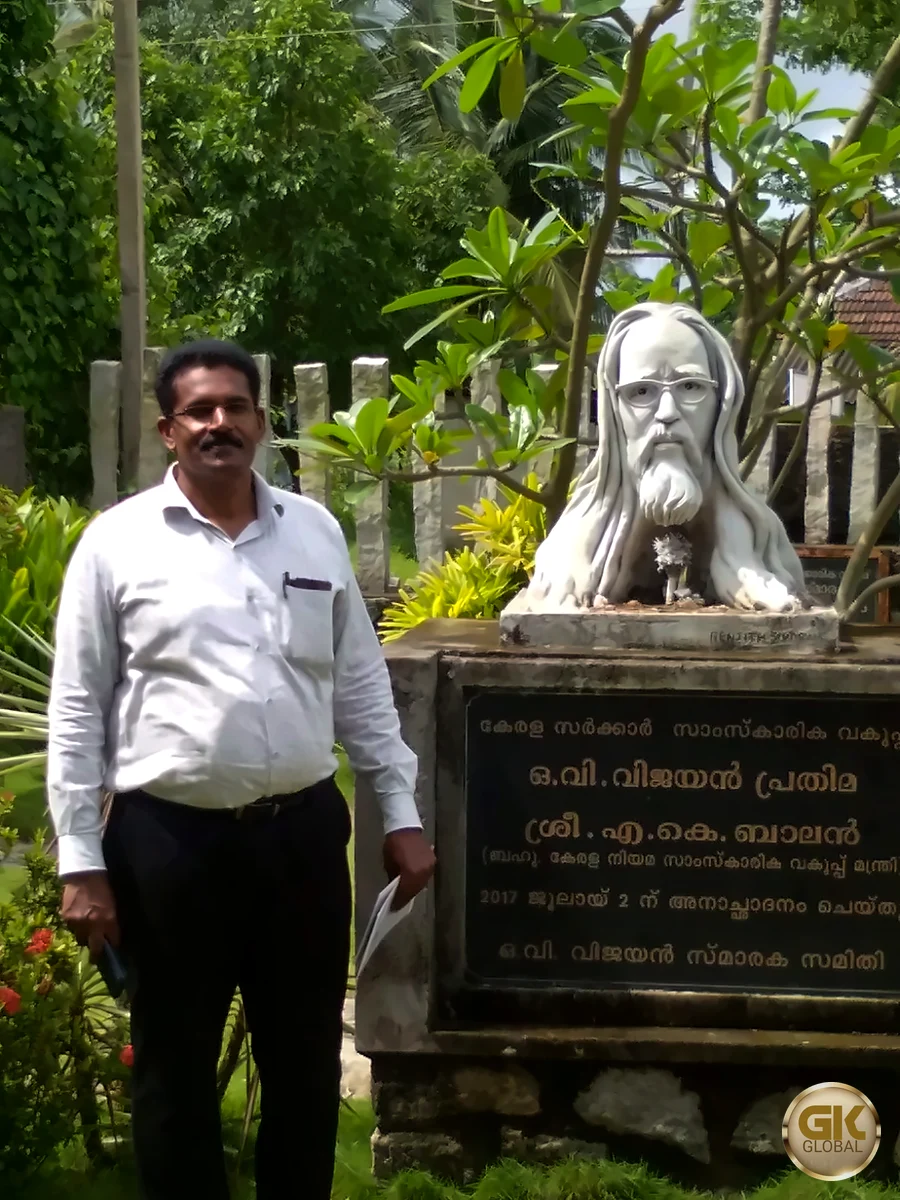
The Government of Kerala's Department of Cultural Affairs created the O. V. Vijayan Memorial (O. V. Vijayan Smarakam) at Thasrak around the old farmhouse. It was opened to the public, after renovation, on 29 March 2015, and is run by the O. V. Vijayan Smaraka Samithi, which also gives annual literary awards. A bust of Vijayan, by the sculptor Renjith Sivaram, was unveiled in the garden on 2 July 2017, his birthday. The memorial includes:
- the njattupura, with photographs and memorabilia;
- a gallery of his cartoons, photographs and letters, and a library;
- a hall for seminars and performances, and pavilions named after his novels;
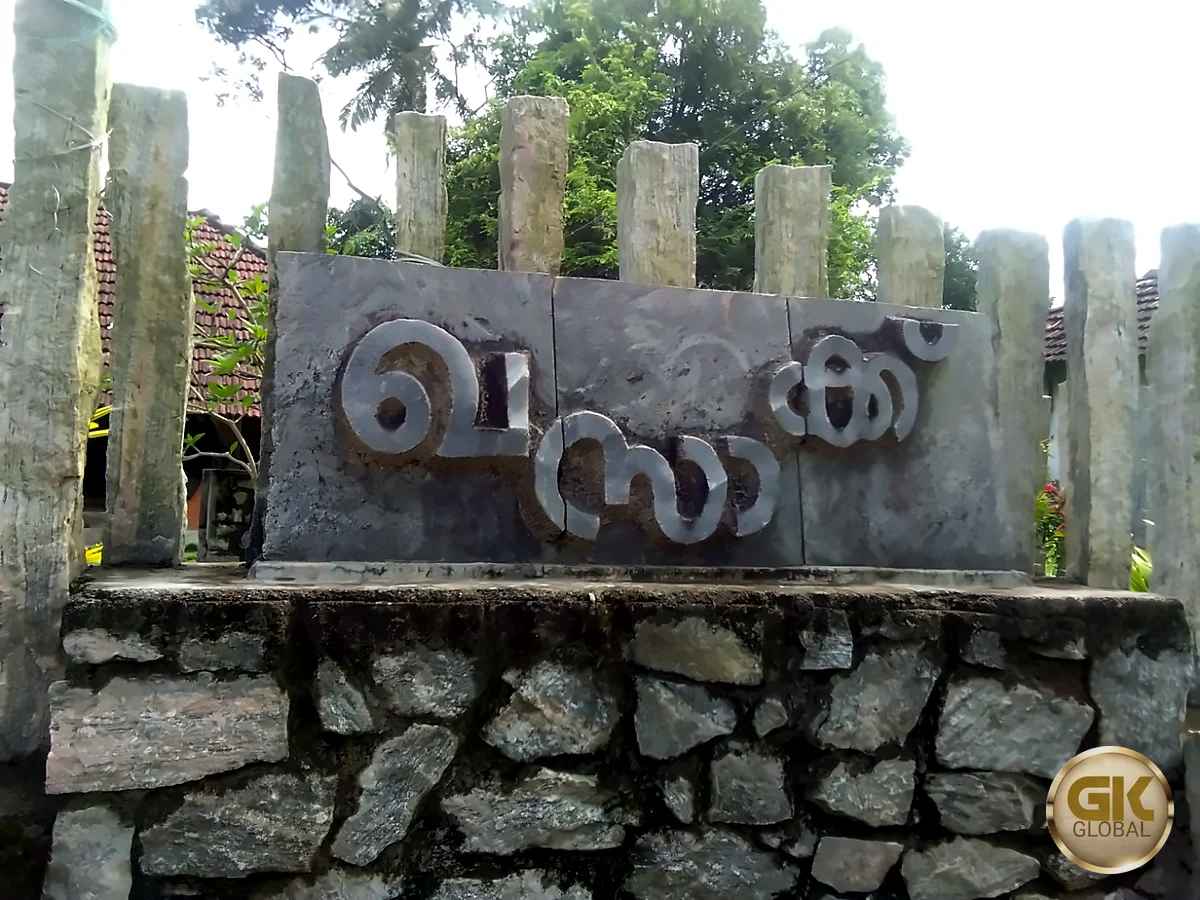
- sculptures of characters from the novel along the paths, and a stone carved with the name Khasak;
- Arabikkulam, the pond of the novel, restored in 2024.
The stones of Khasak
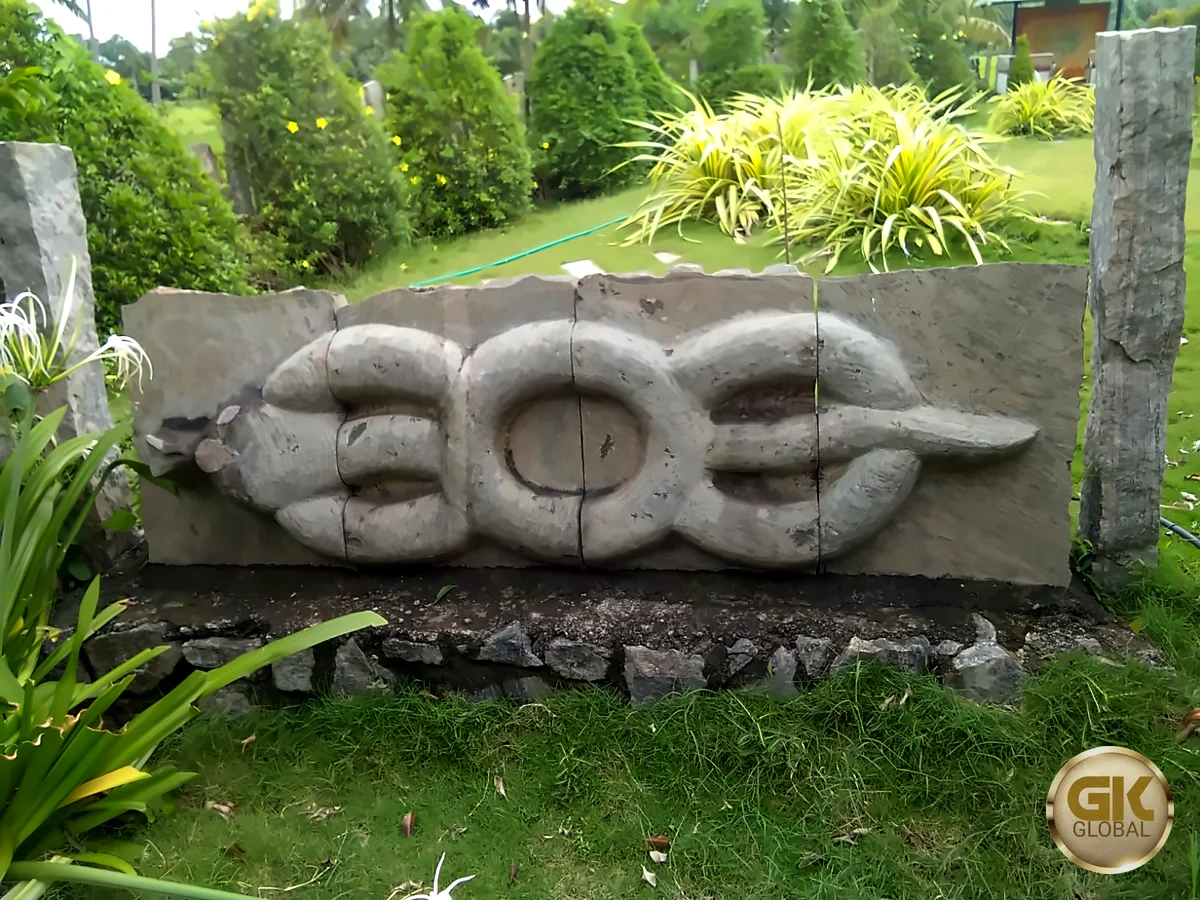
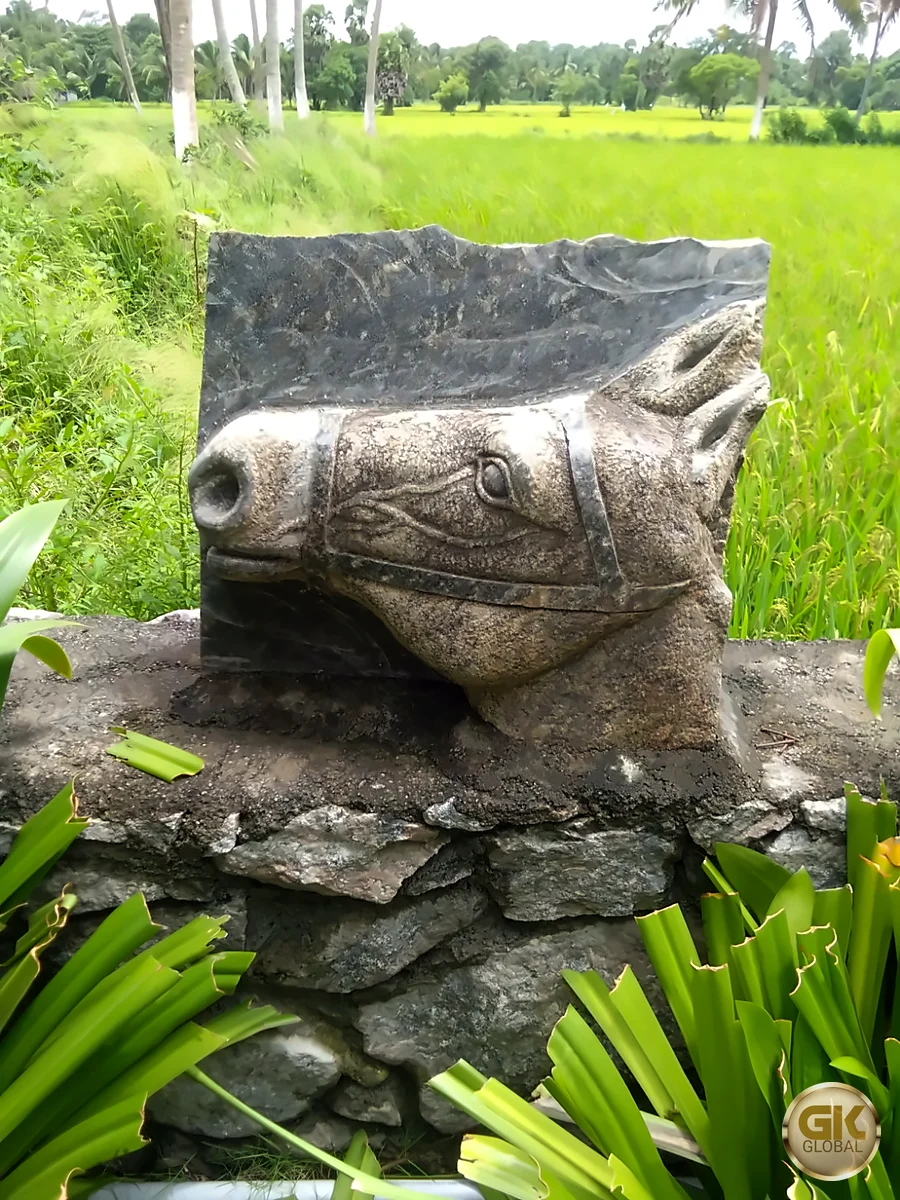
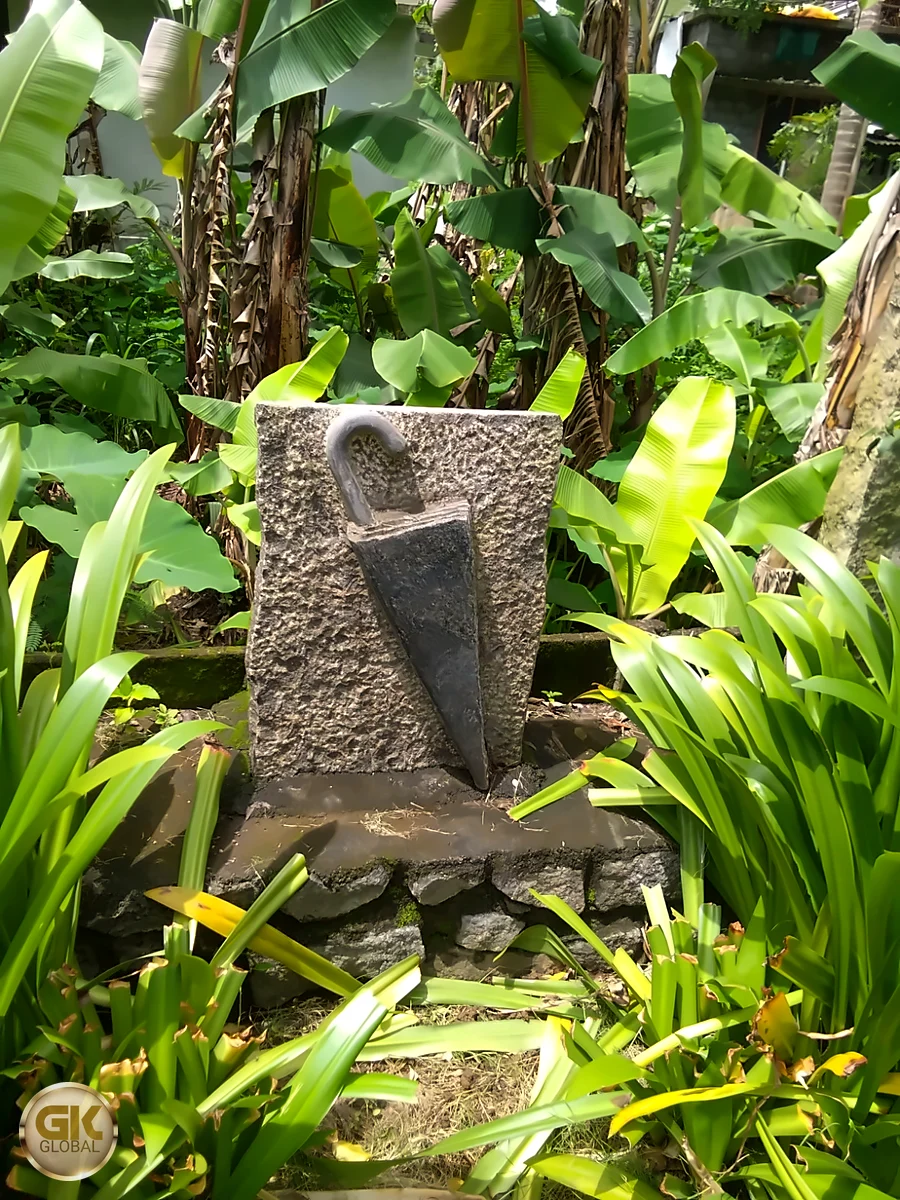
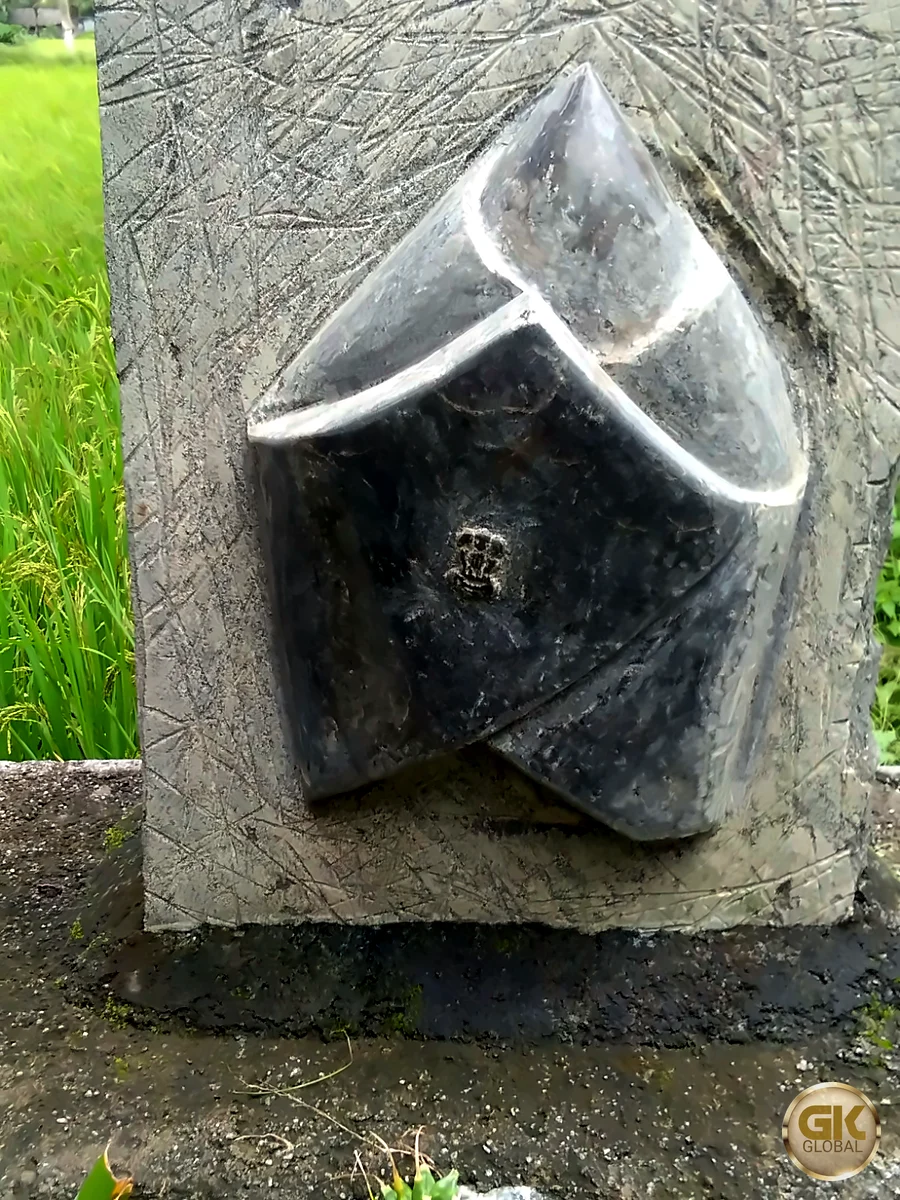
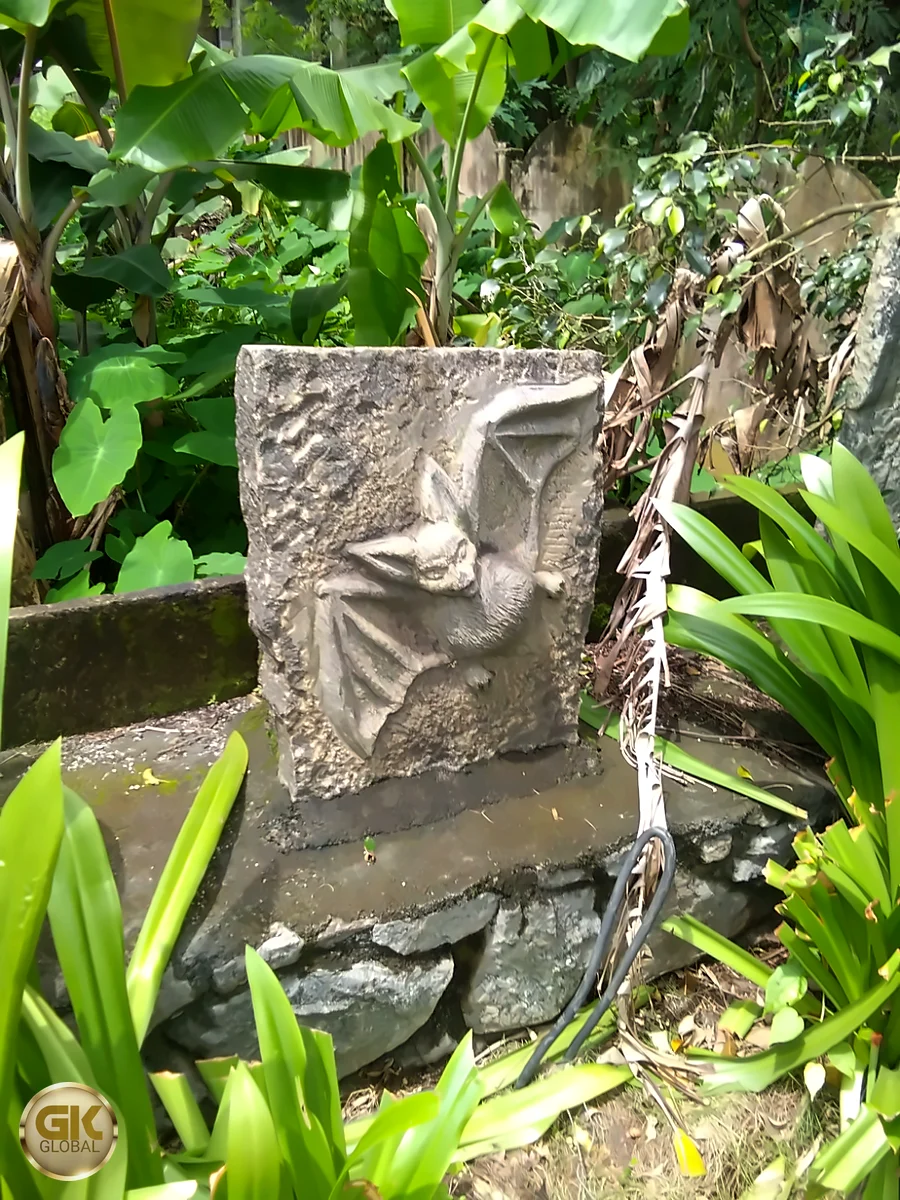
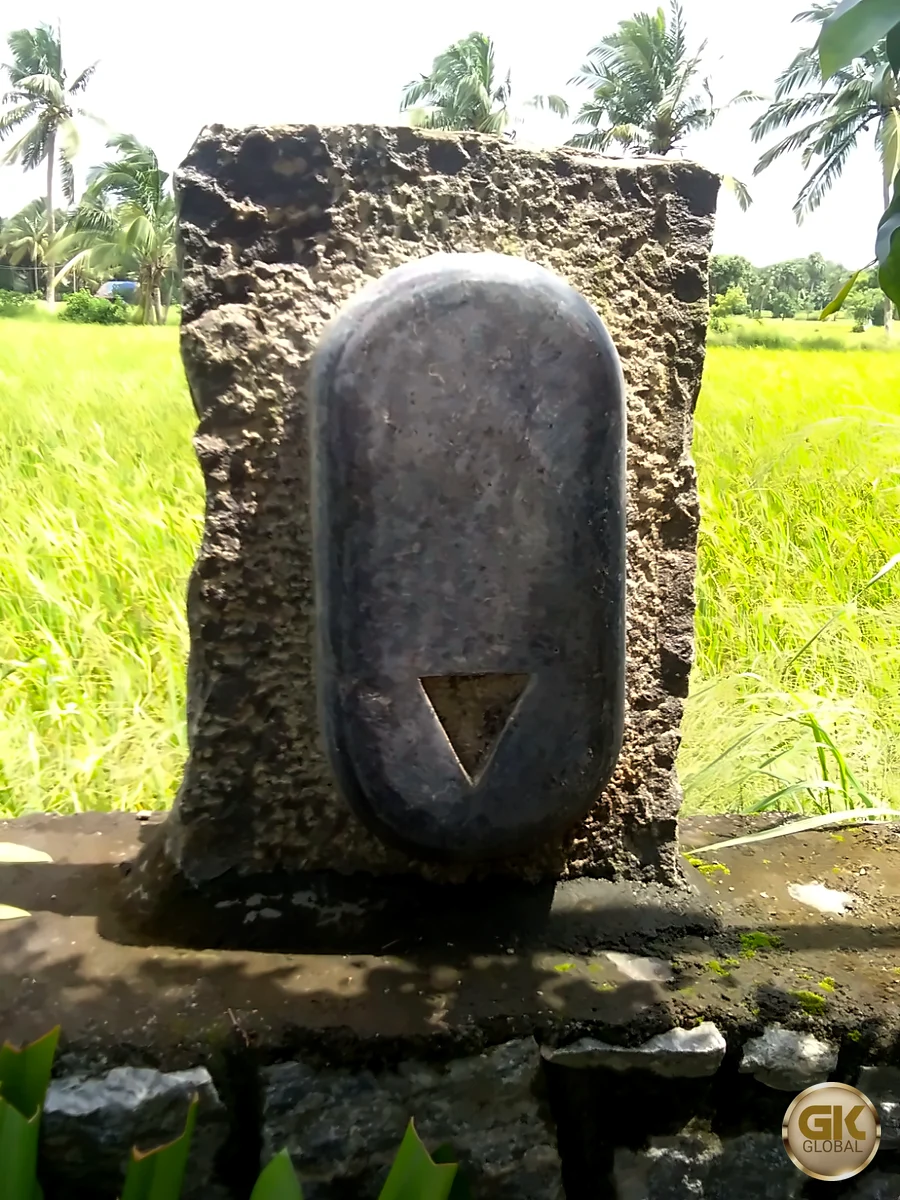
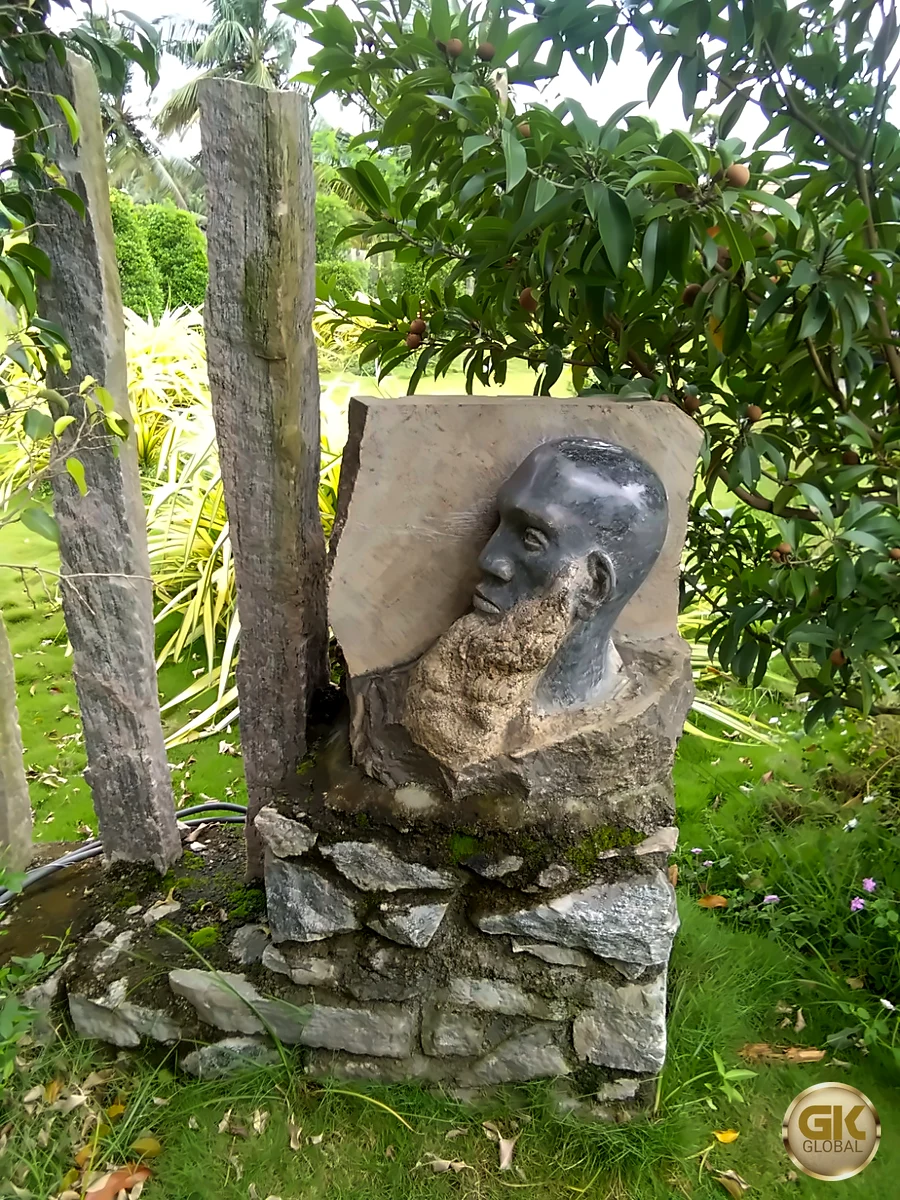
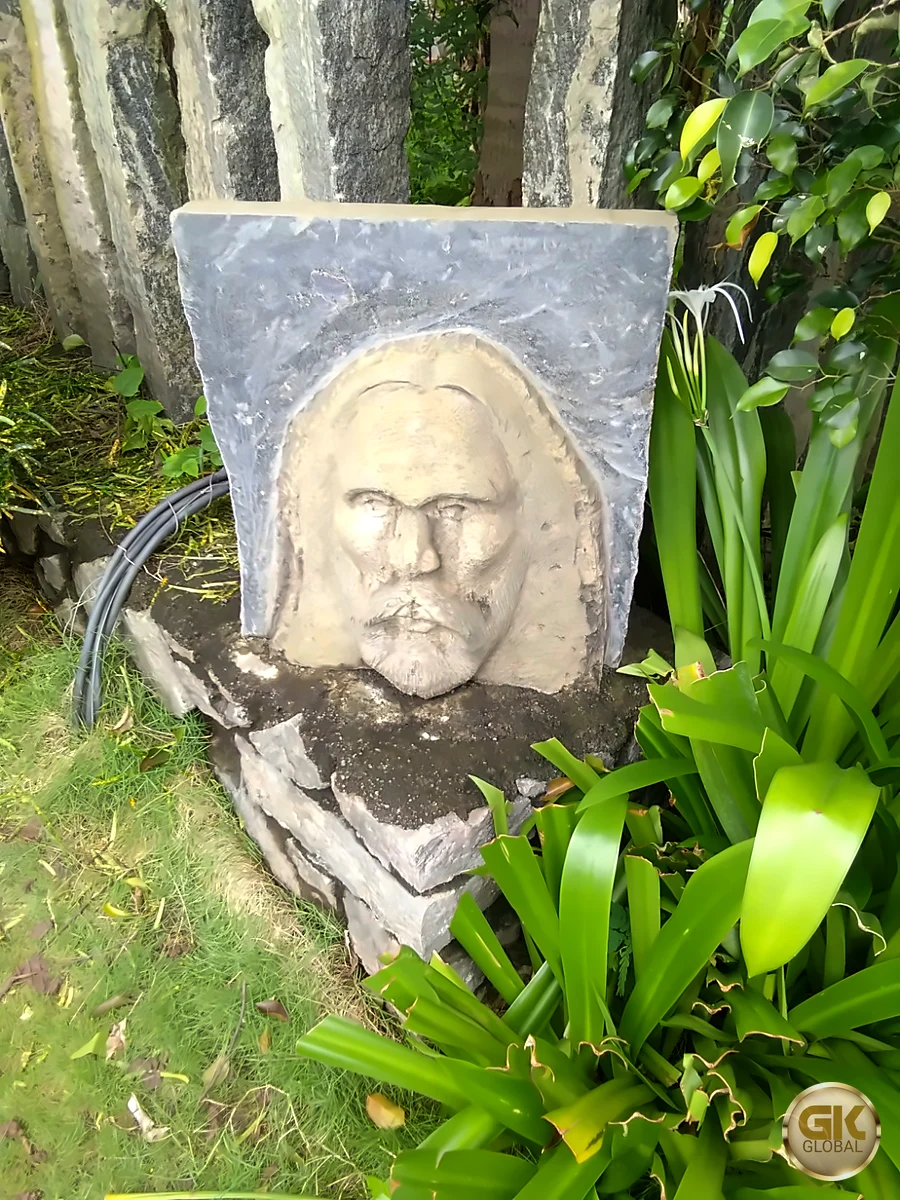
Scattered around the memorial garden and along the edge of the paddy fields are carved stone panels: faces, animals and everyday objects set into rough granite slabs. They are not labelled, and we have not found a published guide that explains each one, so the readings below are our own, based on the novel. Visitors who know the book will enjoy finding their own meanings.
- The coiled snake is surely the serpent of the novel's last page, whose bite ends Ravi's stay in Khasak as he waits in the rain.
- The horse's head probably recalls the old legends of Khasak, in which the Sheikh, the saint of the village mosque, rides through the village's past.
- The umbrella may stand for the monsoon rain of the final chapter, and the cap with an emblem for the police, who come to Khasak in the course of the story.
- The bat, the rounded tablet with a triangle and two bearded faces may stand for other people and things of the novel. We cannot say for certain which, and we would rather leave them open than guess.
Visiting
- Getting there: Thasrak is near Kannadi, about 12 km from Palakkad town. Take the Palakkad–Kannadi road; local buses and autos go to the village.
- Best time: the memorial is open on most days; it is busiest around 2 July (Vijayan's birthday) and 30 March (his death anniversary), when literary events are held.
- Tip: read the novel first, or at least its opening chapters, and walk down to the paddy fields and Arabikkulam. The landscape is the book.
Read also: Keezhthali and Kodungallur · Muziris · French India and M. Mukundan's Mahé
See it for yourself, with a local driver who knows these roads.
Book a Munnar Jeep SafariSources & further reading
- Wikipedia: O. V. Vijayan
- Wikipedia: Khasakkinte Itihasam
- O. V. Vijayan Memorial (official site): Life and times
- Wikipedia: O. V. Vijayan Memorial
- The News Minute (2020): A walk through O. V. Vijayan's memorial in Thasarak
- Onmanorama (2018): Thasrak, where Khasakkinte Ithihasam was born
- Outlook: It's dusk in Khasak (N. S. Madhavan)
- The Comics Reporter: O. V. Vijayan, 1930–2005
- Wikipedia: O. V. Usha
Figures are from the sources listed and were checked in October 2026. Park timings and road conditions change, so please confirm before you travel.