
The Battle of Colachel, 1741: Marthanda Varma, the Dutch, and the Captain Who Changed Sides
How a small siege on a Kanyakumari beach ended the Dutch challenge to Travancore, and how the Dutch officer captured there, Eustachius De Lannoy, built the army of the king who defeated him. With Udayagiri Fort, the victory pillar and the legends.
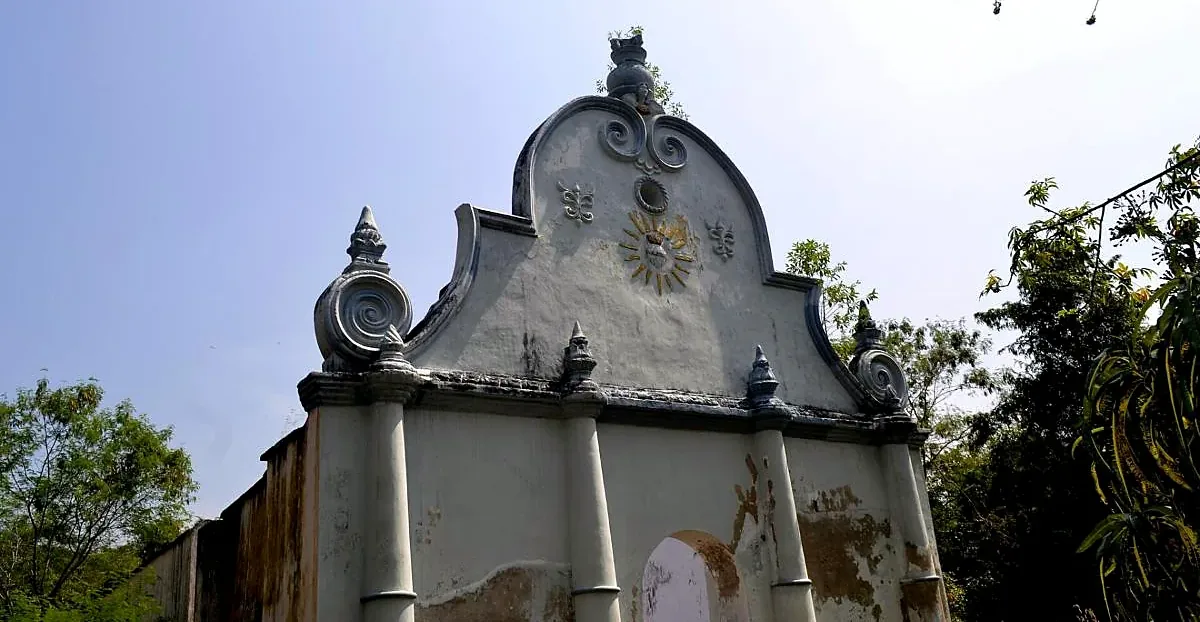
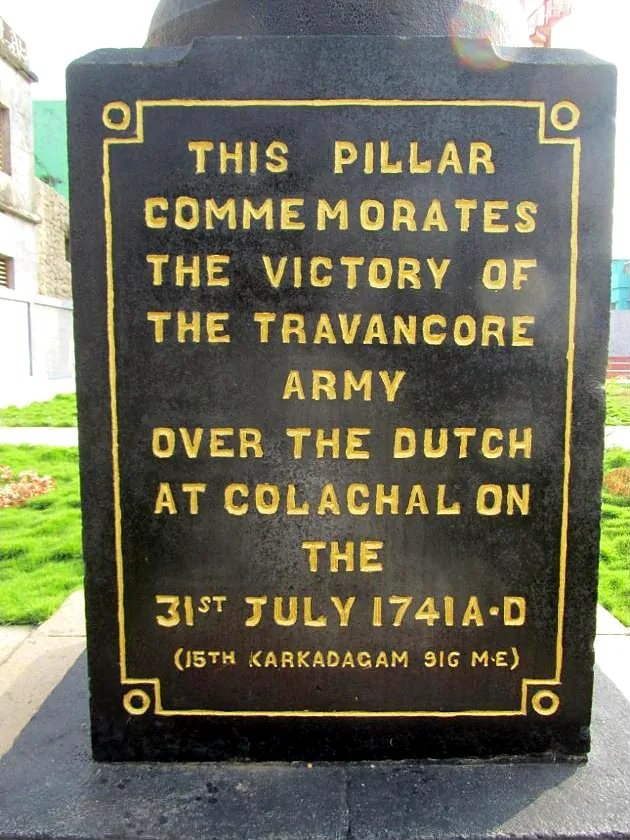
On the coast of what is now Kanyakumari district, about 65 km south of Thiruvananthapuram, is the fishing town of Colachel (also written Kolachal or Kulachal). A slim black pillar in a little garden there records, in gold capitals, a victory of the Travancore army over the Dutch in July 1741. Twelve kilometres inland, inside the walls of Udayagiri Fort, three tombstones lie in a ruined chapel. One belongs to the Dutch captain who surrendered in that battle, and then spent the rest of his life building the army of the king who defeated him.
The Battle of Colachel is one of the most celebrated events in Kerala's history and one of the least understood. It has been called the first defeat of a European power by an Asian state, a David-and-Goliath victory, and an anti-colonial landmark. It was also a small siege on a beach, decided by hunger, a lucky shot and the refusal of local fishermen to help the invaders. This article tells both stories: the battle as the records describe it, and the much bigger story of what it made possible.
At a glance
- What: the decisive engagement of the Travancore–Dutch War (1739–1753) between Marthanda Varma of Travancore and the Dutch East India Company (VOC).
- When: the Dutch surrendered in early August 1741: 7 August in Dutch records, 10 August in most modern accounts, 31 July (Old Style) on the victory pillar.
- Where: Colachel, Kanyakumari district, Tamil Nadu (then in Travancore), about 13 km from the capital at Padmanabhapuram.
- Result: the Dutch force surrendered; 24 European officers and men were taken prisoner, among them Eustachius De Lannoy.
- Afterwards: De Lannoy entered Travancore's service, rebuilt Udayagiri Fort and modernised the army; the Treaty of Mavelikkara (1753) ended the Dutch challenge.
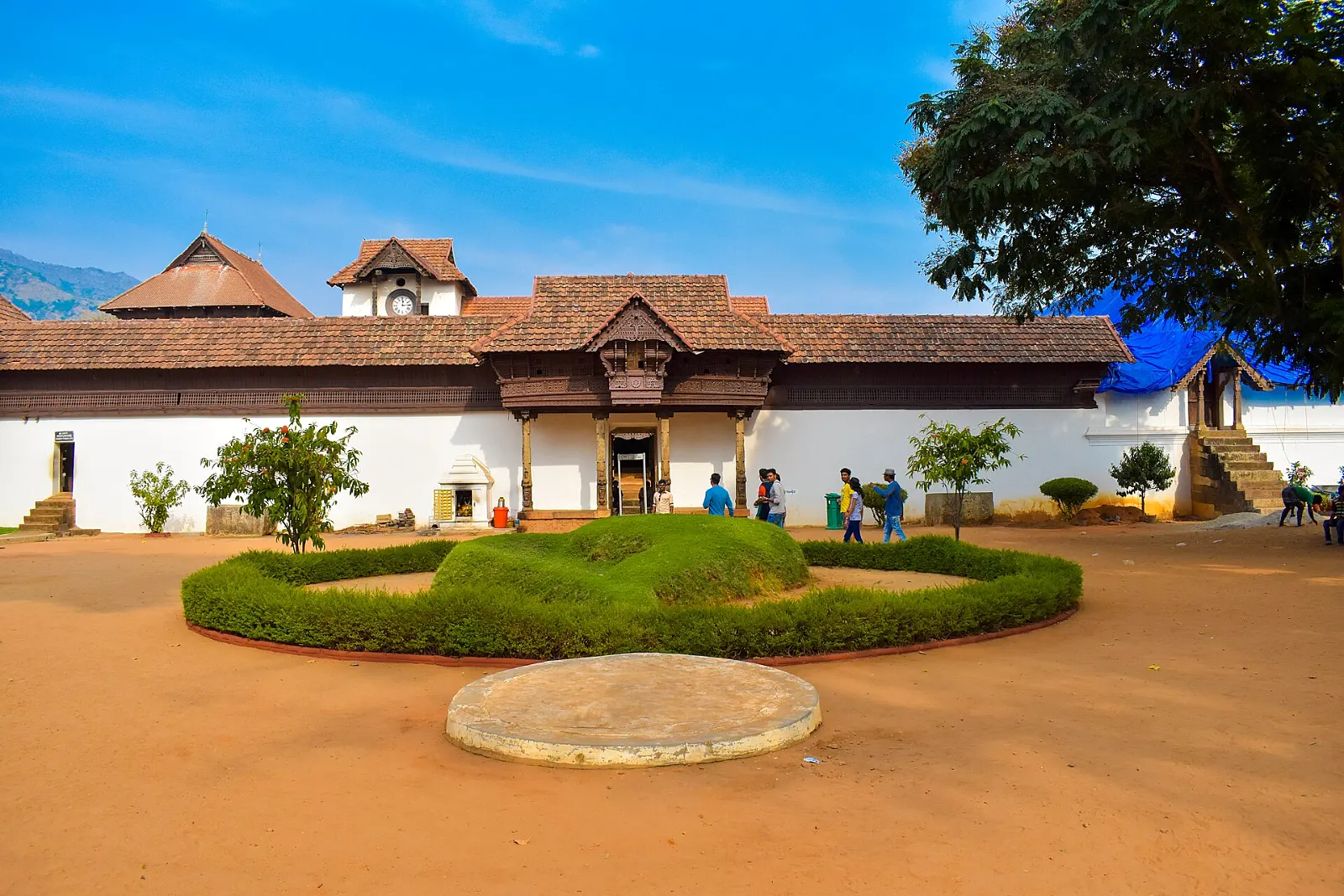
- Visit: the victory pillar at Colachel; Udayagiri Fort and De Lannoy's tomb near Thuckalay; Padmanabhapuram Palace, 2 km from the fort.
Pepper, princes and a Dutch governor
In the early eighteenth century the Malabar coast was divided among many small kingdoms. The Dutch East India Company, which had driven the Portuguese from Kochi in 1663, held a string of forts and depended on monopoly contracts with these rulers to buy pepper at fixed prices. Its command at Kochi answered to the governor of Ceylon and ultimately to the supreme government at Batavia.
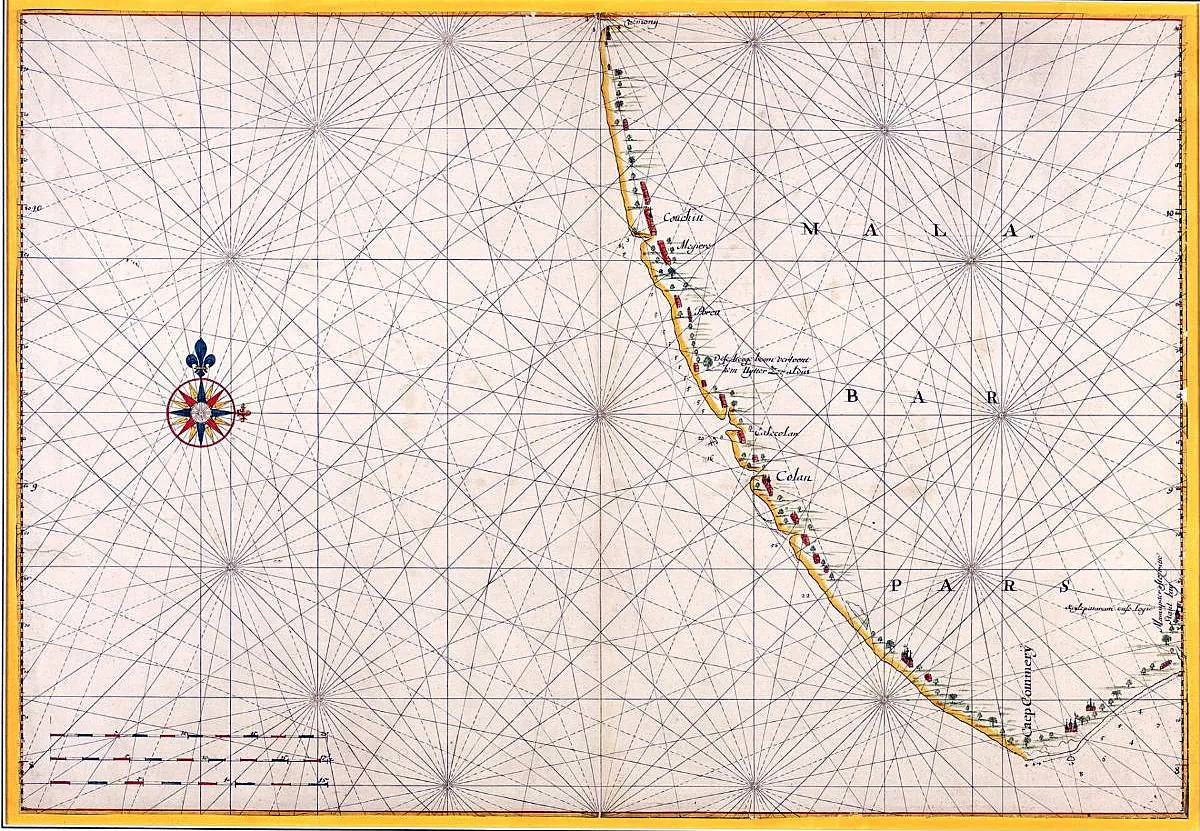
The young ruler of Venad, Anizham Thirunal Marthanda Varma (r. 1729–1758), set out to break this world apart. He crushed the noble houses that had dominated his own kingdom and then turned on his neighbours: Attingal, Kollam (Desinganad), Kayamkulam and the house of Elayadathu at Kottarakkara. Each conquest put another pepper country under a ruler who refused to honour the contracts his predecessors had made with the Dutch, and who preferred to sell to the English and others. For the Company this was an existential threat.
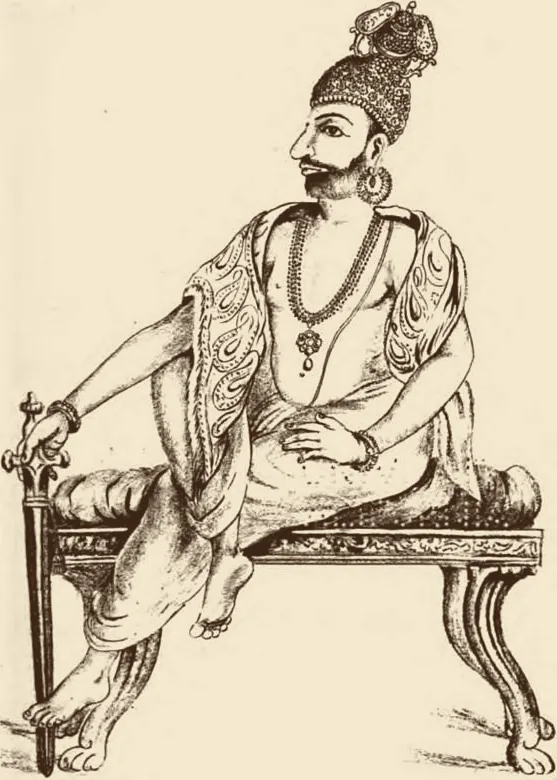
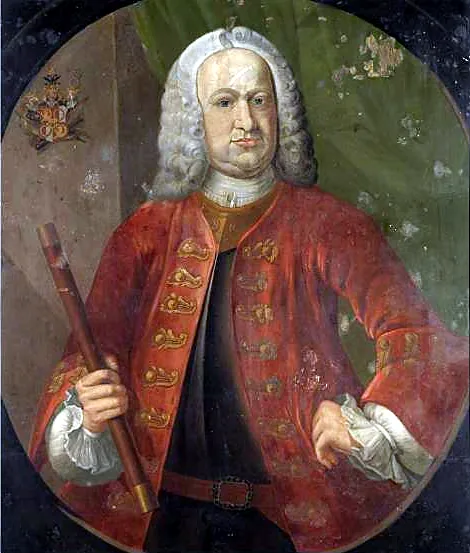
In January 1739 Gustaaf Willem van Imhoff, the governor of Ceylon, came to Kochi to study the Company's position. His report that July described Marthanda Varma's growing power as a threat to Dutch trade. A princess of the Elayadathu house had escaped from captivity in Travancore to Thekkumkur, and van Imhoff met Marthanda Varma in person to demand that she be restored. The king refused. In the most famous anecdote of the war, recorded by later historians, van Imhoff threatened to invade Travancore, and Marthanda Varma answered that he had considered invading Europe himself one day. Whether or not the words were spoken quite so, the meeting ended in war.
The war and the siege of Colachel
Fighting began in 1739 in the north, around Kollam and Kayamkulam, and went badly for the Dutch and their allies. In November 1740 the Company's Malabar command received small reinforcements from Ceylon (two detachments of 105 and 70 soldiers) and decided on a bold stroke in the south: a landing near the Travancore capital itself.
In January 1741 the Dutch ship Maarseveen anchored off the coast between Thengapattanam and Colachel. On 10 February a fleet of seven large ships and smaller craft landed troops just north of Colachel. They seized the town, plundered the country towards Kottar, and threatened Padmanabhapuram, Marthanda Varma's capital, only some 13 km inland. The king, campaigning in the north, sent for help even from the French at Pondicherry, and recalled his ablest commander, Ramayyan Dalawa, with the main army.
The Travancore army now turned the tables. It surrounded the Dutch stockade at Colachel, while armed boats cut off supplies from the sea. The Company could not send relief: its forces were tied down by the war in Java. Inside the stockade, food and powder ran short. Local fishing communities, the Mukkuvar, refused Dutch offers of money for labour and help; in the account of the historian Mark de Lannoy, based on Dutch archives, one fisherman capsized a mail boat carrying an officer sent to fetch reinforcements and delivered him to the Travancore camp. On 5 August 1741 a shot from the Travancore guns set off the Dutch gunpowder store, destroying much of their ammunition and provisions. Within days the garrison asked for terms.
The Dutch offered to surrender if they could march away to Kanyakumari with their weapons. Marthanda Varma insisted on unconditional surrender. Dutch records give the date as 7 August 1741; most modern accounts give 10 August, and the victory pillar, using the Old Style calendar, says 31 July. Twenty-four Europeans were taken prisoner, among them the young Flemish officer Eustachius Benedictus De Lannoy and his deputy, Donadi. One account records 389 guns taken.
| What the evidence says | What is uncertain | |
|---|---|---|
| Size of the forces | The Dutch force was small: a few hundred soldiers at most, with ships' guns. Travancore had a large army and local support. | No reliable total for either side survives in published sources. |
| Date | Dutch records: 7 August 1741 (New Style). Victory pillar: 31 July 1741 (Old Style), 15 Karkadakam 916 ME. | Many writers give 10 August; the gap reflects different documents and calendars. |
| How it was won | Blockade by land and sea, hunger, the explosion of the powder store, and local non-cooperation. | Popular tales of 'palm-trunk cannons' on bullock carts are not supported by records. |
| Prisoners | 24 Europeans, including De Lannoy and Donadi, held at Udayagiri Fort. |
From prisoner to Valiya Kappithan
What happened next is the most remarkable part of the story. Marthanda Varma did not ransom or execute his prisoners. He returned their weapons and invited them to serve him. De Lannoy, born in 1715 in the Southern Netherlands to a family from the town of Lannoy on today's Franco-Belgian border, a Roman Catholic who had joined the Company young and learned the science of fortification, accepted. He first trained a special regiment in the European manner, then took charge of fortifications and arsenals, and finally became commander of the Travancore army. Travancore's people called him the Valiya Kappithan, the 'Great Captain'.
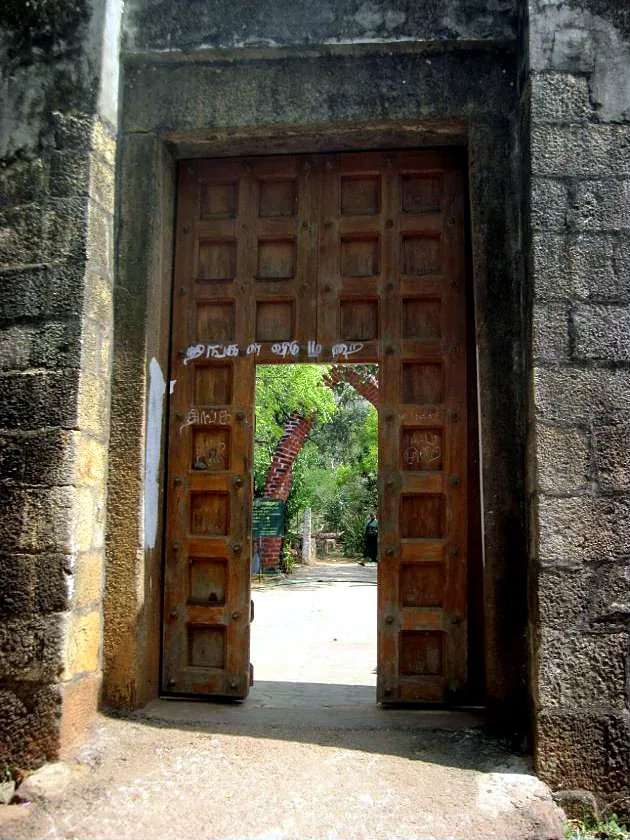
- Udayagiri Fort. The old mud fort at Puliyoorkurichi, near Padmanabhapuram, built around 1600 by a Venad king, was rebuilt in granite between about 1741 and 1744 under De Lannoy's supervision. He set up an arsenal and foundry there for guns and shot, and made the fort his home.
- Other works. He restored the defences of Kalkulam (Padmanabhapuram) and built coastal batteries and the stone wall at Aramboly pass.
- The Travancore Lines. The Nedumkotta, an earthen rampart of more than 30 miles across the north of the kingdom, was built in the reign of Dharma Raja, largely under De Lannoy's direction. It was these lines that Tipu Sultan attacked in 1789–1790, twelve years after De Lannoy's death.
- Campaigns. With the new army Travancore annexed Kayamkulam, Thekkumkur, Ambalappuzha and other states over the following decade, and fought the Zamorin's forces in 1762. His tomb inscription credits him with bringing 'all the kingdoms from Kayamkulam to Cochin' under the king.
In August 1753 the Company accepted defeat in the Treaty of Mavelikkara. The Dutch agreed to stay neutral in Travancore's wars and to supply arms, while Travancore would sell them a fixed quantity of pepper at agreed prices. It left Marthanda Varma free to finish his conquests, and it is usually taken as the moment the Dutch ceased to be a power in Kerala. Three years earlier, in January 1750, the king had dedicated his enlarged kingdom to the deity of the Sree Padmanabhaswamy temple.
A family in the fort
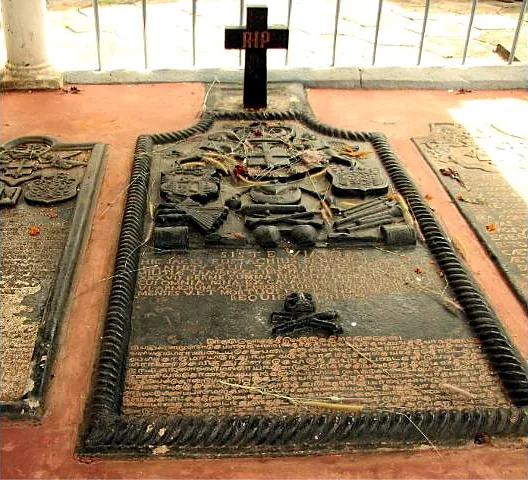
De Lannoy married Margarita, a widow from the English settlement of Anjengo. Their only son, Johannes, was born in 1745 and killed in 1765 while storming the fort of Kalakkad. Because he was a Christian, De Lannoy is said not to have entered the king's palace at Padmanabhapuram; he lived at Udayagiri, where, at his request and at the state's expense, a Roman Catholic chapel was built. He died there on 1 June 1777, after nearly 37 years in Travancore's service, and was buried in the chapel with military honours. Margarita died in 1782 and was buried beside him.
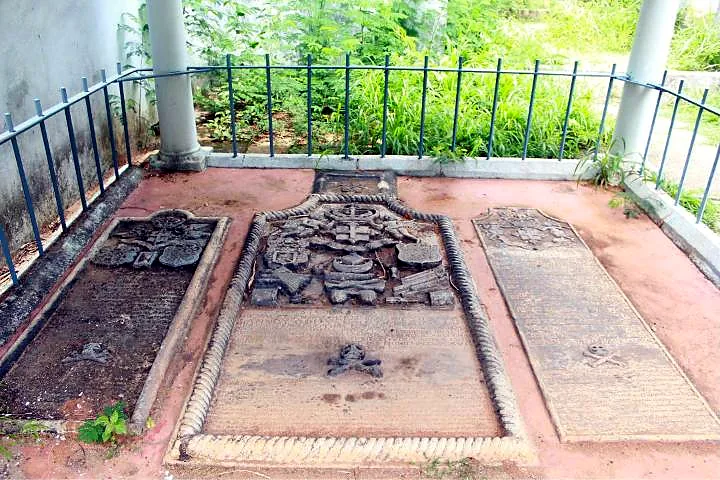
His tombstone carries a Latin epitaph with a fuller version in Tamil. In translation it addresses the passer-by, names him as commander of the forces of Travancore, credits him with the conquest of the kingdoms from Kayamkulam to Kochi, and records that he lived 62 years and 5 months.
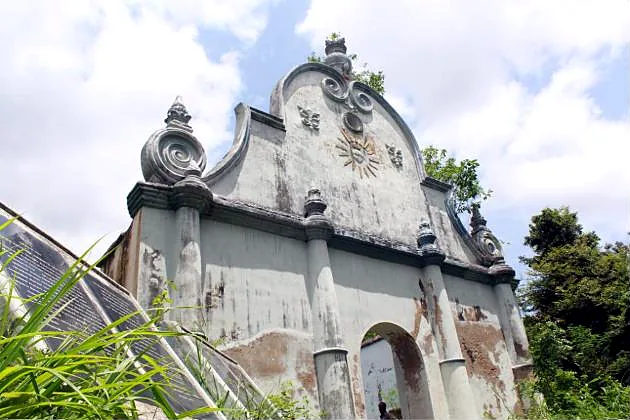
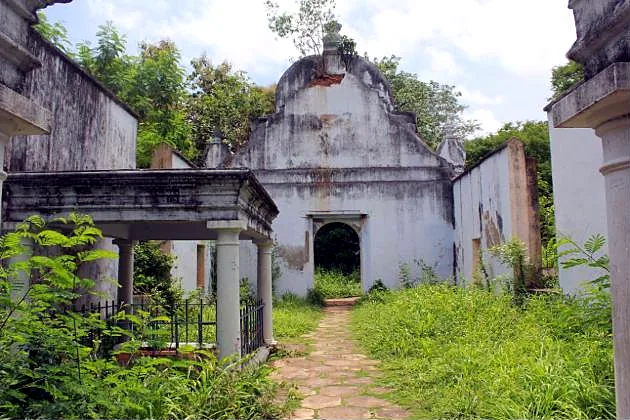
De Lannoy also has a place in Christian history. A court official, Neelakanta Pillai, came to know him at Udayagiri and was baptised a Catholic in 1745, taking the name Devasahayam ('God's help', a rendering of Lazarus). The Catholic Church holds that he was imprisoned and executed for his faith in 1752, and Pope Francis canonised him in 2022 as India's first lay saint. Members of the Travancore royal family and some historians dispute that he was killed for his conversion. Both positions are noted here; the disagreement is about interpretation of the eighteenth-century record.
The victory pillar and the memory of Colachel
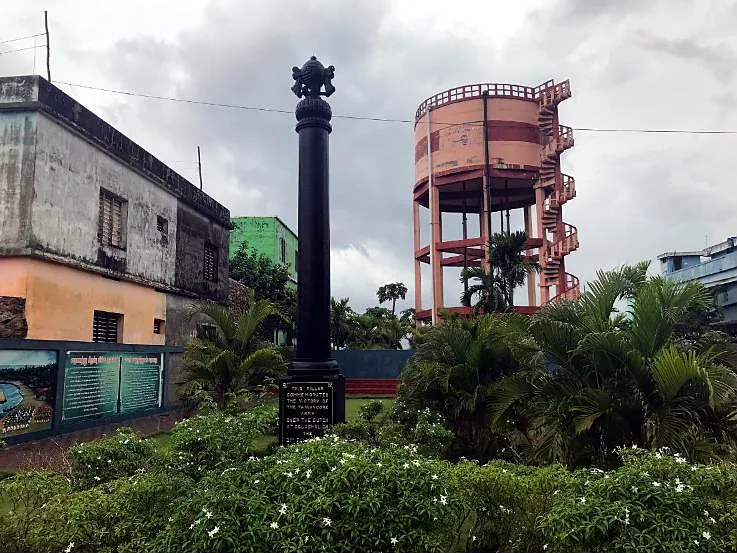
Colachel is remembered in Kerala and Tamil Nadu above all through its pillar, which carries an inscription in English recording 'the victory of the Travancore army over the Dutch at Colachal on the 31st July 1741 A.D.' It is often said that Marthanda Varma erected it after the battle. The present inscription, with its A.D. and M.E. dates, appears to be modern; the pillar may be a later memorial or a restoration of an older one. We have not found a published source that settles when it was set up.
The battle lives on in the Indian Army. Travancore's household troops, the Nair Brigade, were absorbed into the Indian Army after independence and merged with the Madras Regiment in 1954, becoming its 9th and 16th Battalions. The 9th Battalion (Travancore), which traces its origins to 1704 at Padmanabhapuram, is described as the oldest unit of the Indian Army still in service. Each year the Madras Regiment marks Colachel Day at the Colachel War Memorial with wreaths and a band, and in July 2023 a 'Colachel Victory Warrior Statue' was unveiled at the Pangode Military Station in Thiruvananthapuram. The 284th anniversary was observed in July 2025.
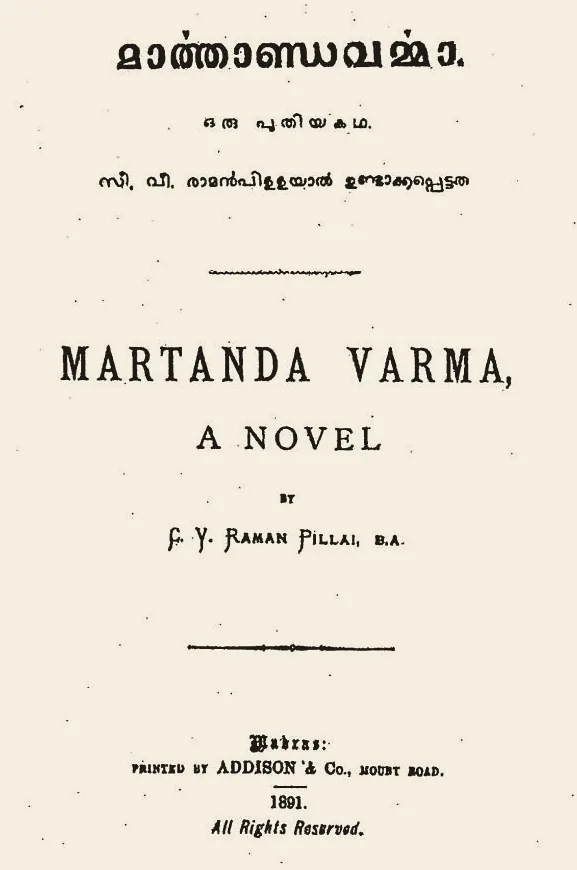
The battle also lives in fiction. C. V. Raman Pillai's Marthandavarma (1891), the first historical novel in Malayalam, made the young king's struggle with his enemies into a national romance, and gave Kerala the hero Anandapadmanabhan, said to have saved the king's life at Colachel. No document confirms that he existed, and the Nair, Nadar and Channar communities have each claimed him as one of their own, a sign of how much the battle has come to matter to identity in the region.
Our assessment: was Colachel 'the first Asian victory over a European power'?
No, not in the literal sense, and the battle does not need the claim. Asian states had defeated European forces before 1741: the Mughals took the Portuguese settlement at Hooghly in 1632, and the Ming loyalist Zheng Chenggong (Koxinga) expelled the Dutch East India Company itself from Taiwan in 1662. Kerala's own Zamorins had fought the Portuguese for a century. What Colachel did was rarer and more lasting: it ended a European company's attempt to dictate terms to a South Indian state, and it led directly to that state absorbing European military skill on its own terms, through its own prisoners. As the historian Rajan Gurukkal has pointed out, Marthanda Varma's achievement lay largely in denying the Dutch any local support. The scale was small; the consequences were large.
Visiting Colachel and Udayagiri
| Details | |
|---|---|
| Udayagiri Fort | At Puliyoorkurichi on the Thiruvananthapuram–Nagercoil highway (NH 66), about 14 km from Nagercoil and 2 km from Padmanabhapuram Palace. Now a biodiversity park run by the Tamil Nadu Forest Department, with deer and bird enclosures; De Lannoy's chapel and tombs are protected monuments inside. Open in the daytime for a small fee; check hours locally. |
| Colachel | About 14 km south-west of Udayagiri; the victory pillar stands in the town near the harbour. Colachel beach and the fishing harbour are worth a short walk. |
| Padmanabhapuram Palace | Thuckalay; open 9:00–12:30 and 2:00–4:30, closed Mondays. See our guide to Padmanabhapuram Palace. |
| From Thiruvananthapuram | About 55–65 km by road (1.5–2 hours). All three sites fit in a day trip, or combine them with Kanyakumari. |
| Best time | October to March. Colachel Day is observed around 31 July. |
Timeline
- 1663The Dutch take Kochi from the Portuguese.
- 1729Marthanda Varma becomes ruler of Venad.
- January 1739Van Imhoff visits Kochi; his July report warns of Travancore's power.
- 1739War breaks out between Travancore and the Dutch.
- November 1740Dutch reinforcements arrive from Ceylon.
- 10 February 1741Dutch forces land near Colachel and advance towards Padmanabhapuram.
- 5 August 1741A Travancore shot explodes the Dutch powder store.
- 7–10 August 1741The Dutch surrender; De Lannoy and 23 others are taken prisoner.
- 1741–1744Udayagiri Fort is rebuilt in granite under De Lannoy.
- 1745Neelakanta Pillai (Devasahayam) is baptised after meeting De Lannoy.
- January 1750Marthanda Varma dedicates Travancore to Sree Padmanabha.
- 15 August 1753Treaty of Mavelikkara with the Dutch.
- 1758Death of Marthanda Varma; Dharma Raja succeeds.
- 1765De Lannoy's son Johannes is killed at Kalakkad.
- 1 June 1777De Lannoy dies at Udayagiri and is buried in its chapel.
- 1891C. V. Raman Pillai's novel Marthandavarma is published.
- 1954The Travancore battalions become the 9th and 16th Madras Regiment.
- 2022Devasahayam Pillai is canonised.
- July 2025The Madras Regiment marks the 284th anniversary at Colachel.
Questions people ask
When was the Battle of Colachel fought?
The Dutch surrendered in early August 1741: 7 August according to Dutch records, 10 August in most modern accounts, and 31 July in the Old Style date on the Colachel pillar.
Who won the Battle of Colachel?
Travancore, under Marthanda Varma and his commander Ramayyan Dalawa, defeated a force of the Dutch East India Company that had landed at Colachel.
Who was Eustachius De Lannoy?
A Flemish officer in Dutch service who was captured at Colachel, joined Travancore, rebuilt Udayagiri Fort, modernised the army and served as its commander until his death in 1777.
Where is De Lannoy buried?
In the ruined chapel inside Udayagiri Fort, at Puliyoorkurichi near Thuckalay in Kanyakumari district, beside his wife and son.
Was Colachel the first time an Asian power defeated a European one?
No. There were earlier examples, such as Koxinga's expulsion of the Dutch from Taiwan in 1662. But Colachel was a decisive check to the Dutch in India and changed the history of Kerala.
How far is Colachel from Thiruvananthapuram?
About 65 km by road, roughly two hours, via Marthandam or Thuckalay.
(Read also Padmanabhapuram Palace, the vaults of Sree Padmanabhaswamy and Kilimanoor Palace.)
See it for yourself, with a local driver who knows these roads.
Book a Munnar Jeep SafariSources & further reading
- Wikipedia: Battle of Colachel
- Wikipedia: Travancore–Dutch War
- Wikipedia: Eustachius De Lannoy
- Dutch in Kerala: A Great Captain (De Lannoy's life and epitaph)
- Open magazine: The heroes of Colachel
- Onmanorama: the fishermen's role in the Colachel war (2018)
- Mark de Lannoy: Eustache Benoît de Lannoy (1715–1777) (in Dutch)
- Tamil Nadu Archaeology Department: Udayagiri Fort and De Lannoy Tomb
- Kanniyakumari district: Udayagiri Fort
- Wikipedia: Treaty of Mavelikkara
- Wikipedia: 9th Battalion, Madras Regiment
- DT Next: Army marks the 1741 triumph at Colachel (2025)
- The Hindu via inkl: Colachel Victory Warrior Statue unveiled at Pangode (2023)
- Vatican News: canonisation of Devasahayam (2022)
- Live History India: Marthanda Varma and the Battle of Colachel
Figures are from the sources listed and were checked in November 2026. Park timings and road conditions change, so please confirm before you travel.