
Inside the Cup: The Tea Plant, How Tea Is Made, and the World Tea Trade
One plant, six families of tea and thousands of named varieties. How tea is grown and made, past and present; the countries that grow, sell and drink it; the world's costliest teas; what tea tasters and blenders really do; and the stories behind tea chests, famous brands, the tea bag and instant tea.
Green, black, white, oolong, pu-erh: they look and taste completely different, yet every one of them comes from the same evergreen shrub. What makes the difference is where the plant grows, which leaves are picked, and above all what happens to the leaves after picking. This is the second of our three tea articles. (Read the history first in The Story of Tea, and the brewing guide in How to Make the Perfect Cup.)
The tea plant
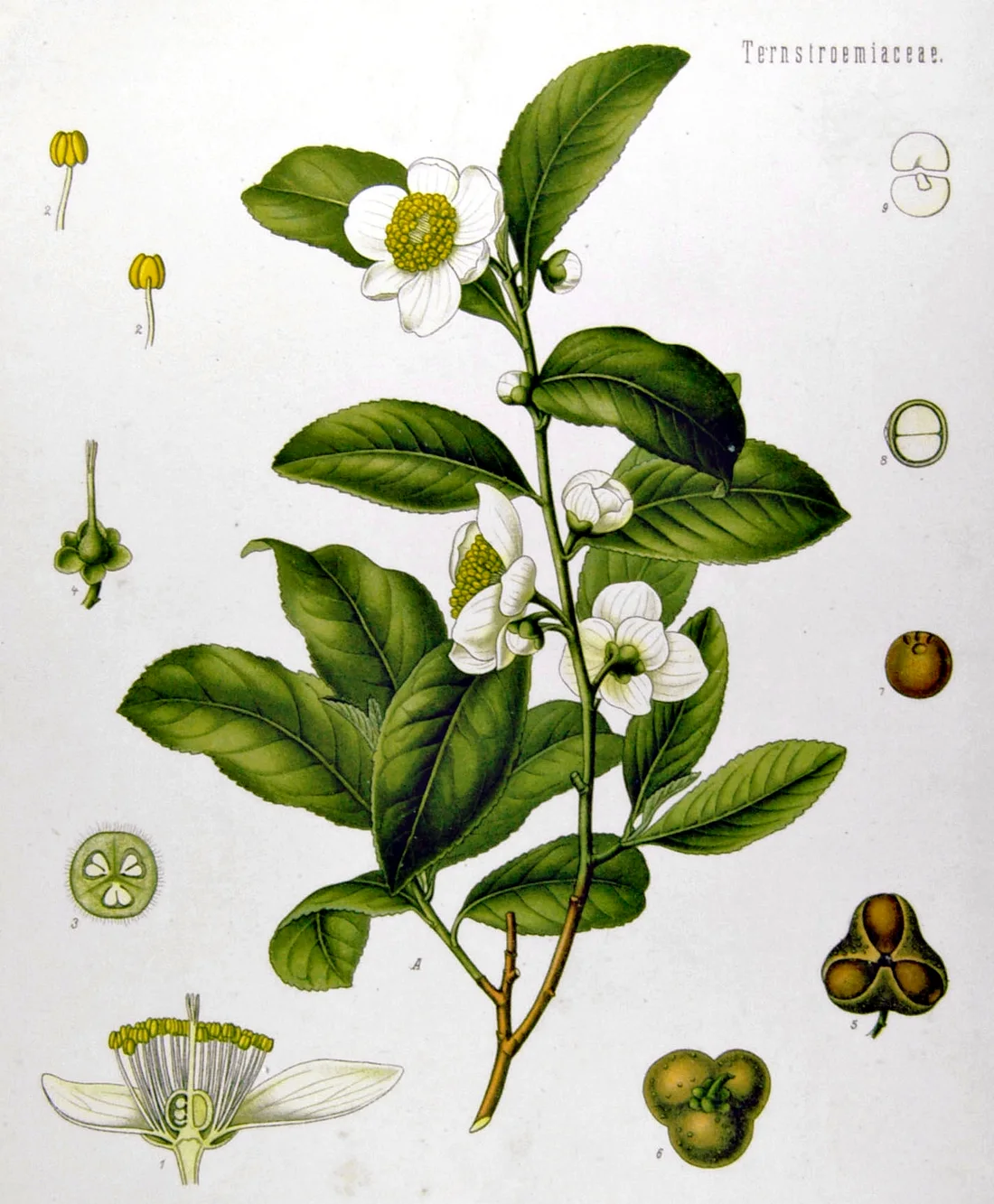
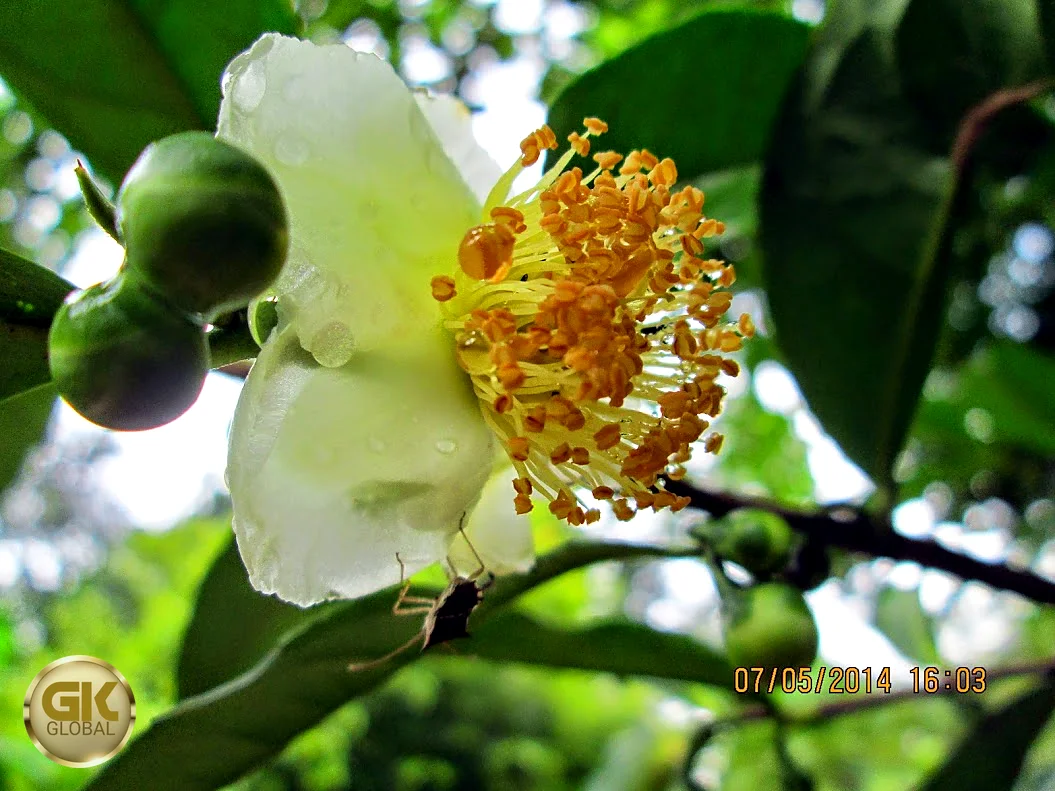
Tea is Camellia sinensis, a member of the camellia family. Left alone it grows into a tree; on plantations it is pruned into a flat-topped bush about a metre high, the "plucking table", so that workers can reach the young shoots. It has glossy, dark green, finely toothed leaves, small white fragrant flowers with golden stamens, and hard round seeds. There are two main varieties and many hybrids:
- China type (var. sinensis): small-leaved, slow-growing and hardy, tolerant of cold. It is the tea of most of China and Japan, and of Darjeeling's finest gardens. It gives delicate, aromatic teas.
- Assam type (var. assamica): large-leaved, fast-growing, tree-like, suited to hot, wet, tropical lowlands. It gives strong, malty, dark teas and dominates in Assam, Sri Lanka, Kenya and South India.
- Cambod and hybrids: intermediate forms and endless crosses between the two, from which most modern clones were bred.
Not everything sold as "tea" comes from this plant. Chamomile, peppermint, hibiscus, rooibos and lemongrass are herbal infusions or tisanes, with no tea leaf and usually no caffeine.
Growing tea: then and now
The old ways
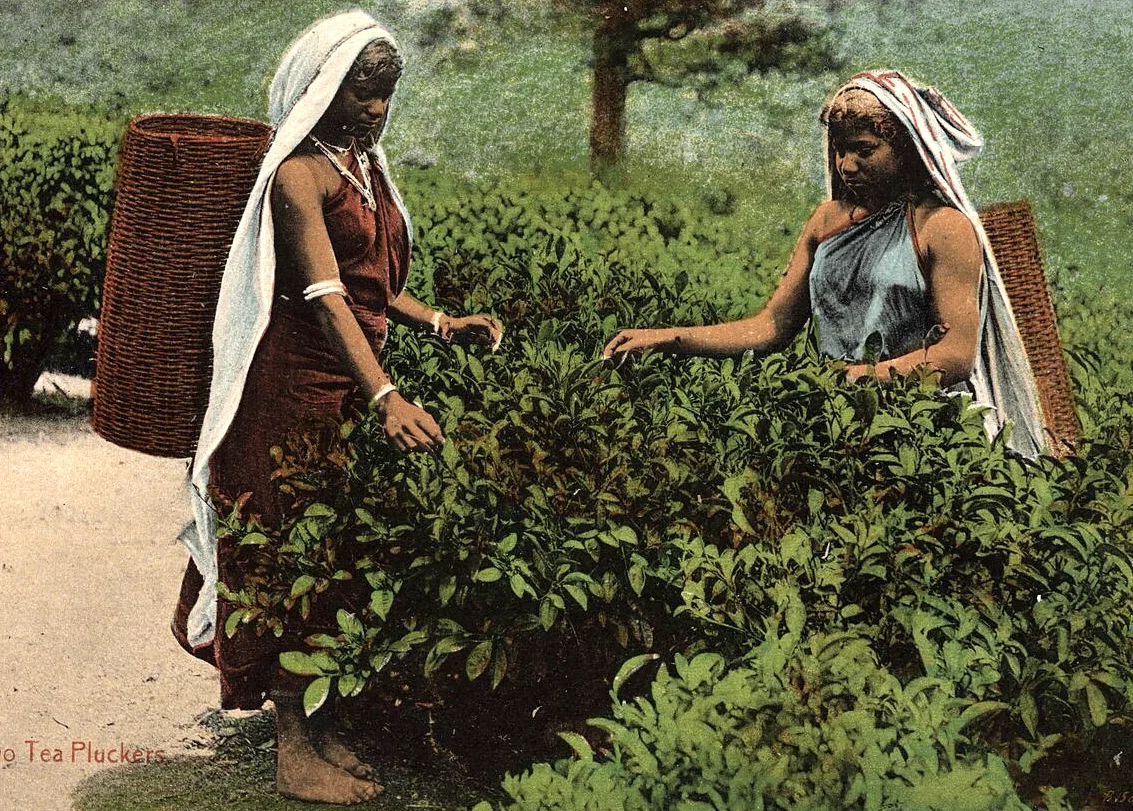
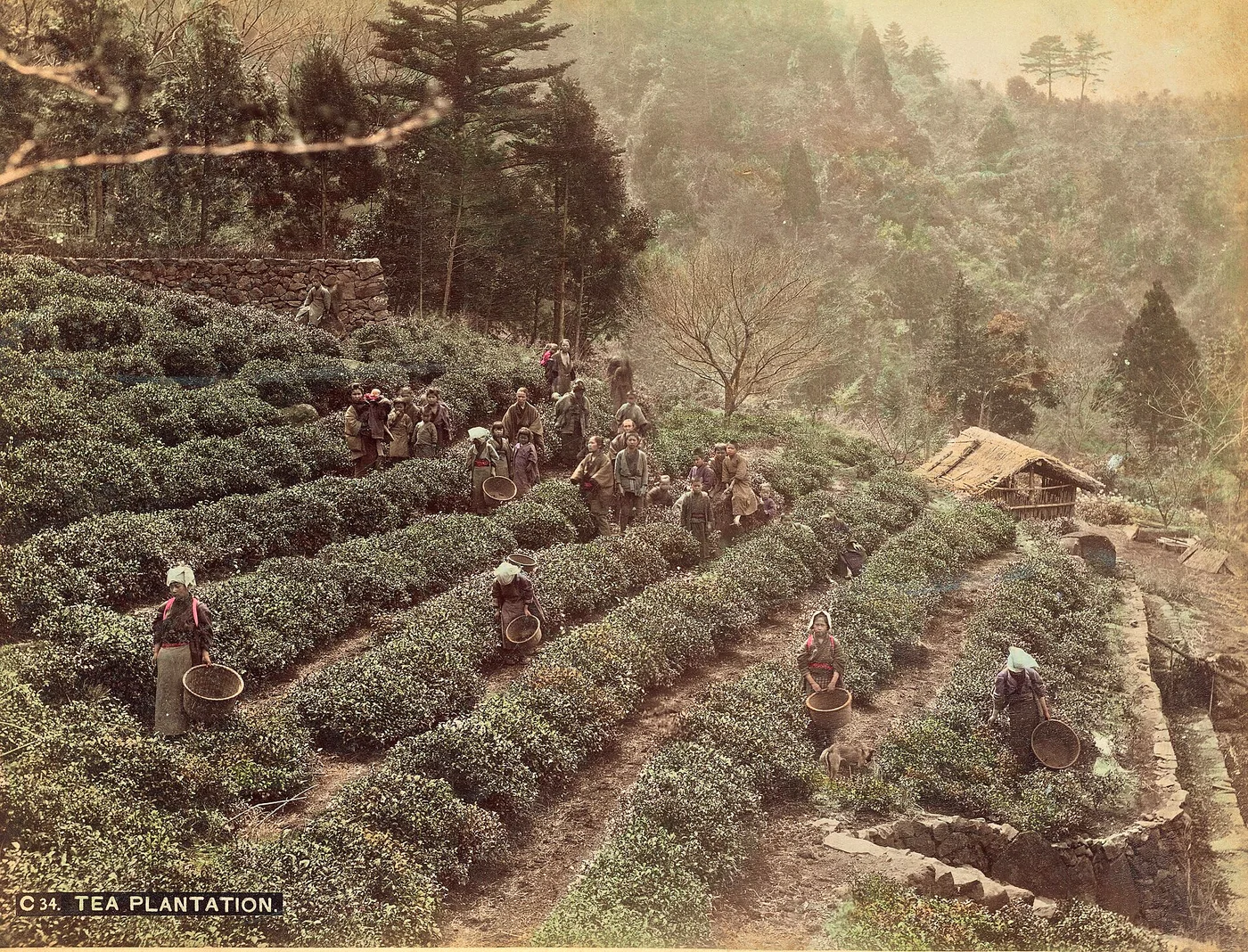
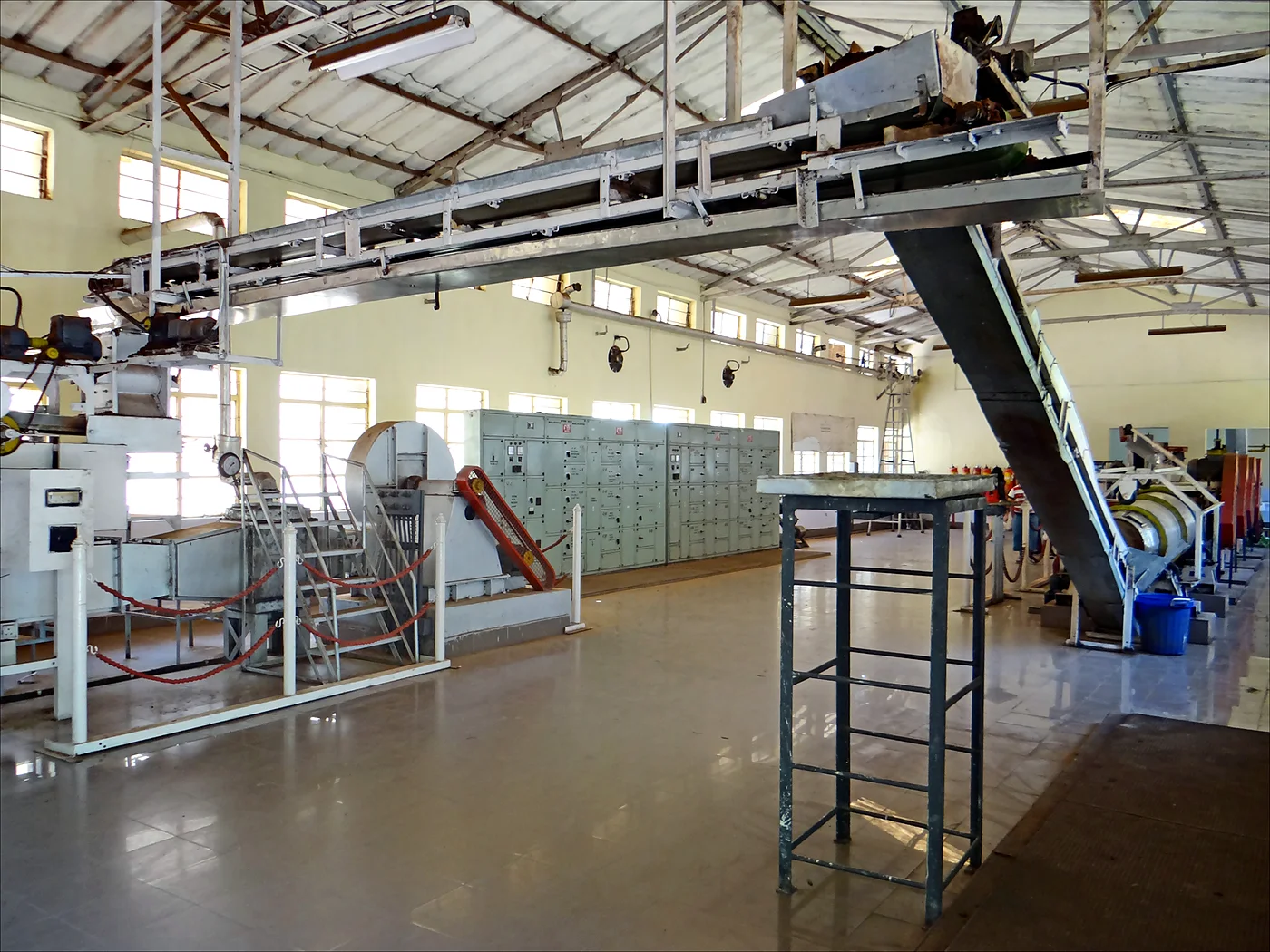
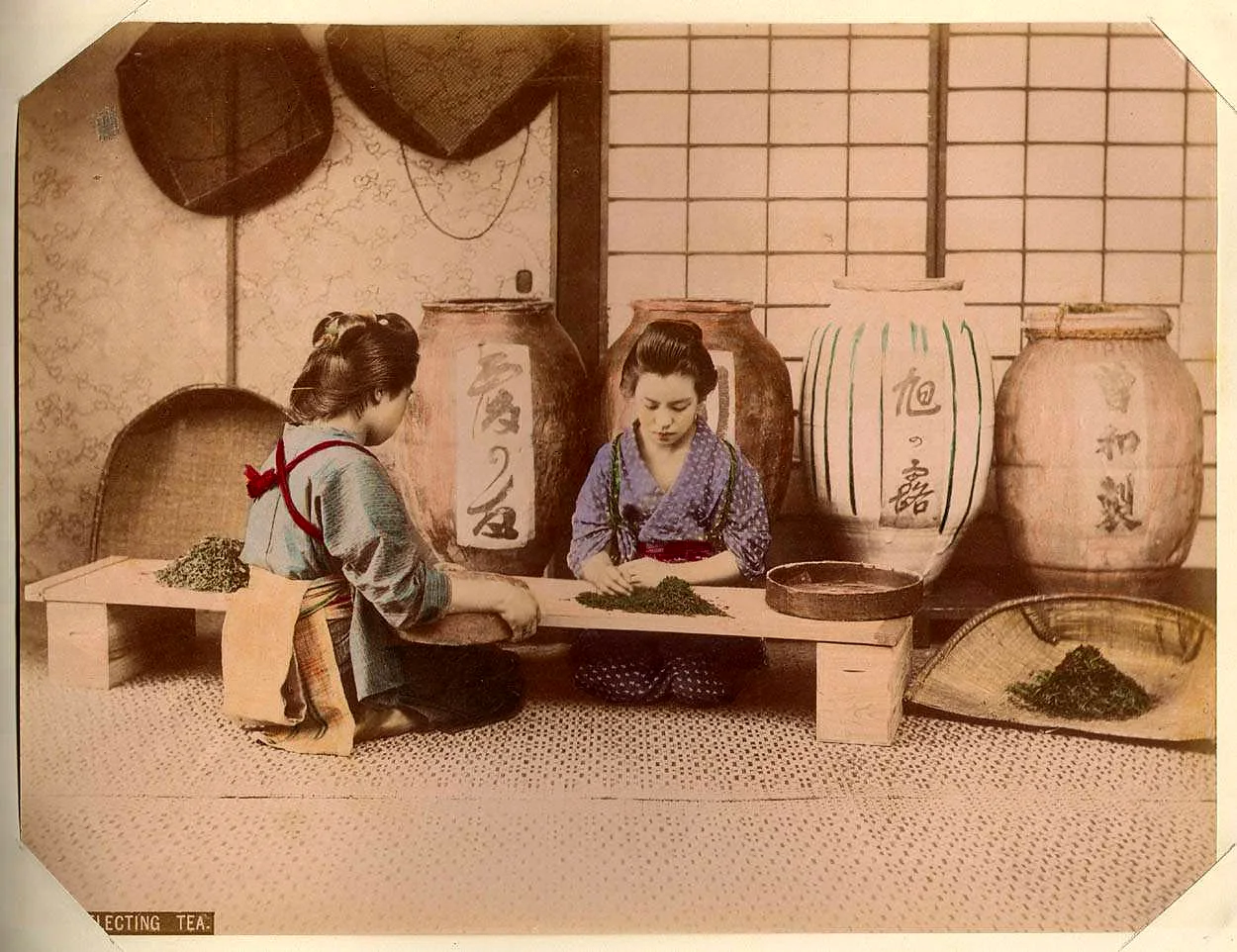
For most of history, tea gardens were raised from seed, so every bush was slightly different. In China tea grew on small family plots and terraced hillsides, and leaves were processed by hand: withered in the sun, rolled on bamboo mats, and fired in iron woks over charcoal. The great colonial estates of the nineteenth century cleared forest on a vast scale, planted seed-grown bushes in rows on contoured slopes, and planted shade trees among them: silver oak (Grevillea) in South India, and albizia and other trees in Assam. Workers plucked by hand into baskets carried on their backs, and early factories used water power and steam to drive rollers and dryers. (See the 1905 rolling machine and the Pelton wheel at the KDHP Tea Museum.)
Modern tea growing
- Clones. Most new gardens are planted with clones, rooted cuttings of selected high-yielding, high-quality or drought-tolerant bushes, bred by research stations such as Tocklai in Assam (founded 1911) and the UPASI Tea Research Institute at Valparai in South India. Japan's single cultivar 'Yabukita' covers most of its tea fields.
- Plucking. The classic rule is "two leaves and a bud". Bushes are plucked every week or two in the growing season. Fine teas are still hand-plucked; elsewhere hand shears and, in Japan, Argentina and parts of Kenya, motorised harvesters are common.
- Pruning every few years keeps the bush low and vigorous.
- Climate. Tea likes acidic soil, plentiful rain spread through the year, and good drainage. Altitude slows growth and concentrates flavour, which is why high-grown teas from Darjeeling, Nuwara Eliya and Munnar are prized. (Read about Kolukkumalai, among the highest tea estates in the world.)
- Flushes. Tea grows in bursts called flushes. Darjeeling's spring first flush is light and flowery; the summer second flush has the famous "muscatel" character. Assam's second flush is the maltiest. In the Nilgiris, frost-season teas are prized.
- New pressures: climate change (droughts, erratic monsoons and heavier pests), rising labour costs and the growth of small growers, who now supply a large share of India's leaf to "bought-leaf" factories.
How tea is made: the six families
Fresh tea leaves contain enzymes that turn the leaf brown when it is bruised and exposed to air, much as a cut apple browns. Tea makers call this "fermentation", though it is really oxidation. Controlling it is the whole art. Chinese tradition recognises six families:
| Type | How it is made | Famous examples |
|---|---|---|
| White | Buds and young leaves simply withered and dried; barely processed, lightly oxidised. | Silver Needle (Baihao Yinzhen), White Peony (Bai Mudan) |
| Green | Heated soon after picking to stop oxidation: pan-fired in China, steamed in Japan; then rolled and dried. | Longjing (Dragon Well), Gunpowder, Sencha, Gyokuro, Matcha |
| Yellow | Like green tea but gently "smothered" while warm, giving a mellow taste. Rare. | Junshan Yinzhen |
| Oolong (wulong) | Leaves bruised and partly oxidised, anywhere from about 10% to 80%, then fired; often rolled into balls or twists. | Tieguanyin, Da Hong Pao, Dong Ding, Oriental Beauty |
| Black (called "red tea", hong cha, in China) | Withered, rolled or cut, fully oxidised, then dried. | Assam, Darjeeling, Ceylon, Nilgiri, Munnar, Keemun, Lapsang souchong |
| Dark (hei cha) | Fermented by microbes after processing, often pressed into cakes or bricks and aged for years. | Pu-erh (raw sheng and ripe shou), Fu brick, Liu Bao |
Most of China's tea is green; most of India's, Sri Lanka's and Kenya's is black.
Orthodox and CTC
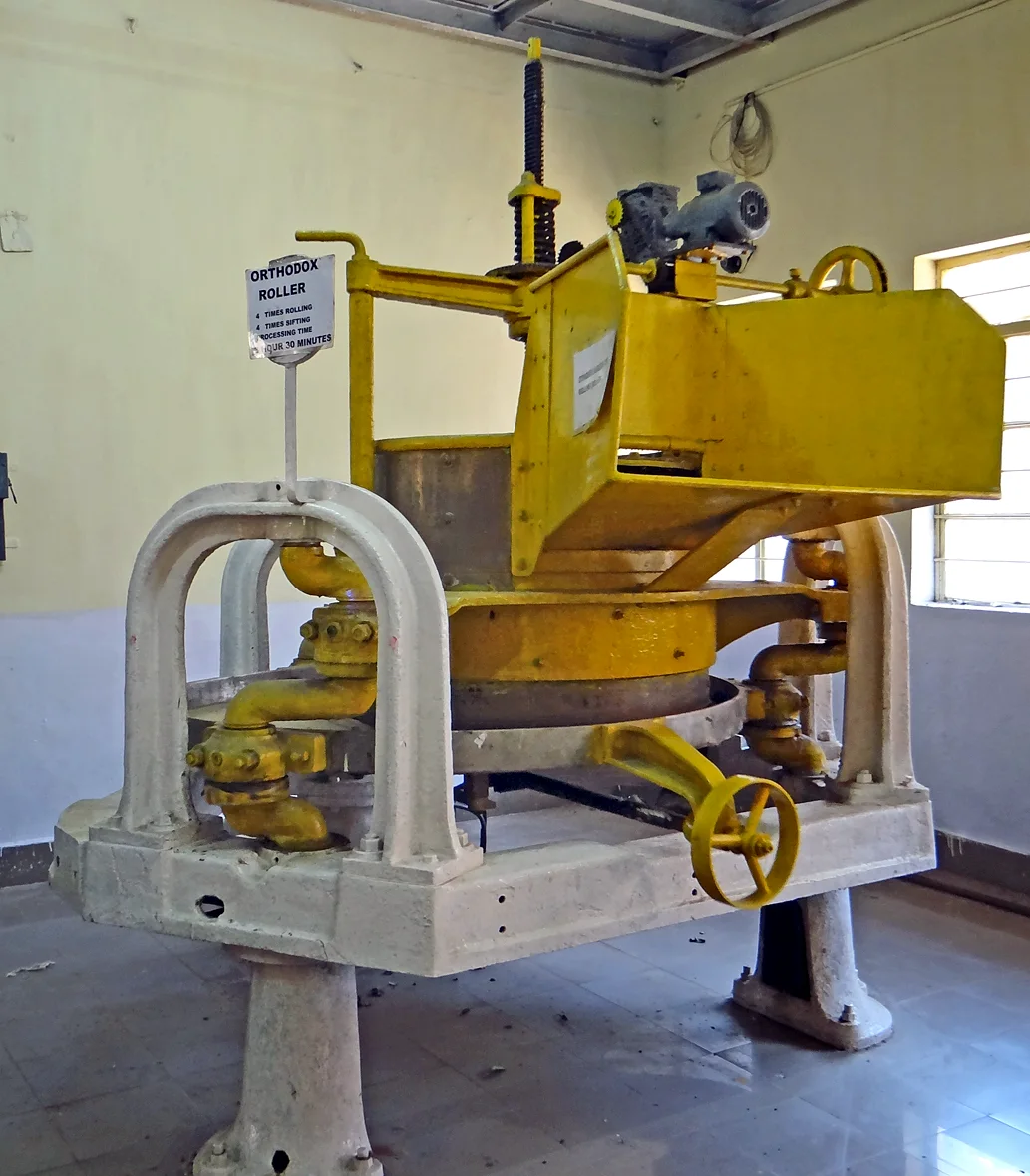
Black tea is made in two main ways. In the orthodox method, the withered leaf is twisted in rollers, keeping larger pieces of leaf; it gives the complex, aromatic teas of Darjeeling and many specialty gardens. In the CTC method ("crush, tear, curl"), developed in Assam in the 1930s, the leaf is passed through toothed steel rollers that chop it into small hard granules. CTC tea brews fast, strong and dark, and takes milk and sugar well. It is the backbone of Indian chai and of tea bags, and the large majority of India's black tea is now CTC.
Grades: what those letters mean
Packets of black tea often carry mysterious letters. They describe leaf size and appearance, not quality as such:
- Whole leaf: OP (Orange Pekoe), FOP (Flowery OP, with some tips), GFOP (Golden Flowery OP), TGFOP (Tippy Golden Flowery OP) and FTGFOP (Finest TGFOP), favoured in Darjeeling and Assam. "Orange" probably has nothing to do with the fruit; one popular theory links it to the Dutch royal House of Orange.
- Broken leaf: BOP (Broken Orange Pekoe), FBOP and similar.
- Fannings and dust: the smallest particles, used in tea bags and for strong, quick brews.
- CTC grades such as BP, BOP, PF (Pekoe Fannings) and PD (Pekoe Dust) are used in India for the granular teas.
Who grows, sells and drinks the world's tea
World production of made tea reached about 6.6 million tonnes in 2023. China alone produced about half of it, roughly 3.3 million tonnes, most of it green tea. India was second with about a fifth, and Kenya third with about 9%. Together these three grow some four-fifths of the world's tea. Other major producers include Sri Lanka, Turkey, Vietnam, Indonesia, Bangladesh, Argentina, Japan, Uganda and Malawi.
| Country | Role in world tea (recent years) |
|---|---|
| China | Largest producer by far (about half of world output); mostly green tea; drinks most of what it grows; a major exporter of green tea. |
| India | Second-largest producer, roughly 1.3 billion kg a year; drinks most of it. In 2024 exports rose to about 255 million kg, the highest in a decade, making India the second-largest exporter. |
| Kenya | Third-largest producer and the world's largest exporter of black tea, almost all CTC, sold mainly through the Mombasa auction to Pakistan, Egypt, the UAE, Russia and the UK. |
| Sri Lanka | Famous "Ceylon tea"; a leading exporter of orthodox black tea, especially to the Middle East and Russia. |
| Turkey | A large producer on the Black Sea coast, almost entirely for its own tea-loving population. |
The biggest importers include Pakistan, Russia, the United Kingdom, the United States, Egypt and the Gulf states. Per head, Turkey is usually ranked the heaviest tea-drinking nation, at around 3 kg of tea per person per year, followed by countries such as Ireland, the UK, Russia and Morocco (estimates vary from source to source). India and China drink far more in total, though less per person.
The auctions
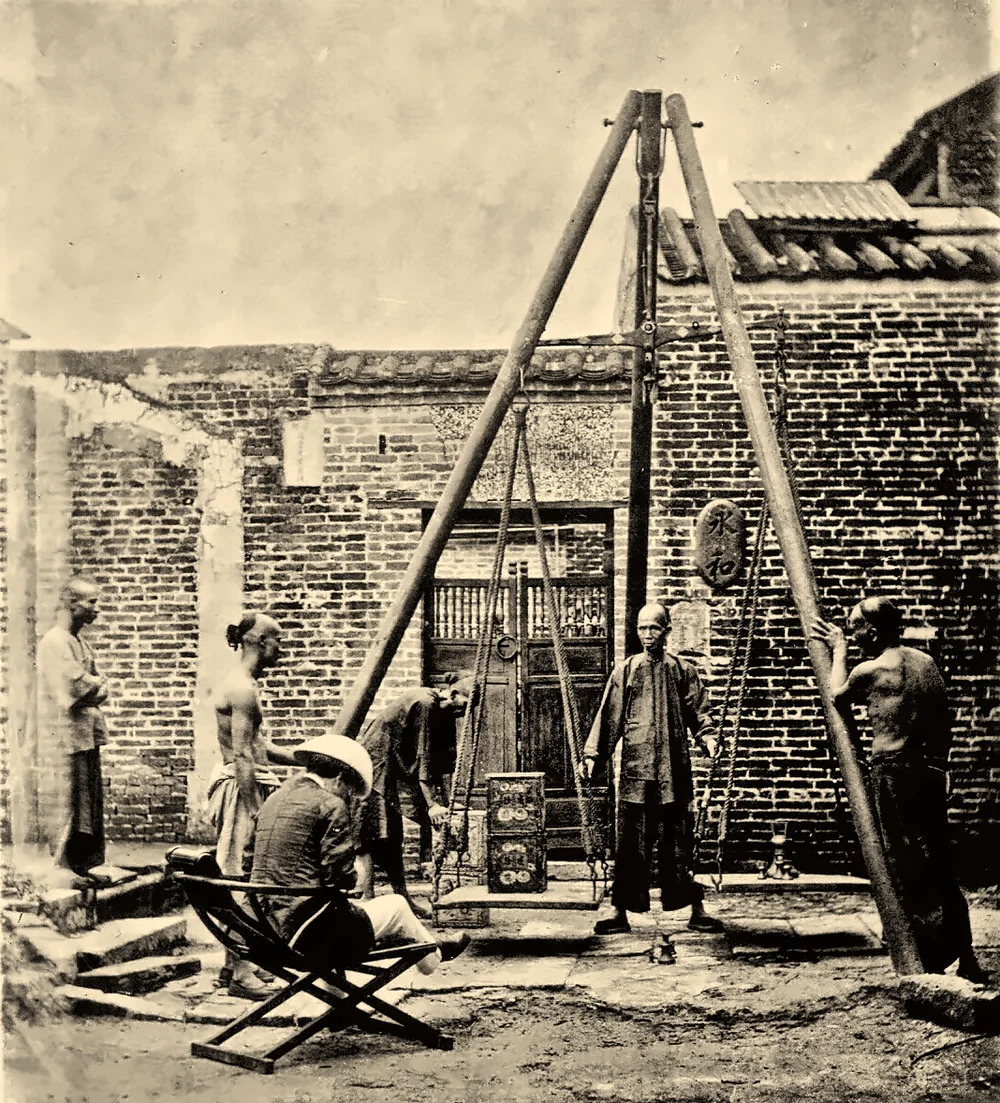
Much of the world's black tea is still sold at public auction. London's tea auctions began with the East India Company in 1679 and moved to Mincing Lane in 1834; the last London auction was held on 29 June 1998. India's first tea auction was held in Kolkata on 27 December 1861. Today Indian tea is auctioned at Kolkata, Guwahati, Siliguri, Kochi, Coonoor and Coimbatore, now mostly electronically. Colombo (Sri Lanka) and Mombasa (Kenya) are among the largest auctions in the world.
Tea tasters: the people who judge every cup
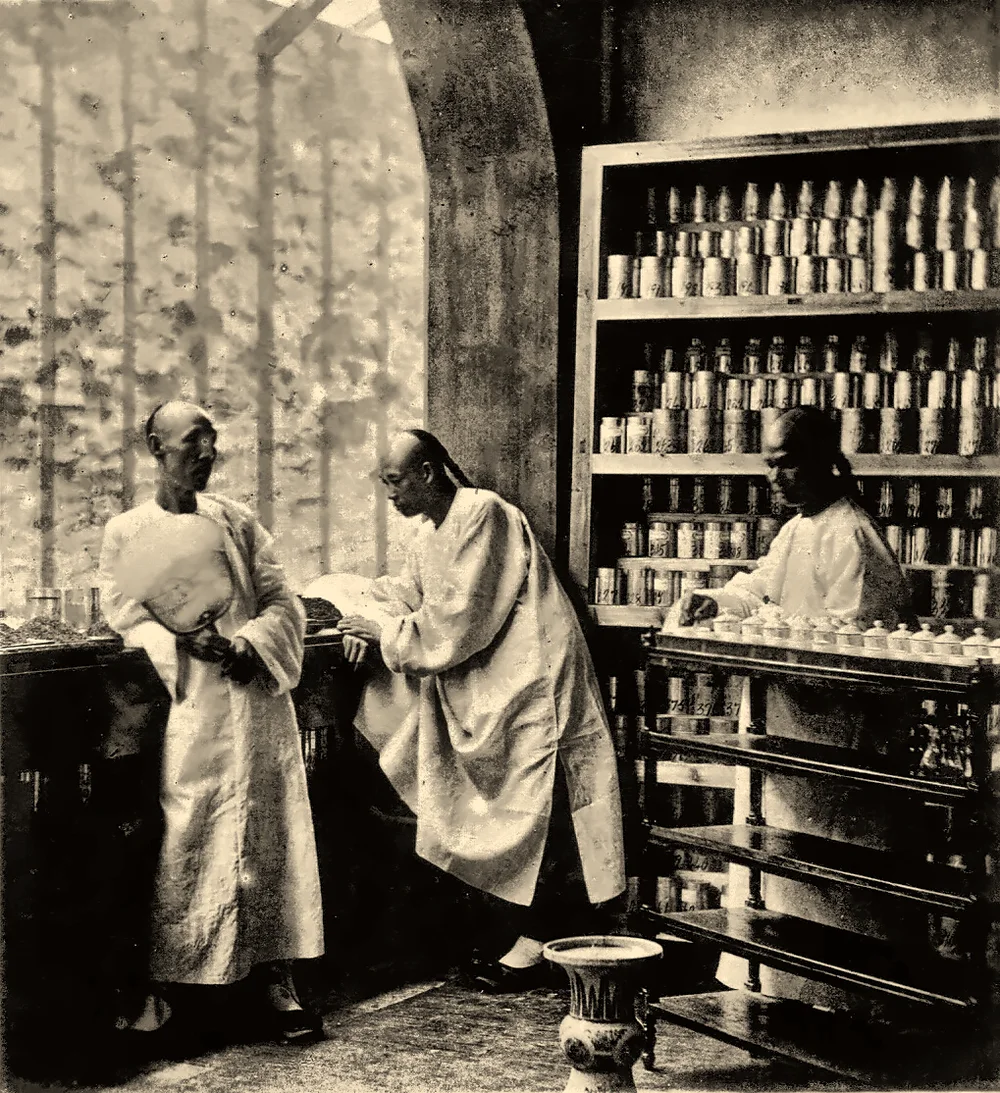
Behind every auction and every packet is a tea taster. Tasters work for brokers, estates, exporters and blending companies, and between them they decide what each lot of tea is worth. A busy taster may assess hundreds of samples in a day.
The routine is almost ritual. A small, fixed weight of each tea is placed in a lidded white porcelain mug and steeped in freshly boiled water for a set time, typically about five or six minutes. (The international standard, ISO 3103, specifies 2 g of tea per 100 ml of water and six minutes.) The liquor is poured into a bowl, and the infused leaf is turned out onto the lid for inspection. The taster:
- looks at the dry leaf: its size, colour, twist, the proportion of golden "tips";
- examines the infused leaf: a bright, coppery colour in black tea suggests good manufacture;
- judges the liquor: its colour, clarity and brightness, often with and without milk;
- and finally slurps a spoonful noisily, spraying it across the whole palate, rolls it around, and spits it into a large spittoon.
Tasters have a vocabulary of their own: "bright", "brisk", "brassy", "coppery", "malty", "muscatel", "thick", "thin", "flat", "stewed", "burnt", "gone off". Learning to taste takes years of apprenticeship. In India, tasters usually train with broking houses or tea companies, and some institutes now run courses in tea tasting and management. It is a demanding job: tasters must protect their palates, avoiding strong spices, smoking and alcohol before work, and their judgement of a single lot can mean a difference of lakhs of rupees to an estate.
Blending: the art of consistency
Teas change with every season, weather and garden. Yet a famous brand must taste the same in every packet, year after year. That is the job of the blender, who may combine twenty, thirty or more teas from different estates and countries, adjusting the recipe constantly to keep the taste steady.
- English Breakfast: a strong, full-bodied blend, typically of Assam, Ceylon and Kenyan teas, made to take milk.
- Irish Breakfast: usually even stronger and maltier, heavy with Assam.
- Earl Grey: black tea flavoured with oil of bergamot, a citrus fruit. It is named after Charles Grey, 2nd Earl Grey, British Prime Minister from 1830 to 1834, but the stories of how he came by the recipe are legends, and several firms claim to have created it.
- Russian Caravan: a smoky blend that recalls the tea caravans from China to Russia, whose cargo was said to absorb the smoke of the campfires.
- Masala chai blends: strong CTC tea with ginger, cardamom, cinnamon, clove and black pepper. (Read about cardamom, cinnamon, clove, ginger and black pepper.)
Flavoured and scented teas
- Jasmine tea: green (sometimes white) tea layered with fresh jasmine blossoms overnight, as they open, so the leaves absorb their scent. The best is scented several times and the spent flowers are removed.
- Lapsang souchong: a black tea from China's Wuyi mountains, dried over pinewood smoke.
- Genmaicha (green tea with toasted rice) and hojicha (roasted green tea), from Japan.
- Osmanthus, rose and chrysanthemum teas, from China.
- Fruit-flavoured teas, from lemon and peach to mango and passion fruit, flavoured with natural oils or added flavourings.
- Mint tea in Morocco, and ginger, cardamom or lemongrass tea in Indian homes.
The world's costliest teas
Most tea is cheap, but the rarest teas fetch staggering prices:
- Da Hong Pao from the "mother trees": only six ancient bushes on a cliff in the Wuyi mountains of Fujian are said to be the original "Big Red Robe" plants. In 2005, 20 grams of their tea sold at auction for ¥208,000. Picking from them was stopped in 2006 to protect them.
- Aged pu-erh: pressed cakes decades old, from famous factories or ancient tea trees, change hands among collectors for very large sums.
- Assam golden-tip teas: hand-rolled teas made only of golden buds. Manohari Gold, from Dibrugarh, sold for ₹99,999 per kg at the Guwahati auction in December 2021, and for ₹1.15 lakh per kg in a private sale in December 2022. Dikom estate's Golden Butterfly fetched ₹75,000 per kg in 2020.
- Darjeeling first-flush and silver-tip teas regularly set records at Indian auctions.
- Japanese gyokuro and ceremonial-grade matcha, shade-grown and hand-processed.
- Tieguanyin and other top oolongs from competition-winning growers in Fujian and Taiwan.
Some "most expensive tea" stories are marketing novelties, such as tea grown with panda dung, or a diamond-studded tea bag made for an anniversary publicity campaign. They are more about headlines than about tea.
Tea chests, caddies and tins
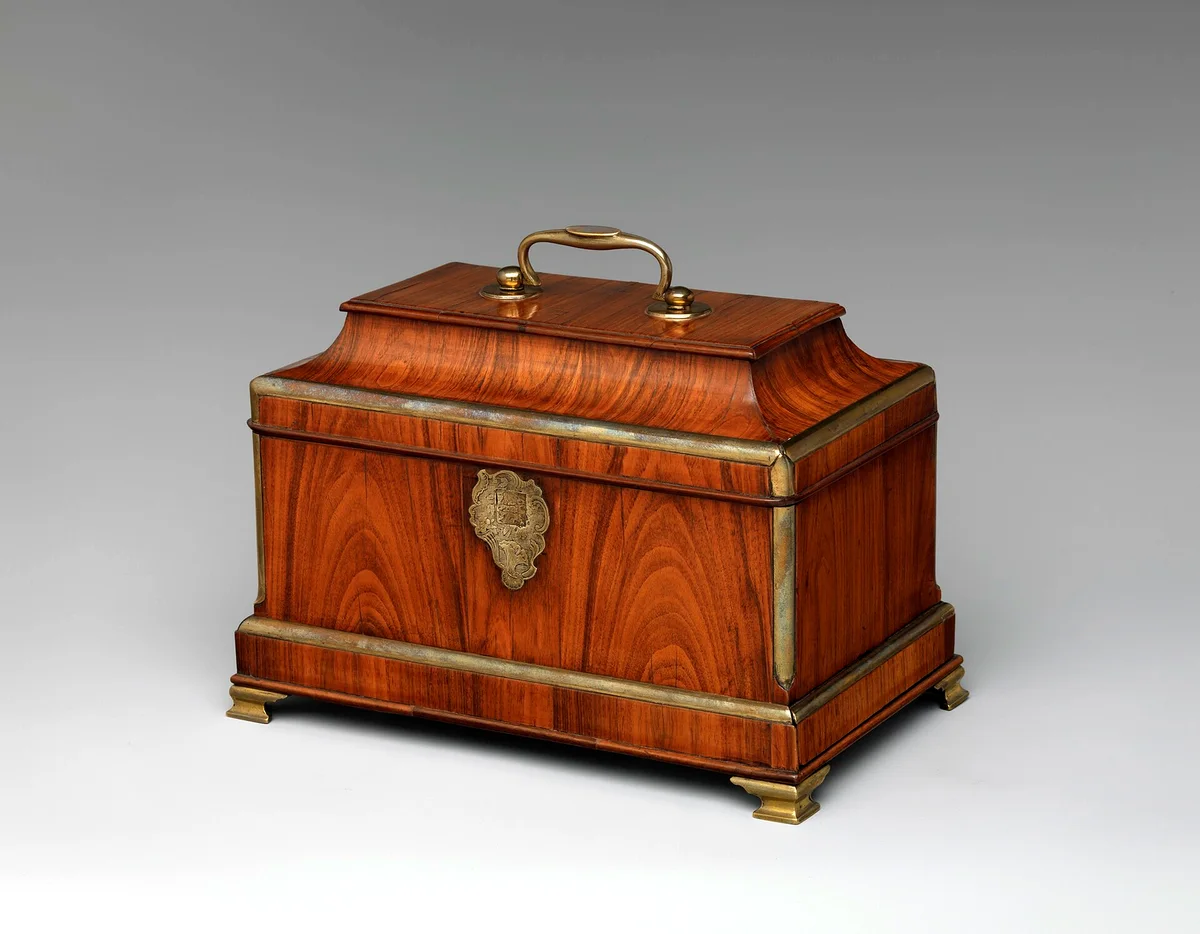
For three centuries tea travelled in wooden chests. The China trade used chests lined with lead foil and stamped with Chinese characters, filled to a standard weight; the Boston Tea Party destroyed 342 of them. On the estates of India and Ceylon, chests were later made of plywood with foil or paper linings, and the "tea chest" became a household object around the world, reused for moving house, storage and even as the sound box of the home-made "tea-chest bass". From the 1970s to the 1990s, chests were gradually replaced by multi-layer paper sacks, which are cheaper and lighter.
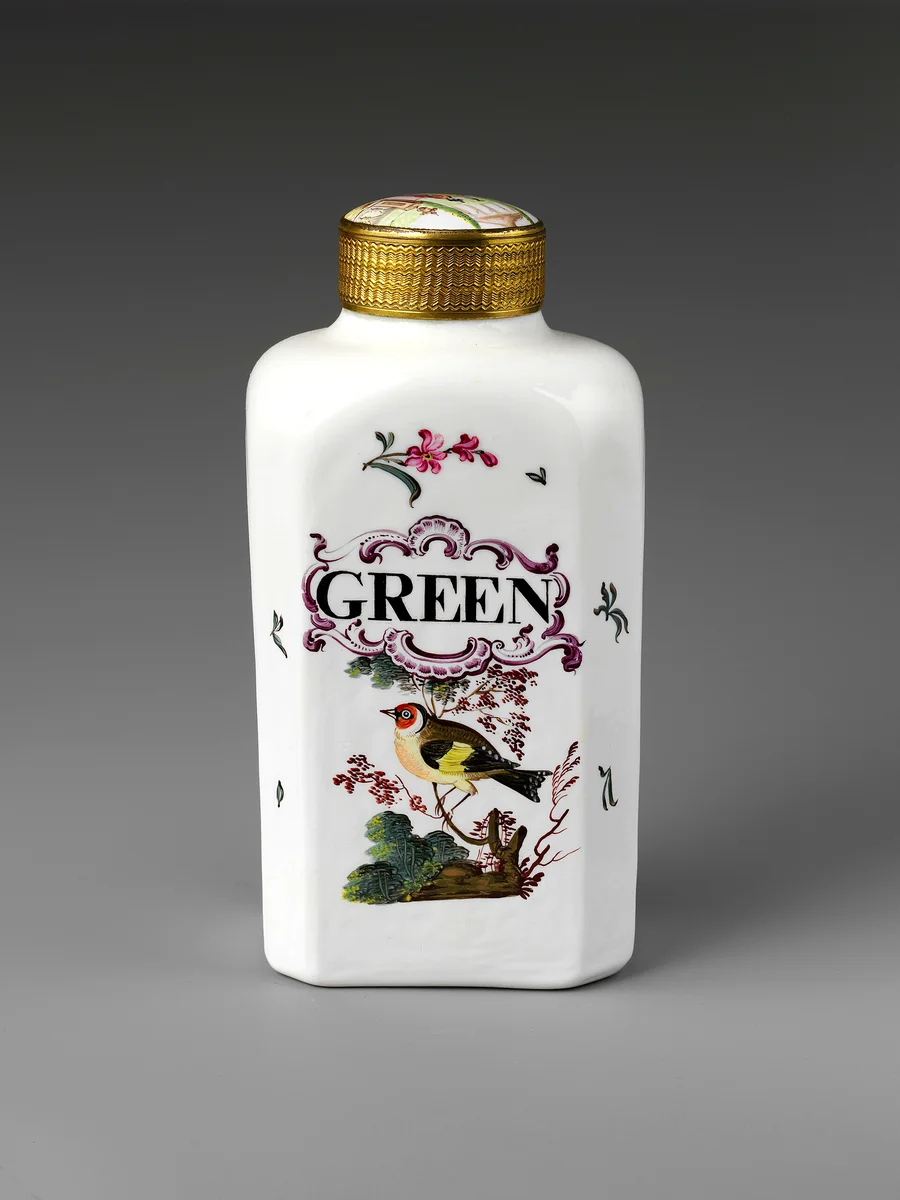
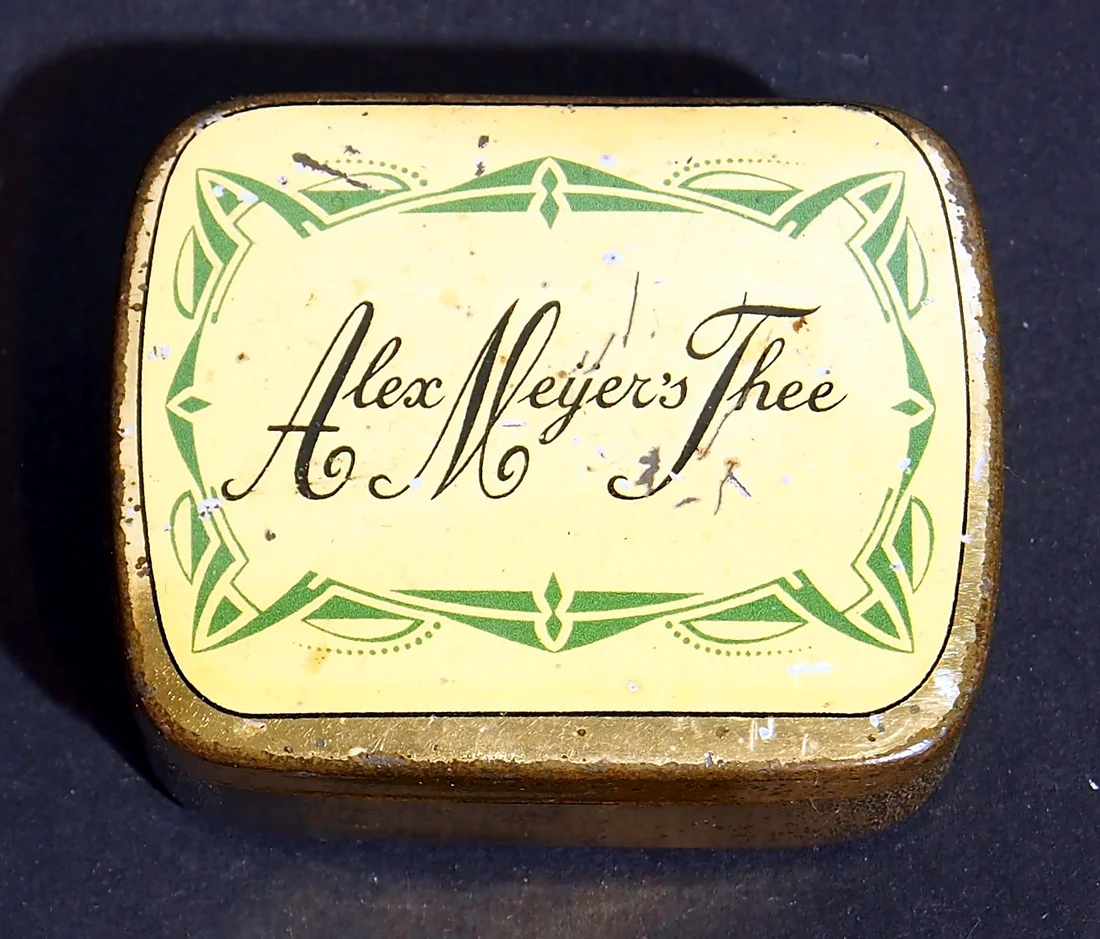
At home, when tea was a luxury, it was kept under lock and key. The housewife or butler held the key to the tea caddy, a decorated box, often with separate compartments or canisters for green and black tea and a bowl for blending them. The word "caddy" comes from kati, a Malay weight of about 600 g.
Famous brands and the birth of packaging
Until the nineteenth century tea was sold loose, scooped from chests by grocers. Adulteration was rife: used leaves were dried and resold, and tea was bulked out with leaves of other plants, dust and even dyes. In 1826, John Horniman began selling tea in sealed, pre-weighed packets guaranteeing its purity, a revolution in grocery. (His son Frederick founded the Horniman Museum in London.)
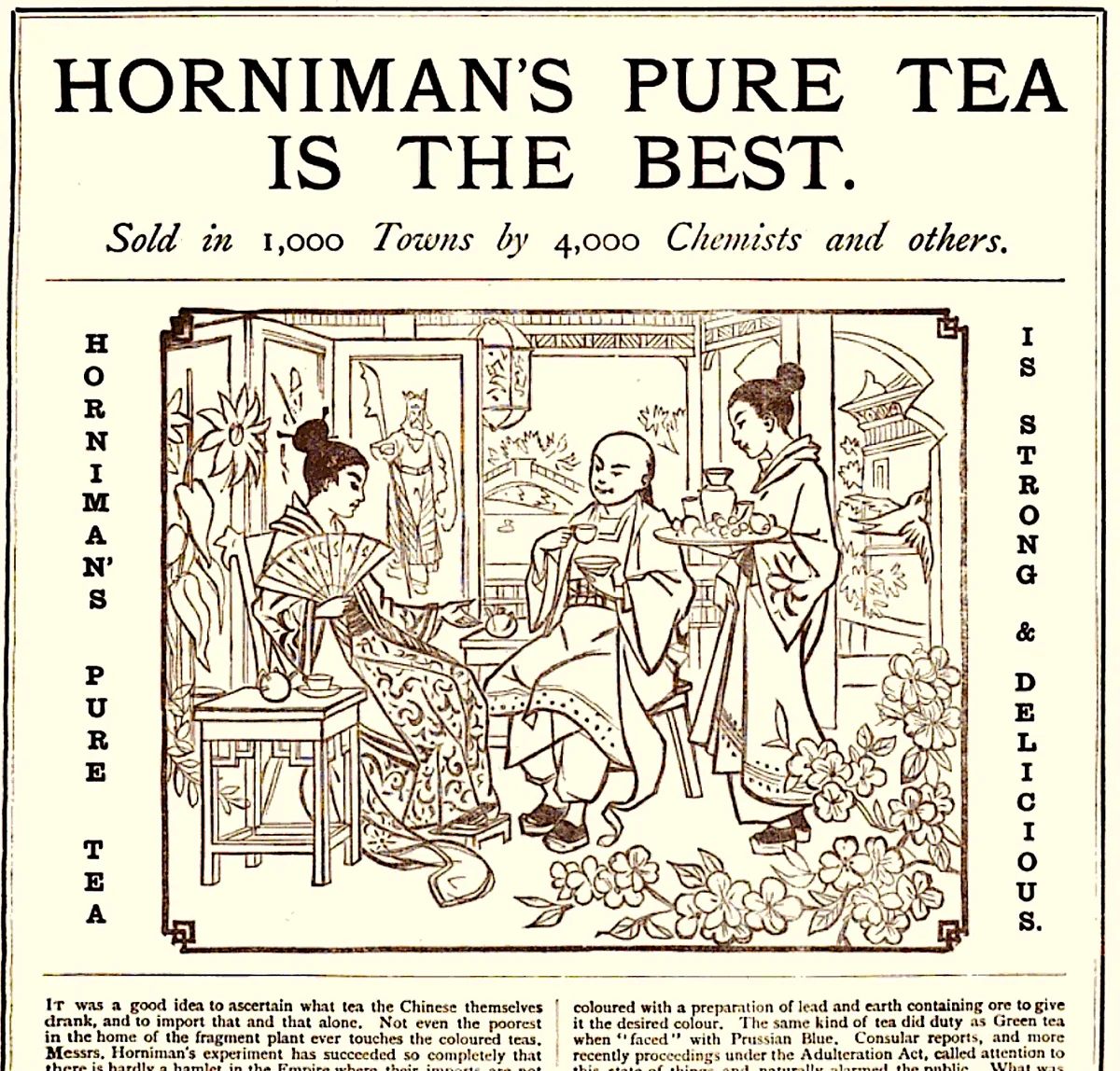
Then came the brands, with bold advertising, decorated tins and catchy names:
- Twinings (London, 1706), one of the oldest tea firms in the world.
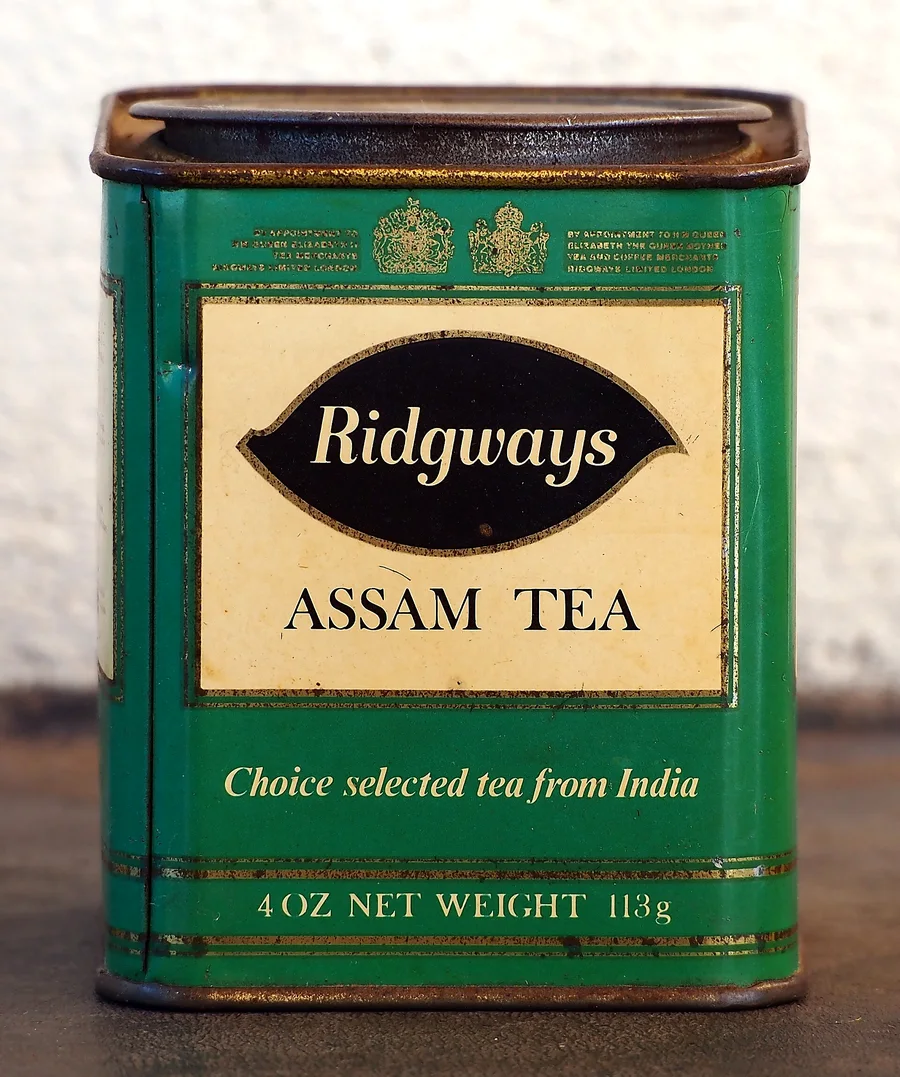
- Ridgways (1836) and Tetley (founded by the Tetley brothers in Yorkshire in 1837). In 2000 Tetley was bought by India's Tata Tea, one of the largest overseas takeovers by an Indian company at the time.
- Brooke Bond (Manchester, 1869), founded by Arthur Brooke. There was no Mr Bond; he simply liked the sound. Brooke Bond's Red Label (1903) became one of India's best-known teas.
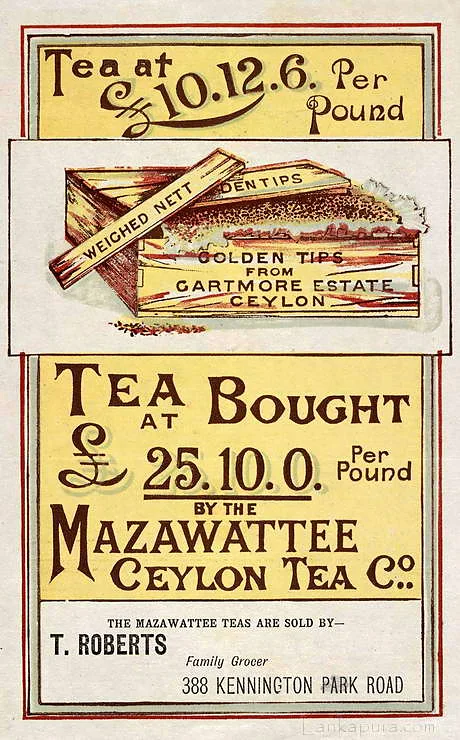
- Mazawattee (1887), a late-Victorian favourite whose name is usually explained as a blend of the Hindi maza (delight) and the Sinhala watte (garden).
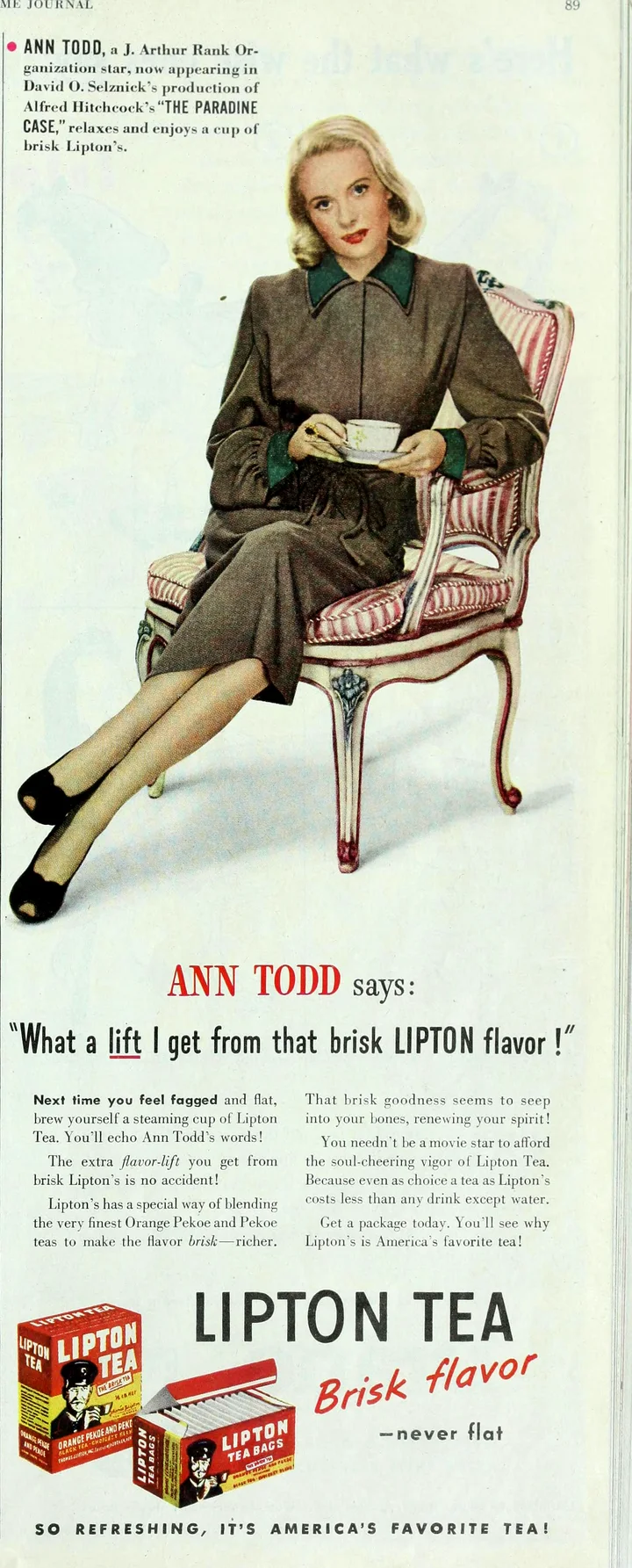
- Lipton, built by Thomas Lipton on his Ceylon estates from 1890, today one of the world's biggest tea brands.
- Typhoo (Birmingham, 1903) and PG Tips (Brooke Bond, 1930), famous for decades of advertising.
- In India, Tata Tea, Taj Mahal, Kannan Devan from the Munnar hills, and a host of regional brands.

The tea bag: an American accident?
The popular story says that around 1908 a New York tea merchant, Thomas Sullivan, sent samples to customers in little silk bags, and they dunked the bags in hot water instead of emptying them. Sullivan certainly marketed silk tea bags, but the "accident" part is probably legend. In fact two women from Milwaukee, Roberta Lawson and Mary McLaren, had already applied in 1901 for a patent on a "tea leaf holder", a stitched mesh bag, granted in 1903.
- 1929: Adolf Rambold built the first automatic tea-bag packing machine for the German firm Teekanne; his later double-chamber bag (1949) is still used.
- 1930: William Hermanson patented the heat-sealed paper tea bag. Filter paper, often containing abaca fibre from a relative of the banana, replaced gauze and silk.
- 1953: Tetley introduced tea bags to Britain. They were slow to catch on, but today the great majority of tea in Britain is made with bags.
- 1997: PG Tips launched pyramid-shaped bags, giving the leaves more room.
- Recent years: concern about plastics. Many bags were sealed with polypropylene, and nylon "silken" pyramids were found in a 2019 study to shed huge numbers of microscopic plastic particles in hot water. Many brands have since switched to plant-based seals and materials.
Tea bags mostly contain fannings and dust, small particles that infuse quickly. That is why bag tea brews strong in a minute or two, while whole-leaf tea needs longer.
Instant tea: how it is made
A concentrated "tea paste" with sugar and milk was patented in Britain as early as 1885, but practical instant tea needed modern drying technology. Instant teas became popular in the United States after the Second World War, especially for iced tea. In India, the Tata and James Finlay partnership set up an instant tea factory at Nallathanni estate in Munnar in 1964. The process, in outline:
- Raw material: often fresh, fermented (oxidised) black tea leaf, which costs less than finished tea and gives a similar flavour.
- Extraction: the tea is steeped in hot water in large extractors, and the liquid is clarified by centrifuges or filters.
- Aroma recovery: the volatile aromas are stripped off with steam or inert gas and saved, to be added back later.
- "Cream" removal: as strong tea cools it turns cloudy ("tea cream"). Manufacturers remove these compounds or make them soluble with an enzyme called tannase, so that the finished powder dissolves clear, even in cold water.
- Concentration: water is evaporated under vacuum at low temperature.
- Drying: the concentrate is spray-dried (atomised into hot air) or freeze-dried into a fine powder, with only a few per cent moisture left.
- Packing, sometimes with sugar, milk powder, lemon or other flavourings for "3-in-1" mixes and iced-tea powders.
Instant tea is also the base of most bottled and canned ready-to-drink teas.
Quick facts
- All true tea comes from one species, Camellia sinensis.
- Black, green, white, oolong and pu-erh differ mainly in how much the leaf is oxidised and how it is processed.
- World production: about 6.6 million tonnes (2023); China about half, India about a fifth, Kenya about 9%.
- Largest exporter of black tea: Kenya. Highest consumption per head: Turkey.
- Most production figures in this article are rounded and change every year.
Next: How to Make the Perfect Cup, including green tea and health facts. Read also: Munnar Tea · The KDHP Tea Museum · The people who made Munnar's tea
See it for yourself, with a local driver who knows these roads.
Book a Munnar Jeep SafariSources & further reading
- Tea & Coffee Trade Journal: China's dominance in tea shows no signs of waning (world production 2023)
- The Week / PTI: Tea exports from India rise to 254.67 million kg in 2024
- The Star / Xinhua: Kenya reports surge of tea export volumes in 2024
- Wikipedia: Da Hong Pao
- Business Today: Manohari Gold tea sells at ₹1.15 lakh per kg (2022)
- Wikipedia: London Tea Auction
- The Telegraph (Kolkata): First tea auction in India, 27 December 1861
- Wikipedia: Tea bag
- Wikipedia: Instant tea
- Wikipedia: Hornimans
- Kerala Museum: Kannan Devan Hills, a historical genesis (instant tea factory, 1964)
Figures are from the sources listed and were checked in October 2026. Park timings and road conditions change, so please confirm before you travel.