
A Maharaja in the Hills: The Sree Moolam Club of Devikulam and its Ravi Varma Portrait
In a quiet hill town above Munnar, a club founded in 1915 to honour the Maharaja of Travancore still keeps one of its oldest treasures: a portrait of Sree Moolam Thirunal attributed to Raja Ravi Varma. The story of the painting, the club, and the ruler whose reign reshaped the high ranges.
Most visitors to Munnar pass through Devikulam without stopping: a small town of government offices, a lake among the tea and the road to the Gap. Yet in a modest building in this town hangs a painting that would be at home in a royal palace: an oil portrait of Maharaja Sree Moolam Thirunal of Travancore, attributed to India's most celebrated painter of the age, Raja Ravi Varma. It belongs to the Sree Moolam Club, which has kept it for more than a century.
At a glance
- Where: the Sree Moolam Club, Devikulam, about 7 km from Munnar.
- Founded: reported as 1915, in honour of the Maharaja's birthday; described as one of the earliest libraries in Kerala's high ranges.
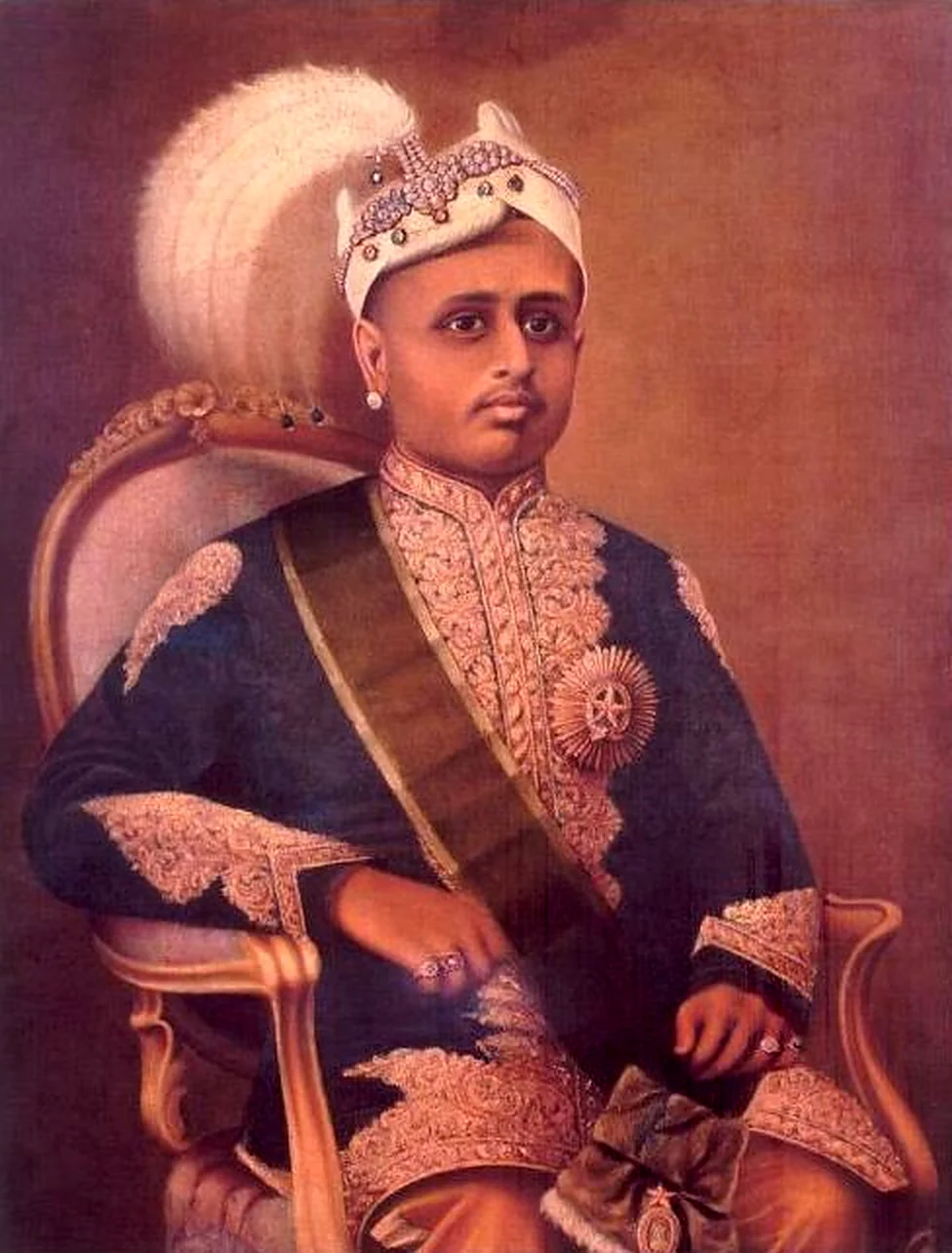
- The painting: an oil portrait of Sree Moolam Thirunal Rama Varma (reigned 1885–1924), attributed to Raja Ravi Varma (1848–1906), presented to the club by a Commissioner named Robinson.
- Today: still in the club, reported to be in good condition and valued at several crores of rupees.
The club
Devikulam was the administrative heart of the high ranges. In 1909 the Travancore government carved out a Devikulam Division, later renamed the High Range Division, and the town became home to the officials who governed the plantations, forests and hill villages. (Read the history of Devikulam.) In 1915, according to the club, a club and reading room was founded in honour of the ruling Maharaja's birthday and named after him: the Sree Moolam Club. It is often described as one of the earliest public libraries in this part of Kerala, a place where officials, clerks, teachers and planters' staff could read newspapers and books brought up from the plains.
The portrait
According to the club's account, reported by Onmanorama in 2026, the portrait was presented by the Devikulam Commissioner, Robinson, as a tribute to the ruler. It shows the Maharaja in ceremonial dress and has survived the damp, cold climate of the hills for more than a century with little damage. The club treasures it as its most valuable possession, and it is now said to be worth several crores of rupees.
Two cautions are worth adding. Raja Ravi Varma died in 1906, so if the painting is from his own hand it was painted at least nine years before the club was founded; it may have hung elsewhere before Robinson gave it. And the attribution, and the story that it was painted with natural pigments made from fruit juices and leaf extracts, come from the club's own tradition. Ravi Varma was famous precisely for his mastery of European oil paints, and his studio and family members also painted portraits of the Travancore royals, so an expert examination would be needed to confirm whose brush it was. None of this lessens its value as a piece of the High Range's history.
Ravi Varma and the Travancore court
Raja Ravi Varma (1848–1906), born at Kilimanoor in Travancore, was the first Indian painter to master oils on a grand scale, and his portraits of princes and his scenes from the epics made him famous across India. He painted many members of the Travancore royal family, and his paintings were reproduced in their thousands by his own printing press, shaping how Indians imagined their gods and heroes for generations.
The ruler and the hills
Sree Moolam Thirunal Rama Varma (1857–1924) ruled Travancore from 1885 until his death, and his long reign changed the high ranges more than any before it.
- In 1886, his government signed the 999-year lease that allowed the Madras Presidency to build the Periyar dam. (Read about the Mullaperiyar dam.)
- The plantations of the Kannan Devan hills grew under his rule, with railways, ropeways and roads climbing into the hills. (Read about the Top Station ropeway.)
- In 1888 Travancore set up a Legislative Council, and in 1904 the Sree Moolam Popular Assembly, one of the first representative bodies in any Indian princely state.
- A local tradition recorded by the Idukki district administration tells how, on a visit to the Periyar works, the Maharaja was given milk by a shepherd named Ankur Rauther and rewarded him with forest land in the hills.
Visiting
The Sree Moolam Club is a private institution, not a museum, so the portrait is not on regular public display. Visitors interested in it should ask the club's office politely in advance. Devikulam itself is worth a stop for its lake, its tea and the drive onwards to the Gap Road. (Read about the viewpoints of the Gap Road.)
A note on the sources
- The details of the club's portrait come from a single news report (Onmanorama, June 2026) based on the club's own account; the attribution to Ravi Varma has not, as far as we know, been confirmed by an expert study.
- The news report says the club was founded in 1915 to mark the Maharaja's 55th birthday; since he was born in 1857, his 55th birthday fell in 1912, so either the year or the birthday may be slightly off.
- The portrait shown on this page is a Ravi Varma portrait of Sree Moolam Thirunal held on Wikimedia Commons, used to illustrate the subject; it may not be the Devikulam painting.
(Read also Devikulam, the history of Munnar and the settlers who made Idukki.)
See it for yourself, with a local driver who knows these roads.
Book a Munnar Jeep SafariSources & further reading
- Onmanorama (June 2026): Rare Raja Ravi Varma painting survives a century in Devikulam
- Idukki district administration: History
- Wikimedia Commons: Raja Ravi Varma, Maharaja Moolam Thirunal Rama Varma
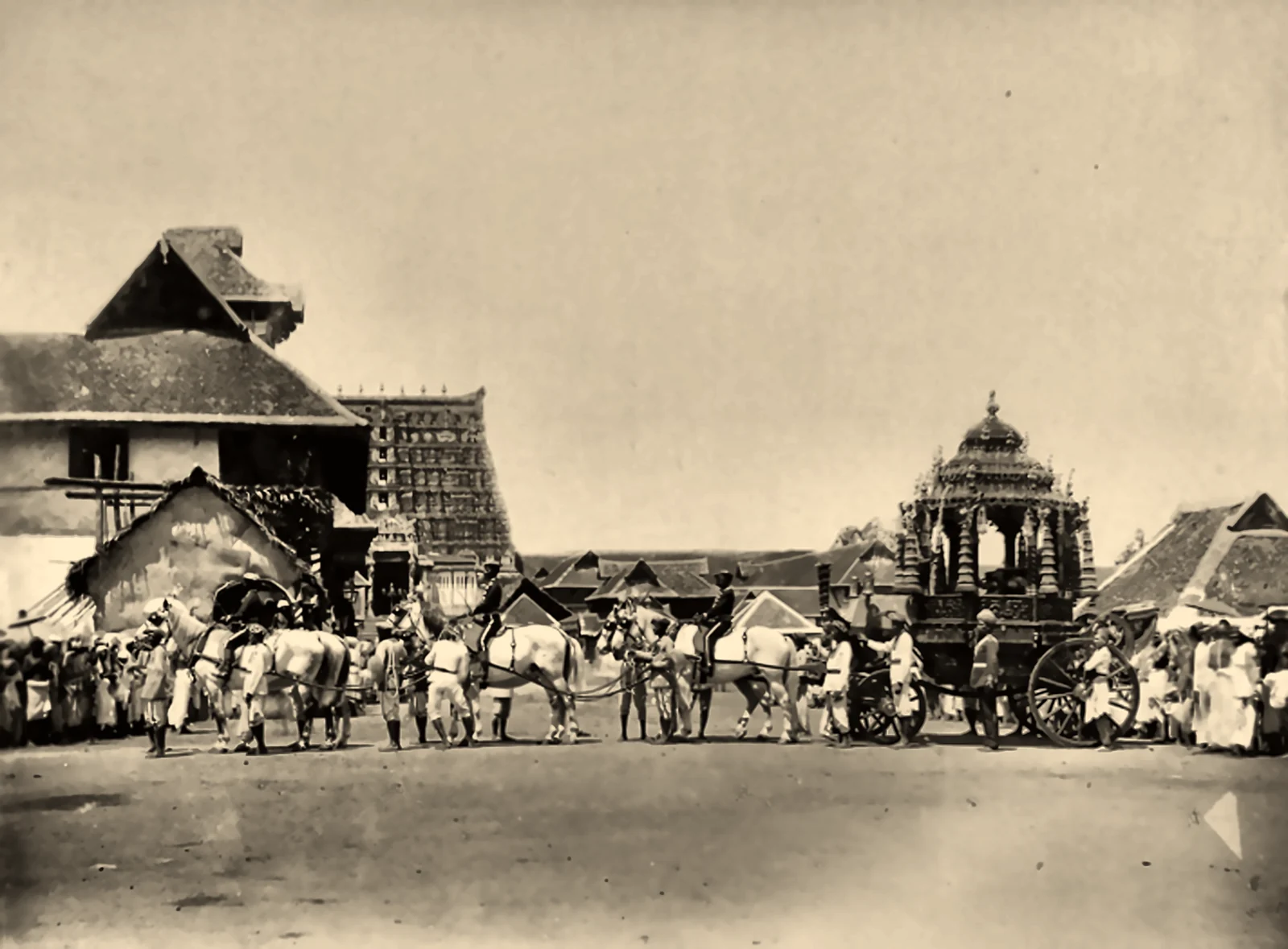
- Wikimedia Commons: Travancore Maharaja's State Carriage
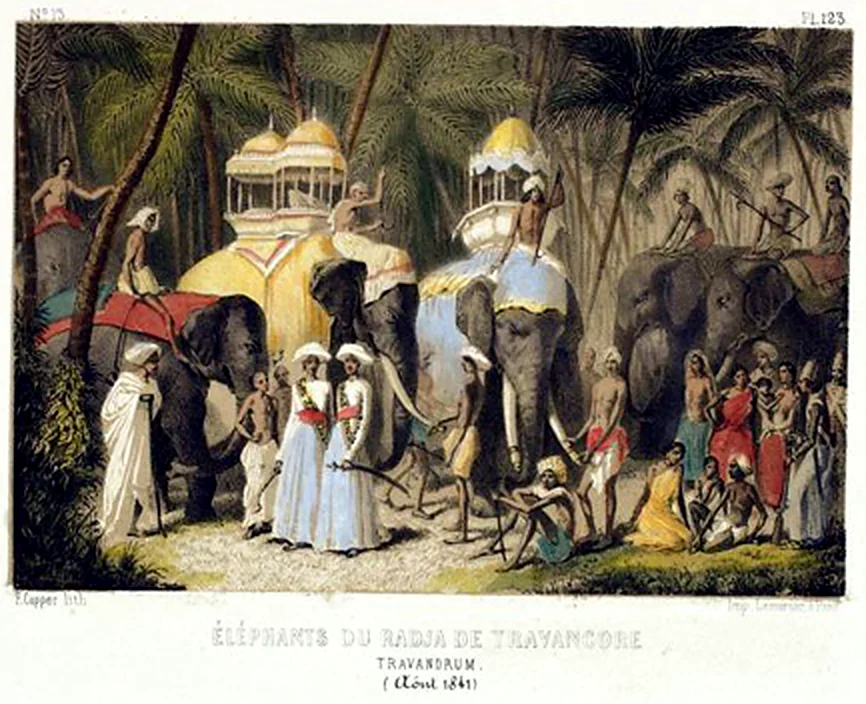
- Wikimedia Commons: Elephants du Radja de Travancore (1841)
Figures are from the sources listed and were checked in October 2026. Park timings and road conditions change, so please confirm before you travel.