
Napier Museum, Thiruvananthapuram: History, Architecture, Art Galleries and Zoo
Founded in 1855 and rebuilt by Robert Chisholm in 1880 with roofs borrowed from Kerala palaces, the Napier Museum sits in a 55-acre campus with one of Asia's oldest zoos and the great collection of Raja Ravi Varma paintings. Its history, the building, what to see and how to visit.
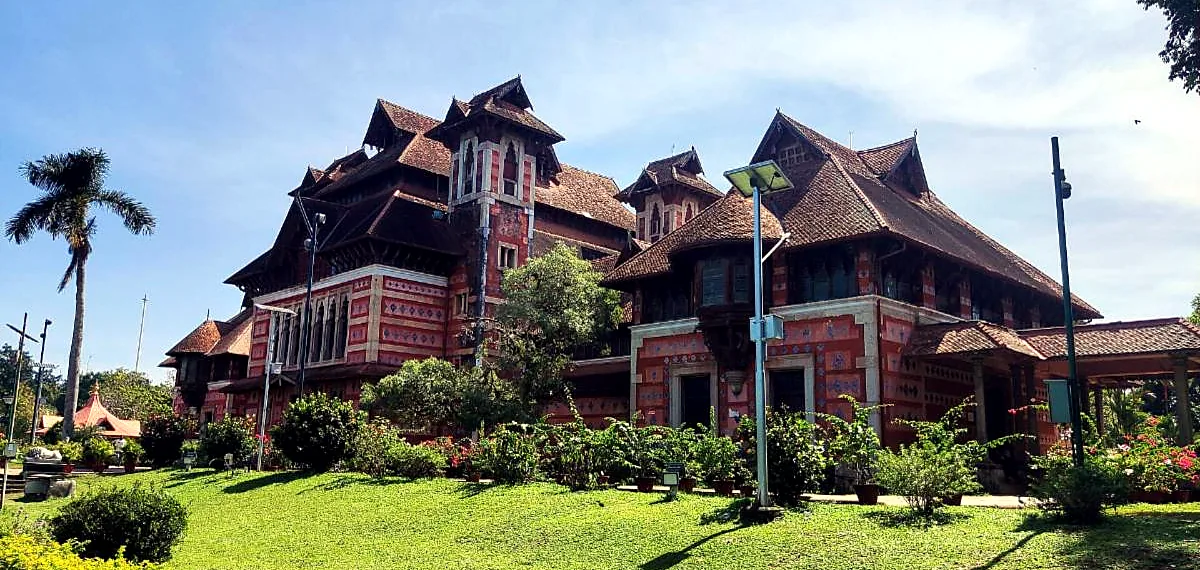
Drive up the hill from Thiruvananthapuram's Museum Junction and you come to a building that looks like no other in India. It has steep tiled roofs stacked one above another like a Kerala palace, little Gothic towers, Islamic pointed arches, and walls patterned in red, white and blue brick. This is the Napier Museum. Around it lie 55 green acres with one of the oldest zoos in Asia, a natural history museum, gardens, a bandstand, and two art galleries. Between them they hold one of the largest collections of paintings by Raja Ravi Varma anywhere.
This guide covers how the museum began in the 1850s, the architect and his building, what to see inside, the Sree Chitra and Raja Ravi Varma art galleries, the zoo, and how to plan a day on the campus.
At a glance
- Where: Museum Junction (Nanthancode), Thiruvananthapuram; about 3.5 km from Thiruvananthapuram Central station.
- Founded: 1855 by Maharaja Uthram Thirunal; the museum opened to the public in 1857.
- Present building: designed by Robert Fellowes Chisholm and opened in 1880, named after Lord Napier, Governor of Madras.
- On the campus: the Napier Museum, Natural History Museum, Sree Chitra Art Gallery (1935), Raja Ravi Varma Art Gallery (2024), the zoo and botanical gardens.
- Open: Tuesday to Sunday, about 10 am to 4:45 pm; Wednesday from 1 pm; closed on Mondays and a few public holidays.
- Run by: the Kerala Department of Museums and Zoos.
A museum for Travancore, 1855
The idea came from the court of Swathi Thirunal, the musician-king who built Kuthiramalika and kept a menagerie of tigers, panthers and deer in his stables. He died in 1846 before he could build a museum. His brother and successor, Uthram Thirunal Marthanda Varma, took the plan forward with the British Resident, General William Cullen.
In 1855 a society was formed to found a museum. The Maharaja was its patron, Cullen its president, and John Allan Broun, director of the Trivandrum Observatory, its secretary. Its aims, in the words of the museum's own history, were to give instruction and encouragement in arts and crafts and to display natural history specimens and the products of native and foreign industry. The museum opened to the public in September 1857. It did not draw many visitors on its own, so a zoo and a public park were added in 1859 to bring people in. The plan worked.
Lord Napier and the architect
By the 1870s the first museum building was too small for its collections. Francis, Lord Napier, Governor of Madras from 1866 to 1872, admired the traditional architecture of Kerala. In 1872 he asked the Madras Government's consulting architect, Robert Fellowes Chisholm, to design a new museum. The foundation stone was laid in 1873, the old building was cleared, and the new museum was opened in 1880 by Maharaja Ayilyam Thirunal. It was named in Napier's honour.
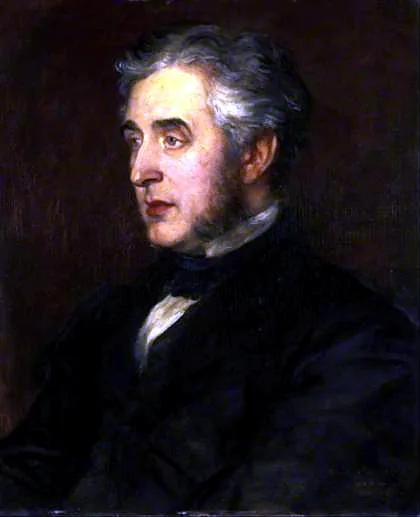
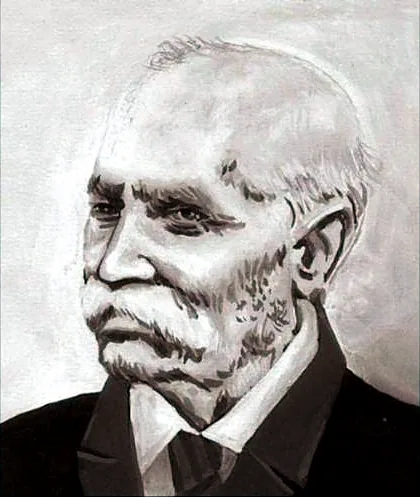
Chisholm was one of the leading figures of the Indo-Saracenic style, which mixed Indian, Islamic and European elements. His Revenue Board building and Post Office in Madras made his name. At Thiruvananthapuram he did something more local. He studied Kerala buildings, especially the stacked roofs of Kuthiramalika, and gave the museum the gabled, layered roofline of a Kerala palace. Below it he added pointed arches, small towers and walls banded in coloured brick.
The building
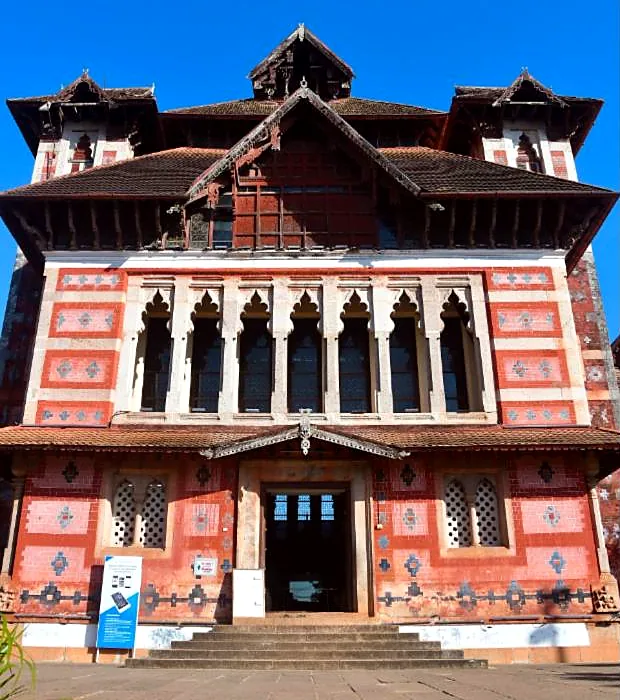
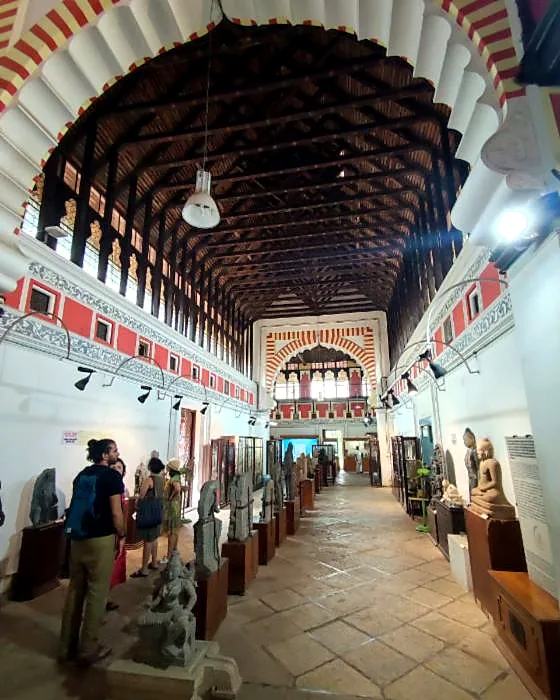
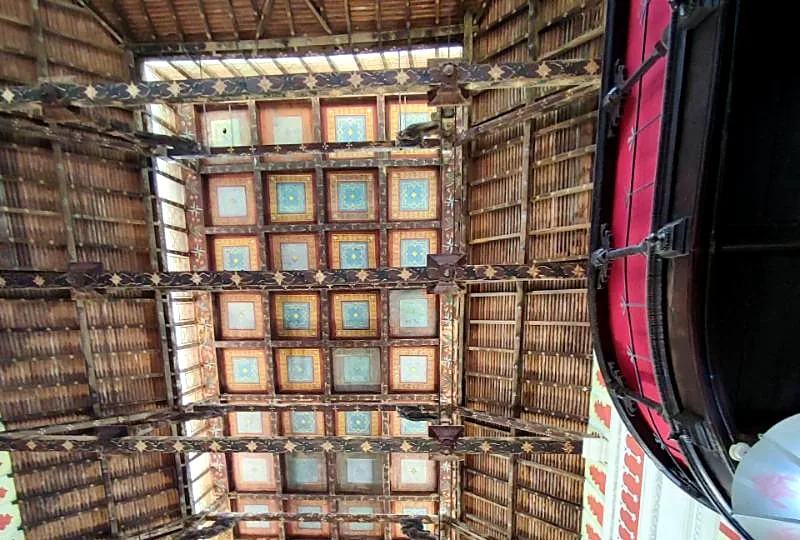
The museum stands on a slight rise among lawns. Its walls are built in patterned brick, with red, white and black bands and diamond motifs, and small stained-glass panes throughout. Inside are three large halls joined by long corridors. Their walls and timber ceilings are painted in red, green and gold, and ornamental windows high up and gaps in the stacked roofs let in light and air. Double walls keep the interior cool, a kind of natural air conditioning. The building still has no mechanical cooling.
What to see inside
The Napier Museum holds a few hundred exhibits, about 550 by Kerala Tourism's count. They are best seen slowly. Highlights include:
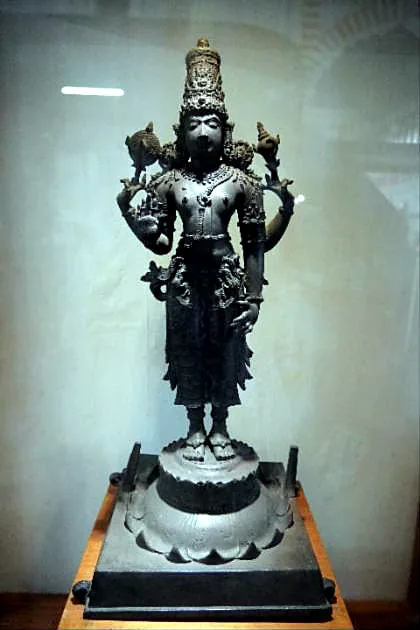
- Bronzes: one of the finest collections of South Indian metal images in Kerala, among them a 13th-century standing Vishnu, a 16th-century Lakshmi-Narayana from Kerala, and many more.
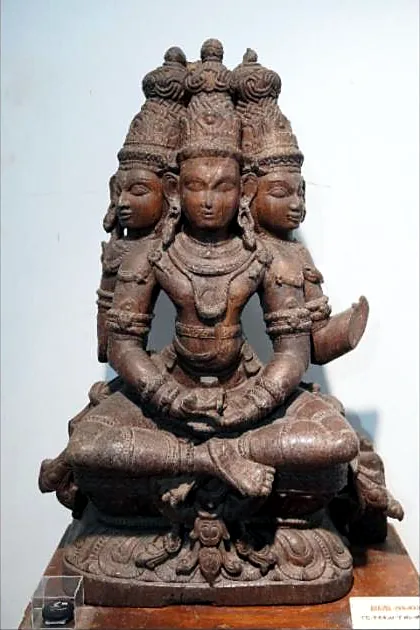
- Stone and wood sculpture: gods, guardians and temple fragments, including a 15th-century Brahma from Thiruvattar.
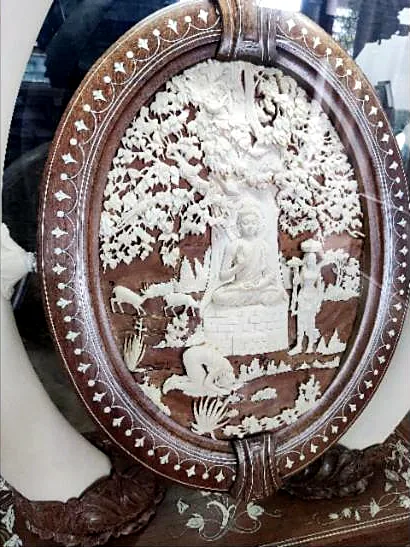
- Ivory carvings: delicate Travancore ivory work, a craft the royal workshops were famous for in the 19th century.
- Temple arts: a carved wooden temple chariot, lamps and ritual objects.
- Kathakali: costumes, headdresses and life-size figures; see our history of Kathakali.
- Coins and ornaments: old Travancore and other coins and traditional Kerala jewellery.
- Asian ceramics: Chinese and Japanese porcelain and celadon from the royal collections.
The Sree Chitra Art Gallery and the Raja Ravi Varma Gallery
On the northern side of the museum grounds is the Sree Chitra Art Gallery. It was founded in 1935 and opened by the last ruling Maharaja of Travancore, Sree Chithira Thirunal. Its collection of about 1,100 paintings covers Indian art over several centuries. There are Tanjore paintings, Mughal and Rajput miniatures, copies of Kerala's temple murals, and works from Bali, China, Japan and Tibet. Among the 20th-century artists are Rabindranath Tagore, Jamini Roy and K. C. S. Paniker. A separate section is given to the Russian painters Nicholas Roerich and his son Svetoslav, with their Himalayan landscapes.
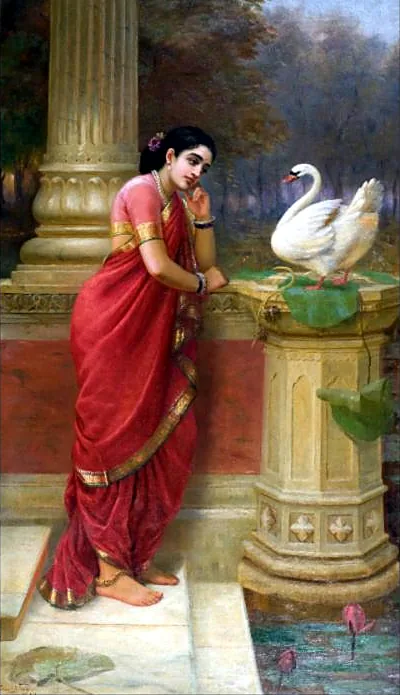
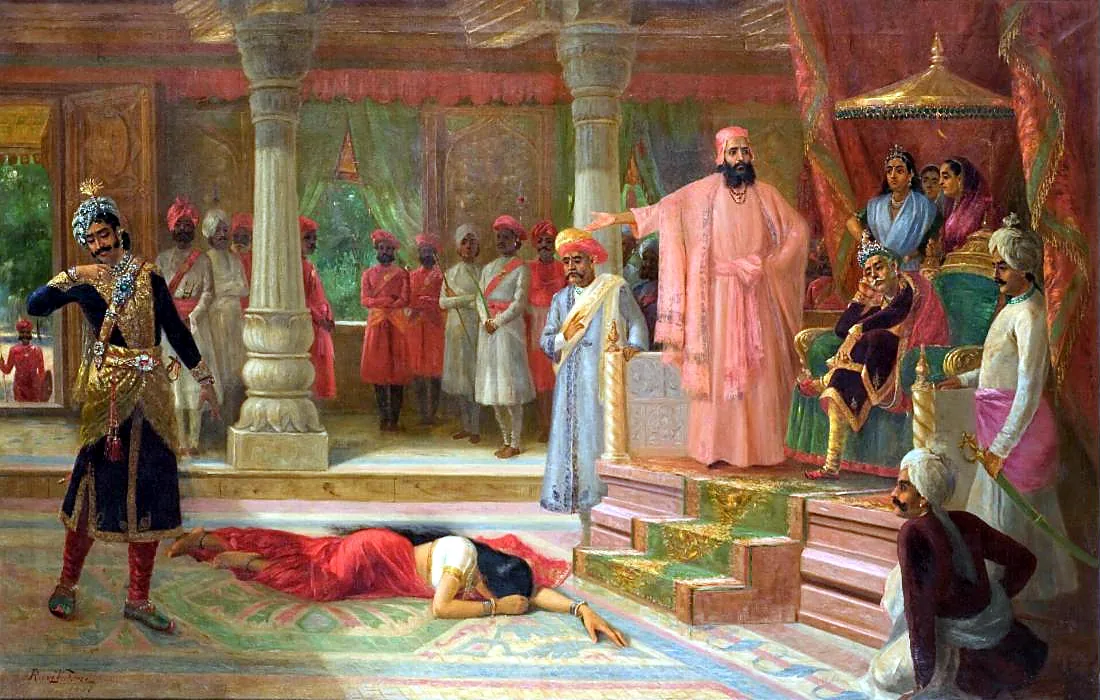
Raja Ravi Varma (1848–1906) was born at Kilimanoor, about 40 km away, and painted for the Travancore court. He has had his own building since 2024. The Raja Ravi Varma Art Gallery, next to the Sree Chitra, covers 12,000 square feet. It shows 134 works by him, including paintings, sketches and oleographs, along with paintings by his brother C. Raja Raja Varma and his sister Mangala Bai. Famous canvases here include Damayanti and the Hamsa (1899), Shakuntala and Draupadi in Virata's Palace.
The zoo and gardens
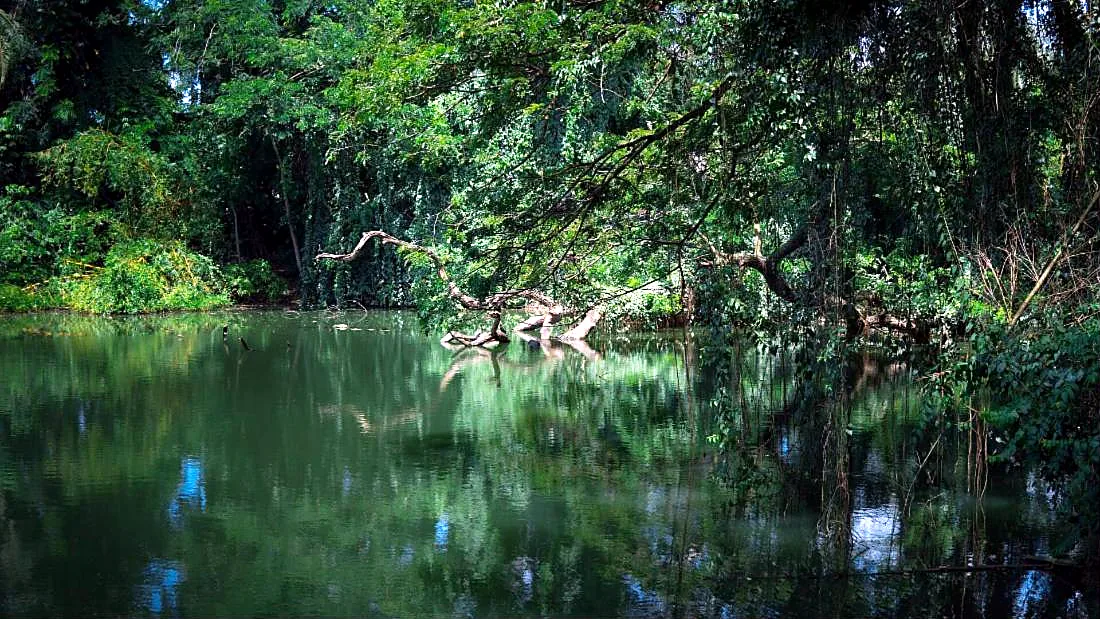
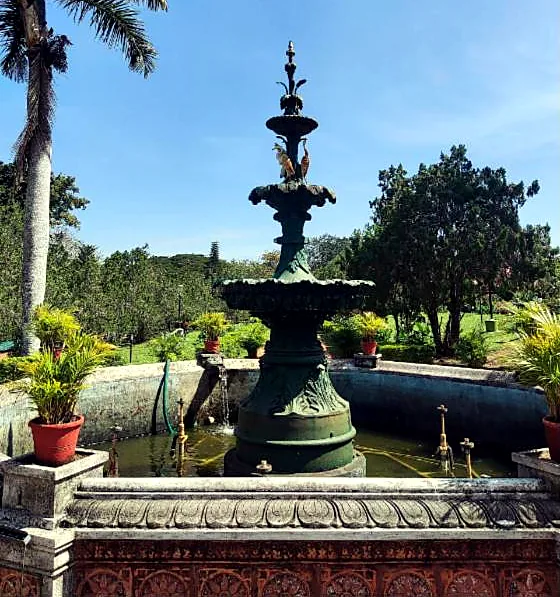
The zoo occupies most of the 55-acre campus, with woods, lakes and lawns linked by shaded paths. It is often called the oldest zoo in India still on its original site. Today it houses more than 80 species, including lions, tigers, leopards, hippos, Nilgiri langurs, lion-tailed macaques, crocodiles and many birds. The botanical gardens, the bandstand and a Victorian cast-iron fountain make the museum grounds one of the city's favourite places for a morning walk.
A campus in the news
In 2026 the Kerala government began considering moving the zoo to a larger site outside the city, to give the animals more space. Heritage groups and many residents argue that the zoo, museum, galleries and gardens form a single historic landscape that cannot be recreated elsewhere. No final decision had been announced at the time of writing.
- 1840sSwathi Thirunal keeps a menagerie in the palace stables.
- 1855A museum society is formed under Uthram Thirunal and General Cullen.
- September 1857The museum opens to the public.
- 1859A zoo and public park are added.
- 1872Lord Napier asks Robert Fellowes Chisholm to design a new museum.
- 1873The foundation stone of the present building is laid.
- 1880Maharaja Ayilyam Thirunal opens the Napier Museum.
- 1935The Sree Chitra Art Gallery opens.
- 2024The Raja Ravi Varma Art Gallery opens next door.
- 2026Debate over relocating the zoo.
Planning your visit
| Details | |
|---|---|
| Museums and galleries | Tuesday to Sunday, about 10 am to 4:45 pm; on Wednesdays from 1 pm. Closed on Mondays and on Republic Day, Independence Day, Thiruvonam and Mahanavami. |
| Zoo | Tuesday to Sunday, morning to late afternoon; closed on Mondays. |
| Tickets | Separate small tickets for the Napier Museum (which also covers some smaller galleries), the Raja Ravi Varma Gallery, the Sree Chitra Gallery and the zoo. Camera fees extra. |
| Time needed | Half a day for the museum, galleries and a walk; a full day with the zoo. |
| Best time | Weekday mornings, when it is cooler and quieter; Sunday afternoons are crowded with families. |
| Getting there | About 3.5 km from Thiruvananthapuram Central and the KSRTC bus stand; buses and autos to Museum Junction. |
Hours and ticket prices are set by the Department of Museums and Zoos and change from time to time.
Combine it with
- Kuthiramalika Palace and the Padmanabhaswamy Temple in East Fort, 3 km south: see Kuthiramalika and the temple.
- Kanakakkunnu Palace, just across the road, with its lawns and cultural festivals.
- Padmanabhapuram Palace, the old wooden palace of Travancore, on a day trip south: Padmanabhapuram Palace.
Questions people ask
Why is it called the Napier Museum?
It is named after Francis, Lord Napier, Governor of Madras from 1866 to 1872, who commissioned its design from the architect Robert Fellowes Chisholm.
When was the Napier Museum built?
The museum was founded in 1855 and opened in 1857; the present building was designed in 1872, begun in 1873 and opened in 1880.
Is the Napier Museum open on Monday?
No. The museums, galleries and zoo are closed on Mondays. On Wednesdays the museum opens only from 1 pm.
Where can I see Raja Ravi Varma's paintings in Thiruvananthapuram?
At the Raja Ravi Varma Art Gallery, opened in 2024 beside the Sree Chitra Art Gallery in the museum compound.
How old is Thiruvananthapuram Zoo?
It was started in 1859 as an addition to the museum, and is often described as the oldest zoo in India still on its original site.
How much time do I need at the Napier Museum complex?
Allow at least half a day for the museum and galleries, and a full day if you also visit the zoo.
(Read also the Hill Palace Museum, Tripunithura, Mattancherry Palace and traditional Kerala architecture.)
See it for yourself, with a local driver who knows these roads.
Book a Munnar Jeep SafariSources & further reading
- Napier Museum (official site): History
- Wikipedia: Napier Museum
- Victorian Web: Napier Museum by Robert Fellowes Chisholm
- Kerala Tourism: Napier Museum
- Kerala Tourism: Sree Chithra Art Gallery
- Kerala Tourism: Raja Ravi Varma Art Gallery (2024)
- Wikipedia: Sree Chitra Art Gallery
- Central Zoo Authority: Thiruvananthapuram Zoo annual report 2020–21
- Wikipedia: Thiruvananthapuram Zoo
- Onmanorama (September 2026): Kerala mulls shifting of Thiruvananthapuram Zoo
- Google Arts & Culture: Damayanti and the Hamsa
Figures are from the sources listed and were checked in November 2026. Park timings and road conditions change, so please confirm before you travel.