
Square and Compass in the Tea Hills: Lodge Heather No. 928 and the Planter Society of Colonial Munnar
In 1902 a handful of tea planters in the Kanan Devan Hills founded a Masonic lodge under the Grand Lodge of Scotland. Its story, from the stones of Christ Church to the graves beside it, shows how a small European elite built a society for itself in the High Ranges.
A short walk above Munnar town, on the road to the High Range Club, stands a building that most visitors pass without a second glance and many local people have long regarded with curiosity, even unease. Its doors are usually closed, its windows reveal little, and in local talk it has gathered the reputation of a place of secrets, even, in some retellings, a "ghost house". It is, in fact, the Masonic Hall of Lodge Heather No. 928, one of the oldest continuously working institutions founded by the European planters of the Kanan Devan Hills.
Lodge Heather was constituted in 1902 under the Grand Lodge of Scotland. Its history is a small one, recorded mostly in the lodge's own papers, on a few gravestones and in the corner stone of a church. Read carefully, it reveals a good deal about the planter community that ran the High Ranges in the first half of the twentieth century: who its members were, how they organised their social world in a remote hill tract, and how that world was bound to the institutions of empire. This article does not set out to celebrate that world. It examines it as historians examine any institution: by asking what it did, for whom, and what it left behind.
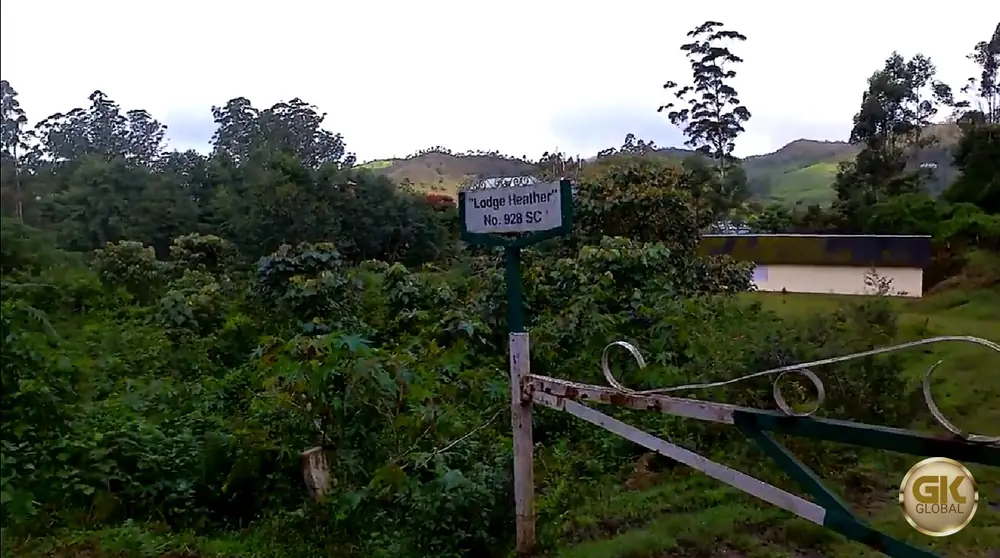
At a glance
- Name: Lodge Heather, No. 928 on the roll of the Grand Lodge of Scotland (S.C., "Scottish Constitution").
- Founded: constituted on 1 May 1902; opened at Munnar in May 1902 and consecrated on 29 June 1902.
- First Master: Bro. A. F. Martin, the first Right Worshipful Master, buried in the Christ Church graveyard.
- Christ Church: the corner stone was laid "with Masonic honours" on 11 March 1910 by the R.W. Master, Bro. G. L. Kerr, and the brethren of the lodge. The church opened for worship on 16 April 1911.
- Today: still working under the Scottish Constitution, within the District Grand Lodge of India, and meeting at the Masonic Hall on High Range Club Road. It celebrated its centenary in 2002.
Freemasonry and empire
Freemasonry is a fraternal society that took its modern form in Britain in the early eighteenth century. Members meet in "lodges", practise ritual drawn from the symbolism of the medieval stonemasons' craft, and swear obligations of mutual aid and charity. The Grand Lodge of England was formed in 1717 and the Grand Lodge of Scotland in 1736. Each warranted lodges overseas under its own "constitution", with its own numbering, rituals and regalia.
Lodges followed the flag. Wherever British soldiers, officials and merchants went, they founded lodges, and India had some of the oldest outside Europe: the first is recorded in Calcutta in the 1730s, and a lodge was consecrated in Madras in 1752. Historians of empire, notably Jessica Harland-Jacobs in Builders of Empire (2007), have shown that these lodges were far more than social clubs. They gave mobile Britons a ready-made community wherever they were posted, a network of mutual obligation that crossed regiments, companies and colonies, and a public stage on which to display loyalty, respectability and order. Masonic ceremonies at the laying of foundation stones for churches, bridges and public buildings were a familiar part of colonial life.
Freemasonry in India was not simply a European affair. In 1843 the Scottish Constitution's Lodge Rising Star of Western India in Bombay became the first lodge founded for Indians, and Parsi, Hindu and Muslim Freemasons became prominent over the following century. But membership depended on class, income and social acceptance, and in planting districts such as the High Ranges the lodge long remained, in practice, an institution of the European managerial elite.
The Scottish Constitution in Kerala
In the territories that now form Kerala, most lodges were warranted from London under the English Constitution and grouped under the District Grand Lodge of Madras. Local accounts trace Masonic activity in the garrison town of Quilon to the early nineteenth century. Among the English lodges of the region were the Kerala Lodge No. 2188 at Calicut (1886), Lodge Minchin No. 2710 at Trivandrum (1897), Lodge Cochin No. 4359 (1921) and Lodge Quilon No. 5839 (1941). These lodges drew on the coastal and administrative world: officials of the Madras Presidency and the princely states of Travancore and Cochin, merchants, lawyers, and the officers of trading houses in the port towns.
Lodge Heather stood apart. It was warranted not from London but from Edinburgh, and it was founded not in a port or a capital but in a remote plantation district, far inland and high above the coast. Its Scottish affiliation reflected the people who ran the Kanan Devan Hills.
The High Range had been opened to planting under a concession of 1877, and its early estates were worked by a mixed group of private planters. In 1896–97 they were consolidated under Finlay, Muir & Co., the agents of the Glasgow house of James Finlay & Co., and the Kanan Devan Hills Produce Company was registered in 1897. Finlay's was one of the great Scottish trading firms of the empire, and by the early twentieth century, as its company history records, it employed "a large staff of superintendents, managers and assistants from Scotland" on its tea estates in India and Ceylon. Munnar became the headquarters of that enterprise in South India. A lodge under the Scottish Constitution was the natural choice of a managerial class recruited largely from Glasgow, Edinburgh and the Scottish countryside.
Even the name was a statement. Heather, the plant of the Scottish hills, was a deliberate and sentimental choice for a lodge in a landscape whose cold grasslands, mists and rolling estates many planters compared to the Highlands. In naming their lodge, the founders claimed the High Ranges as, in some sense, a Scottish place.
Lodge Heather was not entirely alone. A handful of other Scottish lodges eventually came to work in Kerala, among them Lodge Imperial Brotherhood No. 1041, which now meets in Thiruvananthapuram, and Lodge Hope and Sincerity No. 634, which moved from Ahmedabad to Palakkad. But Heather is the one most closely tied to the plantation economy and to a single place.
The Christ Church connection
The most visible mark Lodge Heather left on Munnar is not its own hall but a church. On the hill at Old Munnar where Eleanor Knight, the young wife of the planter Henry Mansfield Knight, had been buried in December 1894, a cemetery grew up for the planting community. In 1910–11 the planters built Christ Church beside it, in rough-hewn granite, with a bell, fittings and furnishings brought from Britain. It opened for worship on 16 April 1911 and is today CSI Christ Church of the Church of South India.
The lodge's records describe the beginning of construction. On 11 March 1910, they state, the corner stone of Christ Church was laid "with Masonic honours by the R.W. Master, Bro. G. L. Kerr and Brethren of Lodge Heather No. 928". Other accounts credit Sir Alexander Kay Muir, the head of Finlay's, with laying the foundation stone that year. The two are not necessarily in conflict: in the Masonic tradition, the lodge laid the corner stone with its own ceremony, while the company's chief presided over the occasion as patron. Either way, the record shows the same small circle of people acting as company, congregation and lodge.
A Masonic corner-stone ceremony followed a set form. The stone was tested with the square, level and plumb rule, the working tools of the craft, and consecrated with corn, wine and oil, symbols of plenty, joy and peace. Coins and a record of the day were often sealed beneath it. For the planters of 1910, the ceremony was a public statement that the church was being built according to order, and that its builders were men of standing and respectability. In a remote district with no town council and few public buildings, such a rite was one of the few ways a community could mark a shared undertaking.
The church's architecture told the same story. With its granite walls, pointed windows and tower, Christ Church was built in the Gothic Revival style that the British carried across their empire. Like the bungalows, the club and the lodge itself, it reproduced a familiar European landscape in an unfamiliar one.
The planter elite and fraternal networks
The graveyard beside the church is, among other things, an archive of the lodge's early members. The lodge itself records that two of its founders lie there.
Bro. A. F. Martin was the first Right Worshipful Master of Lodge Heather, the man who presided over its first meetings in 1902. Little else about him survives in published sources, which is itself revealing. Lodges preserved the names of their officers carefully, but the ordinary careers of estate managers rarely reached the history books.
Baron von Rosenberg, a founder member, came from the family credited with opening the Lockhart estate near Devikulam in 1879, one of the first estates of the High Range. His presence is a reminder that the planting community, though dominated by Scots, was not exclusively British. Planters of German, Baltic and other European origin were part of the same social world, and Freemasonry, which claimed to unite men "of every country, sect and opinion", gave such outsiders a place within it.
The ties between these men were also family ties. According to the lodge's records, the second wife of Bro. H. M. Knight, another founder member and the widower of Eleanor Knight, was the sister of the Baroness von Rosenberg. (Another account of the Kanan Devan families says that Knight married the Baron's widow; the published sources do not settle which is correct.) Either way, a few families were connected through marriage, business and the lodge at once. In a district with very few Europeans, the same men managed neighbouring estates, sat on the planters' association, drank at the club, worshipped at Christ Church and met as brothers in the lodge.
For these men, the lodge served several purposes. It offered fellowship in an isolated place, far from towns, roads and railways. It provided a structure of mutual aid at a time when illness, accident and early death were common, as the gravestones testify. And it reproduced, in miniature, the hierarchies of the society they had left: ranks and offices, rituals of entry and promotion, rules of conduct, and a strict line between members and outsiders.
That line ran along the boundaries of plantation society itself. The estates of the High Range were worked by thousands of Tamil labourers, recruited from the plains through the kangany system, living in crowded lines and bound by debt and contract. Their lives are scarcely recorded in the documents of the period, and none of them appears in the lodge's early history. The lodge, the club and the church formed the social world of a managerial elite that lived among, but apart from, the people whose labour made the enterprise possible. Any honest account of Lodge Heather must hold both facts together: it was a genuine community for its members, and it was also an institution of exclusion.
From empire to independence
The lodge outlived the society that created it. After 1947 many British lodges in India closed or merged. In 1961 the independent Grand Lodge of India was formed, and lodges could choose whether to join it or remain under their home Grand Lodges in England, Scotland or Ireland. Lodge Heather chose to keep its Scottish charter. In 1989 it joined the District Grand Lodge of Western India under the Grand Lodge of Scotland, which later became the District Grand Lodge of India.
Its membership changed with the times. As the planting companies Indianised their management, Indian managers and professionals took the place of the departing Europeans, and the lodge's officers in recent decades have been Indian. In 2002 it celebrated its centenary, long after the last of its founders' generation had left the hills or been buried in them.
A legacy in stone and memory
Lodge Heather No. 928 is a small institution, and its documented history is fragmentary. But it is an unusually clear historical artifact of colonial enterprise in the Western Ghats. Its Scottish charter records the origins of the men who managed the Kanan Devan estates. Its corner stone in Christ Church records how that community marked its public undertakings. Its founders' graves record the networks of business, marriage and fraternity that bound a tiny European elite together in a remote plantation district. And its closed doors, which made it a source of rumour for generations of local people, record the distance between that elite and the society around it.
Today the building on High Range Club Road, the granite church at Old Munnar and the weathered gravestones on the hill behind it are part of Munnar's layered heritage. They are worth visiting, and worth understanding, not as relics of a romantic past but as evidence of how the hills were organised, by whom and for whom, in the age of the tea empire.
Visiting
- CSI Christ Church and cemetery, Old Munnar, about 1 km from Munnar town: a working church and burial ground. Visit quietly, dress respectfully and ask before photographing inside.
- The Masonic Hall, High Range Club Road, is a private building and is not open to visitors.
- For the wider story of Munnar's planters, see our articles on the European settlers who shaped Munnar and the history of Munnar.
See it for yourself, with a local driver who knows these roads.
Book a Munnar Jeep SafariSources & further reading
- District Grand Lodge of India (Scottish Constitution): Lodge Heather No. 928, at Munnar, Kerala State
- District Grand Lodge of India (S.C.): History of Scottish Freemasonry in India, part 1
- District Grand Lodge of India (S.C.): History of Scottish Freemasonry in India, part 2 (post-independence)
- District Grand Lodge of India (S.C.): Roll of lodges
- Wikipedia: District Grand Lodge of Madras (English Constitution lodges)
- Wikipedia: Crowther Masonic Hall, Kollam
- Wikipedia: James Finlay & Co
- Kerala Museum: Kannan Devan Hills, a historical genesis
- Wikipedia: Lockhart Tea Museum (Lockhart estate, 1879)
- The News Minute: The 125-year-old tomb built for a wife's last wish (Christ Church, 1910–11)
- Story House: Munnar Church (A. K. Muir and the 1910 foundation stone)
- Onmanorama: A century-old love story in Munnar (2026)
- Cambridge University Library: Christ Church, Munnar, Travancore (photographs)
- Harland-Jacobs, J. L. (2007). Builders of Empire: Freemasons and British Imperialism, 1717–1927. University of North Carolina Press
Figures are from the sources listed and were checked in October 2026. Park timings and road conditions change, so please confirm before you travel.